¡Acompáñanos a viajar por el mundo de los libros!
Añadir este libro a la estantería
Grey
Escribe un nuevo comentario Default profile 50px
Grey
Suscríbete para leer el libro completo o lee las primeras páginas gratis.
All characters reduced
Visibility Versus Safety - cover

Visibility Versus Safety

Corbin Shepherd

Traductor A AI

Editorial: Publifye

  • 0
  • 0
  • 0

Sinopsis

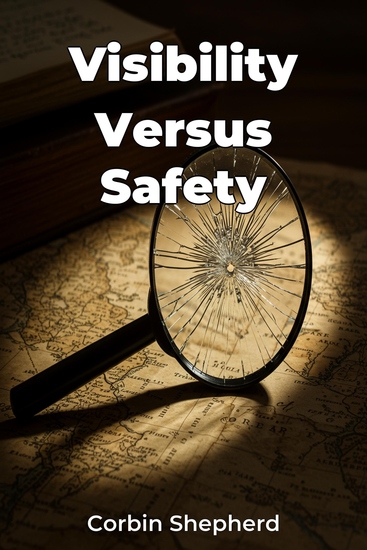
Visibility Versus Safety explores the complex relationship between data transparency, demographic reporting, and the safety of marginalized groups. It challenges the assumption that increased visibility always leads to positive outcomes, arguing that it can paradoxically create vulnerabilities, especially when data collection lacks adequate safeguards. The book delves into how the pursuit of detailed statistics can expose vulnerable communities to discrimination, surveillance, and even violence, highlighting that the benefits of transparency aren't universally shared. For example, seemingly benign data collection can inadvertently lead to the targeting of specific groups, undermining their safety and well-being.

 
The book progresses by first establishing core concepts and the ethical landscape surrounding data collection. It then examines specific case studies, such as the impact of data use on immigration enforcement and the targeting of LGBTQ+ individuals online, to illustrate how increased visibility affects particular demographic groups. Finally, it proposes strategies for mitigating the risks of visibility while preserving the benefits of transparency, calling for stronger data privacy protections and more equitable data governance. It emphasizes the importance of data ethics and a critical approach to data collection to ensure social justice.
Disponible desde: 07/04/2025.
Longitud de impresión: 87 páginas.


Otros libros que te pueden interesar

  • Kiss You Love Goodbye - a poetic journey through life - cover

    Kiss You Love Goodbye - a poetic...

    Wendy Haller

    • 0
    • 0
    • 0
    We evolve. As human beings, through the different stages of our lives, we evolve into different versions of ourselves until we get to an age, where we know who we are meant to be. Kiss you love, goodbye the author explores the complexities of adulthood and all of the inner thoughts we have about ourselves and our experiences. Themes of self-discovery, family dynamics, love, loss, trauma, grief, anxiety, depression, healing, and personal growth. The poems in this book span over 30 years of the author's life from her early college years of "Who am I?" to her late 40's of "This is who I am".
    Ver libro
  • Emotional Freedom Practices - How To Transform Difficult Emotions into Positive Energy - cover

    Emotional Freedom Practices -...

    Judith Orloff

    • 0
    • 0
    • 0
    Anger. Fear. Sadness. Dr. Judith Orloff sees people every day who are struggling with these overwhelming emotions. To help us find relief, she has created Emotional Freedom Practices. This two-CD toolkit expands on the insights from her recently released New York Times bestseller Emotional Freedom, featured in a new public television special. Listeners will discover how to turn away from negativity, react constructively, and seize command of any life situation.What’s the key to finding liberation from negativity? Dr. Orloff teaches that it’s how we choose to respond to external events that determines our experience. Drawing from the fields of biology, psychology, and intuitive medicine, Dr. Orloff offers exercises, self-care techniques, and meditations that help transform fear into courage, disappointment into patience, and anger into compassion.“Achieving emotional freedom gives you access to your own power center during jubilant times and in adversity,” teaches Orloff. Emotional Freedom Practices is a program in self-mastery that will help anyone attain a high-quality life, handle stress artfully, and find serenity—even in the most overwhelming situations.
    Ver libro
  • Marc Chagall: A short biography - 5 Minutes: Short on time - long on info! - cover

    Marc Chagall: A short biography...

    5 Minutes, 5 Minute Biographies,...

    • 0
    • 0
    • 0
    Marc Chagall, painter and cosmopolitan: Life and work in a short biography! Everything you need to know, brief and concise. Infotainment, education and entertainment at its best!
    Ver libro
  • War of the Keys The: The History and Legacy of the Military Conflict Between the Holy Roman Empire and the Vatican - cover

    War of the Keys The: The History...

    Editors Charles River

    • 0
    • 0
    • 0
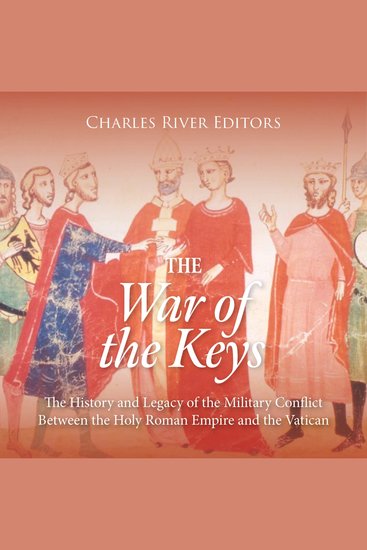
    It has been famously pointed out that the Holy Roman Empire was neither holy, nor Roman, but it was also not an empire in the sense people expect when hearing the term. In theory, the emperor was the highest prince in Christendom, and his dominion extended the length and breadth of Western Europe. The empire had been created by the papacy when Pope Leo III famously crowned the supposedly unwitting Charlemagne in Saint Peter’s Basilica, intending to recreate the Western Roman Empire. In truth, the imperial power did not extend beyond central Europe, which by the beginning of the 16th century included Germany, northern Italy, and the Netherlands. Even in these lands, however, the emperor struggled to command obedience. His dominion over northern Italy was theoretical only, the cities of the Netherlands were deeply conscious of their ancient rights and privileges, and Germany had long ceased to be compliant. The latter had become a collection of principalities, dukedoms and bishoprics which vied with each other and pursued their own agendas. They were, however, united in only one sense: denying the emperor power and resisting attempts to centralize the government. 
    The clergy occupied a privileged place in medieval society. Europe had inherited Christianity from the Roman Empire, and the concept of a united Christendom and empire were practically synonymous. Indeed, there was no real consciousness of the Roman Empire ever having ended. After the Western Roman Empire collapsed in the late 5th century, the Germanic rulers of Western Europe continued to recognize the Eastern Emperor in Constantinople until Charlemagne, and after the dissolution of the Frankish Empire, the imperial seat was transferred to Otto I, King of East Francia in modern Germany. 
    By the late 10th century, however, the emperor’s reach was rarely felt beyond Germany and northern Italy, and the question of who was supposed to be the imperial head was unresolved.
    Ver libro
  • The Defiant Middle - How Women Claim Life's In-Betweens to Remake the World - cover

    The Defiant Middle - How Women...

    Kaya Oakes

    • 0
    • 0
    • 0
    For every woman, from the young to those in midlife and beyond, who has ever been told, "You can't" and thought, "Oh, I definitely will!"—this book is for you. 


    Women are expected to be many things. They should be young enough, but not too young; old enough, but not too old; creative, but not crazy; passionate, but not angry. They should be fertile and feminine and self-reliant, not barren or butch or solitary. Women, in other words, are caught between social expectations and a much more complicated reality. 


    Women who don't fit in, whether during life transitions or because of changes in their body, mind, or gender identity, are carving out new ways of being in and remaking the world. But this is nothing new: they have been doing so for thousands of years, often at the margins of the same religious traditions and cultures that created these limited ways of being for women in the first place. 


    In The Defiant Middle, Kaya Oakes draws on the wisdom of women mystics and explores how transitional eras or living in marginalized female identities can be both spiritually challenging and wonderfully freeing, ultimately resulting in a reinvented way of seeing the world and changing it.
    Ver libro
  • Pythagoras of Samos: The Life of Archaic Greece’s Most Influential Polyglot - cover

    Pythagoras of Samos: The Life of...

    Charles River Editors

    • 0
    • 0
    • 0
    Ionia was one of the most important Greek settlements in Anatolia, and it was the home of Thales (626–548 BCE), an enterprising Greek philosopher, mathematician, and astronomer who is best known for predicting the 585 BCE solar eclipse, which brought an immediate halt to the fighting between the Lydians and Medes in modern-day Turkey. Anaximander of Miletus (610–546 BCE), an Ionian philosopher and student of Thales, pioneered a rational, non-mythological approach to astronomy by proposing a mechanical model of the cosmos. He introduced the Apeiron (the Limitless) as the fundamental, eternal source of all matter, from which all worlds are created and to which they return.  
    Pythagoras studied cosmology, geometry, and astronomy under Thales and his successor Anaximander, and by building on the legacies of their brilliant minds, Pythagoras refined and expanded upon their foundational concepts. However, he also went in a different direction, focusing on mysticism and numbers more than material principles. Known for his profound influence on Plato, Pythagoras defined himself as a lover of wisdom and a seeker of knowledge. As a key figure in the evolution of Western intellectual thought, his ideas have endured for millennia, impacting fields ranging from mathematics to philosophy. Alongside other influential Greek thinkers, Pythagoras helped shift focus toward self-examination, deeply influencing how we understand purpose and the universe.  
    Pythagoras’s most lasting legacy was in the field of mathematics, but mathematics was not merely a tool for measurement to him - it was the underlying language of the universe. One of his most famous statements, “Panta arithmos” (“All is Number”), is indicative of his belief that numbers were the essence, structure, and governing principle of the universe. He thought ratios and proportions of integers could explain all reality, including musical harmony, physical objects, and abstract concepts like justice.
    Ver libro