Junte-se a nós em uma viagem ao mundo dos livros!
Adicionar este livro à prateleira
Grey
Deixe um novo comentário Default profile 50px
Grey
Assine para ler o livro completo ou leia as primeiras páginas de graça!
All characters reduced
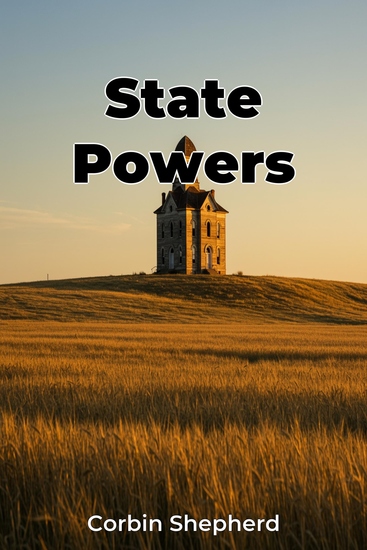
State Powers - cover
LER

State Powers

Corbin Shepherd

Tradutor A AI

Editora: Publifye

  • 0
  • 0
  • 0

Sinopse

State Powers examines the ever-evolving balance between state and federal governments in the U.S., a dynamic impacting crucial areas like healthcare and environmental policy. Understanding this balance is key to navigating American governance.

 
The book explores the historical roots of federalism, highlighting how events like the Civil War and the New Deal redefined state and federal power. It also delves into ongoing legal and political battles, revealing the tensions between state autonomy and national unity.

 
The book argues that this balance is a constantly negotiated compromise shaped by political ideologies and economic forces. Landmark Supreme Court cases, like McCulloch v. Maryland, are analyzed to illustrate the judiciary's role in mediating disputes.

 
Ultimately, State Powers offers a comprehensive understanding of American federalism, providing insights into contemporary policy debates and the future of federalism in an interconnected nation. The book progresses by first establishing theoretical foundations, then analyzing landmark Supreme Court cases, and finally examining contemporary policy debates.
Disponível desde: 06/05/2025.
Comprimento de impressão: 61 páginas.


Outros livros que poderiam interessá-lo

  • America’s Deadliest Hurricanes: The History of the Three Worst Hurricanes in American History - cover

    America’s Deadliest Hurricanes:...

    Editors Charles River

    • 0
    • 0
    • 0
    Hurricanes have been devastating communities for thousands of years, bringing about various combinations of rain and wind that can do everything from taking down some dead limbs to wiping out houses. They are also common enough that people who live for any length of time in a region prone to having hurricanes are inclined to accept them as something of a periodic nuisance rather than a serious danger. Modern construction styles allow houses to withstand winds in excess of 100 miles an hour, and early warning systems allow people to evacuate. Thus, most hurricanes of the 21st century take fewer lives than a serious highway accident. 
    As a result, the world watched in horror as Hurricane Katrina decimated New Orleans in August 2005, and the calamity seemed all the worse because many felt that technology had advanced far enough to prevent such tragedies, whether through advanced warning or engineering. Spawning off the Bahamian coast that month, Katrina quickly grew to be one of the deadliest natural disasters in American history, killing more than 1,800 people and flooding a heavy majority of one of America’s most famous cities. At first, the storm seemed to be harmless, scooting across the Floridian coast as a barely noticeable Category 1 storm, but when Katrina reached the warm waters of the Gulf of Mexico, its winds grew exponentially before slamming into the southern Louisiana coast as a massive Category 5 hurricane. In addition to the deadly nature of the hurricane, it was also incredibly destructive as a result of failed levees around the New Orleans area. By the time the storm had passed, it had wreaked an estimated $108 billion of damage across the region, and the human suffering, with nearly 2,000 deaths and a million people displaced, was available for viewing across the world.
    Ver livro
  • They Were Here Before Us - Stories from Our First Million Years - cover

    They Were Here Before Us -...

    Eyal Halfon, Ran Barkai

    • 0
    • 0
    • 0
    This is not a book about archaeological sites. We shall come across flint tools, bones, skulls, surprising structures, and layers of earth that we can date to different periods—but they are not the heart of the matter. This book is about us, human beings, and about our place in the world. About what we have done, where we came from, which other humans used to be here, why they are no longer with us, and how and why our lives have changed. It's also about where we went wrong. What did early humans do because they had no choice and what is the price we are paying for this now? 


    Taking as the focus ten sites in Israel, the land corridor through which the human species passed on its journey from Africa to Europe, the story ranges far and wide from France, Spain, Turkey, and Georgia to Morocco and South Africa, North America, Columbia, and Peru. The authors follow the footsteps of our ancestors, describing the tools they used, the animals they hunted and the monuments they built. 


    This provocative and panoramic book shows listeners what they can learn from their ancestors, and how the unwavering ability of prehistoric people to survive and thrive can continue into the present.
    Ver livro
  • After Everest - 'The last innocent adventure' Ian Morris - The Lama who Conquered Everest - cover

    After Everest - 'The last...

    Tenzing Norgay

    • 0
    • 0
    • 0
    On 29 May 1953 Tenzing Norgay and Edmund Hillary conquered Everest.Before it had claimed the lives of dozens of climbers, including George Leigh Mallory in 1924. Norgay, the descendant of generations of yak herders, was destined to become a Lama, but his love for the mountains was that much stronger and he ran away from his Buddhist monastery. He had but one dream despite the deaths of many mountaineers: to conquer Everest. For thirty years expeditions had been struggling to scale its fiendishly difficult icy slopes until he and Hillary finally succeeded. His memoir is a unique and eloquent tribute to Zen and the art of mountain climbing.
    Ver livro
  • Start of the Cold War The: The History of the Burgeoning Rivalry Between the United States and Soviet Union - cover

    Start of the Cold War The: The...

    Charles River Editors

    • 0
    • 0
    • 0
    In the wake of World War II, the European continent was devastated, and the conflict left the Soviet Union and the United States as uncontested superpowers. This ushered in over 45 years of the Cold War, and a political alignment of Western democracies against the Communist Soviet bloc that produced conflicts pitting allies on each sides fighting, even as the American and Soviet militaries never engaged each other. Though it never got “hot” between the two superpowers, the Cold War was a tense era until the dissolution of the USSR, and nothing symbolized the split more than the division of Berlin. Berlin had been a flashpoint even before World War II ended, and the city was occupied by the different Allies even as the close of the war turned them into adversaries.  
    If anyone wondered whether the Cold War would dominate geopolitics, any hopes that it wouldn’t were dashed by the Soviets’ blockade of West Berlin in April 1948, ostensibly to protest the currency being used in West Berlin but unquestionably aiming to extend their control over Germany’s capital. By cutting off all access via roads, rail, and water, the Soviets hoped to force the Allies out, and at the same time, Stalin’s action would force a tense showdown that would test their mettle.  
    Stalin ruled with an iron fist for nearly 30 years before his death in 1953, which may or may not have been murder, just as Stalin was preparing to conduct another purge. With his death, Soviet strongman and long-time Stalinist Nikita Khrushchev became the Soviet premier. A barely known figure outside of the Eastern bloc, Khrushchev was derided as a buffoon by one Western diplomat and mocked for his physical appearance by others, but any Western hopes that he would prove a more conciliatory figure than Stalin were quickly snuffed out as the hard-line Khrushchev embraced confrontational stances, ensuring the Cold War was here to stay.
    Ver livro
  • Peak Human - What We Can Learn From History’s Greatest Civilizations - cover

    Peak Human - What We Can Learn...

    Johan Norberg

    • 0
    • 0
    • 0
    All golden ages are marked by periods of spectacular cultural flourishing, scientific exploration, technological achievement and economic growth; yet no two are the same. Their beliefs, societies and place in the wider world all vary. Despite this, all previous golden ages have ended, whether it be because of external pressures or internal fracturing; too much hubris or too little wariness. 
     
    Looking at seven of humanity's greatest civilisations - ancient Athens, the Roman Republic, Abbasid Baghdad, Song C hina, Renaissance Italy, the Dutch Republic and the Anglosphere - historian and commentator Johan Norberg seeks to distil their strengths and shortcomings in answering the question: how do we ensure that our current golden age doesn't end? 
     
    As insightful as it is riveting, Peak Human is at once a paean to our incredible progress and a warning that we cannot afford to be complacent.
    Ver livro
  • Learn Czech: Must-Know Czech Slang Words & Phrases (Extended Version) - cover

    Learn Czech: Must-Know Czech...

    Innovative Language Learning, ...

    • 0
    • 0
    • 0
    ***Important: This Audiobook comes with 3 bonus Czech “slang” and “curse words” conversation cheat sheets***


    Want to speak Czech like a native, understand daily conversations...


    ...and graduate from “knowing just a few basic textbook phrases”?


    Then this the Audiobook is for you.


    You’re about to learn 100+ Czech slang words and phrases used in daily life. With the “Learn Czech: Must-Know Czech Slang Words & Phrases (Extended Version) by CzechClass101” Audiobook, our teachers explain and break down each word and phrase across 25 lessons!


    And all YOU have to do is listen and repeat.


    What you get with this Audiobook:
     
    • 25+ Audio-based Lessons & Review Tracks
     
    • 158 Minutes (2+ Hours) in Total 
     
    • Includes a 90+ Page eBook
     
    • BONUS! 3 Czech Slang Conversation Cheat Sheets


    Results you can expect:
     
    • Master 100+ New Words & Phrases
     
    • Improve Your Speaking & Listening Skills
     
    • Become a Better Czech Speaker


    Download the PDF and read along
    Ver livro