Junte-se a nós em uma viagem ao mundo dos livros!
Adicionar este livro à prateleira
Grey
Deixe um novo comentário Default profile 50px
Grey
Assine para ler o livro completo ou leia as primeiras páginas de graça!
All characters reduced
Regulatory Evolution - cover
LER

Regulatory Evolution

Corbin Shepherd

Tradutor A AI

Editora: Publifye

  • 0
  • 0
  • 0

Sinopse

Regulatory Evolution explores the dynamic nature of administrative laws, revealing how they adapt and change in response to economic shifts, technological advancements, and evolving social needs. The book argues that effective regulations must continuously evolve to remain relevant, highlighting examples where rigid, top-down approaches have failed. One key insight is how regulations undergo fundamental shifts driven by economic incentives and societal values.

 
The book examines historical regulatory shifts and analyzes the impact of globalization, the digital economy, and technologies like artificial intelligence. It uses legal case studies, economic data, and policy analyses to support its arguments. The evolutionary framework suggests regulations evolve through mechanisms akin to natural selection, where only the fittest rules survive. This approach provides a unique perspective on understanding and designing resilient regulatory systems.

 
The book progresses by first establishing a historical context, then delving into the drivers of regulatory change, and finally considering the influence of evolving social needs. It is written for a broad audience, including policymakers, legal professionals, and academics, offering insights applicable to real-world challenges such as regulating emerging technologies and adapting rules for environmental sustainability and data privacy.
Disponível desde: 03/04/2025.
Comprimento de impressão: 77 páginas.
Outros livros que poderiam interessá-lo

  • Lincolnshire's Victorian-era Murders - cover

    Lincolnshire's Victorian-era...

    Simon Potter

    • 0
    • 0
    • 0
    In an article about the perils of his job, the editor of the Lincolnshire Free Press wrote, in his newspaper’s edition of 12 February 1850, ‘If every paper does not contain a goodly number of horrible murders, it is a dull unwelcome sheet.’ 
    It was in the 19th century that murder became popularised, with the rapid growth of newspapers and books. ‘Penny Dreadfuls’ spread like wildfire, telling tales of foul and bloody murder. 
    The Victorian age was the era that created Sweeney Todd: The Demon Barber of Fleet Street, the Sherlock Holmes books, Dracula and Dr. Jekyll and Mr. Hyde. 
    We don’t think of Charles Dickens as being the author of murder mysteries, but more than a dozen of his books contain killings. 
    And in real life, the Victorians had Jack the Ripper, the Thames Torso murders and Mary Ann Cotton – who killed three husbands, numerous lovers, her own mother and 11 of her children, all for the insurance money. 
    Lincolnshire alone had over a hundred real-life, true-crime murders in the Victorian age, that are detailed in this set of three books. 
    The victims were stabbed or strangled or shot or suffocated; they were beaten or burned to death. Some were drowned, some were poisoned, one was even killed by being struck by a loaf of bread. 
    With the police having no fingerprinting, no DNA testing and only the beginnings of forensic examinations, let alone anything as helpful as a telephone, did the guilty escape punishment? Did the innocent get convicted? Decide for yourself in each of these gory tales. 
    The punishment for murder was death. 
    There was no radio, no television, no cinema, no internet. For entertainment, the Victorian masses loved little better than the party atmosphere generated by a bellyful of beer, some rude songs about a convicted murderer and the spectacle of the miserable wretch being put to death on the gallows. 
    Thousands used to gather for the occasion, often travelling many miles for the pleasure. 
    Stoke up your fire, light a candle, and listen on...
    Ver livro
  • Focus On Your Burrito - A small mantra A big difference - cover

    Focus On Your Burrito - A small...

    Mike Vatter

    • 0
    • 0
    • 0
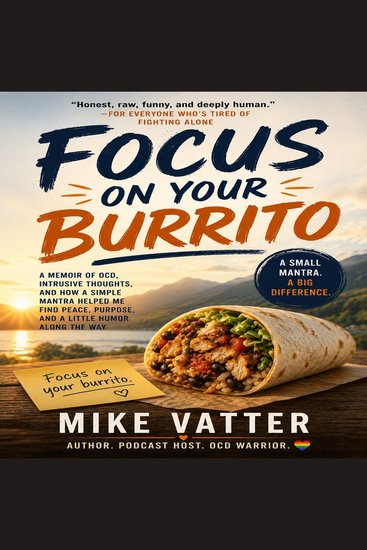
    What if the best way to fight OCD...is to stop fighting it? For years OCD convinced me that certainty was just one more thought away. One more reassurance. One more Google search. One more ritual. One more "just in case." It never was.
    Ver livro
  • William Stanek's The Living Yosemite Biography - Granite Water and the Battle to Preserve a Valley - cover

    William Stanek's The Living...

    The Editors of Our American...

    • 0
    • 0
    • 0
    Yosemite's famous walls were not built for admiration.
    
    Granite rose, fractured, weathered, and was reshaped by ice and water. Rivers cut through mountain country. Waterfalls changed with season. Forests burned and returned. People lived within these landscapes long before Yosemite became an American symbol.
    
    William Stanek's The Living Yosemite Biography follows the park across deep time, Indigenous homeland, displacement, tourism, preservation, roads, recreation, fire, water, management, and the changing meaning of wilderness.
    
    This is the story behind the famous valley: how geology created it, how people fought over it, how protection changed it, and how Yosemite helped reshape America's ideas about beauty and public land.
    
    The granite seems permanent. The Yosemite built around it has never stopped changing.
    Ver livro
  • In the shadow of violence - cover

    In the shadow of violence

    Mohammad Fazeli

    • 0
    • 0
    • 0
    Mohammad Fazeli has summarized the book *"Violence and Social Orders"* in five parts.    This book, one of the final works by Douglass North, was written after his 90th birthday in collaboration with Barry Weingast, a political science professor at Stanford University, and John Wallis, an economic historian. It offers a unique perspective on the history of development.    The book examines the theory of violence and social orders in several developing countries. While it provides a historical interpretation of the transformations in European societies, the authors use this historical understanding to critique conventional development policies. In the final chapter, they discuss the theoretical implications of this alternative view of history.    The book introduces distinct theoretical hypotheses, making it highly engaging for those interested in political and economic development.    This work challenges many of the conventional teachings on political and economic development in Iran.
    Ver livro
  • Forgiveness and Regret :A Comparative Analysis - cover

    Forgiveness and Regret :A...

    Sushmita Dutta

    • 0
    • 0
    • 0
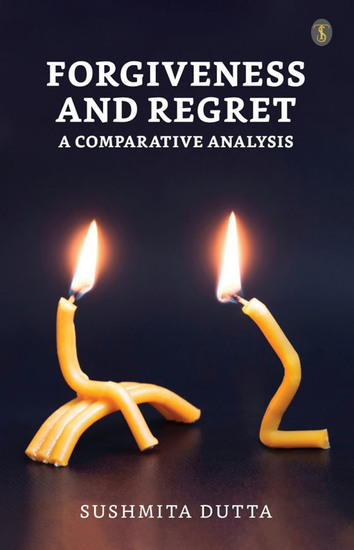
    Forgiveness and Regret: A Comparative Analysis is a thought-provoking book that explores the complex emotions of forgiveness and regret from a comparative perspective. Written by Sushmita Dutta, this insightful work delves into the psychological, emotional, and philosophical aspects of forgiveness and regret, examining their effects on individuals and relationships. Through a comparative lens, Dutta explores how forgiveness and regret are understood and practised in different cultural, religious, and social contexts. The book delves into the complexities of forgiveness, its transformative power, and the healing it brings, as well as the profound impact of regret and its potential for personal growth. Drawing from diverse examples and case studies, Dutta presents a nuanced exploration of these profound human experiences.
    Ver livro
  • Talking Classics - The Shock of the Old - cover

    Talking Classics - The Shock of...

    Mary Beard

    • 0
    • 0
    • 0
    The incomparable Mary Beard is back, and she’s talking all things classics. 
     
    Why the ongoing fascination with the ancient world? This witty, approachable book asks why—for better or (sometimes) worse—antiquity continues to exert such a powerful hold on the contemporary imagination. Recalling a formative childhood encounter with a four-thousand-year-old piece of bread in a museum, Beard introduces the idea of thauma, or wonder, that kick-started a lifetime engaging with classics. It was not the canonical “greats” of ancient literature and art that initially drew her in, she confesses, but rather the more intimate, messy, and humdrum evidence of daily life in the remote past. 
     
    Confronting the uses and abuses of symbols of the ancient world, Beard reminds us that the traditions and “masterpieces” of Greece and Rome have certainly been politicized, but they belong to neither the left nor the right. Happily, no one owns the past. She warns us not to let a sense of reverence or overfamiliarity dampen the “shock of the old,” arguing that one of the most important things that classics teach us is how to grapple with complicated and controversial things. “The Greeks and Romans are long dead, they cannot answer back, and you can say what you like about them,” she reminds readers. “The simple fact that classics belong to none of us can offer a safe space to argue about the most difficult debates we face now.” 
     
    Beard welcomes everyone into classics. “It is not compulsory to be excited by the ancient world,” she writes. “But it can be a shame not to be.” This charming, sharp, and readable book from one of the world’s most entertaining classicists offers something for both new and established fans of classics, bringing new wonder and curiosity to even the most ancient of ideas.
    Ver livro