Junte-se a nós em uma viagem ao mundo dos livros!
Adicionar este livro à prateleira
Grey
Deixe um novo comentário Default profile 50px
Grey
Assine para ler o livro completo ou leia as primeiras páginas de graça!
All characters reduced
Radio Propaganda Impact - cover
LER

Radio Propaganda Impact

Corbin Shepherd

Tradutor A AI

Editora: Publifye

  • 0
  • 0
  • 0

Sinopse

Radio Propaganda Impact delves into the profound influence of radio broadcasting as a tool for propaganda throughout the 20th and 21st centuries. Examining historical case studies, the book analyzes how radio was strategically employed to shape public opinion, mobilize populations, and even instigate international crises. From subtle linguistic cues to emotional appeals, the book dissects propaganda techniques used by nations like Nazi Germany, the Soviet Union, and the United States.

 
It reveals how radio cultivated specific attitudes, reinforced biases, and constructed collective identities during pivotal moments, such as World War II and the Cold War, demonstrating its power to manipulate beliefs on a mass scale. The book progresses logically, beginning with core concepts of propaganda and mass communication before delving into historical examples. By drawing on primary sources like radio broadcasts and government documents, it offers a comprehensive historical analysis of political influence and media manipulation.

 
A key insight is that understanding radio propaganda's mechanisms is vital for fostering media literacy and safeguarding against manipulation in our interconnected world. The conclusion analyzes radio propaganda's legacy and its relevance in the digital age, discussing its evolution into new forms of media manipulation.
Disponível desde: 31/03/2025.
Comprimento de impressão: 66 páginas.

Outros livros que poderiam interessá-lo

  • Race for Nuclear Weapons during World War II The: The History and Legacy of Both Sides’ Efforts to Build an Atomic Bomb - cover

    Race for Nuclear Weapons during...

    Editors Charles River

    • 0
    • 0
    • 0
    Before the Second World War, military conflicts were fought under orthodox conditions, usually termed “conventional warfare,” but several innovations had significantly changed combat, leading inextricably to the race for a nuclear weapon in the 1930s and 1940s. Conflicts had been fought by armies on horseback with guns of varying sophistication since the 16th century, but mechanized warfare and machine guns changed this calculus and set the stage for future combat by the end of World War I. Other sinister changes entered the fray during this conflict, such as chemical weapons like chlorine and mustard gas. The total warfare brought about by World War I and ensuing wars like the Spanish Civil War made the quest for the most powerful weapons somewhat necessary. 
    The Manhattan Project would ultimately yield the “Little Boy” and “Fat Man” bombs that released more than 100 Terajoules of energy at Hiroshima and Nagasaki, but as it turned out, the Axis were not far behind with their own nuclear weapons program. When the Nazis’ quest for a nuclear weapon began in earnest in 1939, no one really had a handle on how important nuclear weapons would prove to war and geopolitics. The attacks on Hiroshima and Nagasaki in August 1945, along with the Cold War-era tests and their accompanying mushroom clouds, would demonstrate the true power and terror of nuclear weapons, but in the late 1930s these bombs were only vaguely being thought through, particularly after the successful first experiment to split the atom by a German scientist. The nuclear age itself was in its infancy, barely 35 years old, but within a few short years the advent of nuclear war loomed over the world and the prospect of the enemy winning the nuclear race kept Allied leaders awake at night.
    Ver livro
  • Ancient Truths: Unveiling the Mysteries of Pre-Christian Beliefs - "Dive into Ancient Truths! Discover audio lessons that unveil pre-Christian mysteries for an enriching experience" - cover

    Ancient Truths: Unveiling the...

    Jasper Vexley

    • 0
    • 0
    • 0
    Ancient Truths: Unveiling the Mysteries of Pre-Christian Beliefs 
    ⭐⭐ Simplified Guide & Explanations Included ⭐⭐ 
    Are you eager to expand your understanding of pre-Christian beliefs and unlock ancient mysteries? 
    Searching for a comprehensive resource that encompasses everything you need to know about ‘Ancient Truths: Unveiling the Mysteries of Pre-Christian Beliefs’? 
    Your quest ends here! 
    This audiobook serves as your ultimate companion for enhancing your knowledge, applying newfound insights, and engaging in enriching discussions. With this guide, you will be well-equipped for your journey through ancient beliefs. 
    Updated for the latest insights on ancient wisdom. 
    Key features of this insightful guide: 
    - In-depth analysis of pre-Christian beliefs and practices 
    - Thorough explanations of core concepts associated with ancient truths 
    - Effective strategies for exploring and understanding historical contexts and narratives 
    Our guide stands out through its extensive coverage, which is essential for achieving a complete understanding. Concepts are not just touched upon; they are explored in-depth with clarity. 
    Please note that this guide is an independent resource and not affiliated with any official organization regarding ancient beliefs. 
    Structured with clarity and an easy-to-follow narrative, our audiobook ensures seamless transitions between topics. Say goodbye to complicated jargon and embrace clear, precise, and accurate information. 
    So, why wait? Click the BUY NOW button, secure your audiobook, and embark on your journey to uncover the mysteries of ancient truths today!
    Ver livro
  • Little Red Barns - Hiding the truth from farm to fable - cover

    Little Red Barns - Hiding the...

    Will Potter

    • 0
    • 0
    • 0
    Behind the little red barns dotting the landscape and decorating so many of the products we consume is a dangerous threat. This groundbreaking investigation exposes the powerful forces at work to hide the harms of industrial agriculture, its outsize role in the climate crisis, and its links to the global rise of fascism. 
    Little Red Barns is the record of a harrowing journey that took investigative journalist Will Potter from factory farms to international climate summits, from Congressional hearings to neo-Nazi fascist groups. As Potter uncovers the frightening truth about animal agriculture’s role in accelerating climate collapse, he shows how the authoritarian measures being taken to maintain control over this key aspect of the global food supply chain are directly linked to the proliferation and empowerment of far-right militias. Confronting a maelstrom of disturbing information, he asks searching questions about a journalist’s role in the 21st century and the impact of bearing witness in a world in which we are bombarded with “news,” both real and faked.
    Ver livro
  • Kotromanić Dynasty The: The History and Legacy of the Kings Who Ruled Medieval Bosnia - cover

    Kotromanić Dynasty The: The...

    Editors Charles River

    • 0
    • 0
    • 0
    Much has been written about Western intervention during the breakup of Yugoslavia, and whether it made matters worse, prevented worse atrocities, or was simply ineffective. In early 1992, however, what was clear was that Europe was hopelessly divided over the best course of action to take towards Yugoslavia, and after several years of fighting, the Bosnian War was one of the most violent conflagrations in Europe since the end of World War II.  
    	Depending on the source, many authors have focused on different catalysts for Yugoslavia’s demise, but Vesna Drapac may have succinctly summed the situation up when he wrote that by the end, the state “lacked a reason to exist.” There is certainly something in this sentiment, but the disintegration came at an enormous cost. 
    	Given what happened in Yugoslavia, it should be little surprise that Bosnia did not have its fully-established borders until the 19th century, and even in modern times, in many respects the people distinguished and defined Bosnia as a polity more than its shifting borders, and regardless of whether Bosnia operated as an independent state or kingdom. It was during the Middle Ages that Bosnia’s culture and ethnic makeup truly began to coalesce, despite the politically rocky nature of the era in the Balkans. 
    Ver livro
  • Reclaiming the Revolution - Extraordinary Adventures in Politics and Leadership at the Inflection Point of Industry 40 - cover

    Reclaiming the Revolution -...

    Stephen Barber

    • 0
    • 0
    • 0
    In this illuminating book, Stephen Barber redefines the Fourth Industrial Revolution for our politics, our societies and those who seek to lead.
    Ver livro
  • A Rare Recording of Iva Toguri "Tokyo Rose" - cover

    A Rare Recording of Iva Toguri...

    "Tokyo Rose" Iva Toguri

    • 0
    • 0
    • 0
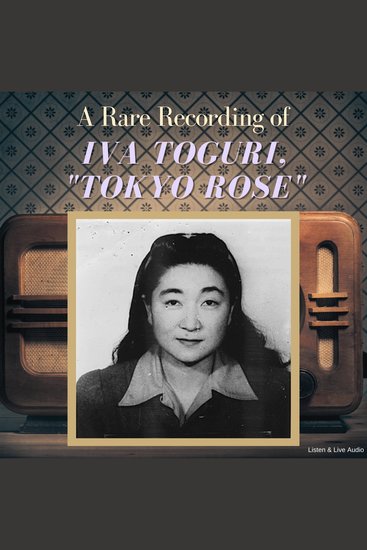
    The following are live recordings of Japanese-American Iva Toguri, of "Tokyo Rose" infamy. Tokyo Rose was a generic name given by Allied troops in the South Pacific during World War II to all female English-speaking radio broadcasters of Japanese propaganda. In fact, the name "Tokyo Rose" was never actually used by any Japanese broadcaster, but rather first appeared in U.S. newspapers in 1943 in the context of these radio programs. Toguri had traveled to Japan to tend to a sick aunt just prior to the attack on Pearl Harbor. Unable to leave the country when war began with the United States, unable to stay with her aunt's family as an American citizen, and unable to receive any aid from her parents who were placed in internment camps in Arizona, Toguri eventually accepted a job as a part-time typist at Radio Tokyo. She was quickly recruited as a broadcaster for the propagandist program The Zero Hour, under the moniker, Orphan Ann. The name Tokyo Rose ceased to be merely a symbol, however, during September 1945 when Toguri attempted to return to the United States. Toguri was arrested and imprisoned for a year in Japan by American authorities. She was subsequently freed, then arrested again two years later. After being returned to the US, Toguri was tried and convicted of one count of treason, in a trial fraught with integrity issues and dubious testimony. Toguri was eventually paroled from prison in 1956, and finally received a pardon from President Gerald Ford in 1977.
    Ver livro