¡Acompáñanos a viajar por el mundo de los libros!
Añadir este libro a la estantería
Grey
Escribe un nuevo comentario Default profile 50px
Grey
Suscríbete para leer el libro completo o lee las primeras páginas gratis.
All characters reduced
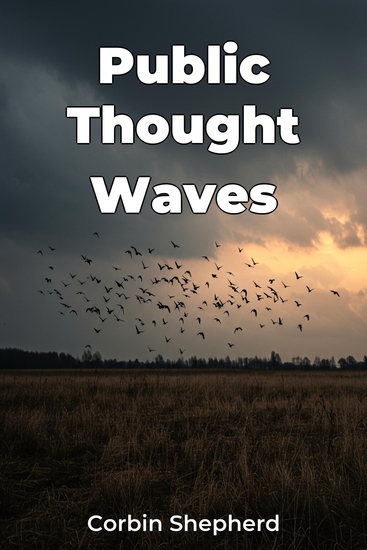
Public Thought Waves - cover

Public Thought Waves

Corbin Shepherd

Traductor A AI

Editorial: Publifye

  • 0
  • 0
  • 0

Sinopsis

Public Thought Waves explores the profound influence of public opinion on social and political movements throughout history. It posits that written discourse serves as a vital instrument, amplifying and channeling these "thought waves" to effect societal transformation. The book examines how public sentiment shapes the sociopolitical landscape, demonstrating that collective thought, when effectively articulated, can reshape the course of history. For example, revolutionary pamphlets have ignited significant social movements and legislative reforms, proving how public opinion can be a catalyst for change.

 
The book progresses by first introducing the core concepts of public opinion formation, emphasizing the roles of information, emotion, and social influence. It then examines key historical periods with dedicated chapters exploring specific movements and their accompanying written discourse. Finally, the book synthesizes the findings from case studies, presenting a model for understanding how public thought waves operate and offering insights into their potential impact on contemporary issues.

 
This comprehensive approach bridges the gap between the formation of public sentiment and its tangible effects on political outcomes, making it valuable for understanding the dynamics of history and politics.
Disponible desde: 05/05/2025.
Longitud de impresión: 61 páginas.

Otros libros que te pueden interesar

  • Vote With Your Phone - Why Mobile Voting Is Our Final Shot at Saving Democracy - cover

    Vote With Your Phone - Why...

    Bradley Tusk

    • 0
    • 0
    • 0
    Gun Control. Abortion. From the halls of Congress, it may seem that Americans are bitterly polarized on the biggest policy issues of the day. But Americans are not as divided as we think, and polls show that most of us largely agree on even the most divisive issues. The problem lies in how we vote. 


    Politics is more extreme because only the most extreme voters turn out in primaries. And with politicians prioritizing reelection above all else, they shun compromise, feed this extremism, and get rewarded for it. If a lot more people vote, the views of the electorate become more mainstream, and our politicians and policies will shift to the center. 


    Mobile voting is the solution. We do just about everything on our phones, and yet we still can't use them to vote. But the technology exists, provides enhanced security over traditional paper ballots, and it could exponentially increase voter turnout. 


    Including essays by Martin Luther King Jr. III, David Hogg, and other prominent political figures, Vote with Your Phone shows us that a solution to restoring faith in our representative democracy is right in the palm of our hands.
    Ver libro
  • Family Lexicon - cover

    Family Lexicon

    Natalia Ginzburg, Peg Boyers

    • 0
    • 0
    • 0
    An Italian family, sizable, with its routines and rituals, crazes, pet phrases, and stories, doubtful, comical, indispensable, comes to life in the pages of Natalia Ginzburg's Family Lexicon. Giuseppe Levi, the father, is a scientist, consumed by his work and a mania for hiking—when he isn't provoked into angry remonstration by someone misspeaking or misbehaving or wearing the wrong thing. Giuseppe is Jewish, married to Lidia, a Catholic, though neither is religious; they live in the industrial city of Turin where, as the years pass, their children find ways of their own to medicine, marriage, literature, politics. It is all very ordinary, except that the background to the story is Mussolini's Italy in its steady downward descent to race law and world war. The Levis are, among other things, unshakeable anti-fascists. That will complicate their lives. 


    Family Lexicon is about a family and language—and about storytelling not only as a form of survival but also as an instrument of deception and domination. The book takes the shape of a novel, yet everything is true. "Every time that I have found myself inventing something in accordance with my old habits as a novelist, I have felt impelled at once to destroy [it]," Ginzburg tells us at the start. "The places, events, and people are all real."
    Ver libro
  • Proverbs - The World English Bible Book 20 (Unabridged) - cover

    Proverbs - The World English...

    Various Authors

    • 0
    • 0
    • 0
    The Book of Proverbs is a book in the third section (called Ketuvim) of the Hebrew Bible and a book of the Christian Old Testament. When translated into Greek and Latin, the title took on different forms: in the Greek Septuagint (LXX) it became Παροιμίαι (Paroimiai, "Proverbs"); in the Latin Vulgate the title was Proverbia, from which the English name is derived.
    Proverbs is not merely an anthology but a "collection of collections" relating to a pattern of life which lasted for more than a millennium. It is an example of the biblical wisdom literature, and raises questions of values, moral behaviour, the meaning of human life, and right conduct, and its theological foundation is that "the fear of God (meaning submission to the will of God) is the beginning of wisdom". Wisdom is praised for her role in creation; God acquired her before all else, and through her he gave order to chaos; and since humans have life and prosperity by conforming to the order of creation, seeking wisdom is the essence and goal of life.
    Ver libro
  • Climate Hope - Stories of Action in an Age of Global Crisis - cover

    Climate Hope - Stories of Action...

    David Geselbracht

    • 0
    • 0
    • 0
    Climate change is a problem so enormous and complex—with threats so frightening in their implications—that many of us fend off confusion and hopelessness by simply turning away. Meanwhile, with delayed action, missed targets, and increasingly dire reports at the international level, a notion that the crisis is intractable continues to spread. And the proposed solutions can be just as daunting. They often involve jargon about gigatons of carbon and kilowatt-hours of electricity. In a deeply polarized political environment, any sense of the common purpose required to make these work seems to dissolve into denial or paralysis. With all this fear and conflict, the question must be asked: How do we find the tools and the hope we need to tackle such a wickedly difficult issue? 


    In Climate Hope, journalist David Geselbracht blends in-depth research, expert interviews, and on-the-ground reporting in multiple countries, revealing remarkable efforts to identify the causes and impacts of climate change—and devise crucial ways to address them. The scale of the challenge is clear in the range of fields he covers, from glaciology and climate science to law and diplomacy. But in drawing these approaches together, he shares stories of hope, awe, and wonder that encourage us to confront this long-term, world-warping phenomenon with a renewed sense of purpose and possibility.
    Ver libro
  • Loneliness - Finding Connection and Solitude in a Disconnected World - cover

    Loneliness - Finding Connection...

    Maria Garrets

    • 0
    • 0
    • 0
    In an age where technology provides countless ways to connect with others, it’s paradoxical that many people are more isolated and lonely than ever. The proliferation of social media platforms, instant messaging apps, and virtual communities should, in theory, make us feel more connected. However, the opposite has often proven to be true. Instead of fostering genuine relationships, these digital connections can leave us feeling empty, misunderstood, and yearning for deeper, more authentic interactions. This phenomenon is what I call the paradox of loneliness—where the very tools designed to bring us closer together end up magnifying our sense of isolation.  
     Loneliness is not just about being physically alone; it is a state of mind that reflects our emotional and psychological distance from others, and sometimes even from ourselves. We may feel lonely in a crowded room, or while scrolling through endless updates from friends and family. This paradox has a profound impact on our well-being, raising important questions: Why do we feel so disconnected in a world that’s seemingly more connected than ever? How did we arrive at this point? What can be done to bridge the gap between our yearning for connection and the realities of modern life? 
    Ver libro
  • Muscle Shoals Sound Studio - How the Swampers Changed American Music - cover

    Muscle Shoals Sound Studio - How...

    Carla Jean Whitley

    • 0
    • 0
    • 0
    An estimated four hundred gold records have been recorded in the Muscle Shoals area. Many of those are thanks to Muscle Shoals Sound Studio and the Muscle Shoals Rhythm Section, dubbed "the Swampers." 


    Some of the greatest names in rock, R&B and blues laid tracks in the original, iconic concrete-block building—the likes of Cher, Lynyrd Skynyrd, the Rolling Stones, and the Black Keys. The National Register of Historic Places now recognizes that building, where Lynyrd Skynyrd recorded the original version of "Free Bird" and the Rolling Stones wrote "Brown Sugar" and "Wild Horses." By combing through decades of articles and music reviews related to Muscle Shoals Sound, music writer Carla Jean Whitley reconstructs the fascinating history of how the Alabama studio created a sound that reverberates across generations.
    Ver libro