Join us on a literary world trip!
Add this book to bookshelf
Grey
Write a new comment Default profile 50px
Grey
Subscribe to read the full book or read the first pages for free!
All characters reduced
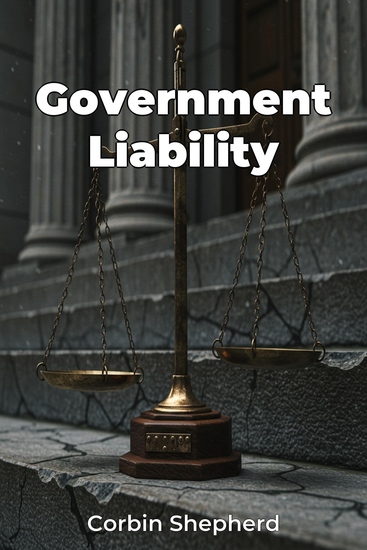
Government Liability - cover

Government Liability

Corbin Shepherd

Translator A Ai

Publisher: Publifye

  • 0
  • 0
  • 0

Summary

"Government Liability" navigates the intricate world of holding government entities legally accountable for their actions. It explores the delicate balance between protecting governments from frivolous lawsuits and ensuring redress for citizens harmed by negligence, policy failures, or constitutional violations.

 
A key focus is sovereign immunity, the historical doctrine that once shielded governments from legal claims, and how this protection has eroded over time through legislation and judicial decisions. For example, laws like the Federal Tort Claims Act demonstrate a shift towards accountability.

 
The book examines various types of legal claims applicable to government bodies, ranging from negligence and breaches of contract to constitutional violations and administrative errors. It also delves into the real-world consequences of government liability, including its impact on budgets, policy decisions, and public trust.

 
The book progresses logically, beginning with foundational principles, followed by detailed examinations of specific legal claims and defenses, and culminating in an analysis of the policy implications of holding government accountable. This comprehensive approach makes it valuable for legal professionals, policymakers, and anyone interested in government accountability.
Available since: 04/03/2025.
Print length: 79 pages.

Other books that might interest you

  • Rare Recording of Yuri Bezmenov A - Volume 3 - cover

    Rare Recording of Yuri Bezmenov...

    Yuri Bezmenov

    • 0
    • 0
    • 0
    Yuri Bezmenov (1939 - January 5, 1993), was a Soviet journalist for RIA Novosti and a former KGB informant who defected to Canada. After being assigned to a station in India, Bezmenov eventually grew to love the people and the culture of India. At the same time, he began to resent the KGB-sanctioned repression of intellectuals who dissented from Moscow's policies and he decided to defect to the West. Bezmenov is best remembered for his anti-communist lectures and books published in the 1980s under the alias of Tomas David Schuman.
    Show book
  • The Secret of Creation - cover

    The Secret of Creation

    Walter Russell

    • 0
    • 0
    • 0
    The Secret of Creation, a profound exploration of universal laws, human potential, and the divine essence that permeates all of creation. Russell presents his unique insights into the nature of light, energy, and consciousness, offering practical wisdom on how to achieve balance, unlock creativity, and align with the rhythms of the universe. 
    This work represents the culmination of a lifetime of discovery, where science and spirituality converge to reveal the hidden truths of existence. Through his teachings, Russell invites listeners to transcend the limitations of materialism and embrace their divine potential as co-creators in the universe. 
    Prepare to journey beyond the boundaries of conventional thought and into a realm where imagination, balance, and universal law guide the path to enlightenment and self-mastery. Let this work serve as a reminder of the infinite possibilities within you and the divine light that illuminates all creation.
    Show book
  • The Middle Way and other essays - cover

    The Middle Way and other essays

    M. O'C. Walshe

    • 0
    • 0
    • 0
    This is an audiobook of Bodhi Leaves No.99 by M. O’C. Walshe, "The Middle Way and other essays" found in the Pariyatti Edition of Collected Bodhi Leaves Vol. IV. 
     
    Excerpt: 
    "It is always a good idea to seek the middle way, or the golden mean, between extremes whether in politics, in one’s personal view and behaviour, or in fact in any walk of life. The difficulty arises when we attempt to discover what, in practice, is the middle way. It is not, as some appear to suppose, the mid-point between truth and falsehood, or between right and wrong! In fact the middle way itself is true, and is right: the difficulty lies merely in finding it. Here are some examples: it is the mean between (as the Buddha said) self-indulgence and self-mortification, or (the same thing as applied to other persons and animals) between pampering and cruelty. 
     
    "The middle way, even at a fairly modest, mundane level, is not very popular in the world today. Probably it never was. But in these restless times it is perhaps especially needed, and at the same time especially hard to achieve. It is fatally easy to indulge in nostalgia, to conjure up a false and idealised picture of earlier times which in fact, whatever period of history we may envisage, all had their grave disadvantages of one kind or another. All the same, until recent times it may be said that, in general, life usually had a kind of placidity that has now been lost, and which is hard to recapture, except in the atmosphere of some temple, church, meditation centre or the like. This, however, may simply mean that in earlier times the tendency towards sloth and indolence was, on the whole, greater than that towards worry and flurry."
    Show book
  • Farewell to Arms by Ernest Hemingway A (Book Analysis) - Detailed Summary Analysis and Reading Guide - cover

    Farewell to Arms by Ernest...

    Bright Summaries

    • 0
    • 0
    • 0
    Unlock the more straightforward side of A Farewell to Arms with this concise and insightful summary and analysis!
    This engaging summary presents an analysis of A Farewell to Arms by Ernest Hemingway, which tells a story of turbulent romance against the backdrop of the First World War. Its protagonist Frederic Henry is serving as an ambulance driver in the Italian army when he meets and falls in love with Catherine Barkley, a nurse in the British hospitals who lost her fiancé in the Battle of the Somme. The novel draws on Hemingway's own experiences (he was an ambulance driver for the Italian Red Cross during the First World War and fell in love with a nurse, Agnes von Kurowsky), and provides an intensely realistic and often horrifying brutal depiction of conflict and the ways it changes those who live through it.
    Find out everything you need to know about A Farewell to Arms in a fraction of the time!
    This in-depth and informative reading guide brings you:
    •A complete plot summary
    •Character studies
    •Key themes and symbols
    •Questions for further reflection
    Why choose BrightSummaries.com?
    Available in print and digital format, our publications are designed to accompany you on your reading journey. The clear and concise style makes for easy understanding, providing the perfect opportunity to improve your literary knowledge in no time.
    See the very best of literature in a whole new light with BrightSummaries.com!
    Show book
  • Little Women Podcast: Meg Goes To Vanity Fair - cover

    Little Women Podcast: Meg Goes...

    Niina Niskanen, Emily Lau

    • 0
    • 0
    • 0
    In this engaging episode of Little Women Podcast, Niina and Emily delve deep into the thought-provoking chapter "Vanity Fair" from Louisa May Alcott's classic novel Little Women. Join them as they explore Meg's transformative experience at the ball, where she’s swept into the dazzling world of wealth and glamour. As the rich girls dress her up in their finest attire, Meg is faced with an internal conflict that challenges her values and ambitions. 
    In this lively discussion, Niina and Emily reflect on Meg’s journey of self-discovery, revealing her struggles with vanity, materialism, and the pursuit of societal approval. What does it mean to stay true to oneself in the face of luxury and outward appearances? Meg's emotional journey offers timeless insights that resonate with listeners today. 
    Tune in to hear a thoughtful, in-depth conversation about one of the most pivotal moments in Little Women, as well as fascinating reflections on character development, values, and personal growth. Whether you're revisiting the novel or experiencing it for the first time, this episode will make you see Meg’s story in a whole new light.
    Show book
  • The Revolution Betrayed - What Is the Soviet Union and Where Is It Going? - cover

    The Revolution Betrayed - What...

    Leon Trotsky

    • 0
    • 0
    • 0
    It is June 1936. Leon Trotsky (1879-1940) has finally been granted a visa for asylum in Norway, having been banned first from living in Paris, and then the whole of France. With him comes the draft of The Revolution Betrayed: What Is the Soviet Union and Where Is It Going?, which is completed and sent to the publishers on the 4th of August. The book, published by Faber in 1937, is considered to be Trotsky’s major work on Stalinism. Trotsky’s passion for the spirit of the Revolution he co-founded, his disgust and sadness at how the people of Russia have been betrayed by Stalin and his acolytes, shows us the bleak lives of 170 million Russians under the absolute control of ‘the Ten Thousand’ of the bureaucracy.  
     
    Trotsky reminds us of the high concepts of the 1917 October Revolution, (Marx’s 'From each according to his ability, to each according to his needs') with the sharing of the nation’s resources for the benefit of all. Prominent among such forward thinking was the commitment to lift women out of the trap of housework and childbirth by communal refectories and creches in the workplace. He praises the positive economic advances of the USSR since the death of Lenin - the growth in areas such as industrial and electrical output. But he notes the continued and inevitable low productivity (much lower than the capitalist West, he acknowledges) that is the result of lack of incentive for the Soviet worker. This, he argues, will never allow the country to lift itself up to full potential, despite Stalin’s ever-changing Five-Year Plans. 
     
    Indeed, it is this zig-zagging of panicked policy and bovine directionlessness that frustrates Trotsky so much. It is bad enough that Stalin and his self-serving cohorts have formed a Thermidorian regime of brutal repression and conservative nest-feathering. But even worse, their economic adventurism is carrying ‘the nation to the edge of disaster’.  
     
    Trotsky brings us a clear picture of the miserable existence of the vast majority of Russians, barely surviving on bad rations, endemic corruption and fear, and the promise of a tomorrow that will never come. He laments the lack of a proletarian uprising in the West that might encourage Russians to change their own off-course regime. He notes the rise of Hitler and Mussolini, and seems, even in 1936, to see war as inevitable. He predicts the toppling of Stalinism but would have wept at how many decades it took and how many millions of lives would be wasted by stupidity and war.  
     
    Only 10 days after Trotsky sent this book to the publishers, Stalin announced the first of the Moscow show trials that began the Great Purge. Trotsky and his wife were badly treated and muzzled by the Norwegians to prevent his protesting at Stalin’s actions, and they moved to Mexico City in early 1937. There they lived, terrorized by Stalin’s determination to assassinate his old rival, until Trotsky’s death following a blow from an ice pick on 20th August 1940. The Revolution Betrayed, with its vivid translation by Max Eastman, is presented with clarity and commitment by Jonathan Booth.
    Show book