Junte-se a nós em uma viagem ao mundo dos livros!
Adicionar este livro à prateleira
Grey
Deixe um novo comentário Default profile 50px
Grey
Assine para ler o livro completo ou leia as primeiras páginas de graça!
All characters reduced
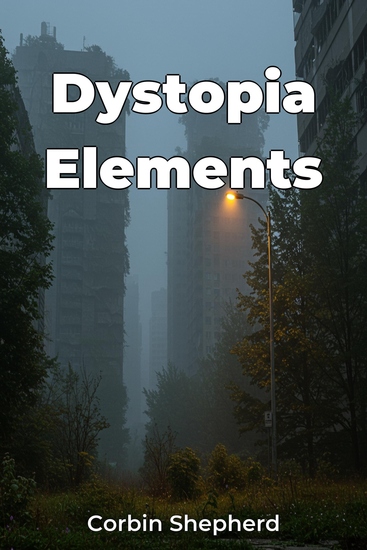
Dystopia Elements - cover
LER

Dystopia Elements

Corbin Shepherd

Tradutor A AI

Editora: Publifye

  • 0
  • 0
  • 0

Sinopse

Dystopia Elements explores how dystopian fiction serves as social and political commentary, reflecting anxieties about governmental control, technological dominance, and environmental degradation. 

 
These narratives aren't just entertainment; they dissect existing power structures and social norms, offering warnings about potential futures. For example, the erosion of individual freedoms and the dangers of unchecked technology are frequently highlighted, urging critical reflection.

 
 The book argues that dystopian fiction is prescriptive, not just predictive. By exaggerating current trends, these stories provide a roadmap, cautioning against oppressive paths.

 
 Beginning with an introduction to dystopian characteristics, the book progresses through chapters dissecting specific themes like environmental collapse and technological dependence, using examples from novels, films, and graphic novels.

 
 This approach offers readers a unique perspective on how these narratives can inspire social change.
Disponível desde: 05/05/2025.
Comprimento de impressão: 69 páginas.

Outros livros que poderiam interessá-lo

  • Imperial Rome - From Augustus to the Fall - cover

    Imperial Rome - From Augustus to...

    Rogan Fish

    • 0
    • 0
    • 0
    The fall of the Roman Republic in the late first century BCE paved the way for a new era, one defined by the leadership of a single man: Augustus. Born Gaius Octavius, he emerged as the heir of Julius Caesar and transformed Rome from a state of political turmoil into a stable empire. His rise to power was marked by strategic alliances, military victories, and significant political reforms that laid the foundation for imperial rule. 
    The aftermath of the Republic’s collapse saw Rome in chaos. The assassination of Julius Caesar in 44 BCE triggered a power struggle between his supporters and those who sought to restore the old Republic. Octavian, as he was then known, capitalized on his status as Caesar’s adopted son and formed the Second Triumvirate with Mark Antony and Marcus Lepidus. Together, they pursued and defeated Caesar’s assassins, Brutus and Cassius, at the Battle of Philippi in 42 BCE. However, tensions among the triumvirs soon escalated. Lepidus was forced into retirement, and Octavian turned against Antony, who had allied himself with Cleopatra of Egypt. Their rivalry culminated in the Battle of Actium in 31 BCE, where Octavian’s naval forces decisively defeated Antony and Cleopatra, leading to their eventual suicides. With no remaining challengers, Octavian stood as the unopposed ruler of Rome. 
    Rather than seizing power as a dictator, Octavian carefully crafted his authority to appear as a restoration of Republican values. In 27 BCE, he formally returned power to the Senate, a move that won him widespread support and the honorary title "Augustus." However, this gesture was largely symbolic, as he retained control over the military and key provinces. His governance established the principate, a system in which the emperor ruled under the guise of republican traditions while holding ultimate authority.
    Ver livro
  • Are We Bodies or Souls? - cover

    Are We Bodies or Souls?

    Richard Swinburne

    • 0
    • 0
    • 0
    What are humans? What makes us who we are? 


    Many think that we are just complicated machines, or animals that are different from machines only by being conscious. In Are We Bodies or Souls? Richard Swinburne comes to the defense of the soul and presents new philosophical arguments that are supported by modern neuroscience. When scientific advances enable neuroscientists to transplant a part of brain into a new body, he reasons, no matter how much we can find out about their brain activity or conscious experiences we will never know whether the resulting person is the same as before or somebody entirely new. Swinburne thus argues that we are immaterial souls sustained in existence by our brains. Sensations, thoughts, and intentions are conscious events in our souls that cause events in our brains. While scientists might discover some of the laws of nature that determine conscious events and brain events, each person's soul is an individual thing and this is what ultimately makes us who we are.
    Ver livro
  • Urban Poverty and Inequality - Challenges of the Modern City (3 in 1) - cover

    Urban Poverty and Inequality -...

    Lyric Vale

    • 0
    • 0
    • 0
    In the shadows of gleaming skyscrapers and vibrant commercial districts lies another city entirely—one marked by systemic deprivation, limited opportunity, and persistent struggle. Urban poverty represents one of the most complex and pressing challenges of our increasingly urbanized world, where the concentration of wealth and opportunity paradoxically exists alongside pockets of profound disadvantage. This comprehensive exploration delves into the multifaceted nature of Urban Poverty and Inequality, examining the lived experiences of The Urban Poor, and analyzing The Urban-Rural Divide that shapes resource distribution and development patterns across landscapes of inequity. 
    The narrative of urban deprivation is fundamentally a story of systemic contradictions, where proximity to abundance often accentuates rather than alleviates scarcity. By examining the structural forces, policy decisions, historical legacies, and global economic patterns that create and perpetuate urban inequality, this book illuminates the complex interplay between spatial location, economic opportunity, and social mobility in contemporary cities. Readers will journey through the intricate landscapes where urban poverty manifests—from informal settlements and public housing developments to gentrifying neighborhoods and peripheral urban zones—while exploring the resilience strategies, community responses, and policy interventions that address these challenges. Through evidence-based analysis, theoretical frameworks, and human-centered perspectives, we aim to deepen understanding of urban inequality not as an inevitable by-product of urbanization, but as a complex social phenomenon shaped by specific historical contexts, policy choices, and economic systems that can be transformed through intentional, equitable approaches to urban development.
    Ver livro
  • The Great Crash 1929 - cover

    The Great Crash 1929

    Anônimo

    • 0
    • 0
    • 0
    Of Galbraith's classic examination of the 1929 financial collapse, the Atlantic Monthly said:""Economic writings are seldom notable for their entertainment value, but this book is. Galbraith's prose has grace and wit, and he distills a good deal of sardonic fun from the whopping errors of the nation's oracles and the wondrous antics of the financial community."" Now, with the stock market riding historic highs, the celebrated economist returns with new insights on the legacy of our past and the consequences of blind optimism and power plays within the financial community.
    Ver livro
  • 情感话语的多维度研究:以抱怨会话为例(英文版) - cover

    情感话语的多维度研究:以抱怨会话为例(英文版)

    李田

    • 0
    • 0
    • 0
    内容简介:
    《情感话语的多维度研究——以抱怨会话为例》从社会语言学和语用学角度出发,以抱怨会话为例,对其中蕴含的情感话语进行会话分析,以探究情感话语在交际中的特征、表现,以及与框架和立场密不可分的关系。本书所分析的情感话语指含有情感信息的话语,既包括明确指示情感的情感语言,也包括隐含表达情感的情感性语言。情感话语遍布整个语言系统,是人类交际的必要组成部分。任何会话中都可能有潜在的情感话语,交际者通过情感话语来施行各种言语行为。因此,语言和情感的关系已经引起多方学者的关注,主要涵盖认知语言学、语言人类学、心理语言学、社会语言学、计算语言学、语用学等多个领域。本书选取抱怨会话中存在的大量情感话语作为特定分析对象。所用语料采集自电视剧和真人秀,包括33个不同情景和社会关系中的对话片段。鉴于会话分析在考察话语序列性和交际性方面的优势,本书将结合立场的三个方面,即对立场客体的评价(客观性)、说话主体的定位(主观性)和会话者间定位的比较(主体间性),对抱怨言语行为中的情感话语进行会话分析。
    Ver livro
  • The Disaster Survival Handbook - A Disaster Survival Guide for Man-Made and Natural Disasters - cover

    The Disaster Survival Handbook -...

    Sam Fury

    • 0
    • 0
    • 0
    Do You Know How to Survive a Disaster? 
    If the answer is "NO" then The Disaster Survival Handbook is a MUST-HAVE! 
    This is a no-nonsense reference book on how to stay alive during man-made and natural disasters. 
    It will also teach you the basics of prepping so you can survive the aftermath. 
    Prepare yourself with the knowledge you need, because you never know when disaster will strike. 
    Get it now.Knowledge is Your Best Disaster Survival Tool 
    Learn the disaster preparedness and recovery steps in case of...FireTornadoNuclear AttackTsunamiVolcanic EruptionEarthquakeAvalancheFloodHurricanePublic shootings 
    ... and many others!Also Learn the Fundamentals of Prepping, such as...How and what to stockpile in case there is a breakdown in societyIdeas on how to sustain your survival needs indefinitely if neededBugging in/outCaches and Bug Out Bags (BOB's)What extra security measures to take when the rule of law is no longer in effect 
    … and more! 
    This book is a must-have in your disaster survival kit, because the information will save your life. 
    Get it now.
    Ver livro