¡Acompáñanos a viajar por el mundo de los libros!
Añadir este libro a la estantería
Grey
Escribe un nuevo comentario Default profile 50px
Grey
Suscríbete para leer el libro completo o lee las primeras páginas gratis.
All characters reduced
How Does University Work? - A University Guide For Psychology Students - cover

How Does University Work? - A University Guide For Psychology Students

Connor Whiteley

Editorial: CGD Publishing

  • 0
  • 0
  • 0

Sinopsis

Psychology students love university. It's an amazing time.
 
But students sometimes fear coming to university. Students are unsure how things work and they want information about university.
 
Written by bestselling and university student writer Connor Whiteley, this great engaging and extremely useful book tells you everything you want to know and university and more. Including brilliant tips, advice and more.
 
If you want a great easy read to learn more about university for psychology students. You NEED this book!
 
BUY NOW!
 
How Does University Work? Includes
 
Introduction


Part One: Before Starting University
 
Is University Right For You?
 
How Does University Work?
 
How To Choose The Right Specific Degree For You?
 
What Is Clearing For University Students?
 
Is Online or In-Person University Right For You?
 
Is Online Learning Here To Stay?
 
What Is Online University Like? Tackling The Myths
 
How Does University Accommodation Work?
 
What Are Your Accommodation Options At University?
 
Are Scholarships A Good Idea?


Part Two: During University
 
How To Pick Optional Modules At University?
 
Should I Change My Degree At University?


Part Three: Third Year and Beyond
 
Expectation Setting For Final Year Modules
 
What To Do After University?
 
Why Do A Masters Degree?
 
How Do Masters Degrees Work?
 
Why Do A PhD?
 
How Do PhDs Work?
 
Conclusion
Disponible desde: 18/08/2023.
Longitud de impresión: 139 páginas.

Otros libros que te pueden interesar

  • Underground Railroad to Mexico The: The History and Legacy of the Southern Routes to Freedom for American Slaves - cover

    Underground Railroad to Mexico...

    Editors Charles River

    • 0
    • 0
    • 0
    The Underground Railroad is one of the most taught topics to young schoolchildren, and every American is familiar with the idea of fugitive slaves escaping to Canada and the North with the help of determined abolitionists and even former escaped slaves like Harriet Tubman. The secrecy involved in the Underground Railroad made it one of the most mysterious aspects of the mid-19th century in America, to the extent that claims spread that 100,000 slaves had escaped via the Underground Railroad. Of course, from a practical standpoint, the Underground Railroad had to remain covert not only for the sake of thousands of slaves, but for a small army of men and women of every race, religion and economic class who put themselves in peril on an ongoing basis throughout the first half of the 19th century, and in the years leading up to the war.  
    	Over 150 years later, that same secrecy has helped the Underground Railroad become so romanticized and mythologized that people often visualize it in ways that were far different from reality. Before the American Civil War eliminated slavery, it was a fixture in North America for over 200 years, and by 1850 a trained slave was worth approximately $2,500, around 10 times the sum of a typical annual salary in that day. As a result, the economic dependence on slavery in the South was an extreme one, and in the wake of the Fugitive Slave Act, black people in the North were under constant pressure to defend their “credentials” to bounty hunters and owners. Between the value of slaves in America, rising abolitionist sentiment at home and overseas, and political debates promoting or hindering the movement toward equality, the era in which the Underground Railroad operated cannot be easily fit into a concise body of principles, actions or geography. 
    Ver libro
  • True Knights Templars - Secrets and Legends of the Medieval Warriors - cover

    True Knights Templars - Secrets...

    John Harpoon

    • 0
    • 0
    • 0
    The Knights Templar have captivated the imagination of historians, writers, and conspiracy theorists for centuries. Founded in the early 12th century, this powerful and mysterious order of warrior monks played a significant role in medieval Europe and the Crusades. While their military strength was formidable, the Templars’ influence extended far beyond the battlefield, reaching into politics, finance, and even the cultural identity of Europe. Their legacy continues to inspire fascination and debate.  
    The origins of the Knights Templar trace back to the aftermath of the First Crusade when Christian forces recaptured Jerusalem. Amidst the unstable region, a group of knights led by Hugues de Payens pledged to protect Christian pilgrims traveling to the Holy Land. These knights adopted strict vows of poverty, chastity, and obedience, dedicating their lives to both spiritual devotion and military service. With the support of the influential Bernard of Clairvaux, the Templars gained recognition from the Catholic Church, receiving papal backing and exemption from local laws.  
    Over the following two centuries, the Knights Templar grew into a powerful institution. They established a network of fortresses across Europe and the Middle East, serving as both military outposts and financial hubs. The Templars became known for their innovations in banking, offering secure ways for pilgrims and nobles to transfer funds across vast distances. This financial prowess allowed them to accumulate significant wealth, making them indispensable to monarchs and rulers across Europe. 
    Ver libro
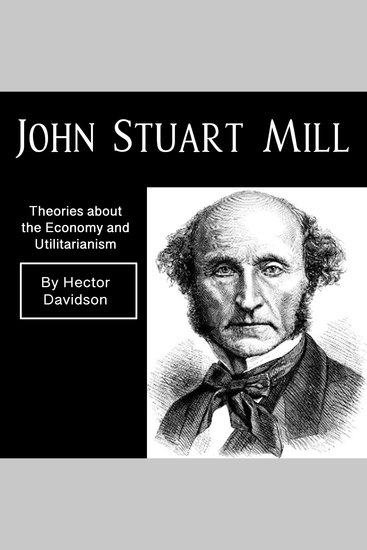
  • John Stuart Mill - Theories about the Economy and Utilitarianism - cover

    John Stuart Mill - Theories...

    Hector Davidson

    • 0
    • 0
    • 0
    John Stuart Mill, a British philosopher and political economist, remains one of the most influential thinkers of the 19th century. Born in 1806, Mill was exposed to rigorous intellectual training from an early age, particularly through his father, James Mill, a prominent utilitarian philosopher. This early exposure shaped Mill's understanding of the world, leading him to become a key figure in the development of utilitarianism, a moral theory that evaluates actions based on their ability to promote the greatest happiness for the greatest number of people. 
    Mill’s contribution to utilitarianism was both a continuation and a refinement of the ideas originally proposed by Jeremy Bentham, his intellectual predecessor. While Bentham’s version of utilitarianism focused primarily on the quantity of pleasure or pain produced by an action, Mill introduced a more nuanced view by distinguishing between higher and lower pleasures. According to Mill, pleasures of the intellect, imagination, and moral feelings were superior to those of mere physical satisfaction. This distinction between qualitative pleasures was central to Mill’s revision of utilitarian thought, emphasizing that the quality of happiness mattered as much as, if not more than, its quantity. 
    In this chapter, we explore the foundations of utilitarianism as laid out by Mill. He argued that the ultimate goal of human life is to achieve happiness, which can be defined as the presence of pleasure and the absence of pain. Mill believed that utilitarianism provided a clear and objective standard by which to judge actions, policies, and societal practices. The greatest happiness principle, which advocates for actions that maximize overall happiness, is a central tenet of Mill’s ethical framework. However, Mill also recognized the complexity of applying this principle in real-life situations, acknowledging the challenges of balancing individual rights with the greater good.
    Ver libro
  • Common Sense - cover

    Common Sense

    Thomas Paine

    • 0
    • 0
    • 0
    Common Sense by Thomas Paine is a powerful and persuasive pamphlet that played a pivotal role in advocating for American independence from British rule. Written in 1776, Paine’s clear and compelling arguments challenged the authority of the British monarchy and promoted the idea of self-governance. His accessible language and logical reasoning inspired the colonists, making Common Sense a key text in the American Revolution. This influential work continues to be celebrated for its impact on political thought and its timeless call for freedom and justice.
    Ver libro
  • Banged Up! - Doing Time in Britain's Toughest Jails - cover

    Banged Up! - Doing Time in...

    David Leslie

    • 0
    • 0
    • 0
    The wartime double agent with a transmitter in his cell to contact suffragettes; the doctor hanged as he smiled to the farewells of lovers on the scaffold; the con who defied a gangland godfather and escaped the bromide in the prison tea; aristocrats and arsonists...The screws who guard Britain's prisons have seen them all. Stir! is the story of six of the country's most notorious jails - Durham, Wandsworth, Pentonville, Wormwood Scrubs, Dartmoor and Holloway - and of the men and women who entered their gates, sometimes stood on their scaffolds and occasionally vanished before their time. The book looks at early punishments, life on hell ships transporting convicts to far-off continents, the growth of prison populations, inmates sentenced to waste away on treadmills, the underworld giant who was birched, children starved and beaten for stealing, and even women forced to eat. Also investigated are the lives and thoughts of scores of inmates, from Oscar Wilde to Oswald Mosley; from Dr Crippen to Ruth Ellis, the last woman hanged; from underworld legend Frankie Fraser to a Rolling Stone; and even the man who shot Martin Luther King, Jr.Just like Ronnie Barker's Porridge series, there are laughs too, as we uncover the man who measured bathwater, the prisoners punished for not wearing a collar and tie, the jail bookie who paid out in bread, and the unlucky brewers. The mix is all there in Stir!
    Ver libro
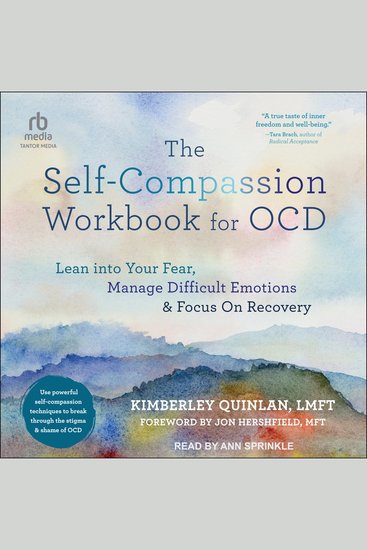
  • The Self-Compassion Workbook for OCD - Lean into Your Fear Manage Difficult Emotions and Focus On Recovery - cover

    The Self-Compassion Workbook for...

    LMFT Kimberley Quinlan, MFT Jon...

    • 0
    • 0
    • 0
    If you're one of millions who suffer from obsessive-compulsive disorder (OCD), you're all-too-familiar with feelings of anxiety, panic, shame, and uncertainty. In addition, the stigma associated with OCD can make you feel unworthy of receiving the compassion and kindness you need and deserve. You may even experience unwanted intrusive thoughts that result in harsh self-judgment—which can actually hinder your recovery and lead to additional mental health problems. So, how can you break this destructive cycle and start feeling better? 


    The Self-Compassion Workbook for OCD outlines a step-by-step program to help you understand the emotional experience of OCD, and develop the tools you need to manage your disorder and build a better life. Drawing on a powerful combination of cognitive behavioral therapy (CBT), exposure and response prevention (ERP), and compassion-focused therapy (CFT), this breakthrough guide will teach you how to balance intense emotions, lean into your fear, and focus on recovery. Over time, you'll learn to replace self-judgment with kindness and self-compassion, so you can stop suffering and start thriving. 


    Living with OCD can be extremely challenging, but it doesn't have to rob you of your self-worth. Let this book be your guide to discovering, supporting, and loving the best you that you can be.
    Ver libro