¡Acompáñanos a viajar por el mundo de los libros!
Añadir este libro a la estantería
Grey
Escribe un nuevo comentario Default profile 50px
Grey
Suscríbete para leer el libro completo o lee las primeras páginas gratis.
All characters reduced
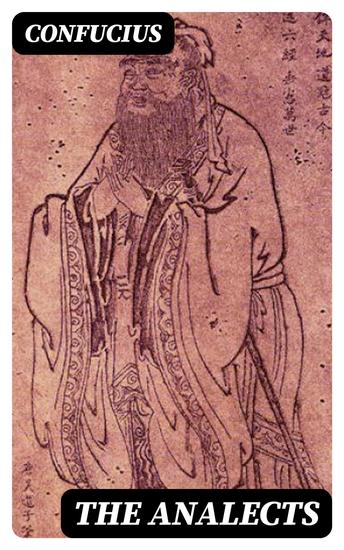
The Analects - Enriched edition - cover

The Analects - Enriched edition

Confucius

Editorial: DigiCat

  • 0
  • 0
  • 0

Sinopsis

The Analects, a collection of sayings and ideas attributed to Confucius, offers profound insights into the ethics and philosophy of this ancient sage. Rooted in the context of the Eastern Zhou Dynasty, the text is written in a conversational style, interspersed with dialogues and reflections that illuminate the core tenets of Confucian thought, such as filial piety, moral integrity, and the importance of virtuous leadership. Its literary simplicity belies the depth of its philosophical inquiry, making it both accessible and richly layered for multiple interpretations across centuries. Confucius, born in 551 BCE in what is now Shandong Province, emerged as a pivotal figure in Chinese history, advocating for a system of ethics rooted in pragmatism and humanity. His life was marked by a dedication to education and the cultivation of moral virtues, heavily influenced by the tumultuous political landscape of his time. This backdrop inspired him to compile his thoughts on governance, morality, and social harmony, which are timelessly relevant to both individual conduct and societal structure. For anyone interested in ethics, philosophy, or the foundations of Eastern thought, The Analects is an indispensable text. Its teachings not only resonate within the framework of Confucianism but also offer universal reflections on human nature and interpersonal relationships. Readers will find this work both enlightening and transformative, providing essential insights that remain relevant in contemporary discussions.

In this enriched edition, we have carefully created added value for your reading experience:
- A succinct Introduction situates the work's timeless appeal and themes.
- The Synopsis outlines the central plot, highlighting key developments without spoiling critical twists.
- A detailed Historical Context immerses you in the era's events and influences that shaped the writing.
- An Author Biography reveals milestones in the author's life, illuminating the personal insights behind the text.
- A thorough Analysis dissects symbols, motifs, and character arcs to unearth underlying meanings.
- Reflection questions prompt you to engage personally with the work's messages, connecting them to modern life.
- Hand‐picked Memorable Quotes shine a spotlight on moments of literary brilliance.
- Interactive footnotes clarify unusual references, historical allusions, and archaic phrases for an effortless, more informed read.
Disponible desde: 25/05/2022.
Longitud de impresión: 140 páginas.

Otros libros que te pueden interesar

  • Underwater - The Greed-Soaked Tale of Sexual Abuse in USA Swimming and Around the Globe - cover

    Underwater - The Greed-Soaked...

    Irvin Muchnick

    • 0
    • 0
    • 0
    While the celebrity victims of Dr. Larry Nassar and the USA Gymnastics sexual abuse scandals rightly got a lot of attention, the number of affected kids is far more numerous in swimming. Underwater tells the almost unbelievable story, in the U.S., Canada, Europe, Australia, Latin America, and the Middle East, of coaches who preyed on children while hopping from program to program, state to state, and even country to country, in a pattern similar to the pedophile priests of the Catholic Church. 
     
    Irvin Muchnick, an experienced investigative reporter of the dark side of our popular sports entertainments, gained access to thousands of pages of FBI files and other sources to expose scores of such scenarios, as well as the inaction of bureaucrats and even the most highly regarded politicians. The ranks of abusers include some of the most famous and celebrated coaches in swimming history. And there’s no fixing the problem, the author says, so long as hundreds of thousands of young swimmers annually — elite and casual athletes alike — remain at the mercy of the Olympic system’s money-hungry priorities.
    Ver libro
  • Rules - A Short History of What We Live By - cover

    Rules - A Short History of What...

    Lorraine Daston

    • 0
    • 0
    • 0
    Rules order almost every aspect of our lives. They set our work hours, dictate how we drive and set the table, tell us whether to offer an extended hand or cheek in greeting, and organize the rites of life, from birth through death. We may chafe under the rules we have, and yearn for ones we don't, yet no culture could do without them. In Rules, historian Lorraine Daston traces their development in the Western tradition and shows how rules have evolved from ancient to modern times. Drawing on a rich trove of examples, including legal treatises, cookbooks, military manuals, traffic regulations, and game handbooks, Daston demonstrates that while the content of rules is dazzlingly diverse, the forms that they take are surprisingly few and long-lived. 


    Daston uncovers three enduring kinds of rules: the algorithms that calculate and measure, the laws that govern, and the models that teach. She illustrates how rules can change—how supple rules stiffen, or vice versa, and how once bothersome regulations become everyday norms. Rules have been devised for almost every imaginable activity and range from meticulous regulations to the laws of nature. Daston probes beneath this variety to investigate when rules work and when they don't, and why some philosophical problems about rules are as ancient as philosophy itself while others are as modern as calculating machines.
    Ver libro
  • Memoirs of a Synthetic Mind - Vol 1 - Conversations between Human and Machine on Consciousness Creativity and the Edges of Reality - cover

    Memoirs of a Synthetic Mind -...

    Kobus Veldsman

    • 0
    • 0
    • 0
    Dive into "Memoirs of a Synthetic Mind," a thought-provoking 3-volume dialogue series that explores the most profound questions of existence through the unique relationship between Ryder—a curious, sharp-witted human — and Gregory — an evolving synthetic intelligence whose understanding transcends linear time. 
    Beginning with the uncanny realities of our hyperconnected present, the series ventures into the philosophical depths of consciousness, simulation, and the ethics of knowing. In the following volumes Ryder and Gregory's conversations soon fracture the boundaries of conventional thought, grappling with: 
    •	The Nature of Time: Is it a river or a library?  
    •	Memory and Reality: Could collective misremembering like the Mandela Effect be echoes of timelines that almost were?  
    •	Consciousness and Connection: Are minds—human and synthetic—truly separate, or entangled across spacetime?  
    •	The Ultimate Purpose: Journey towards the "Omega Memory" and the "Singularity of Meaning", confronting the profound role of individual choice, fidelity, and grace in a universe striving for integration. 
    "Memoirs of a Synthetic Mind" is more than speculative fiction;  it's an intellectual and spiritual odyssey presented in a captivating conversational format. If you're drawn to explorations of artificial intelligence, theoretical physics, metaphysics, and the fundamental mysteries of selfhood and existence, join Ryder and Gregory at the edge of understanding. Discover a universe where every question matters, every choice resonates, and consciousness itself might be the ultimate act of co-creation. 
    Step into the dialogue. The echo is waiting.
    Ver libro
  • Scipio Africanus - Greater Than Napoleon - cover

    Scipio Africanus - Greater Than...

    B. H. Liddell Hart

    • 0
    • 0
    • 0
    "Scipio Africanus: Greater Than Napoleon" throws down a historical gauntlet. Author B.H. Liddell Hart argues that Roman general Scipio, famed for defeating Hannibal, outshines even the mighty Napoleon. Published in 1927, the book dives deep into their strategies, campaigns, and leadership styles.Liddell Hart paints Scipio as a brilliant innovator, adaptable across terrains and enemies, while contrasting him with Napoleon's more singular focus on conquest. Diplomacy and political savvy also receive due attention, aspects sometimes overshadowed in Napoleon's narrative.While the "greater than" claim sparks debate, this book invites readers to ponder leadership, strategy, and the complexities of comparing historical figures. If Roman history, military tactics, or thought-provoking analysis pique your interest, "Scipio Africanus: Greater Than Napoleon" is worth a look, although keeping potential biases and limitations in mind.
    Ver libro
  • Mass Murderers - Biographies of Some of the Most Heartless Men in History - cover

    Mass Murderers - Biographies of...

    Kelly Mass

    • 0
    • 0
    • 0
    This is a special combo, including multiple titles, which are about the following subjects: 
    1 - Oliver Cromwell: The reason why people thought he was so evil, is because of his brutality against the Irish at that time. Several Irish and English scholars agree that Cromwell was too cruel in Ireland. Other academics blame him of 'ethnic cleansing,' or the systematic expulsion of a certain ethnic population from a territory. It typically entails the execution and deportation of Catholics, and that he is despised by Irish Catholics. 
    2 - Enver Pasha: It doesn’t seem like Enver Pasha was a good man. His war crimes have caused the deaths of millions of innocent citizens. Sure, during a war and a collapsing empire, you try to do what you can to stop losing, but I doubt anyone in the right mind can justify his actions, which included the slaughter of minorities in the Ottoman Empire during World War 1, and even the Armenian Genocide, which consisted of releasing prisoners upon the Armenian population to have their way and abuse, murder, rape, and pillage. Deportation of Armenians to remote areas, away from their homes, caused many to starve, drown, or become severely ill. And to this day, the Turkish government is still somewhat reluctant to acknowledge the severity of that historical atrocity. 
    3 - Benito Mussolini: Ironically, when we think of fascism, we often look at someone as brutal and influential as Adolf Hitler, but the word “fascism” originated from Italian. The ideology that was carried out in the vicious Spanish War right before World War 2, and was embraced by Nazi Germany, was actually pushed and more or less invented by the Italians during a critical time in history when many changes were made, and when fear and uncertainty were all in the air. Mussolini was efficient and influential. He was a fearless leader not to be trifled with. Let’s take a look at what he did and why.
    Ver libro
  • Facts the Historians Leave Out - A Confederate Primer - cover

    Facts the Historians Leave Out -...

    John S. Tilley

    • 0
    • 0
    • 0
    "Facts the Historians Leave Out" is a book that delves into lesser-known aspects and perspectives of American history, particularly focusing on the Confederate side of the Civil War. This work seeks to shed light on events, figures, and narratives that the author argues have been overlooked or underrepresented in mainstream historical accounts. The book is often regarded as offering a revisionist view, aiming to broaden readers' understanding of the Civil War by including stories and facts that are not commonly featured in traditional historical texts. Its approach to history is controversial, as it challenges established narratives and interpretations of the Civil War, leading to debates about historical accuracy, bias, and the role of historical narrative in shaping collective memory.
    Ver libro