¡Acompáñanos a viajar por el mundo de los libros!
Añadir este libro a la estantería
Grey
Escribe un nuevo comentario Default profile 50px
Grey
Suscríbete para leer el libro completo o lee las primeras páginas gratis.
All characters reduced
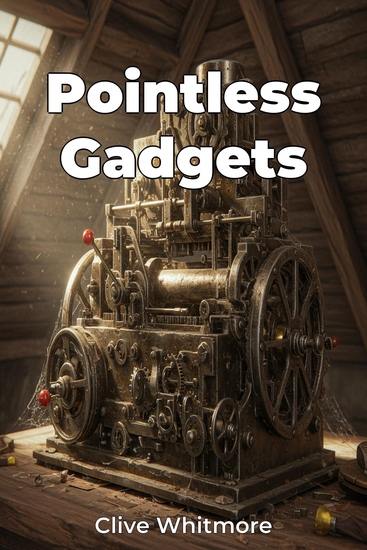
Pointless Gadgets - cover

Pointless Gadgets

Clive Whitmore

Traductor A AI

Editorial: Publifye

  • 0
  • 0
  • 0

Sinopsis

Pointless Gadgets explores the fascinating history of technological misfires, inventions that, despite good intentions, failed to gain traction. The book delves into why certain gadgets became obsolete, not necessarily due to technical flaws, but often because they addressed nonexistent needs. It highlights how the over-complication of simple tasks and prioritizing novelty over practicality often led to innovation failures. For example, some 19th-century inventions, while ingenious, lacked market demand, illustrating that consumer behavior and social context are crucial for success. The book adopts a narrative non-fiction style, examining various case studies from the 19th and 20th centuries.

 
It progresses by first introducing the concept of "pointless gadgets" and then analyzing examples of over-engineered devices and impractical household items. By examining historical records, patent filings, and advertisements, the book draws lessons for future innovators and discusses the broader implications of technological obsolescence.

 
Ultimately, Pointless Gadgets challenges the assumption that technological progress is inherently positive, emphasizing the need for thoughtful consideration of usability and market realities.
Disponible desde: 29/03/2025.
Longitud de impresión: 70 páginas.

Otros libros que te pueden interesar

  • YOUR PASSPORT TO HMT - 3 pillars of great life - cover

    YOUR PASSPORT TO HMT - 3 pillars...

    PRAKASH SHAH

    • 0
    • 0
    • 0
    If you are a parent or a grandparent who finds it difficult to convince your child or grandchild, the IMPORTANCE OF EDUCATION AND SKILLS, this book will easily do the job for you. It helps to get STUDENT'S LIFE, STUDENT'S PERFORMANCE AND GPA better: This is a book THAT MAKES THE JOB OF STUDENTS, PARENTS AS WELL AS TEACHERS MIGHTY EASY. It will give directions to students right in their formative years and will not let them get off track. Each chapter in the book opens a new dimension, a new perspective, which we are usually oblivious to. It is motivational, inspirational and great for overall development. It's worth the time. The results could be fascinating. Every student, every parent, every teacher... if they read this book once will want to read it over and over again. This can be the 'go-to' book for students whenever they get distracted from what they want to achieve in life. Even if the student does not himself or herself read it but the parents did, they can surely give wonderful, life-changing perspectives to their kids. One of the best self help books which is capable to give a dream life to a student.
    Ver libro
  • Apartheid - Racial Segregation in South Africa - cover

    Apartheid - Racial Segregation...

    50 50minutes

    • 0
    • 0
    • 0
    Keen to learn but short on time? Get to grips with the history of apartheid in next to no time with this concise guide.50Minutes.com provides a clear and engaging analysis of apartheid in South Africa. For over 40 years, South Africa maintained a white supremacist regime which denied black citizens the same rights and opportunities as their white counterparts. The regime, which was established and maintained by a series of laws codifying racial segregation, attracted international condemnation and determined opposition from activists, including Nelson Mandela. Apartheid was finally dismantled in 1991, but had lasting effects on South African politics and society.In just 50 minutes you will:• Learn about the laws implemented during apartheid to enforce racial segregation• Identify the most influential figures and central events of the apartheid period• Analyse the immediate impact and long-term consequences of apartheid, both in South Africa and abroadABOUT 50MINUTES.COM|History & Culture50MINUTES.COM will enable you to quickly understand the main events, people, conflicts and discoveries from world history that have shaped the world we live in today. Our publications present the key information on a wide variety of topics in a quick and accessible way that is guaranteed to save you time on your journey of discovery.
    Ver libro
  • Outlines of Pyrrhonism - cover

    Outlines of Pyrrhonism

    Sextus Empiricus

    • 0
    • 0
    • 0
    Throughout history philosophers have sought to define, understand, and delineate concepts important to human well-being. One such concept is knowledge. Many philosophers believed that absolute, certain knowledge, is possible—that the physical world and ideas formulated about it could be given solid foundation unaffected by the varieties of mere opinion. 
     
    Sextus Empiricus stands as an example of the skeptic school of thought whose members believed that knowledge was either unattainable or, if a genuine possibility, the conditions necessary to achieve it were next to impossible to satisfy. In other words, in the absence of complete knowledge, one must make do with the information provided by an imperfect world and conveyed to the mind through sense impressions that can often deceive us. Throughout his life Sextus Empiricus entered into intellectual combat with those who confidently claimed to possess indubitable knowledge. For skeptics, the best one can hope to achieve is a reasonable suspension of judgment—remaining ever mindful that claims to knowledge require careful scrutiny, thoughtful analysis, and critical review if we are to prevent ourselves and others from plunging headlong into mistaken notions.
    Ver libro
  • On the Motion of Animals - cover

    On the Motion of Animals

    Aristotle

    • 0
    • 0
    • 0
    "On the Motion of Animals" is a scientific work by Aristotle that explores the principles of motion in living beings. In this treatise, Aristotle observes and analyzes the movements of various animals, from insects to humans, in order to understand the mechanics of motion and the physiological and psychological factors that drive it. Aristotle begins by examining the different types of motion, including natural, violent, and voluntary, and how they relate to the movements of animals. He then delves into the anatomy and physiology of different animals, looking at their skeletal structures, muscular systems, and nervous systems, and how they work together to produce motion. Read in English, unabridged.
    Ver libro
  • Of Mice and Men by John Steinbeck (Book Analysis) - Detailed Summary Analysis and Reading Guide - cover

    Of Mice and Men by John...

    Bright Summaries

    • 0
    • 0
    • 0
    Unlock the more straightforward side of Of Mice and Men with this concise and insightful summary and analysis!This engaging summary presents an analysis of Of Mice and Men by John Steinbeck, which follows two ranch workers, George and Lennie, as they look for work in California during the Great Depression. Like many of their contemporaries, they dream of earning enough to buy their own farm and living a peaceful, independent life, but they soon find that the deck is stacked against them and that even the most well-intentioned actions can have tragic consequences. Of Mice and Men is arguably Steinbeck's most popular book, and has inspired numerous adaptations across a range of mediums. Steinbeck is best-known for chronicling the hardship faced by itinerant workers in his native California, and was awarded the Nobel Prize in Literature in 1962 "for his realistic and imaginative writings, combining […] sympathetic humour and keen social perception".Find out everything you need to know about Of Mice and Men in a fraction of the time!This in-depth and informative reading guide brings you:• A complete plot summary• Character studies• Key themes and symbols• Questions for further reflectionWhy choose BrightSummaries.com?Available in print and digital format, our publications are designed to accompany you on your reading journey. The clear and concise style makes for easy understanding, providing the perfect opportunity to improve your literary knowledge in no time.See the very best of literature in a whole new light with BrightSummaries.com!
    Ver libro
  • Ancient Rome’s Provinces: The History of the Foreign Lands Ruled by the Roman Empire in Antiquity - cover

    Ancient Rome’s Provinces: The...

    Editors Charles River

    • 0
    • 0
    • 0
    It can be argued that Roman culture was, indeed, Graeco-Roman rather than Roman. It was the Greek language that served as the lingua franca in the Eastern Empire and much of the west including Italy. Many Greek intellectuals, including Galen, were based in Rome and the Roman aristocracy more and more came to embrace Greek literature and philosophy. Homer’s epics inspired Virgil’s Aeneid and Seneca wrote in Greek. Earlier, Scipio Africanus (236 – 183 B.C.), the epitome of the Roman martial hero, studied Greek philosophy and regarded Greek culture as the benchmark against which all others had to be judged. The Roman poet and philosopher Horace studied in Athens during the Principate and, in common with many of his class, saw that city as the intellectual centre of the world. 
    In the minds of most people today, Gaul equates to modern France. However, the vast geographical area that Caesar named Gaul, in fact, was made up of a number of very distinct regions and covered, in addition to modern-day France, Belgium, Luxembourg, parts of the Netherlands, Germany, Switzerland and Northern Italy. The Romans called the northern area of the Italian peninsula, which is now part of modern Italy, Cisalpine Gaul, or Gaul on this side of the Alps. Early Romans did not even consider this region as part of Italy and repeated incursions southwards, and the sacking of Rome itself in 390 B.C., resulted in Rome taking full control of the area in 221 B.C. and thoroughly Romanizing it to the extent that even the Celtic language totally disappeared and was replaced by Latin. The region was initially a province but by the beginning of the 1st century B.C., it had become fully integrated into the Roman heartland and became an administrative region of Italy rather than a province. 
    Ver libro