¡Acompáñanos a viajar por el mundo de los libros!
Añadir este libro a la estantería
Grey
Escribe un nuevo comentario Default profile 50px
Grey
Suscríbete para leer el libro completo o lee las primeras páginas gratis.
All characters reduced
The Philanthropist Handbook - Finding Meaning in the Endowment of Humanity - cover

The Philanthropist Handbook - Finding Meaning in the Endowment of Humanity

Clay M. Grayson

Editorial: Advantage Media Group

  • 0
  • 0
  • 0

Sinopsis

The Philanthropist Handbook: Finding Meaning in the Endowment of Humanity by Clay M. Grayson is a guide for those who wish to leave a lasting legacy through planned giving. Over the next twenty years, the Baby Boomer generation is expected to donate $12 trillion to nonprofits. With 80 percent of this giving expected to be made through their estate planning, this transfer of wealth to nonprofit organizations will transform American society in amazingly positive ways. Clay, a distinguished attorney in nonprofit law, shares his experience representing some of the largest and oldest nonprofit organizations in the United States to guide readers through the transformative power of charitable giving.The book is divided into four parts, covering the historical role of philanthropy, the disciplines necessary for effective charitable giving, the evaluation of nonprofit organizations, and the creation of a personal philanthropic plan. Readers will find practical tools, detailed case studies, and actionable advice to maximize the impact of their giving.By following the guidance in this handbook, you can learn to build trust-based relationships with nonprofits, understand the legal and financial aspects of charitable giving, and find your place in the continuum of human experience as a philanthropist in your own right. Ideal for donors, nonprofit professionals, and volunteers, The Philanthropist Handbook is an essential resource for anyone looking to make an enduring impact in this world. Embrace the power of charitable giving and transform your philanthropic vision into reality.
Disponible desde: 29/10/2024.
Longitud de impresión: 238 páginas.
Otros libros que te pueden interesar

  • The Emotional Craft of Fiction - Evoking Emotion and Empathy in Your Writing - cover

    The Emotional Craft of Fiction -...

    Lou Franzen

    • 0
    • 0
    • 0
    The Emotional Craft of Fiction: Evoking Emotion and Empathy in Your WritingStep into the realm of powerful storytelling with "The Emotional Craft of Fiction: Evoking Emotion and Empathy in Your Writing." This audiobook is a profound exploration of the art of infusing your narratives with genuine emotion and connecting with readers on a deeply resonant level.Crafting stories that tug at heartstrings requires more than just words on a page; it demands a keen understanding of the human experience. In this audiobook, we unravel the secrets of creating characters that come alive, evoking empathy and forging powerful emotional connections with your readers.With each chapter, you'll uncover the power of vulnerability, authenticity, and nuance, drawing readers into the heart of your stories and making them feel seen and understood. Whether you're a seasoned wordsmith or an aspiring writer, this audiobook is your guiding light, illuminating the path to crafting emotionally resonant fiction. As you delve into the art of evoking emotion and empathy, you'll witness the transformative power of storytelling that transcends the boundaries of the written word.Join us on this enlightening journey of self-discovery and literary exploration, and embrace the potential of your words to elicit powerful emotional responses in your readers. "The Emotional Craft of Fiction" is your gateway to becoming a masterful storyteller who touches the hearts and minds of those who embark on the emotional journeys you create.
    Ver libro
  • Medieval Monasticism - Centers of Faith and Learning - cover

    Medieval Monasticism - Centers...

    Harris Ropes

    • 0
    • 0
    • 0
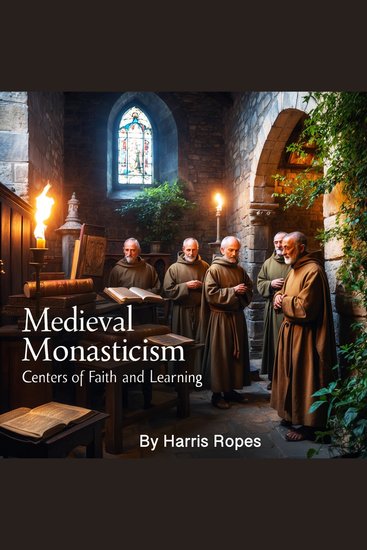
    Monasticism, as a religious way of life, emerged from the desire for spiritual purity and devotion. Its origins can be traced to the early centuries of Christianity, when individuals sought solitude and asceticism to deepen their faith. These early monks and hermits withdrew from the distractions of society, dedicating themselves to prayer, fasting, and contemplation. Their practices laid the foundation for organized monastic communities that would later shape religious life in medieval Europe. 
    Christian asceticism had its roots in the teachings of Jesus and the apostles, who emphasized humility, self-denial, and devotion to God. In the first few centuries after Christ, some Christians chose to live apart from society, embracing a life of solitude in the deserts of Egypt, Syria, and Palestine. Among the most influential of these early ascetics were the Desert Fathers, such as Anthony the Great, who became a model for monastic life. These individuals practiced extreme self-discipline, often enduring harsh conditions to strengthen their spiritual resolve. Their writings and teachings inspired many others to follow their example, leading to the formation of small groups of hermits living near one another. 
    Over time, these solitary ascetics began to form more structured communities. One of the key figures in this transition was Pachomius, an Egyptian monk who, in the fourth century, established one of the earliest known monastic rules. His guidelines emphasized communal living, regular prayer, and shared labor. Unlike the isolated lifestyle of the early hermits, Pachomian monasteries promoted a balance between solitude and community, setting a precedent for later monastic traditions. This model of coenobitic monasticism—where monks lived together under a common rule—spread throughout the Christian world, influencing later monastic developments.
    Ver libro
  • The Confessions of St Augustine - cover

    The Confessions of St Augustine

    Bishop of Hippo St. Augustine,...

    • 0
    • 0
    • 0
    Embark on a profound journey through the struggles and revelations of one of Christianity's most influential figures with Confessions by Augustine of Hippo. This masterful autobiography transcends the mere recounting of Augustine's early life of sin and his pivotal conversion to Christianity, offering readers a timeless meditation on the human condition, the power of faith, and the quest for understanding and truth.  
    Confessions stands as a cornerstone in Western literature and theological thought, profoundly impacting not just Christian theology but also philosophy and the broader human search for meaning. Written with unparalleled eloquence, Augustine's introspective exploration of his own life serves as a mirror reflecting universal truths about the trials and transformations that define the human experience.  
    Through his candid narrative, Augustine embarks on a philosophical inquiry into memory, time, and the nature of God, making Confessions not just a tale of personal redemption but also a compelling discourse on the essence of existence itself. This book invites readers into a deep contemplation of their own spiritual journey, encouraging a reflective exploration of faith, the complexities of the human psyche, and the pursuit of inner peace. 
    Discover why luminaries across centuries have drawn inspiration from Augustine's insights. Confessions promises not just a story of conversion but a profound engagement with the mysteries of life—a literary and spiritual odyssey that continues to resonate with readers seeking wisdom and solace in their own lives. 
    This audiobook was narrated and produced by RAM Studios, where humans and artificial intelligence collaborate to create an excellent listening experience. (The reading is done primarily by AI)
    Ver libro
  • The American Dream - A History of the Nation's Ideals - cover

    The American Dream - A History...

    Harry Montgomery

    • 0
    • 0
    • 0
    The roots of the American Dream reach back to the earliest colonial settlements, when European settlers arrived with hopes of building a better life far from the constraints of their homelands. For many, the New World offered something previously unimaginable—land ownership, religious freedom, and the possibility of rising above the station into which they were born. These opportunities, though limited to a select group at the time, laid the foundation for the evolving idea that anyone could succeed through hard work and determination. In this fertile but dangerous land, ambition was a necessity, and the early colonists began to shape a cultural identity around individualism and perseverance. 
    As the colonies grew and developed, tensions with Britain intensified, giving rise to revolutionary ideas that would further fuel the American Dream. The rejection of monarchy and the assertion of natural rights became central to the vision of a new nation. The Revolution itself was not just a fight for independence but also a declaration that ordinary people had the right to govern themselves. The rhetoric of the time emphasized liberty, equality, and the pursuit of happiness—concepts that would become permanently embedded in the national consciousness. The struggle to gain freedom was brutal and uneven, but the ideals expressed during this time continued to inspire generations to believe in the possibility of social mobility and personal fulfillment. 
    One of the most significant documents in American history, the Declaration of Independence, formalized the promise of the American Dream. Its bold claim that "all men are created equal" introduced a national aspiration that transcended the immediate political conflict. Although in practice this equality was far from realized, the statement set a powerful ideal against which future Americans would measure their progress.
    Ver libro
  • Circus Maximus and the Colosseum The: The History of Ancient Rome’s Most Famous Sports Venues - cover

    Circus Maximus and the Colosseum...

    Editors Charles River

    • 0
    • 0
    • 0
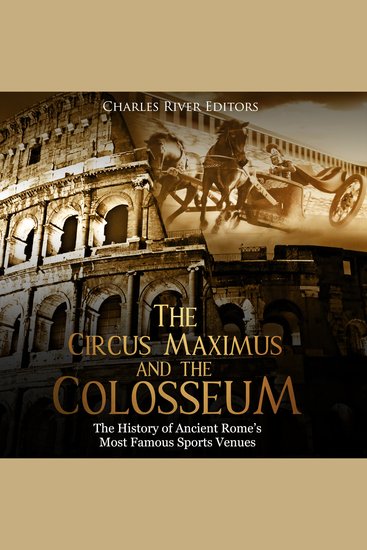
    The ambitious and fearless emperors that built the legendary Roman Empire from scratch, the broad-shouldered and bronzed gladiators with their iconic plume helmets and glinting swords, and elaborate parties attended by toga-wearing Romans fueled by alcohol, violence, orgies, and other godless acts all paint a picture of Roman life. 
    At the Circus Maximus, the guttural cheers of the spectators reverberated across the enormous open space, but their cries could hardly be heard over the rumble of the ground. On the ellipse-shaped track, 5 charioteers would skew their bodies and steer their magnificent vehicles around the curves. Gusts of sand and dirt flew up from the whizzing wheels and encircled the pounding hooves of the stunning stallions. Distracted personnel and guards dragging their feet were considered fair game. As one chariot careened to the side, preparing to collide with another chariot, a row of guards might have to try to duck out of the way in the nick of time. Some would be trampled by hooves. Chariot races were dangerous for participants too. A charioteer could become disoriented and fail to position himself as his horses moved instinctively, sending his body catapulting forward out of the chariot. Needless to say, chariot racing in Rome was a nail-biting spectacle. 
    When the Colosseum was built in the late 1st century A.D., the Romans, a people known for their architectural acumen, managed to amaze themselves. Martial believed the Colosseum was so grand a monument that it was even greater than the other Wonders of the Ancient World, which had been written about and visited endlessly by the Romans and Greeks in antiquity. The Colosseum was a spectacular achievement in architecture, something new and innovative, and therefore an amazing “Wonder” in its own way. The Colosseum is a large stadium even by today’s standards, and its great size conveys the power of the empire as it dominates the landscape and towers over nearby buildings.
    Ver libro
  • Human Being - cover

    Human Being

    Ashkan Tashvir

    • 0
    • 0
    • 0
    What if you could dive deeply within and understand why you interpret the world the way you do and behave a certain way in different situations? What if you could see, with vivid clarity, the unpolished aspects of someone’s character when making critical decisions involving them? Imagine the difference this would make when choosing your life partner, business partner, next employee, future employer or governing leaders. 
    In HUMAN BEING – illuminating the reality beneath the facade, Ashkan Tashvir supports you to adopt an ontological (‘let’s get real’) approach to understanding human beings – yourself and others. It follows his best-selling book, BEING, in which he deeply examines a radical paradigm he engineered after a decade of intensive studies called the Being Framework™ and the philosophy behind it. Explored in this book in a clear, tangible way, the Being Framework zooms in on, breaks down and articulates the qualities behind and drivers of our decisions, behaviours and actions. 
    Whether you are building a career, a startup, a family, a relationship or an organisation, this book provides you with the tools to identify and transform the elusive root causes behind the blockages holding you back and gives you a lens to observe the same in others. Ultimately, it supports you to prioritise your intentions, express your authentic self, enjoy successful relationships and lead a life of influence, well-being and fulfilment. Discover how to see through your and others’ Being by decoding the fundamental qualities that influence our behaviours and decisions and drive our results.
    Ver libro