Junte-se a nós em uma viagem ao mundo dos livros!
Adicionar este livro à prateleira
Grey
Deixe um novo comentário Default profile 50px
Grey
Assine para ler o livro completo ou leia as primeiras páginas de graça!
All characters reduced
Best Places to Live as a Digital Nomad in 2025 - Micro Book - Special Series - cover
LER

Best Places to Live as a Digital Nomad in 2025 - Micro Book - Special Series

Ciro Irmici

Editora: Ciro Irmici

  • 0
  • 0
  • 0

Sinopse

Unlock the ultimate guide to living and thriving as a digital nomad with Best Places to Live as a Digital Nomad in 2025. This book takes you through ten carefully chosen cities that offer the perfect blend of community, affordability, infrastructure, and lifestyle for remote workers.

Whether you’re dreaming of Bali’s serene beaches, Dubai’s luxurious business hubs, or the cultural pulse of Mexico City, each chapter provides a deep dive into what makes each location ideal, including the cost of living, local culture, coworking options, and practical visa insights.

Written with a friendly, informative tone, this guide is designed to empower you to make informed decisions and find the destination that aligns with your goals and lifestyle. Discover how to balance work with adventure, productivity with cultural immersion, and independence with a sense of belonging. Perfect for anyone curious about the digital nomad lifestyle or looking to redefine their approach to work and travel.

Embrace freedom, flexibility, and a lifestyle that’s truly your own with insights into the best places to live, work, and grow as a digital nomad in 2025.
Disponível desde: 02/12/2024.
Comprimento de impressão: 83 páginas.

Outros livros que poderiam interessá-lo

  • Once Upon a Villa - Adventures on the French Riviera - cover

    Once Upon a Villa - Adventures...

    Andrew Kaplan

    • 0
    • 0
    • 0
    In this wise, warm-hearted, witty, and LOL hilariously funny true account, New York Times bestselling author Andrew Kaplan tells what it’s like when he, his wife, and two-year-old son decided to chuck it all and live the fantasy in a villa by the sea in that extraordinary corner of the world – part international café society, part billionaires’ playground, part provincial France – that is the French Riviera. 
    Whether it’s matching wits with French bureaucracy, searching for the perfect bouillabaisse, encounters with con men, eccentric ex-pats, and Monaco’s royal family, partying with the international set on Onassis’ yacht, playing chess with a philosophical police chief, or adventures and friendships with the rich and famous and the presumably standoffish French, Once Upon a Villa will transport you to a fascinating and shrewdly-observed world that you will savor like your first-morning bite of pain au chocolate. 
    So pour yourself a glass of wine, open the book, and Santé!
    Ver livro
  • Economic Crises in Argentina - A Historical Perspective - cover

    Economic Crises in Argentina - A...

    Anya Solace

    • 0
    • 0
    • 0
    Argentina's economic history is a complex and dynamic narrative marked by periods of growth, instability, and deep financial crises. Understanding the evolution of Argentina’s economy requires an examination of its historical context, social dynamics, and key events that have shaped its economic trajectory. From its colonial beginnings to its role in the global economy today, Argentina's economy has been influenced by various internal and external factors, ranging from agricultural production and international trade to political movements and international debt. 
    At the time of its independence in 1816, Argentina had a relatively underdeveloped economy, largely reliant on agriculture, particularly the production of beef and grain. The country’s early economic struggles were compounded by frequent political instability and power struggles, which hindered the development of a cohesive economic strategy. The 19th century witnessed Argentina's agricultural sector become a central pillar of its economy, with exports to Europe fueling growth. However, the country faced several economic setbacks, including trade imbalances, debt accumulation, and conflicts over territorial disputes. 
    The 20th century brought about significant shifts in Argentina’s economic landscape. The country experienced a wave of industrialization, which was supported by government policies aimed at reducing dependency on foreign markets. However, despite periods of prosperity, Argentina’s economy remained vulnerable to global economic trends and the volatility of international trade. The early decades of the 20th century saw periods of rapid growth alongside recurring recessions, and in the mid-1900s, Argentina began experiencing the first of many major economic crises.
    Ver livro
  • The Rosetta Stone - Key to Unlocking Ancient Egyptian Writing - cover

    The Rosetta Stone - Key to...

    Omar Khalil

    • 0
    • 0
    • 0
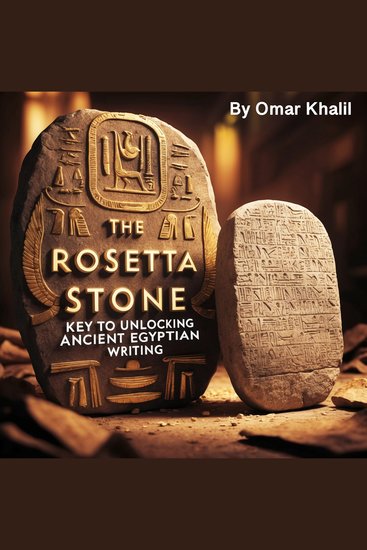
    The discovery of the Rosetta Stone in 1799 was a momentous event in the history of archaeology and linguistics. The stone, a large slab of granodiorite, was found by a French soldier named Pierre-François Bouchard during Napoleon Bonaparte’s military campaign in Egypt. While working near the town of Rashid (or Rosetta), Bouchard uncovered the stone, which contained an inscription in three different scripts: Ancient Greek, Egyptian hieroglyphs, and Demotic. At the time, Egypt was under French control, and the discovery was initially made by a team of French engineers working on fortifications. 
    The significance of the stone would not be immediately apparent, as the study of hieroglyphs had long been a mystery to scholars. Despite attempts by earlier scholars, no one had yet succeeded in translating the ancient Egyptian script, leaving a vast portion of Egypt’s history locked away. The discovery of the Rosetta Stone, however, offered a potential breakthrough due to its trilingual inscription, which allowed for comparison between the known Greek text and the two unknown Egyptian scripts. 
    The stone’s inscription itself was a royal decree issued in 196 BCE by the Egyptian priests in honor of King Ptolemy V Epiphanes. It celebrated his reign and the various accomplishments he had achieved, including his efforts to maintain peace and the prosperity of Egypt. The decree was written in three scripts to ensure it would be understood by various segments of society—the Greek script for the Greek-speaking rulers and officials, the Demotic script for the common Egyptian people, and the hieroglyphic script for the priests and religious authorities.
    Ver livro
  • Oz Clarke’s Story of Wine: 8000 Years 100 Bottles - cover

    Oz Clarke’s Story of Wine: 8000...

    Oz Clarke

    • 0
    • 0
    • 0
    Uncork a whole new take on the fascinating story of wine, captivatingly told by everyone’s favourite wine expert Oz Clarke.  
    This fully updated edition takes us through the riveting twists and turns of the history of winemaking all the way to the very latest trials and innovations of the present day… 
    Join Oz Clarke on a journey through the ages as he explores the places, the people and the bottles that have shaped the captivating history of wine. 
    Starting from the probable birth of a wine culture in ancient Georgia, Oz travels from 6000 BC through the fact and fiction of Persia, Egypt, Greece and Rome, and then along the winding trail right up to the latest innovations in winemaking today. 
    Packed with sparkling wit and charismatic storytelling, Oz shares more than a hundred fascinating tales and woven into these are probably a hundred more. From revered medieval monks to revolutionary discoveries, Oz paints a wonderfully vivid picture of the ever-evolving story of wine. 
    The book is a non-fiction masterpiece, taking readers on a road trip through the world of beverages. It's a top pick for those interested in cooking, antiques, and collectibles, especially those related to alcoholic drinks. 
    For fans of Hugh Johnson (Hugh Johnson on Wine), Madeline Puckette (Wine Folly), Henry Jeffreys (The Cocktail Dictionary), Jamie Goode (The Goode Guide to Wine), and Stephen Skelton (Vine Varieties, Clones and Rootstocks for UK Vineyards 2nd Ed.). 
    HarperCollins 2023
    Ver livro
  • Mexico's Economic History - From Aztec Empire to Modern State - cover

    Mexico's Economic History - From...

    Anya Solace

    • 0
    • 0
    • 0
    Mexico’s economic history is a fascinating journey shaped by diverse influences, from the ancient Aztec empire to the complexities of the modern global economy. Over the centuries, Mexico has experienced dramatic transformations, driven by conquests, colonial rule, revolutions, and economic policies that have defined its growth and challenges. Understanding the evolution of Mexico’s economy requires examining its foundations, the role of geography and natural resources, and the early trade networks that set the stage for future economic systems.  
    The foundations of Mexico’s economy date back to the indigenous civilizations that thrived long before the Spanish conquest. The Aztecs, in particular, established a sophisticated economic system based on agriculture, trade, and tribute collection. Markets flourished in major cities like Tenochtitlán, where goods from across Mesoamerica were exchanged. The Aztec economy was not just a local system but a well-organized network that connected distant regions, allowing the movement of resources such as cacao, textiles, and obsidian. This structure provided a strong economic base, but it also made the region vulnerable to external forces, particularly the arrival of the Spanish.  
    Geography and natural resources have played a crucial role in shaping Mexico’s economic development. The country’s vast landscapes include fertile valleys, mineral-rich mountains, and long coastlines, all of which have influenced economic activities throughout history. The presence of silver, for example, turned Mexico into one of the most important centers of global trade during the colonial period. However, while natural resources have been a source of wealth, they have also led to economic dependency and external exploitation, shaping Mexico’s economic struggles even in modern times. 
    Ver livro
  • Imperial China - Foundations of a Great Civilization (3 in 1) - cover

    Imperial China - Foundations of...

    Jun Liu

    • 0
    • 0
    • 0
    This book offers an in-depth exploration of three of the most influential dynasties in Chinese history: the Han, Qin, and Tang Dynasties. This book delves into the powerful legacies of these dynasties, each of which shaped China’s cultural, political, and social development in profound ways. The Qin Dynasty, under the leadership of Emperor Qin Shi Huang, is known for unifying China and initiating monumental infrastructure projects such as the Great Wall and the Terracotta Army. The Han Dynasty, a golden age in Chinese history, expanded China’s borders, solidified Confucian ideals, and fostered the flourishing of trade along the Silk Road. Finally, the Tang Dynasty, often regarded as the most prosperous period in China’s imperial history, saw significant advancements in arts, culture, and governance. 
    In the Qin Dynasty, China was unified for the first time under a single ruler, marking the beginning of imperial rule. Emperor Qin’s centralization of power, creation of a standardized legal system, and the construction of defensive walls set the stage for the future of Chinese civilization. Although short-lived, the Qin Dynasty’s impact on Chinese governance and infrastructure would echo through the centuries.  
    Meanwhile, the Han Dynasty succeeded the Qin, ushering in an era of stability, economic prosperity, and cultural development. The Han established a strong bureaucracy and military, advanced in science and technology, and integrated Confucianism as the official philosophy, influencing Chinese society for over two millennia. 
    The Tang Dynasty, which followed the collapse of the Sui Dynasty, is celebrated for its cultural achievements, including the flourishing of poetry, painting, and literature. The Tang Empire expanded China's territory to its greatest extent, and its cosmopolitan capital, Chang'an, became a vibrant hub for international trade and cultural exchange.
    Ver livro