Join us on a literary world trip!
Add this book to bookshelf
Grey
Write a new comment Default profile 50px
Grey
Subscribe to read the full book or read the first pages for free!
All characters reduced
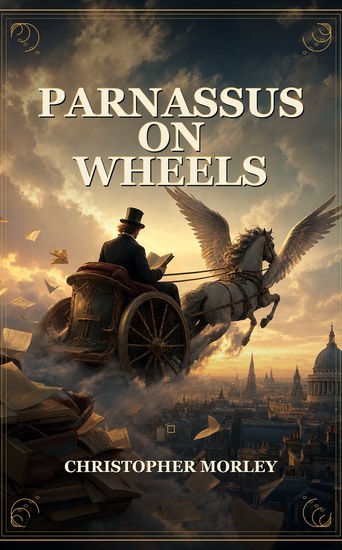
Parnassus On Wheels - cover

Parnassus On Wheels

Christopher Morley

Publisher: Caelwick Press

  • 0
  • 0
  • 0

Summary

Parnassus on Wheels is Christopher Morley's first novel, and the first of two written from a woman's perspective, the second being The Haunted Bookshop , this book's sequel. Parnassus on Wheels was inspired by a novel by David Grayson (pseudonym of Ray Stannard Baker) called The Friendly Road , and is prefaced by a letter to Grayson from Morley. The word "Parnassus" from the title refers to "Mount Parnassus," the home of the Muses in Greek mythology. The protagonist is 39-year-old Helen McGill, who lives on a farm owned by her brother Andrew. The book's Parnassus is a large, horse-drawn van owned by Roger Mifflin, out of which he buys and sells books while traveling around the New England countryside. Mifflin arrives at the McGill farm, looking to sell the business to someone interested in the noble cause of spreading literature to the common man. Helen is at first turned off by Mr. Mifflin, but decides on a whim that an escape from her dreadful farm—and her insufferable brother Andrew—is just what she needs. She buys the Parnassus, and embarks on exactly the type of adventure she had hoped for. Christopher Morley (died 1957) was an influential writer of the modernist period. Their work has endured across generations and continues to be read and studied worldwide. As a work of classic literary fiction, Parnassus On Wheels exemplifies the narrative craft and social insight that defined great storytelling of its era. Literary fiction of this period was characterized by careful attention to character psychology, social milieu, and the moral questions that animated public discourse.
Available since: 05/19/2026.
Print length: 119 pages.

Other books that might interest you

  • The Little Governess - cover

    The Little Governess

    Katherine Mansfield

    • 0
    • 0
    • 0
    "The Little Governess" is a 1915 short story by Katherine Mansfield. It was first published in Signature on 18 October 1915 under the pen name of Matilda Berry, and later reprinted in Bliss and Other Stories. The text is written in the modernist mode, without a set structure, and with many shifts in the narrative.
    After receiving advice from the lady at the Governess Bureau, a young and naive English governess (referred to throughout as "the little governess") is off on the train from France to Munich, from where she will go to a new house for work. The governess has never been abroad before, and is duly forewarned of the dangers by the lady at the Governess Bureau, who tells her to "mistrust people at first". She is harassed by a porter on the way to her train, and once aboard, by a group of rowdy French men.
    Show book
  • Roderick Hudson - cover

    Roderick Hudson

    Henry James

    • 0
    • 0
    • 0
    A rich patron brings a brilliant young American sculptor to Rome to make him great, and watches him instead discover women, idleness and his own limits. James's first real novel, written at thirty-two, invents the subject he would work for forty years: the American of talent set loose in Europe with no idea what it costs.
    Show book
  • Rupert of Hentzau - cover

    Rupert of Hentzau

    Anthony Hope

    • 0
    • 0
    • 0
    ’Rupert of Hentzau’ (1898) picks up three years after ‘The Prisoner of Zenda’ ended with Rudolf Rassendyll sadly leaving behind his love, Queen Flavia. Now unhappily married, Flavia writes Rassendyll to reconcile, but the letter is stolen and before long, Rassendyll once again finds himself forced to impersonate the king. Only this time, the ploy promises to leave behind several fatalities.A decidedly darker sequel, this novel once again asks the question, Duty or love? And the answer might surprise you. The dashing villain, Rupert of Hentzau, has been portrayed on screen by many popular Hollywood actors throughout the years, among these Ramon Novarro (1922), Douglas Fairbanks, Jr. (1937) and James Mason (1952).Anthony Hope (1863-1933) was an English novelist and playwright, known for his adventure novel ‘The Prisoner of Zenda’, the first draft of which he wrote in just one month, and its sequel ‘Rupert of Hentzau’. Hope had trained as a lawyer and barrister and completed the final stage of his education under the future Prime Minister, H. H. Asquith, but ultimately chose writing as his profession.
    Show book
  • The Victor Hugo Collection - cover

    The Victor Hugo Collection

    Victor Hugo

    • 0
    • 0
    • 0
    A magnificent collection of literary masterpieces from one of France's greatest writers.
    
    This anthology gathers Victor Hugo's most celebrated novels and writings, exploring themes of justice, compassion, redemption, revolution, and the triumph of the human spirit. Through unforgettable characters and powerful storytelling, Hugo created works that continue to inspire readers worldwide.
    
    Written by Victor Hugo, this collection stands as a timeless monument to literary excellence.
    Show book
  • The Walk of a Queen - cover

    The Walk of a Queen

    Annie M. P. Smithson

    • 1
    • 0
    • 0
    Intrigue, espionage, and romance collide in this gripping historical mystery set during the Irish struggle for independence at the turn of the 20th century.
    
    As underground revolutionaries in Dublin fight against British rule, Geraldine Moore and her spirited friend Jill find themselves caught in a dangerous game of love and loyalty. When a mysterious French woman arrives in their circle, her presence threatens their revolutionary cell and their closest relationships. As British forces tighten their grip on Dublin, Geraldine finds herself torn between her dedication to the cause and her growing feelings for the enigmatic Dr O'Connor. Meanwhile, her comrades Anthony and Desmond face a test of their brotherhood that could lead to the ultimate sacrifice. Through shocking twists and heartbreaking turns, Geraldine and Jill must fight to expose a traitor and secure freedom for both their cause and their loved ones.
    
    A penetrating look at a pivotal time in Irish history, The Walk of a Queen seamlessly weaves friendship, faith and romance with a propulsive espionage plot. Meticulously researched and breathlessly paced, this classic novel is perfect for fans of historical thrillers and anyone fascinated by the untold stories of Ireland's battle for freedom.
    Show book
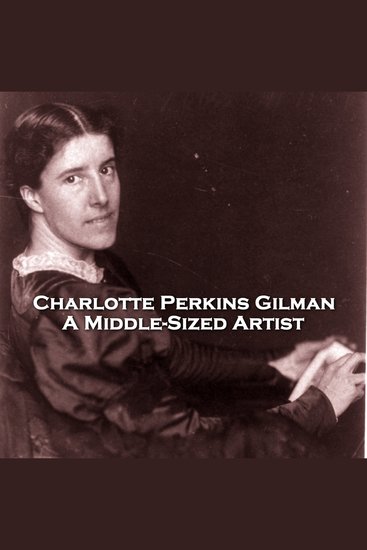
  • A Middle-Sized Artist - From their pens to your ears genius in every story - cover

    A Middle-Sized Artist - From...

    Charlotte Perkins Gilman

    • 0
    • 0
    • 0
    Charlotte Perkins Gilman was born on 3rd July 1860 in Hartford, Connecticut, to an unaffectionate mother and a father who abandoned her and her older brother to a life of poverty. 
    Inevitably her schooling was limited and by 15 she had attended seven different schools but received only four years education.  However Charlotte was resourceful and did spend time with her father’s aunts – the suffragist Isabella Beecher Hooker and the ‘Uncle Tom Cabin’s’ author, Harriet Beecher Stowe as well as many hours at the public library studying ancient civilisations. 
    In 1878, she enrolled in classes at the Rhode Island School of Design where she met Martha Luther and they developed a close relationship until Luther married in 1881. Charlotte was devastated and detested romance and love until she met and married the artist Charles Walter Stetson.  
    Their only child, Katharine Beecher Stetson, was born in 1885 but left Charlotte with post-natal depression, then often dismissed as a case of hysteria or nerves.  Unsuited to domestic life she ruptured her life and moved to California with Katherine.  She divorced in 1894 and then sent Katharine east to live with her father and his second wife confirming that his paternal rights be acknowledged and that Katherine establish a relationship with her father. 
    After her mother died in 1893, Charlotte moved back east and became involved with her first cousin, Wall Street attorney, Houghton Gilman who she married in 1900. After his death she moved back to California, where Katherine now lived.   
    Her most popular story is ‘The Yellow Wallpaper’ which touched on her own post-partum depression and underlined the need for women to be responsible for their mental and physical well-being, as the narrator is ordered by her husband/doctor to take compete rest in her room where she is isolated and becomes obsessed with the revolting yellow wallpaper.   
    She wrote other notable short stories the best of which we also include.   
    Charlotte lectured widely for social reform, wrote important non-fiction works that questioned our patriarchal system and left a legacy as a leading and positive spokesperson for feminism.  
    She was diagnosed with incurable breast cancer in 1932 and, as she wrote in her suicide note and autobiography, she ‘chose chloroform over cancer’    
    Charlotte Perkins Gilman took her own life on 17th August 1935, aged 75, in Pasadena, California.
    Show book