Rejoignez-nous pour un voyage dans le monde des livres!
Ajouter ce livre à l'électronique
Grey
Ecrivez un nouveau commentaire Default profile 50px
Grey
Abonnez-vous pour lire le livre complet ou lisez les premières pages gratuitement!
All characters reduced
Screw Cap Twists - cover

Screw Cap Twists

Christopher Miller

Traducteur A AI

Maison d'édition: Publifye

  • 0
  • 0
  • 0

Synopsis

Screw Cap Twists explores the fascinating history of the screw cap, transforming this seemingly simple object into a lens for examining industrial innovation and consumer culture. From its humble beginnings in the late 19th century, driven by the need for reliable sealing methods, the screw cap's evolution mirrors broader trends in engineering and materials science. For example, early bottling methods relied on unreliable corks, making the screw cap a revolutionary step forward in preserving goods. 

 
The book examines how advancements in design and materials improved the caps' ability to create secure seals, influencing its adoption across industries from beverages to pharmaceuticals. The book argues that the screw cap symbolizes the ongoing quest for efficiency and convenience in packaging. 

 
Chapters progress chronologically, starting with early closure methods and culminating in the screw cap's continuing relevance. Readers will discover how marketing strategies and economic factors played crucial roles in its widespread adoption, highlighting its cost-effectiveness and convenience. This comprehensive look contextualizes the screw cap within broader historical, social, and economic trends, making it valuable for anyone interested in the history of technology and business innovation.
Disponible depuis: 27/02/2025.
Longueur d'impression: 63 pages.

D'autres livres qui pourraient vous intéresser

  • 20th Century’s Most Influential Artists The: The Lives and Art of Pablo Picasso Salvador Dali Andy Warhol and Jackson Pollock - cover

    20th Century’s Most Influential...

    Editors Charles River

    • 0
    • 0
    • 0
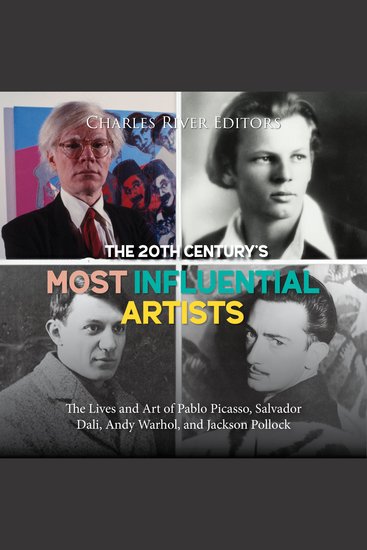
    In their biography of Pablo Picasso, Hans Ludwig and Chris Jaffe note that “for him, art was always adventure: ‘To find is the thing.’” Indeed, there is perhaps no artist who produced more art than Picasso, whose enormous oeuvre (which spanned most of his 91-year life) contained a countless number of paintings and drawings. Picasso also worked in other mediums as well, notably sculpture and lithography, and his constant experimentation with form makes him a useful case study through which to chart the growth of Modernism as an artistic movement and many of the artistic trends that would dominate the 20th century. At the same time, one of the challenges involved in examining Picasso’s body of work is the sheer breadth of it all.  
    	In his review of Salvador Dali’s first autobiography, George Orwell declared that “One ought to be able to hold in one’s head simultaneously the two facts that Dali is a good draughtsman and a disgusting human being.” Whether or not one agrees with the famous author’s assessment, Orwell captures the polarizing nature of Salvador Dali, and the extent to which his undeniable technical virtuosity often brushed against his penchant for provoking his audiences (not to mention provoking long-entrenched standards of “proper” taste).  
    	To truly grasp the significance of Jackson Pollock in 20th century art, it’s necessary to understand the dramatic departure he initiated away from the straightforward compositions associated with the social realist art of the 1930s, a Depression-era period in which political art offered readily comprehensible narratives that were grasped by viewers with little artistic training.  
    Few artists of the 20th century were as enigmatic as Andy Warhol, who once remarked, “If you want to know all about Andy Warhol, just look at the surface of my paintings and films and me, there I am. There’s nothing behind it.” This statement is hardly out of character for the famous artist.
    Voir livre
  • The Prince - cover

    The Prince

    Nicolo Machiavelli

    • 0
    • 0
    • 0
    The Prince by Niccolò Machiavelli is one of the most influential works of political thought ever written. Composed in the early sixteenth century during the turbulent period of the Italian Renaissance, this groundbreaking treatise examines the nature of political power and offers practical advice on leadership, governance, and the realities of ruling a state.
    
    Written as a guide for rulers, the book explores how a leader can gain power, maintain authority, and navigate the complex challenges of governing. Drawing on historical examples from ancient Rome, classical history, and contemporary Italian politics, Machiavelli analyzes the strategies used by successful rulers and the mistakes that have led others to downfall.
    
    At the center of the work is Machiavelli's belief that political leadership requires a clear understanding of human nature, power, and circumstance. He argues that effective rulers must be prepared to act decisively, adapt to changing conditions, and sometimes make difficult or morally complex decisions in order to preserve stability and protect the state.
    
    The book famously discusses the balance between virtù—the qualities of strength, skill, and determination in a ruler—and fortuna, the unpredictable forces of chance that influence political events. According to Machiavelli, a capable leader must learn to manage both, using intelligence and strategic judgment to shape outcomes whenever possible.
    
    Throughout the text, Machiavelli examines different forms of political authority, including hereditary rule, newly acquired territories, and the role of military power in securing and defending a state. His observations emphasize the importance of discipline, strong institutions, and the loyalty of citizens and soldiers.
    
    Although controversial for its candid discussion of political strategy, The Prince has become a foundational work in the study of political science and leadership. Its ideas have influenced generations of thinkers, statesmen, and scholars, sparking ongoing debate about ethics, power, and the responsibilities of leadership.
    
    Clear, direct, and intellectually provocative, The Prince remains a timeless exploration of political realism, leadership, and the complex dynamics of power. More than five centuries after it was written, Machiavelli's insights continue to shape discussions about governance, strategy, and the nature of authority.
    Voir livre
  • Paris Is Not Dead - Surviving Hypergentrification in the City of Light - cover

    Paris Is Not Dead - Surviving...

    Cole Stangler

    • 0
    • 0
    • 0
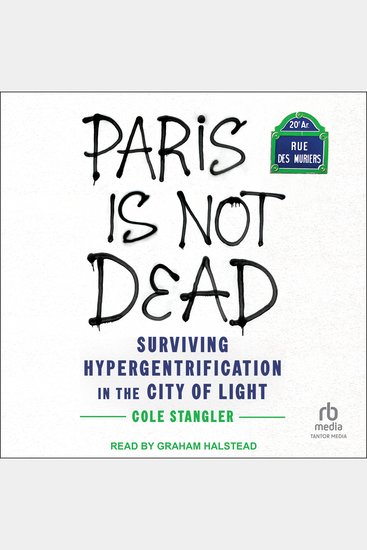
    The Paris of popular imagination is lined with cobblestone streets and stylish cafés, a beacon for fashionistas and well-heeled tourists. But French-American journalist Cole Stangler, celebrated for his reporting on Paris and French politics, argues that the beating heart of the City of Light lies elsewhere—in its striving, working-class districts whose residents are being priced out of their hometown today. 


    Paris Is Not Dead explores the past, present, and future of the City of Light through the lens of class conflict, highlighting the outsized role of immigrants in shaping the city's progressive, cosmopolitan, and open-minded character—at a time when politics nationwide can feel like they're shifting in the opposite direction. This is the Paris many tourists too often miss: immigrant-heavy districts such as the 18th arrondissement, where crowded street markets still define everyday life. Stangler brings this view of the city to life, combining gripping, street-level reportage, stories of today's working-class Parisians, recent history, and a sweeping analysis of the larger forces shaping the city. 


    In the tradition of Lucy Sante and Mike Davis, Paris Is Not Dead offers a bottom-up portrait of one of the world's most vital urban centers—and a call to action to Francophiles and all who care about the future of cities everywhere.
    Voir livre
  • Steppenwolf - cover

    Steppenwolf

    Hermann Hesse

    • 0
    • 0
    • 0
    Steppenwolf by Hermann Hesse is a profound exploration of the human psyche, delving into themes of identity, duality, and existential crisis. The novel follows Harry Haller, a solitary and introspective man who sees himself as divided between his human side and his wild, wolf-like instincts. As he navigates a surreal and mystical journey, Haller confronts the contradictions within himself and the societal norms that alienate him. Blending philosophy, spirituality, and psychological depth, Steppenwolf is a timeless masterpiece that challenges readers to reflect on their own inner struggles and the search for meaning in an ever-changing world.
    Voir livre
  • THINKING Beyond Limits - "Unleash your potential! Dive into captivating audio lessons that elevate your THINKING Beyond Limits experience" - cover

    THINKING Beyond Limits -...

    Orson Vale

    • 0
    • 0
    • 0
    THINKING Beyond Limits 
    A Simplified Guide & Explanations Included 
    Are you eager to advance in your career and enhance your knowledge by successfully understanding the complexities of human decision-making? 
    In search of a comprehensive resource that encompasses all the essential elements needed to navigate this intricate subject? 
    Your quest concludes here! 
    This guide acts as your ultimate ally in deepening your understanding, applying your insights, and engaging in practical exercises. With it, you're set up for success. 
    Updated for the latest insights on human thinking complexities. 
    Key features of this enriched guide include: 
    - In-depth insights into the complexities of human decision-making 
    - Thorough explanations of how human thinking operates 
    - Effective strategies for preparing for decision-making challenges 
    Our guide stands out through its extensive coverage, which is crucial for your understanding. Concepts are explored in depth rather than simply brushed upon. 
    Please note that this guide is an independent resource, having no affiliation with any official entity regarding human decision-making. 
    Crafted with a clear structure and accessible language, our guide ensures seamless transitions between topics. Say goodbye to convoluted terminology and embrace clear, precise, and accurately conveyed content. 
    So, why hesitate? Click the BUY NOW button, secure your guide, and embark on your journey to mastering the complexities of human thinking!
    Voir livre
  • Literature after Feminism - cover

    Literature after Feminism

    Rita Felski

    • 0
    • 0
    • 0
    Recent commentators have portrayed feminist critics as grim-faced ideologues who are destroying the study of literature. Feminists, they claim, reduce art to politics and are hostile to any form of aesthetic pleasure. Literature after Feminism is the first work to comprehensively rebut such caricatures, while also offering a clear-eyed assessment of the relative merits of various feminist approaches to literature.Spelling out her main arguments clearly and succinctly, Rita Felski explains how feminism has changed the ways people read and think about literature. She organizes her book around four key questions: Do women and men read differently? How have feminist critics imagined the female author? What does plot have to do with gender? And what do feminists have to say about the relationship between literary and political value? Interweaving incisive commentary with literary examples, Felski advocates a double critical vision that can do justice to the social and political meanings of literature without dismissing or scanting the aesthetic.
    Voir livre