Junte-se a nós em uma viagem ao mundo dos livros!
Adicionar este livro à prateleira
Grey
Deixe um novo comentário Default profile 50px
Grey
Assine para ler o livro completo ou leia as primeiras páginas de graça!
All characters reduced
Hidden Sea Signals - cover
LER

Hidden Sea Signals

Christopher Miller

Tradutor A AI

Editora: Publifye

  • 0
  • 0
  • 0

Sinopse

Hidden Sea Signals explores the fascinating history and technology of lighthouses, revealing how these beacons served as vital pre-digital communication hubs for maritime navigation and global commerce. Far from being simple structures, lighthouses housed sophisticated systems employing light, fog, and radio signals, all managed by dedicated keepers. The book highlights how the evolution of lighthouse technology, from basic coal fires to advanced Fresnel lenses, dramatically improved signal precision and reliability, crucial for maritime safety.

 
The book progresses by first detailing the technological foundations of lighthouses, then examining the lives and work of the keepers, and finally analyzing case studies of maritime incidents where signaling played a critical role. By drawing on archival records, personal journals, and oral histories, Hidden Sea Signals paints a vivid picture of this bygone era.

 
The book uniquely emphasizes how lighthouse communication formed a sophisticated technological network, essential for maritime safety and global trade, long before modern digital systems.
Disponível desde: 20/02/2025.
Comprimento de impressão: 67 páginas.

Outros livros que poderiam interessá-lo

  • Influence - The Psychology of Persuasion - cover

    Influence - The Psychology of...

    Robert Cialdini

    • 0
    • 0
    • 0
    This work provides a concise synthesis of the key insights and analysis from Influence by Robert Cialdini. It is an independent summary, not the original book, and has no affiliation with or endorsement from the original publication. Created for readers who want a clear, thought-provoking overview, it distills the central themes and ideas while preserving the depth and relevance of the work. 
    A classic study of why people say “yes,” this book explores six universal principles of persuasion—reciprocity, commitment and consistency, social proof, authority, liking, and scarcity. It reveals how these psychological triggers shape decisions, often unconsciously, and how they can be used ethically to guide behavior. At once scientific and practical, it equips readers to recognize when they are being influenced, and to apply the same principles responsibly in sales, leadership, and everyday interactions.
    Ver livro
  • Nations in the Balance - The India-Burma Campaigns December 1943–August 1944 - cover

    Nations in the Balance - The...

    Christopher L. Kolakowski

    • 0
    • 0
    • 0
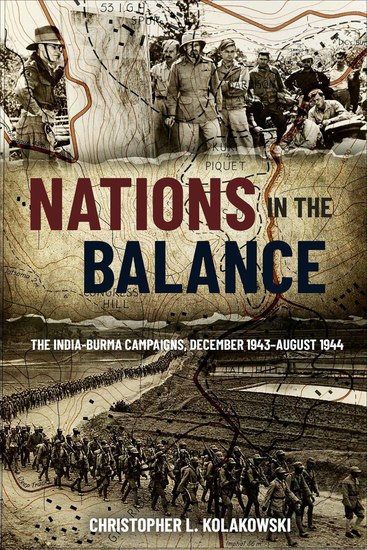
    An account of the decisive WWII battles that helped shape Asia’s future: “Reminds us of the high stakes at risk for both Allies and Axis powers in Burma.” —Military Review   From December 1943 to August 1944, Allied and Japanese forces fought the decisive battles of World War II in Southeast Asia. Fighting centered around North Burma, Imphal, Kohima, and the Arakan, involving troops from all over the world along a battlefront the combined size of Pennsylvania and Ohio. The campaigns brought nations into collision for the highest stakes: British and Indian troops fighting for Empire, the Indo-Japanese forces seeking a prestige victory with an invasion of India and the Americans and Chinese focused on helping China and reopening the Burma Road.   Events turned on the decisions of the principal commanders—Admiral Louis Mountbatten and Generals Joseph Stilwell, William Slim, Orde Wingate, and Mutaguchi Renya, among many others. The impact of the fighting was felt in London, Tokyo, Washington, and other places far away from the battlefront, with effects that presaged postwar political relationships. This was also the first U.S. involvement in Southeast Asia, and Stilwell’s operations in some ways foreshadowed battles in Vietnam two decades later.  Nations in the Balance recounts these battles, offering dramatic and compelling stories of people fighting in difficult conditions against high odds, with far-reaching results. It also shows how they proved important to the postwar future of the participant nations and Asia as a whole, with effects that still reverberate decades after the war.
    Ver livro
  • Woman Stop Overthinking! - How to Stop Overthinking Turn Off Your Intensive & Negative Thoughts Break It Overthinking Habits Start Thinking Posivitely and Recreate a Happy Life - cover

    Woman Stop Overthinking! - How...

    Victoria Nolen

    • 0
    • 0
    • 0
    Are you a woman who tends to overthink things and super-analyze even the smallest details? 
    Is overthinking holding you back from being productive and robbing you of the opportunity to achieve some of your greatest goals? 
    Here’s a book to shine a bright light on why a lot of women overthink, why it hurts people, and how to stop it effectively. This book shares real and powerful techniques for conquering negative thinking and finding real solutions to problems. 
    Being a woman who overthinks everything and spends hours dwelling on negative feelings and experiences is very traumatic as several studies have shown that overthinking leads to serious mental and emotional problems. 
    With this book, you’ll discover creative ways to stop analyzing every tiny detail and overcome those uncontrollable worries that suck your energy and prevent you from taking positive action. Whether you're a student, entrepreneur, aging senior or even a stay-at-home mom, you’ll learn how to prevent your thoughts from going into overdrive without sacrificing your ability to think deeply and create solutions to real life problems. 
    Within the Pages of This Book, You’ll Discover: 
    •	What overthinking is, its causes and the psychology behind it 
    •	How to overcome negative thinking and develop the ability to self-reflect purposefully 
    •	Powerful tricks to stop yourself from overthinking and analyzing everything 
    •	How to replace cognitive distortions with real facts and reclaim your brain power 
    •	How develop new insights and avoid situations that tend to lead you into overthinking
    Ver livro
  • Socrates - Socrates Philosophy and the Examined Life - cover

    Socrates - Socrates Philosophy...

    Hector Davidson

    • 0
    • 0
    • 0
    Socrates stands as one of the most influential figures in the history of philosophy, a thinker whose ideas and methods continue to shape intellectual inquiry. Born in Athens around 469 BCE, he never wrote a single philosophical text, yet his impact endures through the works of his students, particularly Plato. His approach to philosophy was rooted in dialogue, questioning, and an unwavering commitment to seeking truth. Unlike the Sophists of his time, who often prioritized rhetorical skill and persuasion, Socrates believed that wisdom was not about appearing knowledgeable but about recognizing one’s own ignorance. His method of relentless questioning, now known as the Socratic Method, remains a cornerstone of critical thinking and philosophical discourse. 
    Socrates lived during a period of great political and social upheaval in Athens. The city had emerged from the Peloponnesian War weakened and uncertain about its future. In this context, Socrates became both an admired and controversial figure. His insistence on questioning authority and challenging conventional beliefs made him a target for those who saw his influence as destabilizing. He did not align himself with any particular political faction but instead sought to examine the moral and ethical foundations of society. His discussions often exposed the contradictions in the reasoning of politicians, poets, and fellow citizens, leading many to view him as a disruptive force. 
    His trial in 399 BCE remains one of the most significant moments in philosophical history. Accused of corrupting the youth and impiety, Socrates defended himself in a manner that was both defiant and deeply philosophical. In The Apology, Plato’s account of the trial, Socrates argues that he was fulfilling a divine mission by encouraging people to think critically and examine their lives.
    Ver livro
  • Athenian Agora and Roman Forum The: The Beating Hearts of the Ancient World’s Most Famous Cities - cover

    Athenian Agora and Roman Forum...

    Editors Charles River

    • 0
    • 0
    • 0
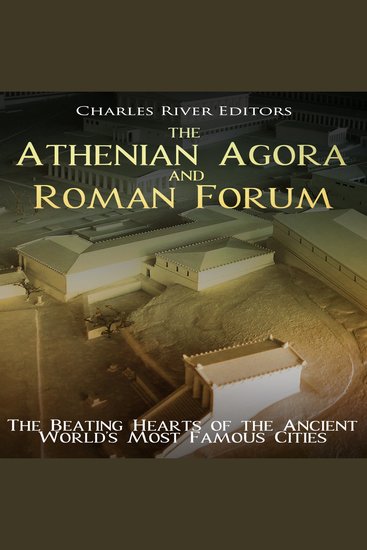
    The center of political and commercial interaction in the Ancient Greek polis was the agora. The word essentially means a gathering place or an open space, and in all Greek city states, the agora was central to all aspects of daily life and commerce. As the agora developed as a civic space, particularly from the 6th century BCE onward in Athens, the architectural splendor of the buildings associated with it became an ever more obvious demonstration of the power and glory of Athenian democracy. In its earliest forms, an agora in maritime cities was invariably situated near the sea, while in inland urban centers, it was usually located at the foot of the hill that normally provided the city’s ultimate defense. The agora was always the oldest part of any city and, as such, and as well as being the commercial hub of the area, also became the center of the religious and political life of the polis. In Homer’s time, an agora might have seats for the comfort of the citizens that had assembled to consult with one another. The city’s oldest sanctuaries were always located either in or very close to the agora itself, and the first festive games were held in its open space.  
    The Roman Empire is the most famous in history, and the center of the far-reaching empire’s activities was located in the Forum, a low area between the Capitoline and Palatine hills in Rome. The topography held a great deal of significance for Romans, and consequently so many layers of myth were laid on top of the landscape and buildings that it is difficult to separate legend from actual historical fact. As a low-lying area near the Tiber river, the Forum was subject to much flooding, and even into the 20th century, the Forum area could flood upwards of over 40 feet above sea level. This would factor significantly in the imagination of Romans, who later ascribed the flooding with saving the city’s founders, Romulus and Remus, from execution.
    Ver livro
  • Operation Speedy Express: The History and Legacy of One of the Vietnam War’s Most Controversial Campaigns - cover

    Operation Speedy Express: The...

    Editors Charles River

    • 0
    • 0
    • 0
    Before the Vietnam War, most Americans would have been hard pressed to locate Vietnam on a map. South Vietnamese President Diệm’s regime was extremely unpopular, and war broke out between Communist North Vietnam and South Vietnam around the end of the 1950s. Kennedy’s administration tried to prop up the South Vietnamese with training and assistance, but the South Vietnamese military was feeble. A month before his death, Kennedy signed a presidential directive withdrawing 1,000 American personnel, but shortly after Kennedy’s assassination, new President Lyndon B. Johnson reversed course, instead opting to expand American assistance to South Vietnam. 
    	Operation Speedy Express was a highly controversial military operation carried out by the U.S. Army supported by the Army of South Vietnam (ARVN) as well as regional and popular forces during the Vietnam War. It lasted from December 1968 until May 1969 and took place in the Mekong Delta's Kien Hoa and Vinh Binh provinces. The operation was a part of U.S. Army “pacification” efforts toward the Viet Cong, as American forces sought to interdict Viet Cong supply and communication lines from Cambodia and deny them the use of operational bases. Formally, the operation involved 8,000 U.S. soldiers and resulted in 242 American lives lost compared to 10,899 Viet Cong and People’s Army of Vietnam (PAVN) killed, according to Department of Defense records. Operation Speedy Express was considered successful by U.S. standards, as determined by the primary metric of body counts. However, while the number of Vietnamese dead, including civilians, is unknown, it is assumed to surpass 5,000, and the high number of casualties was attributed to the indiscriminate use of firepower, which included air and artillery strikes in densely populated areas.
    Ver livro