Junte-se a nós em uma viagem ao mundo dos livros!
Adicionar este livro à prateleira
Grey
Deixe um novo comentário Default profile 50px
Grey
Assine para ler o livro completo ou leia as primeiras páginas de graça!
All characters reduced
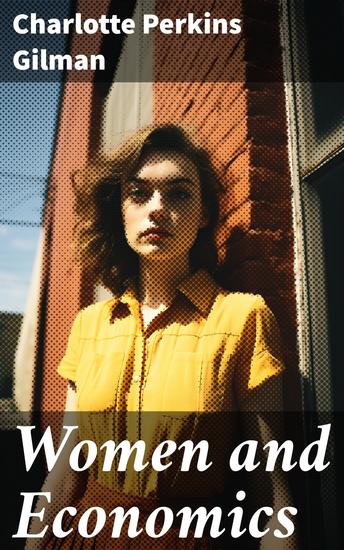
Women and Economics - A Study of the Economic Relation Between Men and Women as a Factor in Social Evolution - cover
LER

Women and Economics - A Study of the Economic Relation Between Men and Women as a Factor in Social Evolution

Charlotte Perkins Gilman

Editora: Good Press

  • 0
  • 0
  • 0

Sinopse

In "Women and Economics," Charlotte Perkins Gilman offers a pioneering exploration of the intersection between gender roles and economic structures, challenging the prevailing societal norms of her time. Written in a compelling and accessible style, the book critiques the economic dependency imposed on women and emphasizes the necessity for their independence and active participation in the workforce. Gilman's arguments are underpinned by a socialist feminist perspective, intertwining social theory with practical implications, and situating her work within the late 19th-century context of the women's suffrage movement. Her eloquence and clarity highlight not only the moral imperatives for gender equality but also advocate for systemic changes that recognize women as essential contributors to the economy. Charlotte Perkins Gilman, an influential figure in feminist literature and activism, wrote this work during a period of great upheaval regarding women'Äôs rights. Her own experiences, including a troubling marriage and subsequent mental health struggles, informed her passionate advocacy for women'Äôs autonomy and economic self-sufficiency. Gilman's background in sociology and her keen insights into societal norms shaped her vision, positioning her as a formidable voice in both literary and social reform circles. "Women and Economics" is essential reading for anyone interested in gender studies, economics, or social reform. Gilman'Äôs incisive analysis not only resonates with contemporary discussions on gender equality but also serves as a historical document illustrating the ongoing struggle for women'Äôs rights. Readers will find that her arguments compel a reevaluation of traditional notions about women's roles in society, offering profound insights that remain relevant today.
Disponível desde: 04/01/2024.
Comprimento de impressão: 256 páginas.

Outros livros que poderiam interessá-lo

  • Poor Folk - cover

    Poor Folk

    Fyodor Dostoevsky

    • 0
    • 0
    • 0
    "We are poor people, we are simple people, but we have hearts and souls too."
    
    Before the psychological labyrinths of Crime and Punishment, a young Dostoevsky captured the world's attention with this exquisite epistolary novel. Through a series of increasingly desperate letters, we witness the relationship between Makar Devushkin, a lowly, aging copy clerk, and Varvara Dobroselova, a fragile young seamstress. Living in squalid rooms across a dismal St. Petersburg courtyard, they exchange words of comfort, shared bread, and the flickering hope of a better life. Poor Folk is a searingly intimate portrait of the "little man" struggling to maintain his humanity in a society that views him as nothing more than a smudge on a ledger.
    
    The Birth of Psychological Realism: Dostoevsky takes the traditional "sentimental" epistolary form and infuses it with a brutal, modern realism. He elevates the clerk—a figure usually mocked in Russian literature—to a tragic hero. Makar's obsession with his social standing and his desperate attempts to appear "respectable" even as he starves reveal the deep psychological scars of class inequality.
    
    A Tragedy of Self-Sacrifice: As their financial situation deteriorates, the letters become a battleground between love and survival. Makar's selfless devotion to Varvara leads him to ruin, while Varvara is forced to make a heart-shattering choice between the man who loves her and the safety of a wealthy, predatory suitor. It is a story that proves the greatest tragedies are often the quietest ones, occurring behind closed doors in the poorest corners of the city.
    
    Witness the soul of a genius in its first bloom. Purchase "Poor Folk" today and experience the novel that changed Russian literature forever.
    Ver livro
  • Direct Perception is Freedom - Bombay (Mumbai) 1971 - Public Talk 2 - cover

    Direct Perception is Freedom -...

    Jiddu Krishnamurti

    • 0
    • 0
    • 0
    ". Direct perception is freedom - 10 February 1971 
    • Can the mind living in this world ever be free, not only superficially but 
    profoundly, at the very root of its existence? 
    • ‘Freedom from’ is an abstraction, but freedom in observing ‘what is’ and going 
    beyond it is actual freedom. 
    How do I observe greed? Do I observe it as an outsider looking in or do I observe it without the observer? 
    Without the mind being free you cannot live in order. 
    Q: Three years have passed; I have no energy to be aware of my reactions. Q: Can we seek God through observation?"
    Ver livro
  • Plotting the Impossible: A Modern Guide to Story Architecture - cover

    Plotting the Impossible: A...

    Billy Grady

    • 0
    • 0
    • 0
    Every unforgettable story shares a hidden framework—a structure that pulls readers in, keeps them hooked, and leaves them breathless at the end. Plotting the Impossible is your key to mastering that architecture, whether you’re writing a high-stakes thriller, a sweeping romance, or a genre-defying masterpiece. 
    In this insightful and practical guide, bestselling author and coach Billy Grady reveals how to: 
    Build bulletproof plots that captivate from the first page to the last 
    Design twists and turns that surprise without breaking believability 
    Balance pacing and tension for maximum emotional impact 
    Adapt classic story structures to fit modern audiences and unique voices 
    Packed with real-world examples, actionable exercises, and step-by-step blueprints, Plotting the Impossible gives you the tools to create stories that feel both inevitable and unforgettable. 
    If you’ve ever wondered how to turn a wild idea into a perfectly constructed narrative, this book will show you how to make the impossible not just possible—but unforgettable.
    Ver livro
  • The French Famine of 1693-1694 - A Historical Overview - cover

    The French Famine of 1693-1694 -...

    Sarah Willards

    • 0
    • 0
    • 0
    The French Famine of 1693-1694, one of the most devastating in the nation's history, was deeply influenced by a confluence of environmental, social, and political factors that shaped its catastrophic outcome. To understand the severity of this famine, it is crucial to examine the conditions that preceded it, including the weather patterns, economic environment, and political climate of late 17th-century France. 
    At the heart of the famine was a series of harsh weather conditions that led to poor harvests in 1693. A combination of torrential rains, flooding, and unseasonably cold temperatures during the growing season caused widespread crop failure. The heavy rainfall ruined crops such as wheat, barley, and oats, essential staples for the population. In particular, the harsh winter of 1693–1694 exacerbated the problem by delaying planting and further destroying the few crops that had managed to survive. This extreme weather pattern, which was part of a broader climate event known as the "Little Ice Age," contributed to reduced food production and severe shortages across France. 
    In addition to the challenging weather, the economic and social conditions in France played a significant role in magnifying the effects of the famine. By the late 17th century, the French economy had been heavily strained by costly wars, including the Nine Years' War, and the lavish spending of Louis XIV. The country’s infrastructure was ill-equipped to handle such widespread agricultural distress. The peasants, who made up the majority of the population, were already burdened with heavy taxes and had limited resources to survive such a crisis. With most of the population living in rural areas, food shortages hit them hardest, leading to widespread hunger and suffering.
    Ver livro
  • The City Is Up for Grabs - How Chicago Mayor Lori Lightfoot Led and Lost a City in Crisis - cover

    The City Is Up for Grabs - How...

    Gregory Royal Pratt

    • 0
    • 0
    • 0
    Chicago is a world-class city, but it is also a city in crisis. 


    Crime is up, schools have repeatedly shut down due to conflict between City Hall and the powerful teachers' union, and COVID-19 only deepened the entrenched poverty, institutional racism, and endless tug of war between the city's haves and have nots. 


    For four years, the person at the center of this storm was Lori Lightfoot. A groundbreaking figure—the first Black, gay woman to be elected mayor of a major city and only the second female mayor of Chicago—she knew the city was at a critical turning point when she took office in 2019. But the once-in-a-lifetime challenges she ended up facing were beyond anything she or anyone else saw coming. 


    Chicago Tribune reporter Gregory Royal Pratt offers the first comprehensive behind-the-scenes look at the tumultuous single term of Mayor Lightfoot and the chaos that roiled the city and City Hall as she fought to live up to her promises to change the city's culture of corruption and villainy, reform its long-troubled police department, and make Chicago the safest big city in America.
    Ver livro
  • The Zelensky Effect - cover

    The Zelensky Effect

    Olga Onuch, Henry E. Hale

    • 0
    • 0
    • 0
    With Russian shells raining on Kyiv and tanks closing in, American forces prepared to evacuate Ukraine's leader. Just three years earlier, his apparent main qualification had been playing a president on TV. But Volodymyr Zelensky reportedly retorted, 'I need ammunition, not a ride.' Ukrainian forces won the battle for Kyiv, ensuring their country's independence even as a longer war began for the southeast. 


    You cannot understand the historic events of 2022 without understanding Zelensky. But the Zelensky effect is less about the man himself than about the civic nation he embodies: what makes Zelensky most extraordinary in war is his very ordinariness as a Ukrainian. 


    The Zelensky Effect explains this paradox, exploring Ukraine's national history to show how its now-iconic president reflects the hopes and frustrations of the country's first 'independence generation'. Interweaving social and political background with compelling episodes from Zelensky's life and career, this is the story of Ukraine told through the journey of one man who has come to symbolize his country.
    Ver livro