Junte-se a nós em uma viagem ao mundo dos livros!
Adicionar este livro à prateleira
Grey
Deixe um novo comentário Default profile 50px
Grey
Assine para ler o livro completo ou leia as primeiras páginas de graça!
All characters reduced
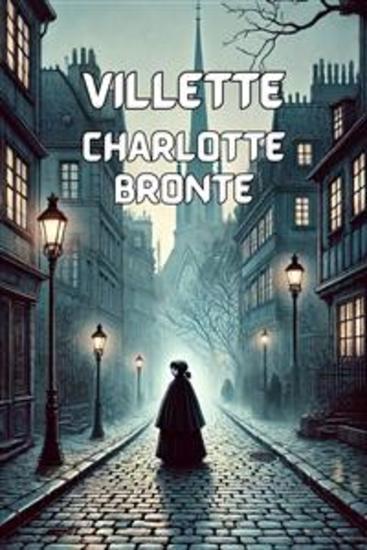
Villette(Illustrated) - cover
LER

Villette(Illustrated)

Charlotte Brontë

Editora: Swish

  • 0
  • 0
  • 0

Sinopse

Illustrated Edition with 20 Exclusive Illustrations
	Includes a Detailed Summary of the Story
	Comprehensive Character List
	Insightful Author Biography of Charlotte Brontë

Villette by Charlotte Brontë is a timeless masterpiece of Gothic literature, weaving together themes of love, isolation, and inner strength. The story follows Lucy Snowe, a quiet, introspective Englishwoman who embarks on a journey to the fictional town of Villette in search of independence and purpose. In this new world, Lucy takes up a teaching position at Madame Beck’s school and is soon swept into a whirlwind of emotional turmoil, personal discovery, and unspoken passion.
As Lucy grapples with loneliness, cultural displacement, and the emotional complexity of her relationships, including her evolving connection with the fiery Professor Paul Emanuel, Brontë masterfully portrays the inner world of a woman struggling to assert herself in a society that demands conformity. The rich, atmospheric setting of Villette and its haunting undertones make this novel a compelling exploration of identity, repression, and desire.
This special edition includes 20 beautiful illustrations that bring to life key moments from the first 20 chapters of the novel, immersing readers in the visual world of Villette. It also features a complete summary, a character list for easy reference, and a thoughtfully crafted biography of Charlotte Brontë, offering readers deeper insights into the mind of one of the greatest literary figures of the 19th century.
Villette is a story of quiet strength, profound emotion, and the enduring human spirit, making it a must-read for lovers of classic literature.


Disponível desde: 04/11/2024.

Outros livros que poderiam interessá-lo

  • War and Peace - Book 14: 1812 (Unabridged) - cover

    War and Peace - Book 14: 1812...

    Leo Tolstoy

    • 0
    • 0
    • 0
    War and Peace is a literary work mixed with chapters on history and philosophy by the Russian author Leo Tolstoy. It was first published serially, then published in its entirety in 1869. It is regarded as one of Tolstoy's finest literary achievements and remains an internationally praised classic of world literature.
    Book 14: 1812: The Battle of Borodinó, with the occupation of Moscow that followed it and the flight of the French without further conflicts, is one of the most instructive phenomena in history. All historians agree that the external activity of states and nations in their conflicts with one another is expressed in wars, and that as a direct result of greater or less success in war the political strength of states and nations increases or decreases.
    Ver livro
  • Love's Pilgrimage - A Novel - cover

    Love's Pilgrimage - A Novel

    Upton Sinclair

    • 0
    • 0
    • 0
    "Love's Pilgrimage: A Novel" by Upton Sinclair is a deeply emotional exploration of love, faith, and self-discovery. The story follows a young woman’s journey as she grapples with societal expectations, religious doubts, and the complexities of romantic relationships. Set against the backdrop of early 20th-century America, Sinclair delves into themes of personal freedom, spiritual awakening, and the search for meaning. As the protagonist navigates heartbreak and moral dilemmas, she embarks on a transformative quest for truth and fulfillment. Blending romance with social critique, the novel examines the tension between tradition and individuality. A poignant reflection on the human condition, it highlights Sinclair’s ability to intertwine personal struggles with broader societal issues.
    Ver livro
  • A Dead Secret - From their pens to your ears genius in every story - cover

    A Dead Secret - From their pens...

    Lafcadio Hearn

    • 0
    • 0
    • 0
    Lafcadio Hearn was born on the 27th June 1850 on the Ionian isle of Levkás in Greece to a British Army officer and a Greek Mother. 
    His father, fearing for his career prospects at being married to a Greek Orthodox wife, sent them to Dublin whilst he continued to advance his career with further postings.  Life there was difficult for mother and son.  His father returned, wounded and traumatised, when Lafcadio was three.  He annulled the marriage and she remarried but had to give up care of Lafcadio to her sister-in law.   
    After brief periods for Catholic education in England and France he emigrated to Ohio in the United States when he was 19, taking on a series of casual jobs before embarking on a career as a journalist, publishing poems and essays in Cincinnati.  It was whilst here that he began a side-line in translating, starting with Gautier and Flaubert.  He married in 1874 to a 20 year old African-American woman in violation of Ohio's anti-miscegenation law.  The marriage soon failed. 
    In 1877 he relocated to New Orleans to write on a variety of themes before picking up a two year assignment from Harper’s to write in the West Indies, where he also wrote his first novel. 
    In 1890 Harper’s sent him to Japan.  Here he left journalism and took the remarkable decision to become a schoolteacher in the north of Japan.   Enraptured by the culture he was driven to explain it in various Western publications to those who had little, if any, knowledge of its culture.  Within the year he had fallen in love with, and married, a high-born Japanese lady, together they would have four children.   
    In 1895 he became a Japanese national and took the name Koizumi Yakumo, Koizumi being his wife’s family name. 
    The following few years, whilst a professor of Literature at the Imperial University of Japan, were his most creative and admired period.   
    Lafcadio Hearn died of heart failure on the 26th of September 1904, in Tokyo, Japan shortly before leaving to deliver a series of lectures at Cornell University in New York State.  He was 54.
    Ver livro
  • Freckles - From their pens to your ears genius in every story - cover

    Freckles - From their pens to...

    William Pett Ridge

    • 0
    • 0
    • 0
    William Pett Ridge was born at Chartham, near Canterbury, Kent, on 22nd April 1859. 
    His family’s resources were certainly limited. His father was a railway porter, and the young Pett Ridge, after schooling in Marden, Kent became a clerk in a railway clearing-house. The hours were long and arduous, but self-improvement was Pett Ridge’s goal.  After working from nine until seven o’clock he would attend evening classes at Birkbeck Literary and Scientific Institute and then to follow his passion; the ambition to write.  He was heavily influenced by Dickens and several critics thought he had the capability to be his successor. 
    From 1891 many of his humourous sketches were published in the St James's Gazette, the Idler, Windsor Magazine and other literary periodicals of the day. 
    Pett Ridge published his first novel in 1895, A Clever Wife. By the advent of his fifth novel, Mord Em'ly, a mere three years later in 1898, his success was obvious.  His writing was written from the perspective of those born with no privilege and relied on his great talent to find humour and sympathy in his portrayal of working class life. 
    Today Pett Ridge and other East End novelists including Arthur Nevinson, Arthur Morrison and Edwin Pugh are being grouped together as the Cockney Novelists.   
    In 1924, Pugh set out his recollections of Pett Ridge from the 1890s: “I see him most clearly, as he was in those days, through a blue haze of tobacco smoke. We used sometimes to travel together from Waterloo to Worcester Park on our way to spend a Saturday afternoon and evening with H. G. Wells. Pett Ridge does not know it, but it was through watching him fill his pipe, as he sat opposite me in a stuffy little railway compartment, that I completed my own education as a smoker... Pett Ridge had a small, dark, rather spiky moustache in those days, and thick, dark, sleek hair which is perhaps not quite so thick or dark, though hardly less sleek nowadays than it was then”. 
    With his success, on the back of his prolific output and commercial success, Pett Ridge gave generously of both time and money to charity. In 1907 he founded the Babies Home at Hoxton.  This was one of several organisations that he supported that had the welfare of children as their mission.  
    His circle considered Pett Ridge to be one of life's natural bachelors. In 1909 they were rather surprised therefore when he married Olga Hentschel.  
    As the 1920’s arrived Pett Ridge added to his popularity with the movies. Four of his books were adapted into films.  
    Pett Ridge now found the peak of his fame had passed. Although he still managed to produce a book a year he was falling out of fashion and favour with the reading public and his popularity declined rapidly.  His canon runs to over sixty novels and short-story collections as well as many pieces for magazines and periodicals. 
    William Pett Ridge died, on 29th September 1930, at his home, Ampthill, Willow Grove, Chislehurst, at the age of 71. 
    He was cremated at West Norwood on 2nd October 1930.
    Ver livro
  • Big Two-Hearted River - The Centennial Edition - cover

    Big Two-Hearted River - The...

    Ernest Hemingway

    • 0
    • 0
    • 0
    Ernest Hemingway’s landmark short story of a veteran’s solo fishing trip in Michigan’s rugged Upper Peninsula, featuring a revelatory foreword by John N. Maclean. 
    “A century since its publication in the collection In Our Time, “Big Two-Hearted River” has helped shape language and literature in America and across the globe, and its magnetic pull continues to draw readers, writers, and critics. The story is the best early example of Ernest Hemingway’s now-familiar writing style: short sentences, punchy nouns and verbs, few adjectives and adverbs, and a seductive cadence. Easy to imitate, difficult to match. The subject matter of the story has inspired generations of writers to believe that fly fishing can be literature. More than any of his stories, it depends on his ‘iceberg theory’ of literature, the notion that leaving essential parts of a story unsaid, the underwater portion of the iceberg, adds to its power. Taken in context with his other work, it marks Hemingway’s passage from boyish writer to accomplished author: nothing big came before it, novels and stories poured out after it.” —from the foreword by John N. Maclean
    Ver livro
  • The Ghost and the Bone Setter - From their pens to your ears genius in every story - cover

    The Ghost and the Bone Setter -...

    Sheridan Le Fanu

    • 0
    • 0
    • 0
    Joseph Sheridan Le Fanu was born on 28th August 1814 in Dublin into a literary family with Huguenot, Irish and English roots.   
    For a time he and his siblings were tutored but Le Fanu would often immerse himself in the books of his father’s library. 
    In 1833 Le Fanu began his Law studies at Trinity College, Dublin and graduated in 1839. Although called to the bar he instead began a career in journalism.   
    He was also writing. His first fiction story ‘The Ghost and the Bonesetter’ was published in 1838.  In 1843 came the novella ‘Spalatro: From the Notes of Fra Giacomo’, a hero with a particular necrophiliac passion for an undead blood-drinking beauty, a forerunner to his later female vampire ‘Carmilla’.  
    In 1844 Le Fanu married Susanna Bennett with whom he had 4 children. The following year his first novel ‘The C'ock and Anchor’ was published. Works now flowed from his pen and with a rapid increase in family finances they moved, in 1851, to Merrion Square, Dublin, where he remained until his death.  
    In 1858 Susanna died and Le Fanu became reclusive. It was during this period that he produced some of his best work.  Working only by candlelight he wrote through the night, burnishing his reputation as a major figure of 19th Century supernaturalism with many classics including; ‘Green Tea’, ‘Mr Justice Harbottle’, and ‘In a Glass Darkly’.  
    Joseph Thomas Sheridan Le Fanu died in Merrion Square in his native Dublin on February 7th, 1873, at the age of 58.
    Ver livro