Rejoignez-nous pour un voyage dans le monde des livres!
Ajouter ce livre à l'électronique
Grey
Ecrivez un nouveau commentaire Default profile 50px
Grey
Abonnez-vous pour lire le livre complet ou lisez les premières pages gratuitement!
All characters reduced
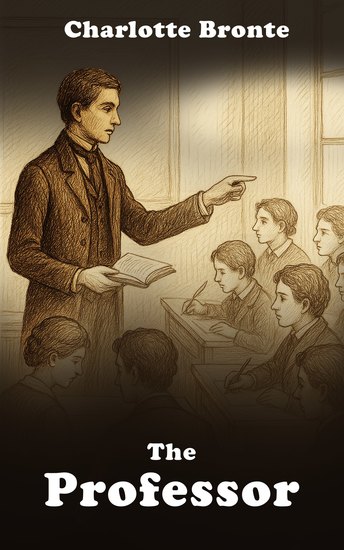
The Professor - cover

The Professor

Charlotte Brontë

Maison d'édition: CLXBX

  • 0
  • 0
  • 0

Synopsis

The Professor is a quietly powerful and introspective novel by Charlotte Brontë that explores ambition, self-discipline, and the pursuit of personal integrity. Written before Jane Eyre but published posthumously in 1857, the novel offers a revealing glimpse into Brontë's developing literary voice and her interest in inner moral strength over outward drama.

The story follows William Crimsworth, a young Englishman who rejects dependence and privilege in favor of independence earned through hard work. After leaving England, he builds a new life as a teacher in Belgium, where he struggles against professional rivalry, social isolation, and emotional restraint. His reserved nature is gradually softened through his growing affection for Frances Henri, a fellow teacher whose intelligence and determination mirror his own.

Rather than focusing on sweeping romance, the novel emphasizes restraint, mutual respect, and the quiet satisfaction of shared purpose. Through William's journey, Brontë examines themes of self-respect, perseverance, education, and the dignity of honest labor.

Subtle, realistic, and morally focused, The Professor stands as an important early work in Charlotte Brontë's canon. It offers readers a thoughtful exploration of character, discipline, and love grounded in equality, making it a meaningful companion to her more dramatic novels.
Disponible depuis: 10/02/2026.
Longueur d'impression: 313 pages.


D'autres livres qui pourraient vous intéresser

  • The Magic Mountain - cover

    The Magic Mountain

    Thomas Mann

    • 0
    • 0
    • 0
    A book that pulses with life in the midst of death, The Magic Mountain is a mammoth masterpiece of erudition and irony, sexual tension, and intellectual ferment. Mann utilises a sanatorium in the Swiss Alps, a community dedicated solely to illness, as a microcosm for Europe, which in the years prior to 1914 was already displaying the initial signs of its own terminal madness, in this dizzyingly dense novel of ideas.Death in Venice tells the tale of Gustav von Aschenbach, a successful but ageing writer who follows his wanderlust to Venice in search of spiritual fulfilment but instead leads to his erotic doom. It was published on the eve of World War I, ten years after Buddenbrooks had established Thomas Mann as a literary celebrity.Foreword - Track 1Chapter 1. Arrival - Track 2Chapter 2. Of the Christening Basin -Track 3 Chapter 3. Drawing the Veil - Track 4 to 6 Chapter 4. Necessary Purchases - Track 7 to 11Chapter 5. Soup-Everlasting Part 1 - Track 12 to 16./ Soup-Everlasting Part 2 - Track 17 to 21.Chapter 6. Changes Part 1 - Track 22 to 25. / Changes Part 2 - Track 26 to 29. / Changes Part 3 - Track 30 to 32.Chapter 7. By the Ocean of Time Part 1 - Track 33 to 37. / By the Ocean of Time Part 2 - Track 38 ./ By the Ocean of Time Part 3 - Track 39 to 43.
    Voir livre
  • A Dream of Wild Bees - From their pens to your ears genius in every story - cover

    A Dream of Wild Bees - From...

    Olive Schreiner

    • 0
    • 0
    • 0
    The bookshelves of World literature are incredible collections that have gathered together centuries of very talented authors.  From their countries and continents their fame spread and whilst among their number many are now forgotten or neglected their talents endure.  Among them is Olive Schreiner.
    Voir livre
  • The Voice of the City: Further Stories of the Four Million - Further Stories of the Four Million - cover

    The Voice of the City: Further...

    O. Henry

    • 0
    • 0
    • 0
    New York talking to itself: a shop girl deciding how to spend her lunch hour, a millionaire's son on a park bench, a waiter who was once a gentleman, and the Fool-Killer walking up a Southern road looking for custom. O. Henry wrote these at the rate of a story a week for the New York World, from hotel rooms and bar tables, and died two years after the book appeared, at forty-seven and in debt. Complete and unabridged.
    Voir livre
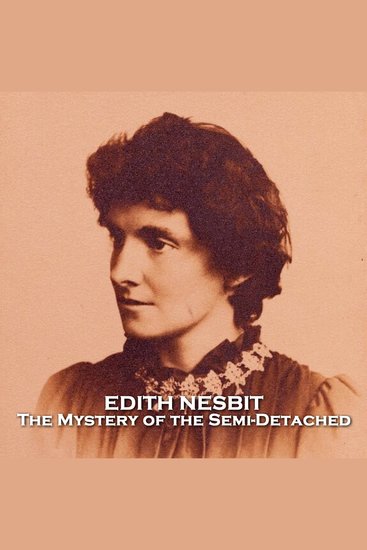
  • The Mystery of the Semi Detached - From their pens to your ears genius in every story - cover

    The Mystery of the Semi Detached...

    Edith Nesbit

    • 0
    • 0
    • 0
    Edith Nesbit was born on the 15th August 1858 in Kennington, then part of Surrey.   
    Due to the health issues and tuberculosis of her sister Mary, Nesbit’s early life was one of constant changes of house both in England and on the continent. 
    At age 17, Nesbit met Hubert Bland and they married three years later―whilst she was 7 months pregnant.  Bland also kept his affair with another woman going throughout their marriage and the two children of that relationship were raised by Nesbit as well as her own three with Bland. 
    Together they were founder members of the Fabian Society in 1884 naming their son Fabian in its honour.  They also edited the Society's journal; ‘Today’.  Nesbit was an active lecturer and prolific writer on socialism during those years but gradually her work for them dwindled as her career as a children’s writer grew.  Her most famous success was ‘The Railway Children’ but she was also very prolific and greatly accomplished in poetry, short stories―especially her macabre ghost and supernatural stories―and novels for adults.  
    In February 1917, some three years after the death of Bland she married Thomas ‘the Skipper’ Tucker in Woolwich, where he was a ship's engineer on the Woolwich Ferry. 
    Edith Nesbit died from lung cancer on the 4th May 1924 at her house ‘The Long Boat’ at Jesson, St Mary's Bay, New Romney in Kent.  She was 65.
    Voir livre
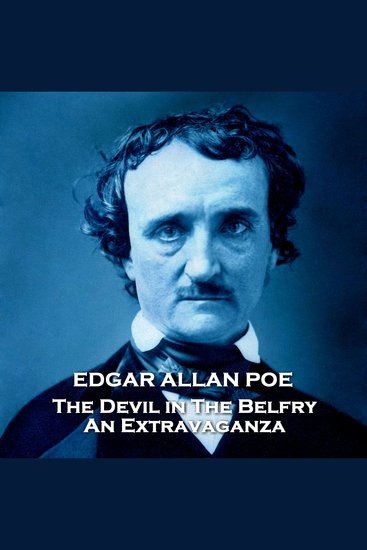
  • Devil in the Belfry - Another classic from the master of the genre - cover

    Devil in the Belfry - Another...

    Edgar Allan Poe

    • 0
    • 0
    • 0
    Edgar Poe was born in Boston Massachusetts on 19th January 1809. His father abandoned his family the following year and within a year his mother had died leaving him an orphan.   
    He was taken in by the Allan family but never formally adopted although he now referred to himself as Edgar Allan Poe.  His father alternatively spoiled or chastised him and tension was frequent over gambling debts and monies for his education.  His university years to study ancient and modern languages was cut short by lack of money and he enlisted as a private in the army claiming he was 22, it is more probable he was 18. After 2 years he obtained a discharge in order to take up an appointment at the military academy, West Point, where he failed to become an officer. 
    Poe had released his 1st poetry volume in 1827 and after his 3rd turned to prose and placing short stories in several magazines and journals.  At age 26 he obtained a licence to marry his cousin.  She was a mere 13 but they stayed together until her death from tuberculosis 11 years after. 
    In January 1845 ‘The Raven’ was published and became an instant classic.  Thereafter followed the prose works for which he is now so rightly famed as a master of the mysterious and the macabre. 
    Edgar Allan Poe died at the tragically early age of 40 on 7th October 1849 in Baltimore, Maryland. Newspapers at the time reported Poe's death as ‘congestion of the brain’ or ‘cerebral inflammation’, common euphemisms for death from disreputable causes such as alcoholism but the actual cause of death remains a mystery.
    Voir livre
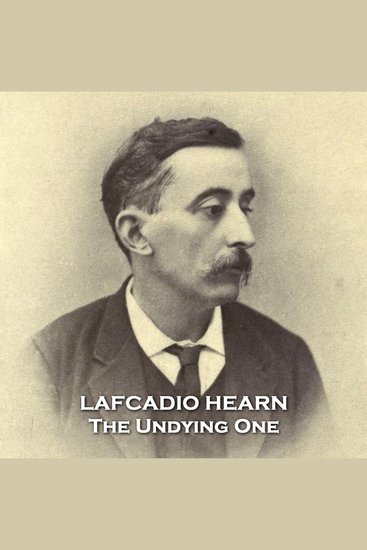
  • The Undying One - From their pens to your ears genius in every story - cover

    The Undying One - From their...

    Lafcadio Hearn

    • 0
    • 0
    • 0
    Lafcadio Hearn was born on the 27th June 1850 on the Ionian isle of Levkás in Greece to a British Army officer and a Greek Mother. 
    His father, fearing for his career prospects at being married to a Greek Orthodox wife, sent them to Dublin whilst he continued to advance his career with further postings.  Life there was difficult for mother and son.  His father returned, wounded and traumatised, when Lafcadio was three.  He annulled the marriage and she remarried but had to give up care of Lafcadio to her sister-in law.   
    After brief periods for Catholic education in England and France he emigrated to Ohio in the United States when he was 19, taking on a series of casual jobs before embarking on a career as a journalist, publishing poems and essays in Cincinnati.  It was whilst here that he began a side-line in translating, starting with Gautier and Flaubert.  He married in 1874 to a 20 year old African-American woman in violation of Ohio's anti-miscegenation law.  The marriage soon failed. 
    In 1877 he relocated to New Orleans to write on a variety of themes before picking up a two year assignment from Harper’s to write in the West Indies, where he also wrote his first novel. 
    In 1890 Harper’s sent him to Japan.  Here he left journalism and took the remarkable decision to become a schoolteacher in the north of Japan.   Enraptured by the culture he was driven to explain it in various Western publications to those who had little, if any, knowledge of its culture.  Within the year he had fallen in love with, and married, a high-born Japanese lady, together they would have four children.   
    In 1895 he became a Japanese national and took the name Koizumi Yakumo, Koizumi being his wife’s family name. 
    The following few years, whilst a professor of Literature at the Imperial University of Japan, were his most creative and admired period.   
    Lafcadio Hearn died of heart failure on the 26th of September 1904, in Tokyo, Japan shortly before leaving to deliver a series of lectures at Cornell University in New York State.  He was 54.
    Voir livre