¡Acompáñanos a viajar por el mundo de los libros!
Añadir este libro a la estantería
Grey
Escribe un nuevo comentario Default profile 50px
Grey
Suscríbete para leer el libro completo o lee las primeras páginas gratis.
All characters reduced
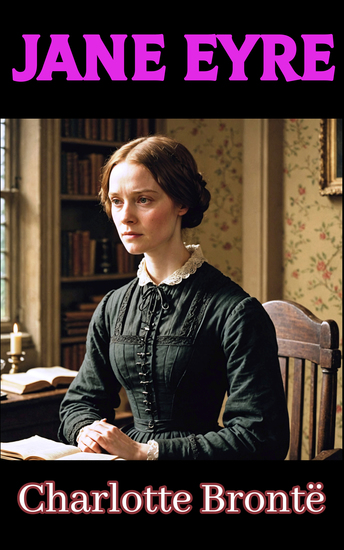
Jane Eyre - cover

Jane Eyre

Charlotte Brontë

Editorial: E-Kitap Projesi & Cheapest Books

  • 0
  • 0
  • 0

Sinopsis

Jane Eyre is the story of a young, orphaned girl (shockingly, shes named Jane Eyre) who lives with her aunt and cousins, the Reeds, at Gateshead Hall. Like all nineteenth-century orphans, her situation pretty much sucks.Mrs. Reed hates Jane and allows her son John to torment the girl. Even the servants are constantly reminding Jane that shes poor and worthless. At the tender age of ten, Jane rises up against this treatment and tells them all exactly what she thinks of them. (We wish we couldve been there to hear it!) Shes punished by being locked in "the red room," the bedroom where her uncle died, and she has a hysterical fit when she thinks his ghost is appearing. After this, nobody knows what to do with her, so they send her away to a religious boarding school for orphansLowood Institute. At Lowood, which is run by the hypocritical ogre Mr. Brocklehurst, the students never have enough to eat or warm clothes. However, Jane finds a pious friend, Helen Burns, and a sympathetic teacher, Miss Temple. Under their influence, she becomes an excellent student, learning all the little bits and pieces of culture that made up a ladys education in Victorian England: French, piano-playing, singing, and drawing.Unfortunately, an epidemic of typhus breaks out at the school, and Helen diesbut of consumption, not typhus. (We always knew shed be a martyr.) Jane remains at Lowood as a student until shes sixteen, and then as a teacher until shes eighteen. When Miss Temple leaves the school to get married, Jane gets a case of wanderlust and arranges to leave the school and become a governess. The governess job that Jane accepts is to tutor a little French girl, Adèle Varens, at a country house called Thornfield. Jane goes there thinking that shell be working for a woman named Mrs. Fairfax, but Mrs. Fairfax is just the housekeeper; the owner of the house is the mysterious Mr. Rochester, and he's Adèle's guardian, although were not sure whether shes his daughter. Jane likes Thornfield, although not the third floor, where a strange servant named Grace Poole works alone and Jane can hear eerie laughter coming from a locked room.
Disponible desde: 07/12/2024.
Longitud de impresión: 750 páginas.

Otros libros que te pueden interesar

  • Through the Looking Glass - cover

    Through the Looking Glass

    Lewis Carroll

    • 0
    • 0
    • 0
    Through the Looking-Glass, and What Alice Found There is a novel by Lewis Carroll and the sequel to Alice's Adventures in Wonderland (1865). Alice again enters a fantastical world, this time by climbing through a mirror into the world that she can see beyond it. There she finds that, just like a reflection, everything is reversed, including logic (running helps you remain stationary, walking away from something brings you towards it, chessmen are alive, nursery rhyme characters exist, etc) Through the Looking-Glass includes such verses as "Jabberwocky" and "The Walrus and the Carpenter", and the episode involving Tweedledum and Tweedledee.
    Ver libro
  • The Jack London Collection - The Whale Tooth To Build A Fire The House of Pride The House of Mapuhi - cover

    The Jack London Collection - The...

    Jack London

    • 0
    • 0
    • 0
    Jack London was an American author who wrote The Call of the Wild and other books. A pioneer in the then-burgeoning world of commercial magazine fiction, he was one of the first Americans to make a lucrative career exclusively from writing. Here are four of his best stories: The Whale Tooth, To Build A Fire, The House of Pride, The House of Mapuhi.
    Ver libro
  • The Count of Monte Cristo - A sweeping Historical Adventure of ultimate betrayal unimaginable wealth and the cold pursuit of revenge that changed classic literature forever - cover

    The Count of Monte Cristo - A...

    Alexandre Dumas

    • 0
    • 0
    • 0
    Betrayal stole his life. Unimaginable wealth will buy his revenge. 
    On the eve of his wedding and a triumphant promotion to ship's captain, young and earnest sailor Edmond Dantès is framed for treason by three jealous men. Stripped of his freedom, his true love Mercédès, and his promising future, Edmond is condemned to rot in solitary confinement within the walls of the notorious island prison, the Château d'If. But in the pitch-black depths of despair, a chance encounter with a brilliant fellow captive unlocks the secret location of a staggering, mythical fortune. 
    What eventually emerges from the dungeon years later is no longer an innocent boy, but the enigmatic, infinitely wealthy, and deeply calculating Count of Monte Cristo. Methodical and merciless, he infiltrates the opulent high society of Paris to systematically destroy the lives of those who ruined his own. As the ultimate trap is set, the lines between justice and vengeance blur, threatening to consume both the guilty and the innocent. 
    Why you will love this: The Count of Monte Cristo remains the undisputed king of the Historical Adventure genre, brilliantly blending breathless swashbuckling action with an intricate, slow-burn psychological thriller. Fans of epic revenge tropes, high-stakes political intrigue, thrilling prison breaks, and classic historical fiction will be utterly captivated by this iconic, edge-of-your-seat saga of justice, patience, and redemption. 
    About the Authors: Alexandre Dumas and his collaborator Auguste Maquet forged a dynamic literary partnership in 19th-century France. Together, they mastered the art of serialized romantic fiction, weaving rich historical events into pulse-pounding, globally enduring legends.
    Ver libro
  • The Golden Slipper and Other Problems for Violet Strange - Nine elegant mysteries featuring a society belle with a secret talent for detection - cover

    The Golden Slipper and Other...

    Anna Katharine Green

    • 0
    • 0
    • 0
    The Golden Slipper, and Other Problems for Violet Strange introduces one of Anna Katharine Green’s most distinctive detective heroines: Violet Strange, a young society woman whose charm, wit, and social position conceal an unexpected gift for solving delicate mysteries. 
    Across nine intriguing cases, Violet moves through drawing rooms, country houses, fashionable gatherings, and private scandals, uncovering thefts, hidden motives, suspicious deaths, missing evidence, and secrets too sensitive for ordinary police work. From “The Golden Slipper” to “Violet’s Own,” each problem reveals a different side of her intelligence, courage, and emotional complexity. 
    First published in the early twentieth century, this collection is an important classic of female detective fiction from Anna Katharine Green, one of the pioneering voices of American mystery writing.
    Ver libro
  • The Last of the Mohicans - cover

    The Last of the Mohicans

    James Fenimore Cooper

    • 0
    • 0
    • 0
    "The spirit of the forest speaks through those who know its secrets."
    
    It is 1757, the third year of the war between France and Great Britain for control of the North American colonies. In the dense wilderness of New York, the scout Hawkeye (Natty Bumppo) and his Mohican companions—the wise Chingachgook and his valiant son Uncas—embark on a perilous mission. They must guide the daughters of a British commander, Cora and Alice Munro, through territory crawling with hostile Huron warriors. Their journey takes them through the blood-stained siege of Fort William Henry and into a tragic confrontation that will determine the fate of the "last" of the Mohican line.
    
    The Archetype of the American Hero: Hawkeye stands as one of literature's most enduring figures. A white man who has adopted the skills and philosophy of the Indigenous peoples, he represents the bridge between two worlds. His skill with his long rifle, "Killdeer," and his unwavering moral code make him the ultimate frontier protagonist.
    
    The Dual Duel: Uncas vs. Magua: The emotional weight of the novel rests on the rivalry between the noble Uncas and the vengeful Huron chief, Magua. Their conflict is more than a personal vendetta; it represents the clashing fates of different nations amidst the interference of European powers. Cooper's portrayal of Magua remains one of the most complex and terrifying villain archetypes in literary history.
    
    A Tragic Romanticism: Cooper's New York frontier is a place of breathtaking beauty and sudden, brutal violence. Through the tragic romance of Uncas and Cora Munro, the novel explores the social and racial tensions of the 18th century, culminating in a finale that has moved readers for two hundred years.
    
    Witness the birth of an American legend. Purchase "The Last of the Mohicans" today and experience the epic that defined a genre.
    Ver libro
  • Death In Venice - cover

    Death In Venice

    Thomas Mann

    • 0
    • 0
    • 0
    "The experience of death is bound up with the experience of beauty."
    
    First published in 1912, Thomas Mann's Death in Venice is a masterful meditation on art, desire, and the fatal allure of beauty.
    
    Gustav von Aschenbach, an ageing but successful writer renowned for the solemn dignity and asceticism of his work, travels to Venice seeking artistic inspiration – the first indulgence the fastidiously restrained author has allowed himself. Through the languid Venetian atmosphere and the peacefully rocking gondolas, Aschenbach is lured away from his rigid self-discipline as he falls into a deep and obsessive love with a beautiful young Polish boy named Tadzio, even though they never meet.
    
    As his infatuation deepens and the city wilts under the shadow of disease, Aschenbach's pursuit of the unattainable leads him into a tragic spiral of longing and loss.
    Thomas Mann (1875–1955) was a renowned German novelist, short story writer, and essayist, celebrated for his exploration of complex themes, his profound psychological insight, and critique of bourgeois society.
    
    Born into a wealthy trading family, he studied law and economics before turning to writing and had his major breakthrough with Buddenbrooks, which depicts the decline of a bourgeois family. International acclaim came with the publication of The Magic Mountain (1924), a philosophical novel set in a sanatorium that explores themes such as life, death, time and ideological conflict. His other notable works include Death in Venice (1912) and Doktor Faustus (1947). In 1929, he received the Nobel Prize for Literature in recognition of his significant contributions to German literature.
    
    Mann was politically active against fascism, leading him to leave Germany in 1933 due to the rise of the Nazi regime. He lived in Switzerland and later in the United States during World War II. Despite the challenges, he continued to write and became a prominent voice against totalitarianism.
    Ver libro