Junte-se a nós em uma viagem ao mundo dos livros!
Adicionar este livro à prateleira
Grey
Deixe um novo comentário Default profile 50px
Grey
Assine para ler o livro completo ou leia as primeiras páginas de graça!
All characters reduced
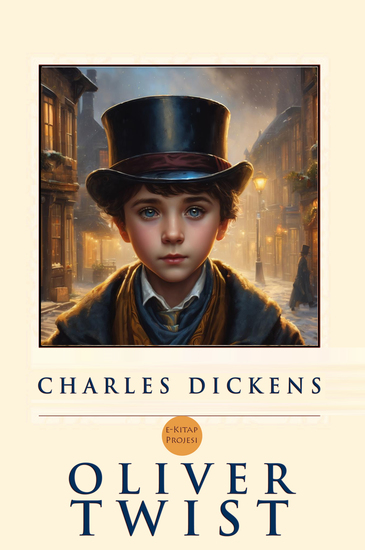
Oliver Twist - cover
LER

Oliver Twist

Charles Dickens

Editora: E-Kitap Projesi & Cheapest Books

  • 0
  • 0
  • 0

Sinopse

Charles Dickens was born on 1812, in Portsea, England. His parents were middle-class, but they suffered financially as a result of living beyond their means. When Dickens was twelve years old, his family's dire straits forced him to quit school and work in a blacking factory, a place where shoe polish is made. Within weeks, his father was put in debtor's prison, where Dickens's mother and siblings eventually joined him. At this point, Dickens lived on his own and continued to work at the factory for several months. The horrific conditions in the factory haunted him for the rest of his life, as did the experience of temporary orphanhood. Apparently, Dickens never forgot the day when a more senior boy in the warehouse took it upon himself to instruct Dickens in how to do his work more efficiently. For Dickens, that instruction may have represented the first step toward his full integration into the misery and tedium of working-class life. The more senior boy's name was Bob Fagin. Dickens's residual resentment of him reached a fevered pitch in the characterization of the villain Fagin in Oliver Twist.

After inheriting some money, Dickens's father got out of prison and Charles returned to school. As a young adult, he worked as a law clerk and later as a journalist. His experience as a journalist kept him in close contact with the darker social conditions of the Industrial Revolution, and he grew disillusioned with the attempts of lawmakers to alleviate those conditions. A collection of semi-fictional sketches entitled Sketches by Boz earned him recognition as a writer. Dickens became famous and began to make money from his writing when he published his first novel, The Pickwick Papers, which was serialized in 1836 and published in book form the following year.

In 1837, the first installment of Oliver Twist appeared in the magazine Bentley's Miscellany, which Dickens was then editing. It was accompanied by illustrations by George Cruikshank, which still accompany many editions of the novel today. Even at this early date, some critics accused Dickens of writing too quickly and too prolifically, since he was paid by the word for his serialized novels. Yet the passion behind Oliver Twist, animated in part by Dickens's own childhood experiences and in part by his outrage at the living conditions of the poor that he had witnessed as a journalist, touched his contemporary readers. Greatly successful, the novel was a thinly veiled protest against the Poor Law of 1834.

In 1836, Dickens married Catherine Hogarth, but after twenty years of marriage and ten children, he fell in love with Ellen Ternan, an actress many years his junior. Soon after, Dickens and his wife separated, ending a long series of marital difficulties. Dickens remained a prolific writer to the end of his life, and his novels—among them Great Expectations, A Tale of Two Cities, A Christmas Carol, David Copperfield, and Bleak House—continued to earn critical and popular acclaim. He died of a stroke in 1870, at the age of 58, leaving The Mystery of Edwin Drood unfinished.

Oliver Twist opens with a bitter invective directed at the nineteenth-century English Poor Laws. These laws were a distorted manifestation of the Victorian middle class's emphasis on the virtues of hard work. England in the 1830s was rapidly undergoing a transformation from an agricultural, rural economy to an urban, industrial nation. The growing middle class had achieved an economic influence equal to, if not greater than, that of the British aristocracy.

In the 1830s, the middle class clamored for a share of political power with the landed gentry, bringing about a restructuring of the voting system. Parliament passed the Reform Act, which granted the right to vote to previously disenfranchised middle-class citizens. This desire gave rise to the Evangelical religious movement and inspired sweeping economic and political change.
Disponível desde: 25/01/2024.
Comprimento de impressão: 600 páginas.
Outros livros que poderiam interessá-lo

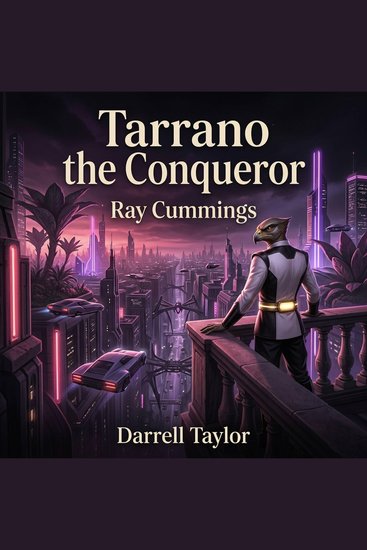
  • Tarrano the Conqueror - An Epic Science Fiction Space Opera of Interplanetary War Assassins and One Dictator's Mad Quest to Conquer Earth Venus and Mars - cover

    Tarrano the Conqueror - An Epic...

    Raymond King Cummings

    • 0
    • 0
    • 0
    Three worlds plunge into chaos as simultaneous assassinations spark an interplanetary war for the ultimate prize: eternal life. 
    The year is 2430. Jac Hallen, an ambitious news-gatherer, stands in the bustling mega-city of Greater New York when the President of the Anglo-Saxon Republic is murdered before his very eyes. Within the hour, the rulers of Earth, Venus, and Mars are also assassinated. A ruthless dictator from the icy wastelands of Venus—the cunning and charismatic Tarrano—has claimed credit. But Tarrano’s true objective is not just military domination. He seeks a newly discovered scientific vibration created by the brilliant Dr. Brende, a medical secret capable of halting human aging indefinitely. 
    When Dr. Brende is murdered and his children, along with Jac, are taken captive, they are thrust into a deadly game of political intrigue, high-tech espionage, and perilous escapes. Held hostage in the heart of an alien immigrant colony, Jac and his friends must outwit a mastermind who intends to hold the entire solar system captive. 
    Why you will love this: Fans of vintage Science Fiction will be absolutely captivated by this grand, golden-age space opera. Packed with futuristic technology, terrifying political unrest, daring escapes, and pulse-pounding interplanetary action & adventure, it hits all the classic tropes of retro sci-fi. If you enjoy early tales of dystopia driven by visionary megalomaniacs and intricate world-building, this epic will keep you riveted from the first paralyzing ray-blast to the final showdown. 
    About the Author: Ray Cummings (1887–1957) was a pioneering master of pulp fiction who once worked as a personal assistant to Thomas Edison. Known for blending speculative science with breathless pacing, he remains a foundational figure in early 20th-century speculative literature.
    Ver livro
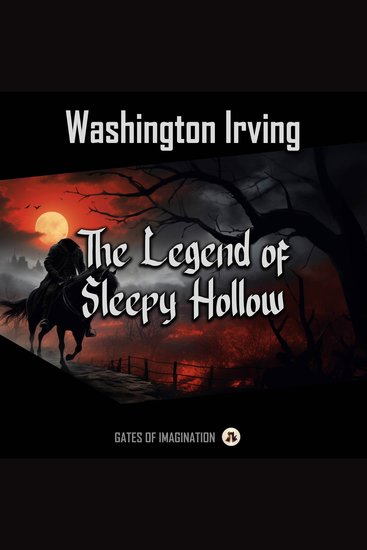
  • The Legend of Sleepy Hollow - cover

    The Legend of Sleepy Hollow

    Washington Irving

    • 0
    • 0
    • 0
    This audiobook is narrated by an AI Voice. Sleepy Hollow is a strange little place...some say bewitched. Some talk of its haunted valleys and streams, the ghostly woman in white, eerie midnight shrieks and howls, but most of all they talk of the Headless Horseman. A huge, shadowy soldier who rides headless through the night, terrifying unlucky travellers. 
     
    Schoolteacher Ichabod Crane is fascinated by these stories....Until late one night, walking home through Wiley's swamp, he finds that maybe they're not just stories.
    Ver livro
  • All the Sad Young Men - cover

    All the Sad Young Men

    F. Scott Fitzgerald

    • 0
    • 0
    • 0
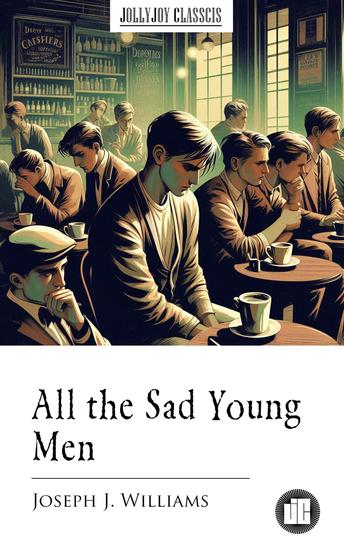
    This volume of the Cambridge Fitzgerald Edition includes the original nine stories selected by Fitzgerald for All the Sad Young Men, together with eleven additional stories, published between 1925 and 1928, which were not collected by Fitzgerald during his lifetime. This edition is based on extensive surviving manuscripts and typescripts. The volume contains a scholarly introduction, historical notes, a textual apparatus, illustrations, and appendices. The complex history of composition for 'The Rich Boy' is untangled, and Fitzgerald's thorough revision of 'Winter Dreams' is described. Important passages of sexual innuendo and tabloid-style scandal in 'Jacob's Ladder', 'The Love Boat', and 'Magnetism' - removed by editors at the Saturday Evening Post - are restored to the Cambridge texts.
    Ver livro
  • The Great Big Treasury of Beatrix Potter - Peter Rabbit Nutkin Tiggy-Winkle and the Rest - cover

    The Great Big Treasury of...

    Beatrix Potter

    • 0
    • 0
    • 0
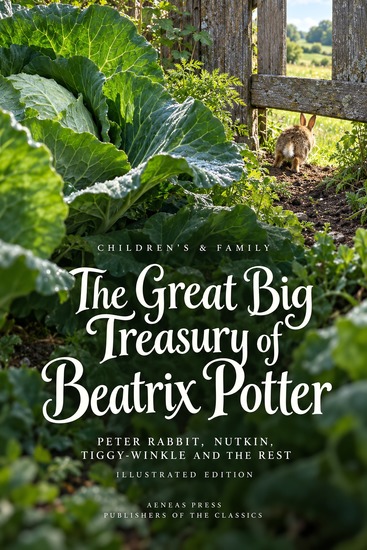
    Nineteen tales in one volume: Peter Rabbit in Mr McGregor's garden, the tailor of Gloucester, Jemima Puddle-Duck and the gentleman with sandy whiskers, the two bad mice, Mrs Tiggy-Winkle, Tom Kitten and Mr Tod. Potter drew and wrote them for the children of friends, first as picture letters, and published the first at her own expense when publishers refused it. The animals wear clothes and keep shops; the danger — pie dish, fox, farmer — is never softened. Fifty-four plates of garden, village and winter road — Constable and Grimshaw among them — answer Potter's hedgerows and farmyards with the same English light she drew.
    Ver livro
  • Valse Mélancolique - cover

    Valse Mélancolique

    Olga Kobylanska

    • 0
    • 0
    • 0
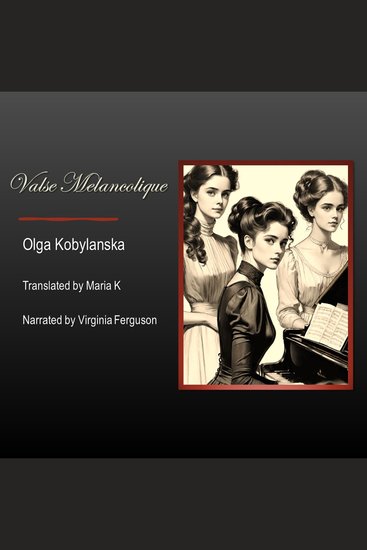
    A beautifully detailed, emotionally intense story by a Ukrainian writer Olga Kobylanska describes a relationship between three roommates - three very different young women, whose diverse personalities and life goals causes their union to oscillate wildly between the jarring dissonance and the perfect harmony.
    Ver livro
  • Raven The - and Other Tailfeathers - cover

    Raven The - and Other Tailfeathers

    Edgar Allan Poe

    • 0
    • 0
    • 0
    A collection of six Edgar Allan Poe short stories. 
     
    Edgar Allan Poe was an American writer, poet, and literary critic of the early 19th century. He is widely regarded as a central figure in the development of the American Romantic movement and is known for his dark, macabre tales and poems, including "The Raven," "The Tell-Tale Heart," and "The Black Cat." Poe's works have had a lasting impact on American literature and popular culture, and his writing style, which often features atmospheric suspense and the supernatural, continues to be imitated and referenced today.
    Ver livro