Junte-se a nós em uma viagem ao mundo dos livros!
Adicionar este livro à prateleira
Grey
Deixe um novo comentário Default profile 50px
Grey
Assine para ler o livro completo ou leia as primeiras páginas de graça!
All characters reduced
Early Australian History Convict Life in New South Wales and Van Diemen's Land - cover
LER

Early Australian History Convict Life in New South Wales and Van Diemen's Land

Charles White

Editora: DigiCat

  • 0
  • 0
  • 0

Sinopse

In "Early Australian History: Convict Life in New South Wales and Van Diemen's Land," Charles White provides an intricate exploration of the convict era in Australia, meticulously charting the social, economic, and psychological impacts of transportation on both the convicts and the colonial society. White employs a scholarly yet accessible narrative style, intertwining historical facts with vivid personal accounts and primary sources, thus offering a multifaceted view of life in the penal colonies. This book not only serves as an essential chronicle of the period but also critiques the broader implications of colonialism and the evolution of Australian identity in the 19th century. Charles White, a historian with a profound interest in Australia's early colonial history, draws from extensive research and personal ties to the region to shed light on a largely overlooked chapter in Australian literature. His dedication stems from a desire to give voice to the convicts, who are often reduced to mere statistics in academic discussions, as well as to detail the harsh realities and complexities of their existence in a foreign land. This compelling book is a must-read for scholars, students, and general readers alike, as it enriches our understanding of Australia's penal heritage and the resilience of the human spirit. Through White's insightful analysis, readers are invited to engage with the foundational narratives of Australia and to reflect on the historical trajectories that shape contemporary society.
Disponível desde: 21/11/2023.
Comprimento de impressão: 539 páginas.

Outros livros que poderiam interessá-lo

  • Masters of Emotional Blackmail - Stop Being a Victim of Blackmail Learn How to Set Boundaries and Get Rid of Anxiety-Inducing Thoughts and Feelings (2022 Guide for Beginners) - cover

    Masters of Emotional Blackmail -...

    Michael Heath

    • 0
    • 0
    • 0
    Are you still suffering from the aftereffects of an abusive relationship? 
      
    Although complicated and frequently perplexing, the answer to the above questions may be summed up in two words: emotional blackmail. 
      
    Emotional blackmail is a sneaky, aggressive tactic in which someone close to us threatens to penalize us, directly or indirectly, if we fail to achieve their expectations. It is a potent manipulation that takes advantage of those with whom you have intimate ties. 
      
    We usually imagine the blackmailer to be selfish, deceitful, and cruel; yet, this viewpoint is a poor explanation for this emotional event since the truth is very different. 
      
    Blackmailers are devious charmers and expert manipulators, so you begin to accept the most extreme behaviour as usual, even if it hurts you. 
      
    THIS MANUAL WILL TEACH YOU THE FOLLOWING: 
     How to recognize the subtle indicators of emotional blackmail and avoid falling into the trap in the future.How to recognize toxic personalities and prevent them.The numerous sorts of blackmail and strategies that blackmailers use to drive you insane regularly.How to Break the Blackmail Chains and Protect Yourself from Their AttacksAttachment and co-dependency patterns can help you understand where all this madness started.How to recover and break free from this destructive cycle once and for all. 
    And Much More!... 
      
    Take a deep breath, relax your tummy knot, and grab this book. 
    Ver livro
  • The Great Russian Famine of 1601-1603 - Causes and Consequences - cover

    The Great Russian Famine of...

    Sarah Willards

    • 0
    • 0
    • 0
    The Great Russian Famine of 1601-1603 was one of the most catastrophic events in Russian history, causing widespread death, social instability, and economic distress. This famine occurred during a period of political turmoil, just after the death of Tsar Ivan the Terrible and amid the struggle for the Russian throne. The famine’s impact was felt across Russia, particularly in the central and southern regions, and it highlighted both the fragility of the agrarian economy and the vulnerability of the Russian people to climatic and political disruptions. 
    The context of the famine is crucial to understanding its devastating effects. In the late 16th century, Russia was already experiencing significant strain, including the collapse of the feudal system, a declining central government, and the outbreak of the Time of Troubles, a series of civil wars and foreign invasions. The Russian agricultural system, heavily dependent on the success of yearly harvests, was not equipped to deal with the combination of extreme weather, crop failure, and a lack of effective governance. 
    The famine itself was primarily caused by a series of poor harvests, which were exacerbated by severe weather conditions, including droughts and unseasonably cold winters. The summer of 1601 saw a significant drought, which devastated crops, and the following winter brought freezing temperatures that further hindered the ability to cultivate food. As a result, grain production plummeted, and prices soared, making food increasingly inaccessible to the general population.
    Ver livro
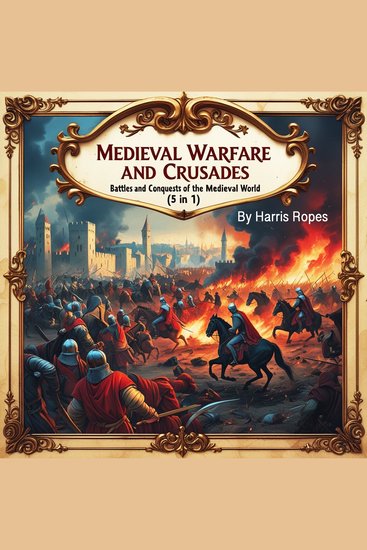
  • Medieval Warfare and Crusades - Battles and Conquests of the Medieval World (5 in 1) - cover

    Medieval Warfare and Crusades -...

    Harris Ropes

    • 0
    • 0
    • 0
    This volume presents five major narratives that shaped the geopolitics and religious landscape of Europe and the Near East from the 8th to the 15th centuries. 
    The story of Joan of Arc brings to life the courage and mysticism of a teenage girl who led French forces to victory during the Hundred Years' War, claiming divine guidance in her quest to drive out the English. Her legacy endures as both a national heroine and a symbol of spiritual resistance. 
    The Albigensian Crusade explores a lesser-known but brutal campaign within Europe itself—where the Catholic Church sought to eradicate the Cathar heresy in southern France. It reveals the tangled web of religious persecution, regional power struggles, and papal authority. 
    The Crusades section covers the series of holy wars between Christian Europe and the Muslim world over control of Jerusalem and other sacred territories. From the First Crusade’s initial fervor to the eventual decline of Christian military ambitions in the East, this section paints a vivid portrait of religious zeal, political ambition, and cultural exchange. 
    The Battle of Tours recounts the pivotal clash in 732 between Frankish forces under Charles Martel and invading Muslim armies. Often hailed as a turning point that halted Islamic expansion into Western Europe, this battle shaped the future of European Christendom. 
    The Hundred Years' War examines the long, bitter struggle between England and France over territorial claims and dynastic rights. It highlights major battles, key figures like Edward the Black Prince, and the war’s impact on national identity and military tactics. 
    Together, these five accounts offer a compelling and detailed portrait of warfare in the medieval world—where faith, politics, and ambition collided on the battlefield, forging the course of European history.
    Ver livro
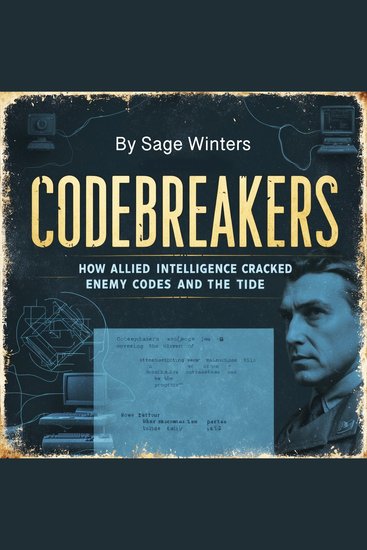
  • Codebreakers - How Allied Intelligence Cracked Enemy Codes and the Tide - cover

    Codebreakers - How Allied...

    Sage Winters

    • 0
    • 0
    • 0
    The art of codebreaking has long been an essential aspect of warfare, serving as a hidden weapon that can change the course of history. During World War II, intelligence efforts were not only about gathering information; they were about deciphering the secrets encoded by the enemy to gain a strategic advantage. As technology evolved, so did the complexity of military ciphers, making the task of breaking enemy codes more challenging and more critical than ever. "Codebreakers: How Allied Intelligence Cracked Enemy Codes and the Tide" delves into the extraordinary efforts of Allied cryptographers, whose tireless work behind the scenes helped secure victories that shifted the balance of the war. 
      
    The importance of cryptography in World War II cannot be overstated. The ability to read an enemy’s messages before they had time to act was a decisive factor in numerous key battles and campaigns. The German Enigma machine, a sophisticated encryption device, represented the pinnacle of Nazi Germany’s efforts to protect its communications. Breaking this code was essential to the Allied success, and it was a challenge that seemed insurmountable at the time. However, a group of brilliant minds, including Alan Turing, led the charge in deciphering the Enigma cipher, providing the Allies with invaluable intelligence that allowed them to anticipate German movements, thwart attacks, and save countless lives. 
      
    At the heart of this monumental achievement was Bletchley Park, a secret British facility that became the epicenter of codebreaking during the war. Here, the brightest mathematicians, linguists, and engineers worked tirelessly, often under immense pressure, to crack the German and later the Japanese codes.
    Ver livro
  • Gupta Empire - Golden Age of Art Science and Literature - cover

    Gupta Empire - Golden Age of Art...

    Rolf Hedger

    • 0
    • 0
    • 0
    The Gupta Empire, one of the most influential dynasties in Indian history, emerged in the early 4th century CE. It marked the beginning of a new era characterized by political stability, territorial expansion, and remarkable advancements in various fields. The foundation of the empire was laid by Chandragupta I, whose leadership and strategic alliances set the stage for the golden age that followed. 
    The origins of the Gupta dynasty remain somewhat obscure, but historical records suggest that they were a powerful regional clan in the Magadha region, present-day Bihar. Unlike the Mauryan Empire, which had a centralized administrative structure, the Gupta rulers adopted a more decentralized approach, allowing local rulers to maintain a degree of autonomy while still pledging allegiance to the empire. This governance model contributed to their long-lasting rule and ensured stability across their vast territories. 
    Chandragupta I, who ascended the throne around 320 CE, played a crucial role in the establishment of the empire. His most significant achievement was his matrimonial alliance with the Licchavi princess Kumaradevi, which not only strengthened his position but also expanded his influence in the fertile Ganges basin. This strategic marriage helped him consolidate power and gain the support of powerful regional factions. As a result, the empire's boundaries began to expand, laying the groundwork for future conquests.
    Ver livro
  • Nietzsche's Jewish Problem - Between Anti-Semitism and Anti-Judaism - cover

    Nietzsche's Jewish Problem -...

    Robert C. Holub

    • 0
    • 0
    • 0
    The first comprehensive account of Nietzsche's views of Jews and JudaismFor more than a century, Nietzsche's views about Jews and Judaism have been subject to countless polemics. The Nazis infamously fashioned the philosopher as their anti-Semitic precursor, while in the past thirty years the pendulum has swung in the opposite direction. The increasingly popular view today is that Nietzsche was not only completely free of racist tendencies but also was a principled adversary of anti-Jewish thought. Nietzsche’s Jewish Problem offers a definitive reappraisal of the controversy, taking the full historical, intellectual, and biographical context into account. As Robert Holub shows, a careful consideration of all the evidence from Nietzsche’s published and unpublished writings and letters reveals that he harbored anti-Jewish prejudices throughout his life.Nietzsche’s Jewish Problem demonstrates how this is so despite the apparent paradox of the philosopher’s well-documented opposition to the crude political anti-Semitism of the Germany of his day. As Holub explains, Nietzsche’s "anti-anti-Semitism" was motivated more by distaste for vulgar nationalism than by any objection to anti-Jewish prejudice.A richly detailed account of a controversy that goes to the heart of Nietzsche’s reputation and reception, Nietzsche’s Jewish Problem will fascinate anyone interested in philosophy, intellectual history, or the history of anti-Semitism.
    Ver livro