Junte-se a nós em uma viagem ao mundo dos livros!
Adicionar este livro à prateleira
Grey
Deixe um novo comentário Default profile 50px
Grey
Assine para ler o livro completo ou leia as primeiras páginas de graça!
All characters reduced
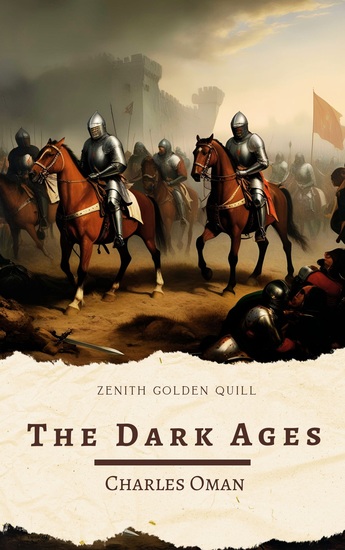
The Dark Ages - A Definitive History of Europe's Forgotten Centuries by Charles Oman - cover
LER

The Dark Ages - A Definitive History of Europe's Forgotten Centuries by Charles Oman

Charles Oman, Zenith Golden Quill

Editora: Zenith Golden Quill

  • 0
  • 0
  • 0

Sinopse

Invasions. Collapse. Faith. Rebirth. Discover the dramatic truth behind the so-called Dark Ages.

In The Dark Ages, renowned historian Charles Oman offers a vivid and authoritative account of Europe's transformation between the fall of the Roman Empire and the rise of medieval civilization. From the migrations of Germanic tribes and the spread of Christianity to the shaping of feudal societies and the foundations of modern Europe, this classic work explores how chaos and continuity coexisted across five pivotal centuries.

Oman's lucid narrative and meticulous research bring clarity to a misunderstood era—making this essential reading for students, history buffs, and lovers of European heritage.

📘 This Edition Features:
✔ Unabridged original content
✔ Kindle-optimized layout with an interactive table of contents
✔ Ideal for readers of ancient history, medieval studies, and classic nonfiction

💬 What Readers Say:
"A thorough and engaging guide to the most mysterious era in European history."
"Oman's storytelling turns dusty dates into dynamic drama."
"A timeless resource for understanding the roots of Western civilization."

📥 Download The Dark Ages today and rediscover the legacy of an age too often misunderstood.
Disponível desde: 07/05/2025.
Comprimento de impressão: 567 páginas.

Outros livros que poderiam interessá-lo

  • Structuralism - Philosophy and Patterns in Human Culture - cover

    Structuralism - Philosophy and...

    Hector Davidson

    • 0
    • 0
    • 0
    Structuralism is an intellectual movement that emerged in the early to mid-20th century, primarily influenced by the works of linguists, anthropologists, and philosophers. Its foundational premise is that human culture, including language, myths, and social institutions, can be understood through underlying structures that govern them. These structures are not always immediately visible but influence how individuals and societies behave, think, and organize themselves. 
    At its core, structuralism asserts that elements of human culture must be studied in relation to one another within a larger system. For example, language can only be fully understood when the relationships between words and their meanings are considered. This perspective contrasts with earlier intellectual traditions that focused on individual elements, seeking meaning through isolated concepts. Instead, structuralism emphasizes the interconnections and patterns that form the basis of human existence. 
    The intellectual origins of structuralism can be traced back to the work of Swiss linguist Ferdinand de Saussure. In his work, Saussure argued that language is a system of signs, each of which acquires meaning not by its inherent qualities but through its relationship to other signs. His concept of the "signifier" (the word or symbol) and the "signified" (the concept or meaning) set the stage for structuralist thought. Saussure’s approach highlighted the importance of studying language as a system of differences, where meanings are produced not in isolation but in opposition to other meanings.
    Ver livro
  • Dostoevsky - A Very Short Introduction - cover

    Dostoevsky - A Very Short...

    Deborah Martinsen

    • 0
    • 0
    • 0
    Fyodor Dostoevsky became the writer best known for his treatment of the big questions of ethics, religion, and philosophy. 


    In this Very Short Introduction, Deborah Martinsen explores Dostoevsky's tumultuous life story: his political imprisonment and narrow escape from execution, his Siberian exile, his gambling addiction, his romantic marriage, and his literary success. Martinsen also delves into his major works—Notes from Underground, Crime and Punishment, The Idiot, Demons, The Brothers Karamazov, The Diary of a Writer, and more. Each chapter analyzes a key theme or aspect of Dostoevsky's writing that showcases his profound insights into human nature and society: doubling, freedom, shame, social justice, scandal, aesthetics, ethics, faith, and the eternal questions. Martinsen also demonstrates how Dostoevsky's novels remain relevant today as they address pressing questions about freedom, morality, and meaning in a complex world.
    Ver livro
  • Empower Your Wealth: Break Free from Financial Traps and Thrive! - "Elevate your financial success with inspiring audio lessons that help you break free and prosper!" - cover

    Empower Your Wealth: Break Free...

    Cyrus Merrick

    • 0
    • 0
    • 0
    Audiobook Title: Empower Your Wealth: Break Free from Financial Traps and Thrive! 
    Are you ready to elevate your financial journey and fully harness your wealth-building potential? 
    Searching for an all-inclusive guide that equips you with everything necessary to break free from financial constraints and thrive? 
    Your quest ends here! 
    This audiobook acts as your ultimate resource for deepening your understanding, mastering essential skills, and engaging in practical exercises designed to empower your financial success. 
    Updated for the latest financial strategies and trends in 2024. 
    Key Features of This Comprehensive Guide: 
    - In-depth insights on transforming your mindset and unlocking your financial potential. 
    - Detailed explanations of essential financial concepts. 
    - Effective strategies for achieving financial literacy and overcoming barriers. 
    What sets this audiobook apart is its thorough coverage, providing vital information crucial for your financial triumph. Concepts are not just briefly touched upon; they are explored in detail. 
    Please be aware that this guide is an independent resource and not affiliated with any official financial institution. 
    Crafted with an intuitive structure and straightforward language, "Empower Your Wealth" guarantees seamless transitions between topics. Say goodbye to confusing jargon, and embrace clear, accurate, and accessible content. 
    So, why delay? Click the BUY NOW button, secure your copy, and embark on your journey toward financial empowerment and success! 
    Take charge of your financial future today!
    Ver livro
  • How to Get Rid of a Narcissist - 7 Proven Strategies to Identify Confront and Free Yourself from Narcissistic Influence and Reclaim Your Health and Emotional Well-being - cover

    How to Get Rid of a Narcissist -...

    Whitney Barton

    • 0
    • 0
    • 0
    Narcissists Holding You Back?  
    Kick them to the Curb and Get Back on Track! 
    Tired of being surrounded by people using you for their benefit?   
    Feeling lost due to Narcissistic Abuse and longing to find yourself or be human again?  
    Want to flee from all this Narcissistic abuse and manipulation but clueless about how to start?  
    If all these hit close to home, then please keep reading.  
    Being entangled in a Narcissistic web is no easy feat. Combined with your past experiences with various types of abuse, family pressure, and low self-esteem, victims are easily trapped in a quicksand-like life that without any help, can cause them a lifetime of damage in all forms.  
    Don't let yourself or any of your loved ones be snared by this type of situation any longer. Let Whitney Barton enlighten you on what to do. With her newest addition, "How to Get Rid of a Narcissist", Barton unveils what narcissists are, how they maneuver into someone else's life, what makes them tick, and the impact of their actions on someone else's life. Together, she will show you the way how to break free from their grasp to your healing recovery.  
    Remember, no matter what happens do not not resort to blaming yourself. Let "How to Get Rid of a Narcissist" help you find your way out to happiness. Keep one handy or hand this over to a friend who needs it. Together you can paddle your way to safety, recovery, and a lifetime free from Narcissistic PTSD.  
    Fight your way out of this hellhole, together! 
    Get Your’s Today!
    Ver livro
  • Urban Crime and Safety - Understanding and Addressing Issues - cover

    Urban Crime and Safety -...

    Lyric Vale

    • 0
    • 0
    • 0
    Urban crime is a complex and pervasive issue that affects millions of people across the globe. As cities continue to grow and evolve, the challenges of maintaining safety and reducing criminal activity become more pressing. Urban areas, often characterized by dense populations, diverse social dynamics, and limited resources, can create an environment where crime thrives. These cities face a unique set of circumstances that contribute to the rise of criminal activities, ranging from petty theft to violent crimes. The relationship between urban crime and safety is multifaceted and requires a comprehensive understanding of its causes, impact, and the strategies necessary for effective crime prevention. 
    The rise in urban crime can be attributed to several factors, including social inequality, economic disparity, inadequate law enforcement, and environmental design issues. High levels of poverty, unemployment, and lack of education in certain neighborhoods often serve as breeding grounds for criminal behavior. In many urban centers, individuals with limited opportunities turn to crime as a means of survival or social mobility. The breakdown of social networks and a lack of community cohesion further exacerbate these challenges, making it difficult to foster a sense of security and mutual trust among residents. 
    Urban crime also places a significant strain on local law enforcement and public resources. Police departments are often overwhelmed by the volume and diversity of crimes that occur in cities. Additionally, urban environments may present logistical challenges for law enforcement agencies, such as limited manpower, insufficient technology, and high crime concentrations in certain areas. This can lead to delayed responses, reduced effectiveness, and strained relations between law enforcement and the communities they serve.
    Ver livro
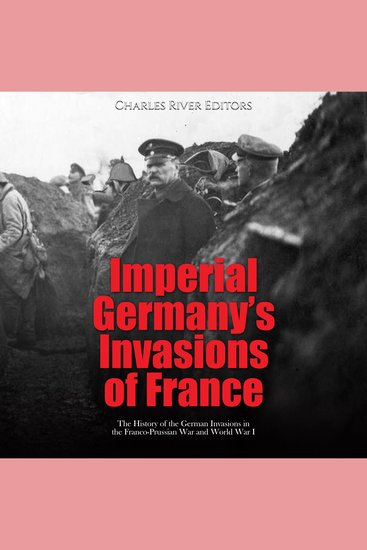
  • Imperial Germany’s Invasions of France: The History of the German Invasions in the Franco-Prussian War and World War I - cover

    Imperial Germany’s Invasions of...

    Editors Charles River

    • 0
    • 0
    • 0
    Prussian leaders, especially Otto von Bismarck, the chancellor and advisor to Prussia’s king, believed Prussia could be a united and respected power, but only without the traditional Austrian dominance. At the time, the Austrian empire was a collection of ethnically diverse peoples and had been dominated by a socio-political conservatism that sought to keep the empire ruled in Hapsburg tradition.  
    After Prussia was victorious in the Austro-Prussian War, Bismarck played a waiting game where the unification of Germany was concerned, as the joining of the southern states - initially resistant to Prussian rule, friendly with Austria, and bent on independence - would have to be overcome. What was needed was “a clear case of French aggression” toward either Prussia or the southern states. Not only would such a move by Emperor Napoleon III trigger the terms of the treaty between the German states, but it would keep the remaining world powers out of the conflict. It would be a dispute over the throne of Spain that would cause Napoleon III to act. 
    	If trench warfare was an inevitability during the war, it is only because the events leading up to the First Battle of the Marne were quite different. The armies at the beginning of the war moved quickly through the land, but the First Battle of the Marne devolved into a bloody pitched battle that led to the construction of trenches after the Germans retreated, blocked in their pursuit of Paris. When the aftermath disintegrated into a war between trenches, some Germans thought they had the upper hand since they were occupying French territory, but with fewer soldiers than the combined Allied nations and fewer resources and supplies, it was possibly only a matter of time before they were ultimately defeated. The commander of the German armies, General Helmuth von Moltke, allegedly said to Kaiser Wilhelm II immediately after the First Battle of the Marne, "Your Majesty, we have lost the war."
    Ver livro