¡Acompáñanos a viajar por el mundo de los libros!
Añadir este libro a la estantería
Grey
Escribe un nuevo comentario Default profile 50px
Grey
Suscríbete para leer el libro completo o lee las primeras páginas gratis.
All characters reduced
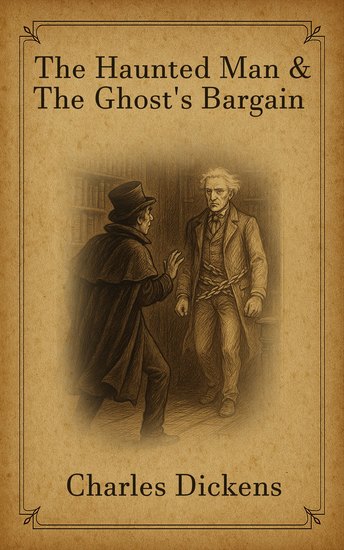
The Haunted Man and the Ghost's Bargain - cover

The Haunted Man and the Ghost's Bargain

Charles Dickens

Editorial: CLXBX

  • 0
  • 0
  • 0

Sinopsis

The Haunted Man and the Ghost's Bargain is a haunting and thought-provoking novella by Charles Dickens that explores memory, suffering, and the moral consequences of escaping pain. As the final entry in Dickens's Christmas books, the story blends supernatural elements with deep psychological and social insight.

The narrative follows Professor Redlaw, a learned but emotionally tormented man who is visited by a mysterious phantom—his own spectral double. The ghost offers Redlaw a dangerous gift: the ability to forget all painful memories and regrets. Believing this release will free him from sorrow, Redlaw accepts the bargain, unaware of its far-reaching effects.

As the power spreads to others around him, the loss of memory leads not to peace, but to emotional emptiness, cruelty, and moral confusion. Through these chilling consequences, Dickens reveals that suffering and remembrance are essential to empathy, compassion, and human connection. Pain, the novel suggests, is inseparable from growth and moral responsibility.

The Haunted Man and the Ghost's Bargain is a powerful meditation on the nature of memory and forgiveness. Darker in tone than Dickens's other Christmas tales, it delivers a profound message about the necessity of shared human suffering. Rich in symbolism and moral depth, the story remains a compelling and unsettling classic that asks whether forgetting our past would truly make us better—or less human.
Disponible desde: 05/02/2026.
Longitud de impresión: 116 páginas.
Otros libros que te pueden interesar

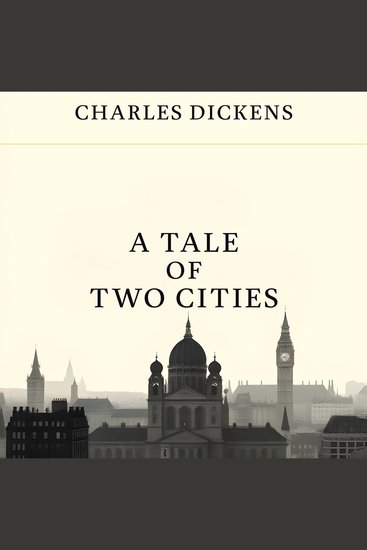
  • A Tale of Two Cities - cover

    A Tale of Two Cities

    Charles Dickens

    • 0
    • 0
    • 0
    "A Tale of Two Cities" by Charles Dickens is a historical novel written in the mid-19th century. Set against the backdrop of the French Revolution, the story begins by exploring the social and political turmoil of the era, introducing key themes such as resurrection, sacrifice, and the contrast between oppression and liberty.  
    The narrative follows Mr. Jarvis Lorry on his mission to retrieve Dr. Alexandre Manette, an imprisoned former physician who has been "recalled to life" after years of suffering. Dickens vividly depicts the contrasting conditions in England and France, highlighting the hardships faced by ordinary people. 
    A notable scene unfolds as Mr. Lorry travels on a Dover mail coach and encounters a mysterious messenger who delivers a message concerning Dr. Manette. Upon arriving in Paris, the ominous undertones of the Revolution are palpable, with Madame Defarge's wine shop symbolizing the growing discontent.  
    The story hints at the challenges ahead as the characters intertwine in a tale of personal and political upheaval, setting the stage for a drama that explores the quest for justice in the face of tyranny.
    Ver libro
  • Old Age - cover

    Old Age

    Anton Chekhov

    • 0
    • 0
    • 0
    In Old Age by Anton Chekhov we have the theme of change, loss, renewal, memories, guilt and despair. Taken from his The Complete Stories collection the story is narrated in the third person by an unnamed narrator and very early on in the story the reader realises that Chekhov may be exploring the theme of change. Since Uzelkov has returned to his hometown he cannot imagine the differences the town has undertaken. It is not the place that he has left and there is a sense of modernity. Even the old waiter cannot remember the parts of the town that Uzelkov can. What is also interesting about the town is that Uzelkov has many memories there. Including marrying and divorcing his first wife there. But this seems like a distant memory and only Shapkin can recall the marriage and the divorce. For he was responsible for the legal case and was paid handsomely for his duties.
    Over all Old Age is sad tale that lets the reader know that despite the passing of time, time is not a great healer and that the only real winner is Shapkin.
    Ver libro
  • Morphine - This story is perhaps the greatest depiction and description in literature of the human psyche going through addiction - cover

    Morphine - This story is perhaps...

    Mikhail Bulgakov

    • 0
    • 0
    • 0
    Mikhail Bulgakov was born on 15th May 1891 in Kiev, in the Kiev Governorate of the Russian Empire, into a Russian family.  He was one of seven children. 
     
    In 1901, Bulgakov attended the First Kiev Gymnasium, and developed a keen interest in Russian and European literature, theatre and opera.  After the death of his father in 1907, his mother assumed responsibility for his education.  After graduating Bulgakov entered the Medical Faculty of Kiev University and then took up a post as physician at the Kiev Military Hospital. 
     
    At the outbreak of the First World War, he volunteered as a doctor and was sent directly to the front, where he was badly injured at least twice.  To suppress chronic pain, especially in the abdomen, he injected morphine.  It took years to wean himself off. 
     
    He now took up medical posts in various towns and in 1919, he was mobilised by the Ukrainian People's Army and assigned to the Northern Caucasus.  There, he became seriously ill with typhus and barely survived.  
     
    After this illness, Bulgakov abandoned his medicine to pursue writing.  He moved to Vladikavkaz and had two plays staged there with great success.  He wrote too for various newspapers and other outlets, but his critics were many.  And growing. 
     
    When a Moscow's theatre director severely criticised Bulgakov, Stalin personally protected him, saying that a writer of Bulgakov's quality was above ‘party words’ like ‘left’ and ‘right’.   Indeed, it is said that Stalin watched ‘The Days of the Turbins’ at least 15 times. 
     
    It was not to last and by March 1929, Bulgakov's career was ruined when Government censorship stopped publication of any of his work and plays. 
     
    In despair, Bulgakov wrote a personal letter to Stalin.  He requested permission to emigrate.  He received a phone call from the Soviet leader, who asked the writer whether he really desired to leave. He replied that a Russian writer cannot live outside of his homeland.  Stalin thus gave him permission to continue working. In May 1930, he re-joined the theater, as stage director's assistant.  
     
    During the last stressful decade of his life, and in poor health, Bulgakov continued to work on ‘The Master and Margarita’, wrote plays, critical works, stories, and continued translations and dramatisations of novels.  Many of them were not published, others were derided by critics.  
     
    On 10th March 1940, Mikhail Afanasyevich Bulgakov died from nephrosclerosis.  He was 48. 
     
    ‘The Master and Margarita’ was not published in any form until the mid-1960’s 
     
    In this story Bulgakov relates the terrifying and hellish descent into addiction that seems so avoidable and yet so chillingly not.
    Ver libro
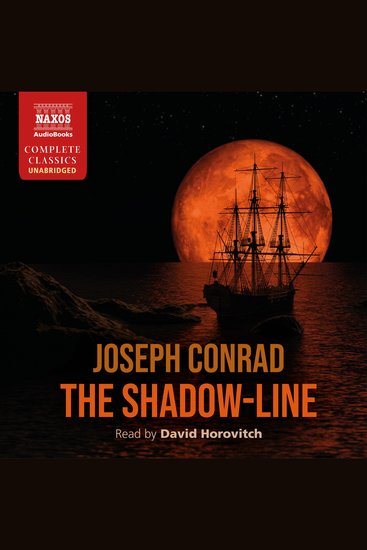
  • The Shadow-Line - cover

    The Shadow-Line

    Joseph Conrad

    • 0
    • 0
    • 0
    An unsettling tale of plague, drift and terror, The Shadow-Line documents a young seaman’s coming of age after he is recruited to captain a ship for the first time. Bad luck and disease haunt the inexperienced hero and his crew, and the evil legacy of the previous captain overshadows them with a feeling of supernatural menace. Against all odds, the young captain must get his crew through the Gulf of Siam to safety in Singapore, before they succumb to malaria and the curse of his mad predecessor. Written in 1915 and based on Conrad’s own experiences 27 years earlier, The Shadow-Line is a gripping take on the lines between youth and maturity, sanity and madness.
    Ver libro
  • The Hollow Needle - Further Adventures of Arsène Lupin - cover

    The Hollow Needle - Further...

    Maurice Leblanc

    • 0
    • 0
    • 0
    In the third installment of the Arsène Lupin series, we find our gentleman burglar up against Isidore Beautrelet, a young but gifted amateur detective who is determined to foil Lupin once and for all. As he hunts down the Hollow Needle, a needle that contains secrets that have been passed down from French kings since Julius Caesar, Beautrelet is never too far behind.
    Ver libro
  • Jane Eyre: A Christian Readers' Guide - cover

    Jane Eyre: A Christian Readers'...

    Rachel Kovaciny

    • 0
    • 0
    • 0
    Explore the story of Jane Eyre in a brand new light. With prompts for discussions, thought provoking questions, and a breakdown and analysis of each chapter,Rachel Kovaciny brings to the forefront the major and minor themes and valuable lessons to be learned from this classic novel. An excellent companion for the novel, this guide demonstrates a love and appreciation for the classics and elevates understanding through the author’s clear grasp of the historical context as well as Charlotte Brontë’s background. Kovaciny’s guide also approaches each analysis through the lens of a Christian worldview. Viewing the heartbreak, growth, introspection, and lessons of love and loss through a Biblical perspective allows for an even deeper understanding of the characters, plot, and even Brontë herself. A wonderful library addition for fans of classic literature, homeschool families, book clubs, or those looking to further their education on the classics, this thoughtful and thorough guide is a must have!
    Ver libro