¡Acompáñanos a viajar por el mundo de los libros!
Añadir este libro a la estantería
Grey
Escribe un nuevo comentario Default profile 50px
Grey
Suscríbete para leer el libro completo o lee las primeras páginas gratis.
All characters reduced
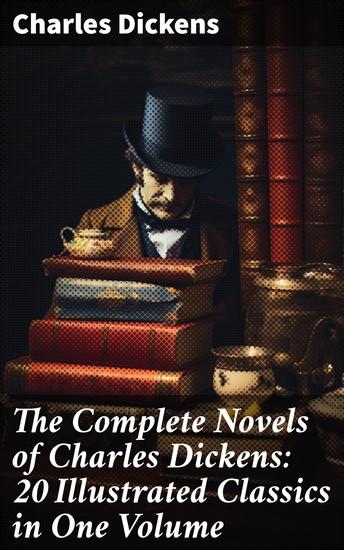
The Complete Novels of Charles Dickens: 20 Illustrated Classics in One Volume - Masterpieces of Victorian Literature and Social Commentary - cover

The Complete Novels of Charles Dickens: 20 Illustrated Classics in One Volume - Masterpieces of Victorian Literature and Social Commentary

Charles Dickens

Editorial: Good Press

  • 0
  • 0
  • 0

Sinopsis

The Complete Novels of Charles Dickens: 20 Illustrated Classics in One Volume offers a comprehensive journey through the rich tapestry of Victorian England, capturing the complexities of its society and human experience. Dickens's unparalleled narrative style, characterized by a blend of satire, humor, and deep empathy, invites readers into vividly detailed worlds populated by memorable characters. This volume showcases the complete spectrum of his works, from iconic tales like 'A Tale of Two Cities' and 'Great Expectations' to lesser-known gems, all meticulously illustrated, which enhances the visual experience of his profound storytelling. Charles Dickens, born in 1812, emerged from a tumultuous childhood marked by poverty and hardship, experiences that profoundly influenced his literary voice. His works often reflect his ardent social critique and compassion for the marginalized, showcasing his keen observations of human nature and social injustices. Dickens'Äôs commitment to reforming societal issues, especially those affecting the poor, is rendered with a unique blend of pathos and exuberance in this collection, providing critical insights into the era'Äôs socio-economic conditions. For scholars, students, and casual readers alike, this volume is an indispensable addition to any literary collection. It not only celebrates Dickens'Äôs monumental contributions to English literature but also invites contemplation on the enduring relevance of his themes. Readers are urged to immerse themselves in these timeless narratives, which resonate with contemporary issues and embody the richness of human experience.
Disponible desde: 15/01/2024.
Longitud de impresión: 11815 páginas.
Otros libros que te pueden interesar

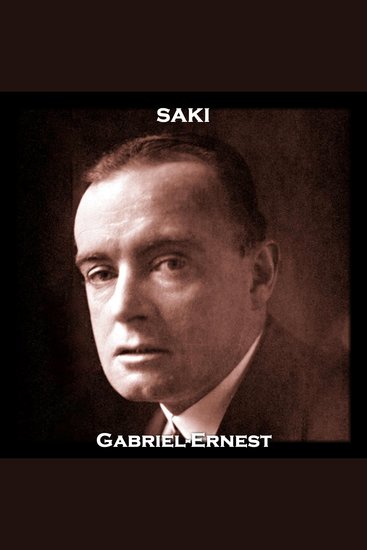
  • Gabriel-Ernest - From their pens to your ears genius in every story - cover

    Gabriel-Ernest - From their pens...

    Saki Saki

    • 0
    • 0
    • 0
    Hector Hugh Munro, more familiarly known by his pen-name ‘Saki’ was born in what was then Akyab in British Burma on 18th December 1870. His father was an Inspector General for the Indian Imperial Police, and his mother the daughter of a Rear Admiral. 
    When he was 2 his mother died and he and his siblings were sent back to England to be raised by their grandmother and paternal maiden aunts in a strict, puritanical household near Barnstaple, Devon. Educated by governesses Saki used many of these women as character models for his later writing. 
    At 17 his father retried and returned to England and then embarked on a series of European travels with Saki and his siblings. 
    After a short stint working in Burma with the Indian Imperial Police Saki decided to move to London to make a living as a writer. Initially he wrote as a journalist for a number of newspapers and magazines before attempting an historical study, ‘The Rise of the Russian Empire’, whose real value lay in directing him to writing short stories instead, the first of which, ‘Dogged’, he published in 1899. 
    From here it was a short stab of the pen to writing political satire before in 1902 he became the foreign correspondent for The Morning Post, first in the Balkans, then Russia, Paris and back to London in 1908, where 'the agreeable life of a man of letters with a brilliant reputation awaited him.'  
    Collections of his short stories full of witty, mischievous and often macabre stories that satirized Edwardian society and two novels now appeared in the years up to the Great War.  At its’ outbreak he was 43 but managed to join as an ordinary trooper. More than once he returned to the battlefield when officially too sick or injured.  
    On 14th November 1916 Hector Hugh Munro was sheltering in crater during the Battle of the Ancre, when he was shot and killed by a German sniper. According to several sources, his last words were "Put that bloody cigarette out!"
    Ver libro
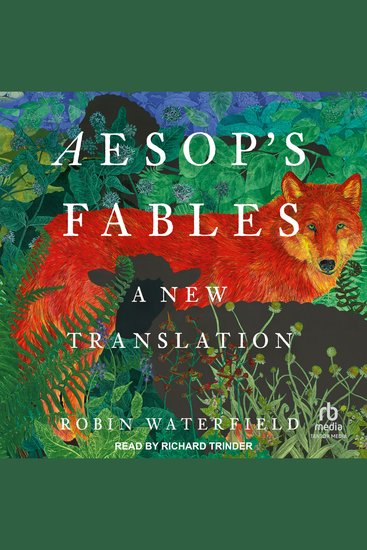
  • Aesop's Fables - A New Translation - cover

    Aesop's Fables - A New Translation

    Aesop Aesop, Robin Waterfield

    • 0
    • 0
    • 0
    From a renowned scholar and translator, the definitive translation of Aesop's Fables 


    Aesop's fables are among the most familiar and best-loved stories in the world. Tales like "The Tortoise and the Hare," "The Dog in the Manger," and "Sour Grapes" have captivated us for generations. The fables delight us and teach timeless truths. Aesop's tales offer us a world fundamentally simpler to ours—one with clear good and plain evil—but nonetheless one that is marked by political nuance and literary complexity. 


    Newly translated and annotated by renowned scholar Robin Waterfield, this definitive translation shines a new light on four hundred of Aesop's most enduring fables.
    Ver libro
  • Captain Rogers - From their pens to your ears genius in every story - cover

    Captain Rogers - From their pens...

    W Jacobs

    • 0
    • 0
    • 0
    William Wymark Jacobs was born on 8th September 1863 in Wapping, East London.  
    He was educated at a private school and then Birkbeck Literary and Scientific Institution, now part of the University of London. 
    In 1879, Jacobs began work as a clerk in the civil service, in the Post Office Savings Bank.  In 1885 his first short story was published but it was not until almost the turn of the century that he would abandon his post office career to that as a full-time writer. By then he was a very popular author, his collections selling extremely well and with an excellent income. 
    His best-known work is the macabre ‘The Monkey's Paw’ and he is also highly regarded for his ghost stories although much of his remaining short story output is streaked with humour.  His characters are immediately identifiable and we all know that life will take chunks out of them in no time at all.  
    Jacobs married the noted suffragette Agnes Eleanor Williams in 1900 at West Ham, Essex. They went on to have two daughters and three sons as they settled down to life.  
    By the outbreak of the First World War his literary output had declined and he now mainly spent his time rewriting his earlier stories for the stage.  In all he wrote 18 plays. 
    W W Jacobs died on 1st September 1943 at Hornsey Lane, Islington in London. He was 79.
    Ver libro
  • As the Crow Flies - From their pens to your ears genius in every story - cover

    As the Crow Flies - From their...

    John Davys Beresford

    • 0
    • 0
    • 0
    John Davys Beresford was born on 17th March 1873.  His life was blighted by infantile paralysis which left him partially disabled. 
    After an education at Oundle school he trained to be an architect.  However, he quickly decided that his life was to be centred on a literary career.  His first offerings were in drama and as a journalist. 
    As well as being a book reviewer for the Manchester Guardian he contributed to New Statesman, The Spectator, Westminster Gazette, and the Theosophist magazine The Aryan Path.   
    His spiritual journey in early adulthood had claimed him as an agnostic, in defiance of his clergyman father.  This view he later abandoned in preference to describing himself as a Theosophist and a pacifist. 
    As well as many novels, many themed with spiritual and philosophical elements.  Beresford was also a gifted short story writer particularly across the science-fiction, horror and ghost genres. 
    All of these elements helped him to obtain a prominent place in Edwardian Literary London. 
    John Davys Beresford died on the 2nd February 1947. He was 73.
    Ver libro
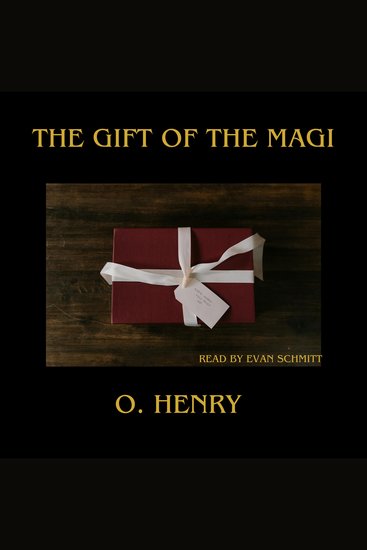
  • The Gift of the Magi - cover

    The Gift of the Magi

    O. Henry

    • 0
    • 0
    • 0
    “The Gift of the Magi” by O. Henry is a timeless Christmas tale of love, sacrifice, and the true spirit of giving. On Christmas Eve, a young couple in a modest New York apartment each part with their most prized possession to buy a gift for the other—only to discover the deeper meaning of devotion and generosity. With O. Henry’s signature wit and a heartwarming twist, this classic story remains as moving today as it was over a century ago. 
    Cover Photo by cottonbro studio: https://www.pexels.com/photo/box-with-white-ribbon-on-a-wooden-surface-6833317/
    Ver libro
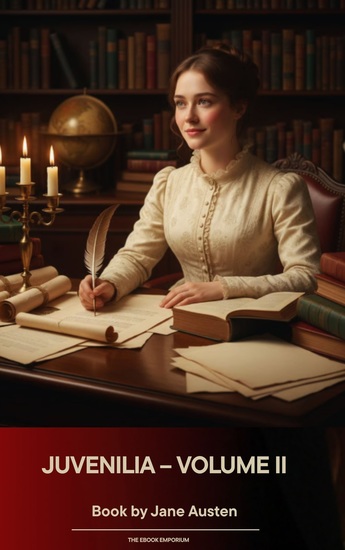
  • Juvenilia – Volume II - cover

    Juvenilia – Volume II

    Jane Austen

    • 0
    • 0
    • 0
    "Run mad as often as you choose; but do not faint!"
    
    If Volume I was the spark, Juvenilia – Volume II is the fire. In this volume, a mid-teen Jane Austen takes aim at the "cult of sensibility" that dominated the novels of her day. The centerpiece, "Love and Freindship" (spelled intentionally with Austen's original flourish), is a brilliant epistolary parody featuring heroines who faint on every sofa they encounter and wander the countryside in a state of perpetual, melodramatic "distraction." This volume also features her iconic "History of England," where she gleefully abandons historical accuracy to defend Mary, Queen of Scots, and mock the "vile" Elizabeth I. It is a collection that proves Austen was a master of irony before she was even twenty.
    
    The Masterpiece of Parody: Love and Freindship: Through a series of letters, Austen deconstructs the romantic tropes of the era. Her characters, Laura and Sophia, believe that "feeling" is more important than "common sense," leading to a series of absurd adventures involving stolen money, secret marriages, and dying of a "chill" caught while fainting in the dew.
    
    The Bias of a Historian: In The History of England, Austen mocks the dry, "objective" historians of her time. Writing as a "partial, prejudiced, and ignorant historian," she proves that history is often just a matter of who you like and who you don't—a biting critique of how narratives are constructed that still feels modern today.
    
    A Developing Genius: From the unfinished "Lesley Castle" to the sharp "Collection of Letters," this volume shows Austen experimenting with different voices and structures. You can see the DNA of Northanger Abbey and Sense and Sensibility being formed in these rowdy, rebellious pages.
    
    Join the fun at the Austen family table. Purchase "Juvenilia – Volume II" today.
    Ver libro