Junte-se a nós em uma viagem ao mundo dos livros!
Adicionar este livro à prateleira
Grey
Deixe um novo comentário Default profile 50px
Grey
Assine para ler o livro completo ou leia as primeiras páginas de graça!
All characters reduced
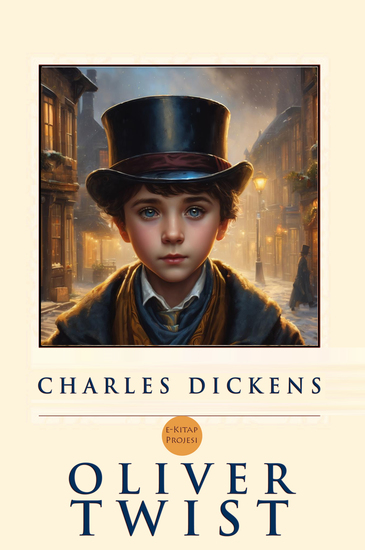
Oliver Twist - cover
LER

Oliver Twist

Charles Dickens

Editora: E-Kitap Projesi & Cheapest Books

  • 0
  • 0
  • 0

Sinopse

Charles Dickens was born on 1812, in Portsea, England. His parents were middle-class, but they suffered financially as a result of living beyond their means. When Dickens was twelve years old, his family's dire straits forced him to quit school and work in a blacking factory, a place where shoe polish is made. Within weeks, his father was put in debtor's prison, where Dickens's mother and siblings eventually joined him. At this point, Dickens lived on his own and continued to work at the factory for several months. The horrific conditions in the factory haunted him for the rest of his life, as did the experience of temporary orphanhood. Apparently, Dickens never forgot the day when a more senior boy in the warehouse took it upon himself to instruct Dickens in how to do his work more efficiently. For Dickens, that instruction may have represented the first step toward his full integration into the misery and tedium of working-class life. The more senior boy's name was Bob Fagin. Dickens's residual resentment of him reached a fevered pitch in the characterization of the villain Fagin in Oliver Twist.

After inheriting some money, Dickens's father got out of prison and Charles returned to school. As a young adult, he worked as a law clerk and later as a journalist. His experience as a journalist kept him in close contact with the darker social conditions of the Industrial Revolution, and he grew disillusioned with the attempts of lawmakers to alleviate those conditions. A collection of semi-fictional sketches entitled Sketches by Boz earned him recognition as a writer. Dickens became famous and began to make money from his writing when he published his first novel, The Pickwick Papers, which was serialized in 1836 and published in book form the following year.

In 1837, the first installment of Oliver Twist appeared in the magazine Bentley's Miscellany, which Dickens was then editing. It was accompanied by illustrations by George Cruikshank, which still accompany many editions of the novel today. Even at this early date, some critics accused Dickens of writing too quickly and too prolifically, since he was paid by the word for his serialized novels. Yet the passion behind Oliver Twist, animated in part by Dickens's own childhood experiences and in part by his outrage at the living conditions of the poor that he had witnessed as a journalist, touched his contemporary readers. Greatly successful, the novel was a thinly veiled protest against the Poor Law of 1834.

In 1836, Dickens married Catherine Hogarth, but after twenty years of marriage and ten children, he fell in love with Ellen Ternan, an actress many years his junior. Soon after, Dickens and his wife separated, ending a long series of marital difficulties. Dickens remained a prolific writer to the end of his life, and his novels—among them Great Expectations, A Tale of Two Cities, A Christmas Carol, David Copperfield, and Bleak House—continued to earn critical and popular acclaim. He died of a stroke in 1870, at the age of 58, leaving The Mystery of Edwin Drood unfinished.

Oliver Twist opens with a bitter invective directed at the nineteenth-century English Poor Laws. These laws were a distorted manifestation of the Victorian middle class's emphasis on the virtues of hard work. England in the 1830s was rapidly undergoing a transformation from an agricultural, rural economy to an urban, industrial nation. The growing middle class had achieved an economic influence equal to, if not greater than, that of the British aristocracy.

In the 1830s, the middle class clamored for a share of political power with the landed gentry, bringing about a restructuring of the voting system. Parliament passed the Reform Act, which granted the right to vote to previously disenfranchised middle-class citizens. This desire gave rise to the Evangelical religious movement and inspired sweeping economic and political change.
Disponível desde: 25/01/2024.
Comprimento de impressão: 600 páginas.
Outros livros que poderiam interessá-lo

  • Shakespeare for Every Night of the Year - cover

    Shakespeare for Every Night of...

    Colin Salter

    • 0
    • 0
    • 0
    Immerse yourself in the sublime words of the Bard with this sumptuous anthology of Shakespeare, with one entry for every night of the year.
    Chosen especially by a Shakespeare fanatic to reflect the changing seasons and daily events, the entries in this glorious book include:
    Romeo and Juliet on Valentine's Day.
    A Midsummer Night's Dream in Midsummer.
    The witches of Macbeth around their cauldron on Halloween.
    Also featured is one of Shakespeare's only two mentions of football for the anniversary of the first FA cup final. 
    Beautifully illustrated with favourite scenes from Shakespeare's best-loved plays, this magnificent volume is a fun introduction to the well-known work and lesser known plays and poetry and is designed to be accessible to both adults and curious children.
    Keep this book by your bedside and luxuriate in the rich language of the greatest writer the world has ever known, for entertainment, relaxation and timeless wisdom every night of the year.
    Ver livro
  • Imaginative Woman An - From their pens to your ears genius in every story - cover

    Imaginative Woman An - From...

    Thomas Hardy

    • 0
    • 0
    • 0
    Thomas Hardy was born in the hamlet of Upper Bockhampton about three miles east of Dorchester in Dorset, England, on 2nd June 1840.  
    Despite a fairly wide education and being an avid reader his parents thought it unlikely he would lead a successful scholarly or clerical career and he was apprenticed in 1856, at age 16, to a local architect whose speciality was in church restoration.  Hardy’s only opportunity to read was in the morning before work between the hours of five and eight.  
    On the back of a failed love affair he moved to London and spent five years working as an assistant to the architect Arthur Blomfield, also a restorer and designer of churches. Hardy though had by now become disillusioned with institutionalised forms of Christianity and abandoned any lingering hopes of ordination in the Anglican Church.  However, his writing of poetry was now flourishing, although it was still rejected for publication.  
    His novel ‘Desperate Remedies’, was published anonymously in 1871 and he now resolved to write full time though he was not yet in a position to achieve financial security or literary success. His second novel, ‘Under the Greenwood Tree’, appeared in 1872 and in 1873 ‘A Pair of Blue Eyes’, the most autobiographical of his works arrived. With ‘Far From the Madding Crowd’ in 1874, came critical acclaim, public attention and financial success. This was repeated in 1878 with ‘The Return of the Native’, and the ensuing years saw him rise to ever greater popularity.  
    His classic ‘The Mayor of Casterbridge’ arrived in 1886 and 5 years later ‘Tess of the d’Urbervilles’. The latter only saw publication after extensive alterations to its plot and the deletion of long passages to lessen the shock to the prudish Victorian audience who were dismayed by the seduction and ruin of a young girl by a rakish aristocrat.  
    ‘Jude the Obscure’, his last novel, suffered the same fate when it was published in 1895.  The uproar so disturbed him that he returned to poetry. In 1898 he had an earlier poetry collection, ‘Wessex Poems’ published. 
    Hardy spent the years between 1903 and 1908 writing ‘The Dynasts’, an epic poem on the Napoleonic Wars. 
    In his twilight years came honours and awards from the great and the good in recognition of his stature as one of the most outstanding of British authors across novels, short stories and poetry. George V conferred on him the Order of Merit in 1910. 
    From 1920 to 1927 he worked, in secret, on his autobiography, which was later published after his death as the work of his second wife, Florence Hardy.  
    Thomas Hardy OM died on the 11th January 1928. 
    His heart was buried alongside his first wife in Stinsford churchyard, Dorchester.
    Ver livro
  • A Haunted House - From their pens to your ears genius in every story - cover

    A Haunted House - From their...

    Virginia Woolf

    • 0
    • 0
    • 0
    Adeline Virginia Woolf was born on the 25th January 1882 in South Kensington in London. 
    Although lauded as a founder of modernist writing with such classics as ‘Orlando’, ‘Mrs Dalloway’ and ‘To the Lighthouse’ and, of course, many classic short stories, her background is filled with elements of tragedy that she somehow overcame to become such a revered writer.   Her mother died when she was 13, her half-sister Stella two years later and with it her first of several nervous breakdowns.  Appallingly it was later found that three of her half-brothers had sexually abused her so darkness must have seemed ever present.   
    She began writing professionally at age 20 but her father’s death two years later brought a complete mental collapse and she was briefly institutionalised.  Somehow she found within herself a literary career and with it great innovations in writing; she was a pioneer of “stream of consciousness”.    
    Her tight circle of friends were the founders of the Bloomsbury Group, a movement whose legacy still influences across the arts and society in many way to this day.   
    Whilst the dark periods continued to interrupt her emotional state her rate of work never ceased.  Until, on 28th March 1941, Woolf put on her overcoat, filled up its pockets with stones, and walked into the River Ouse, in Lewes, East Sussex and drowned herself.  Her body was not recovered until the 18th April.  She was 59. 
    She left behind a note which read in part “Dearest, I feel certain that I am going mad again.  I feel we can't go through another of those terrible times.  And I shan't recover this time.  I begin to hear voices, and I can't concentrate.  So I am doing what seems the best thing to do”.
    Ver livro
  • The Imp of the Perverse - cover

    The Imp of the Perverse

    SAMPI Books, Edgar Allan Poe

    • 0
    • 0
    • 0
    In the short story "The Imp of the Perverse", Edgar Allan Poe deals with the psychology of guilt and self-destruction. A man, after committing a murder in order to inherit a fortune, is tormented by the need to confess his crime, driven by an irresistible impulse, the "demon of perversity", which leads him to his own ruin.
    Ver livro
  • Timeless Terrors Vol 1 - Volume One Classic Horror Collection Narrated by Horror Author Jonathan Dunne - cover

    Timeless Terrors Vol 1 - Volume...

    Various Authors

    • 0
    • 0
    • 0
    Enter a world where fear is eternal. Timeless Terrors: Volume One gathers ten masterworks of Gothic and classic horror, each a dark journey into the uncanny and the macabre. Witness the nightmarish transformation of The Metamorphosis, the creeping dread of The Yellow Wallpaper, the sinister power of The Monkey’s Paw, and the chilling vengeance of The Cask of Amontillado. These stories, haunting readers for over a century, now come alive through the masterful narration of Amazon bestselling horror author Jonathan Dunne. 
    This omnibus includes: 
    The Metamorphosis, The Outsider, Tell-Tale Sign, The Yellow Wallpaper, The Oval Portrait, The Monkey’s Paw, The Cask of Amontillado, Dracula’s Guest, Dagon, and The Damned Thing. 
    Immerse yourself in tales of terror that defy time—where every shadow hides a secret, every silence whispers a warning, and every page is a journey into the unknown.
    Ver livro
  • Jane Austen Collection: The Complete Novels (Sense and Sensibility Pride and Prejudice Emma Persuasion) - cover

    Jane Austen Collection: The...

    Jane Austen

    • 0
    • 0
    • 0
    This audiobook contains the complete novels of Jane Austen in the chronological order of their original publication.
    
    - Lady Susan (starts at Chapter 1)
    - Sense and Sensibility (starts at Chapter 44)
    - Pride and Prejudice (starts at Chapter 96)
    - Mansfield Park (starts at Chapter 159)
    - Emma (starts at Chapter 209)
    - Persuasion (starts at Chapter 266)
    - Northanger Abbey (starts at Chapter 292)
    - The Watsons (starts at Chapter 326)
    Ver livro