Junte-se a nós em uma viagem ao mundo dos livros!
Adicionar este livro à prateleira
Grey
Deixe um novo comentário Default profile 50px
Grey
Assine para ler o livro completo ou leia as primeiras páginas de graça!
All characters reduced
How to Raise Highly Successful People - Learn How Successful People Lead!: How to Increase Your Influence & Raise a Boy - cover
LER

How to Raise Highly Successful People - Learn How Successful People Lead!: How to Increase Your Influence & Raise a Boy

Charles Bell

Editora: Youcanprint

  • 0
  • 0
  • 0

Sinopse

What is that thing that really makes someone successful?


What kind of abilities or knowledge do successful people have?


The truth is that success is made of a lot of simple and little things that can create great results when used together.

For example: When it comes to parenting, it's a known fact that we tend to raise our children in the same way our parents raised us. Now, we don't want to do that, we want only to take the best of our parents efforts and leave all the rest.

Our children will be able to grow up in a complete different way only because of this little difference.

To examine how you can raise your children to be not only successful, but kind and independent too than you'll need a guide like:

Here's a little preview of what you will find inside of the book:

the Esther Wojcicki story

let your children discover their passions

build rock solid relationships

the importance of discipline

how much collaboration is important to become successful

...and much, much more!
Disponível desde: 30/12/2021.

Outros livros que poderiam interessá-lo

  • Shakey's Madness - cover

    Shakey's Madness

    Robert P Boog

    • 0
    • 0
    • 0
    Want to discover why William Shakespeare did NOT write the poems, plays and sonnets attributed to him? Using the internet during the COVID-19 pandemic to doublecheck what past experts have told us about William Shakespeare, author Robert Boog uses a fresh set of eyes to view the facts.  Because of all the fainting found in the poems and plays, Mr. Boog believes that the "real" author of the works probably suffered from epilepsy at a young age. Boog counted nine instances of fainting, but a British physician in 2006 counted 18 episodes of fainting with another 13 instances of "near" fainting. Why so much fainting? Did fainting morph into bipolar disorder when he was older? Boog claims BD symptoms can be found in the works while the man from Stratford never did. For this reason, a person close to Queen Elizabeth who showed symptoms of bipolar disorder and was called "the best playwright for comedy in Queen Elizabeth's court" makes the best choice for author.  Also, back in Elizabethan days, the Queen or King could behead anyone who "imagined the death of a ruler" so why would ANYONE in their right mind, write a play about the death of a ruler? Yet Hamlet, Anthony & Cleopatra and Richard II, all feature rulers who die. So writing under a pen name makes sense - esp in these days of fake Twitter handles and online cat-fishing.Mr. Boog suggests we approach the mystery of William Shakespeare's authorship like a modern-day "cold case" mystery. So, get ready to have fun listening and learning about a compelling case for the true authorship of the Shakespeare canon? A fun and informative audio book that includes humorous stories. It is read by the author from Los Angeles who has a wicked sense of humor."
    Ver livro
  • Dhoya - From their pens to your ears genius in every story - cover

    Dhoya - From their pens to your...

    W B Yeats

    • 0
    • 0
    • 0
    William Butler Yeats was born in Sandymount in County Dublin, Ireland on 13th June 1865. 
    His early years moved between Ireland and England. By his mid-teens he was writing but those works were described as ‘entirely Un-Irish’.  With Ernest Rhys he founded the Rhymers Club. Based at Ye Olde Cheshire Cheese in Fleet Street it’s best described as a drinking club for performing poets.  Yeats later cited them as ‘The Tragic Generation’.  By now Yeats was writing and publishing poetry and stories that were profoundly based in Irish folklore.   
    Yeats is perhaps best described as Ireland’s national poet in addition to being one of the major twentieth-century literary figures of the English tongue. He represents the ‘Romantic poet of modernism,’ with an extraordinary style created from the outward emphasis on the expression of emotions and the extensive use of symbolism, imagery and allusions.  
    In 1923 his fame was brought to an even wider audience when he received the Nobel Prize in Literature.  
    His personal life was driven by his many relationships in love and by his great interest in oriental mysticism and occultism.  Yeats also wrote prose and drama and, as an ardent Nationalist, established himself as a spokesman of the Irish cause and served as an Irish senator for two terms.  
    W B Yeats died at the Hôtel Idéal Séjour, in Menton, France, on 28th January 1939.  He was 73.
    Ver livro
  • Pythagoras - The Philosopher of Numbers and the Universe - cover

    Pythagoras - The Philosopher of...

    Hector Davidson

    • 0
    • 0
    • 0
    Pythagoras of Samos, one of the most enigmatic and influential figures in the history of philosophy and mathematics, is a person whose legacy continues to shape various disciplines. Born around 570 BCE on the Greek island of Samos, Pythagoras became famous not only for his contributions to mathematics but also for his unique approach to life, religion, and the natural world. His teachings, although shrouded in mystery due to the scarcity of historical records, have left an indelible mark on Western thought, especially in the realms of mathematics, music, ethics, and cosmology. 
    As a philosopher and mathematician, Pythagoras is perhaps best known for the Pythagorean Theorem, a fundamental principle in geometry that has influenced the study of mathematics for over two millennia. However, his impact extends far beyond the confines of geometry. Pythagoras is often credited with transforming numbers from mere tools of calculation into a system that mirrors the structure and harmony of the universe. For him, numbers were not just abstract symbols but the very essence of reality, governing everything from the motions of the stars to the patterns in music. His belief in the mystical and metaphysical significance of numbers laid the groundwork for later developments in philosophy, particularly the idea that the world is not a chaotic, random place but a cosmos governed by rational and harmonious principles. 
    Pythagoras also founded a community known as the Pythagorean Brotherhood, a school that combined elements of philosophy, religion, and science. This group not only explored intellectual pursuits but also engaged in practices aimed at moral and spiritual purification. Through this community, Pythagoras introduced the idea of the soul’s immortality and its journey of reincarnation, concepts that would influence the course of Greek philosophy and eventually early Christian thought.
    Ver livro
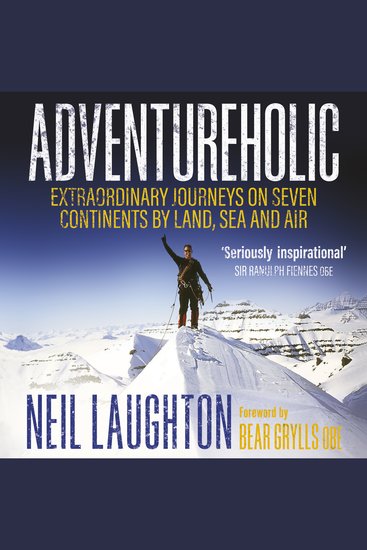
  • Adventureholic - Extraordinary Journeys on Seven Continents by Land Sea and Air - cover

    Adventureholic - Extraordinary...

    Neil Laughton

    • 0
    • 0
    • 0
    More than fifty expeditions across all seven continents – by land, sea and air – have led adventurer Neil Laughton to some of the most remote places in the world. 
    Adventureholic tells the stories of Neil’s most unforgettable and daring adventures yet. From summiting Mount Everest with Bear Grylls and playing cricket at the Geographic South Pole to piloting the world’s first road-legal flying car on a 10,000km journey across the Sahara Desert to Timbuktu, running with bulls, and train-surfing in Myanmar, Neil really has seen and done it all. 
    Readers are invited to join Neil on a roller-coaster ride around the world, gaining the necessary insight, confidence and inspiration to add a little more adventure to their own lives.
    Ver livro
  • The Shakespeare Conundrum - Examining the True Identity of the Literary Genius - cover

    The Shakespeare Conundrum -...

    John Harpoon

    • 0
    • 0
    • 0
    The question of who wrote the works attributed to William Shakespeare has intrigued scholars, historians, and literary enthusiasts for centuries. Despite being one of the most celebrated figures in the world of literature, Shakespeare’s true identity remains a subject of mystery. The sheer volume of his works, their profound depth, and the complexity of their themes have led many to wonder whether the man from Stratford-upon-Avon was truly the author of the plays and sonnets that bear his name. This uncertainty has given rise to one of the most enduring and controversial debates in literary history: the Shakespeare authorship question. 
      
    The core of this mystery lies in the limited biographical information available about Shakespeare’s life. Born in 1564 in Stratford-upon-Avon, Shakespeare’s early years remain largely undocumented, with no personal manuscripts or letters bearing his signature. The surviving records of his life mainly consist of legal documents, such as his marriage license, business transactions, and his will. While these historical artifacts confirm his existence and some of his professional endeavors, they provide little insight into his intellectual and literary development. For a figure of his stature, this absence of personal evidence is startling, leading some to question whether the “Stratford man” could have truly written the works attributed to him. 
      
    In the absence of definitive evidence, a number of alternative theories have emerged, suggesting that another writer, or group of writers, may have been responsible for Shakespeare’s remarkable body of work. These theories have ranged from the claim that the works were penned by an aristocrat such as Francis Bacon, to the suggestion that the true author was the playwright Christopher Marlowe, whose death in 1593 has been disputed by some.
    Ver livro
  • History Biographies - Marie Curie Nostradamus and Alan Turing - cover

    History Biographies - Marie...

    Kelly Mass

    • 0
    • 0
    • 0
    This is a combo of biographies about the following well-known individuals: 
    Marie Curie - Marie Salomea Skodowska Curie was a Polish-born, naturalized-French researcher and chemist who originated radioactivity research. She was the first woman to win the Nobel Reward, the first and only woman to win it two times, and the only individual to win the Nobel Reward in 2 different clinical classifications. 
    Her first Nobel Reward was co-won by her spouse, Pierre Curie, making them the first married set to win the reward and developing the Curie family tradition of 5 Nobel Prizes. She was the first woman to be selected as a teacher at the University of Paris in 1906. 
    Nostradamus - Michel de Nostredame, referred to as Nostradamus in Latin, was a French astronomer, doctor, and presumed seer mostly known for his work Les Prophéties, a collection of 942 poetic quatrains supposedly predicting future events. In the year 1555, the book was first released. 
    Since the release of his Les Prophéties, Nostradamus has acquired a very large following of followers who, in addition to the majority of the well-known press, credit him with properly anticipating many essential historic events. 
    Alan Turing - Alan Mathison Turing was a mathematician, computer system researcher, scholar, cryptanalyst, thinker, and theoretical biologist from the U.K. With the Turing device, which can be considered a design of a general-purpose computer system, Turing had a substantial influence on the development of theoretical computer technology, offering a formalization of the ideas of algorithm and calculation. Turing is considered the creator of theoretical computer technology and AI. Turing was born in Maida Vale, London, and raised in the south of England.
    Ver livro