Junte-se a nós em uma viagem ao mundo dos livros!
Adicionar este livro à prateleira
Grey
Deixe um novo comentário Default profile 50px
Grey
Assine para ler o livro completo ou leia as primeiras páginas de graça!
All characters reduced
Fifty Years in Chains; or the Life of an American Slave - cover
LER

Fifty Years in Chains; or the Life of an American Slave

Charles Ball

Editora: DigiCat

  • 0
  • 0
  • 0

Sinopse

In "Fifty Years in Chains; or, the Life of an American Slave," Charles Ball presents a harrowing first-person narrative that intricately documents his experiences as an enslaved man in America. The book blends autobiography with historical commentary, employing a direct and unembellished literary style that evokes the raw truth of enslavement. Ball's account spans several decades, encapsulating the brutality of the plantation system, his personal struggles, and the relentless pursuit of freedom. By situating his story within the broader context of American slavery, he offers readers invaluable insights into the dehumanizing realities faced by countless individuals, challenging them to confront the moral implications of this institution. Charles Ball, born into slavery in 1780, escaped to freedom in 1825, after enduring unimaginable hardships. His profound life experiences as a slave, combined with an earnest desire to shed light on the truth behind the institution of slavery, inform this poignant narrative. Ball's journey encompassed not only the physical fight for freedom but also an intellectual struggle to communicate his truths to a society that often turned a blind eye to the brutalities occurring within its borders. This powerful work is essential reading for anyone interested in American history, social justice, or the enduring legacy of slavery. Ball's vivid recounting serves as both a personal testimony and a collective memory, urging modern readers to engage with the past. It is a potent reminder of the resilience of the human spirit and the ongoing struggle for equality.
Disponível desde: 28/05/2022.
Comprimento de impressão: 245 páginas.


Outros livros que poderiam interessá-lo

  • Classic Rock & Rock Radio Commercials - Volume 3 - cover

    Classic Rock & Rock Radio...

    Various authors

    • 0
    • 0
    • 0
    This fascinating audio program includes actual radio commercials from the 1960s for the following bands: George Harrison, Nazz, Paul Revere & The Raiders, Booker T. & The M.G.'s, The Steve Miller Band, Three Dog Night
    Ver livro
  • Phonology - Sound in Language: How We Speak and Understand Words - cover

    Phonology - Sound in Language:...

    Mike Crawford

    • 0
    • 0
    • 0
    Phonology is the branch of linguistics that deals with the study of sound systems in language. It focuses on how sounds are used and organized in particular languages, and how they contribute to meaning. Phonology is a key component of linguistics, as it helps us understand the structure of speech and how language functions at a fundamental level. The study of phonology is concerned not only with individual speech sounds, known as phonemes, but also with how these sounds interact with each other within the rules of a given language. Unlike phonetics, which focuses on the physical properties of speech sounds, phonology is primarily concerned with how these sounds function within a linguistic system. 
    Phonology is essential for understanding the patterns and regularities in how sounds are produced and interpreted by speakers of a language. It provides insight into the ways in which sound systems vary across languages and how they are structured in the mind. Phonological systems may include a variety of elements, such as consonants, vowels, syllables, stress patterns, and intonation, each of which plays a crucial role in forming the spoken word. Phonology helps to identify which sounds are significant in a language and how these sounds are perceived and organized.
    Ver livro
  • Designing for Democracy - How to Build Community in Digital Environments - cover

    Designing for Democracy - How to...

    Jennifer Forestal

    • 0
    • 0
    • 0
    How should we "fix" digital technologies to support democracy instead of undermining it? In Designing for Democracy, Jennifer Forestal argues that accurately evaluating the democratic potential of digital spaces means studying how the built environment—a primary component of our "modern public square"—structures our activity, shapes our attitudes, and supports the kinds of relationships and behaviors democracy requires. 


    While many scholars and practitioners are attentive to the role of design in shaping behavior, they have yet to fully engage with the question of what structures are required to support democratic communities—and how to build them. Forestal closes this gap by providing a new theory of democratic space. Drawing from a wide range of disciplines, she argues that "democratic spaces" must be designed with three environmental characteristics—boundaries, durability, and flexibility—that, taken together, afford users the ability to engage in fundamental civic practices. 


    Through extended analyses of Facebook, Twitter, and Reddit, Forestal shows precisely how well these digital platforms meet the criteria for democratic spaces, or whether they do so at all. The result is a nuanced analysis of the democratic communities that form—or fail to emerge—in these spaces, as well as more concrete suggestions for how to improve them.
    Ver livro
  • World War II: An Enthralling Guide to the Second World War - cover

    World War II: An Enthralling...

    Enthralling History

    • 0
    • 0
    • 0
    Discover the history of one of the most defining events of the 21st century 
    Regardless of how much has been written about it, new information continues to be discovered about the thousands of events that make up the six years that shaped the world we live in today. 
    WWII is inextricably linked with Hitler and the Nazis; however, there is so much more to discover. In this audiobook, learn about the major events that transpired around the world to create a perfect storm that allowed Hitler to rise to power. 
    As the somewhat shaky peace of the post-war world begins to crumble and tensions begin to brew once more in Europe, it might be more important than ever to learn from the past. 
    This audiobook will provide an overview of the war and will take an in-depth look at some topics like: How the end of the First World War helped lead to the Second World War.Hitler’s rise to power.Conflicts and rumblings in Africa and Asia.The Holocaust.War of ideologies.The staggering number of casualties.The major battles of the war and how they impacted the war effort.And much, much more! 
    Pick up your introductory guide to World War II today. Scroll up and click the “add to cart” button, and begin your journey!
    Ver livro
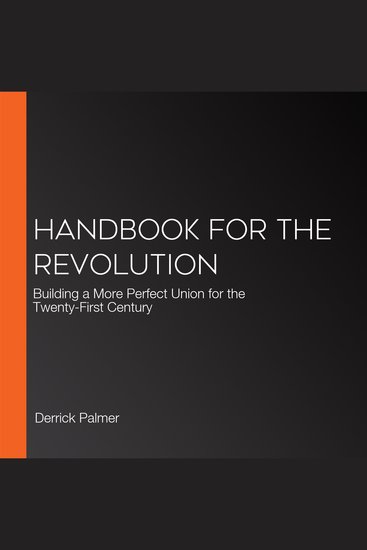
  • Handbook for the Revolution - Building a More Perfect Union for the Twenty-First Century - cover

    Handbook for the Revolution -...

    Derrick Palmer

    • 0
    • 0
    • 0
    From the cofounder of the Amazon Labor Union, a definitive how-to guide to workplace organizing told through a David vs. Goliath chronicle for the ages.   On April 1, 2022, the Amazon warehouse known as JFK8, in Staten Island, notched an improbable victory when its workers voted to become the company’s first unionized facility. Miraculously, a completely self-taught and worker-led union had defeated one of the most powerful corporations on the planet. In the aftermath, two of the founders of the Amazon Labor Union, Derrick Palmer and Chris Smalls, began traveling across the country to help workers at Amazon and other corporations form their own unions. Unsurprisingly, nearly everyone they met had the same question: How did they do it?   In Handbook for the Revolution, Derrick Palmer, who continues to work at JFK8, provides the answer in the form of a how-to guide to organizing in today’s workplace while providing gripping, never before-told anecdotes from the ALU's fight and its plans for the future. Practical, philosophical, and full of personality, Palmer’s manual-cum-manifesto is an accessible step-by-step playbook for the often contentious and complex process of unionization, and a powerful call for equality—and greater understanding—through worker solidarity.   Full of hard-won lessons and personal experience, and written in the context of mass consolidation, fluctuating labor laws, and an ever widening wealth gap, Handbook for the Revolution is an invaluable resource for the modern labor movement, a thrilling chronicle of persistence, and an inspiring push for change in the workplace—and beyond.
    Ver livro
  • The Congress of Vienna - Redrawing Europe's Map - cover

    The Congress of Vienna -...

    Nova Ashford

    • 0
    • 0
    • 0
    The Congress of Vienna, held between 1814 and 1815, came at a pivotal moment in European history. The continent had just endured the upheaval caused by the Napoleonic Wars, which had left Europe in chaos and instability. Napoleon Bonaparte's rise to power and subsequent expansionist ambitions had dramatically altered the political landscape, reshaping borders and redrawing alliances. By 1814, with Napoleon's defeat and exile, Europe was left to deal with the aftermath of a decade of war and turmoil. The challenge for the leaders of the major powers was to rebuild a stable Europe while ensuring that the events which had led to war would not be repeated. 
    The immediate concern was to restore order and prevent any single nation from becoming too powerful. Napoleon’s domination of Europe, followed by his eventual fall, had created an imbalance of power that threatened the security of the continent. The leaders of the great powers—Great Britain, Austria, Prussia, and Russia—realized that to avoid future conflict, they needed to create a system that would maintain peace and stability through diplomacy and careful balancing of power. This would be achieved not by restoring the status quo exactly as it had been before the Napoleonic Wars, but by reshaping Europe in a way that would prevent any one nation from becoming overwhelmingly dominant. 
    The Congress of Vienna aimed to establish a new framework based on the principles of legitimacy and a balance of power. Legitimacy referred to the restoration of rightful monarchs who had been overthrown by Napoleon, while the balance of power involved redistributing territory and influence in a way that would prevent any single country from threatening the security of the others. It was a delicate process, as the major powers had competing interests and varying visions of what a stable Europe would look like. Nonetheless, the common goal was to create a system that could provide long-term peace.
    Ver livro