Junte-se a nós em uma viagem ao mundo dos livros!
Adicionar este livro à prateleira
Grey
Deixe um novo comentário Default profile 50px
Grey
Assine para ler o livro completo ou leia as primeiras páginas de graça!
All characters reduced
American Operations in Italy during WW2: Salerno - From the Beaches to the Volturno 9 September - 6 October 1943 - cover
LER

American Operations in Italy during WW2: Salerno - From the Beaches to the Volturno 9 September - 6 October 1943

Center of Military History of the U.S. Army

Editora: e-artnow

  • 0
  • 0
  • 0

Sinopse

Operation Avalanche was the codename for the Allied landings near the port of Salerno, executed on 9 September 1943, as a part of the Allied invasion of Italy during World War II. The Italians withdrew from the war the day before the invasion, but the Allies landed in an area defended by German troops. The landings were carried out by the U.S. Fifth Army, under Lieutenant General Mark W. Clark. Its primary objectives were to seize the port of Naples to ensure resupply, and to cut across to the east coast, trapping the Axis troops further south.
This book provides a concise summary of this military operation. The skilful combination of combat interviews with primary sources, many of which are now lost, gives these unassuming narratives a special importance to military historians. This careful analysis of Operation Avalanche provides numerous lessons for the modern generations.
Disponível desde: 12/07/2022.
Comprimento de impressão: 175 páginas.

Outros livros que poderiam interessá-lo

  • But you don't look autistic at all - cover

    But you don't look autistic at all

    Bianca Toeps

    • 0
    • 0
    • 0
    Autism – that’s being able to count matches really fast and knowing that 7 August 1984 was a Tuesday, right? Well, no. In this book, Bianca Toeps explains in great detail what life is like when you’re autistic.She does this by looking at what science says about autism (and why some theories can go straight in the bin), but also by telling her own story and interviewing other autistics. Bianca talks in a refreshing and sometimes hilarious way about different situations autistic people encounter in daily life. She has some useful tips for non-autistic people too: what you should do if someone prefers not to look you in the eye, why it is sometimes better to communicate by email, and, most important of all, why it is not a compliment if you say: “But you don’t look autistic at all!”
    Ver livro
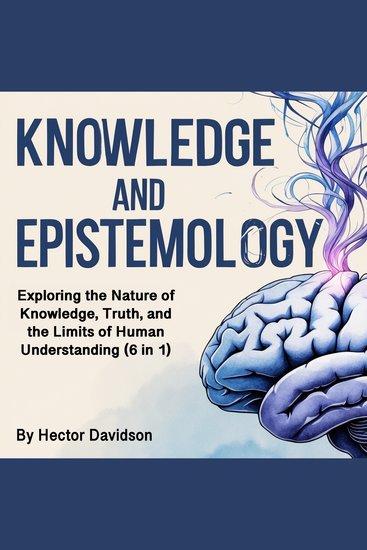
  • Knowledge and Epistemology - Exploring the Nature of Knowledge Truth and the Limits of Human Understanding (6 in 1) - cover

    Knowledge and Epistemology -...

    Hector Davidson

    • 0
    • 0
    • 0
    This book bundle contains these books: 
    - Epistemology  
    - Empiricism  
    - Feminist Philosophy  
    - Phenomenology  
    - Pragmatism  
    - Transcendentalism 
    Ver livro
  • Pain Bleeds Crime - cover

    Pain Bleeds Crime

    Pamela Nathan

    • 0
    • 0
    • 0
    True stories from a forensic psychologist in prisons and out.  
     
     
    ‘The most dangerous people I met weren’t monsters. They were broken children wearing adult faces.’ 
     
    Pamela Nathan, clinical and forensic psychologist and psychoanalytic psychotherapist, uncovers the inner worlds of society’s most dangerous and broken—whether behind bars or hidden in plain sight. 
     
    In Pain Bleeds Crime, she shares twenty-three gripping true stories from her decades working in maximum-security prisons, courts, and forensic hospitals. The crimes are shocking—murder, rape, paedophilia, assault, fetishism, bestiality, and more—but what lies beneath is often even more confronting. 
     
    Each offender, whether male, female or transgender, reveals a hidden world shaped by trauma, pain, and silence. Pamela enters these inner worlds to feel and then to have revealed the internal crime scenes, to see what made them break—mentally, emotionally, morally. These aren’t excuses. They’re revelations. 
     
    You’ll come face-to-face with people whose crimes horrified the public—people who insist they’re not violent, or that “it just happened”—and come face-to-face with the dark truth: the past never really goes away. With unflinching honesty and rare insight, Pamela shows how the past never really stays buried—and how behind every act of violence, there’s a story waiting to be told. 
     
    Brutally honest, deeply unsettling, and impossible to forget, Pain Bleeds Crime is a journey into the darkest parts of humanity. 
     
     
    ‘Mad, bad, or sad—when we listen to the story, we see the person.’ 
     
     
    ‘A chilling exploration of the trauma and pain behind the most heinous crimes.’
    Ver livro
  • Jews in the Garden - A Holocaust Survivor the Fate of His Family and the Secret History of Poland in World War II - cover

    Jews in the Garden - A Holocaust...

    Judy Rakowsky

    • 0
    • 0
    • 0
    Villages of Poland hide the lost secrets of World War II 


    1944: Heavy footfalls thud on the road on a rainy May night. A band of gunmen scour a hilltop farm, acting on rumors that it harbors a Jewish family. For 18 months, the Rozeneks have been hiding safely, but their luck is about to run out. Only one from the family of six will live to see the sunrise. Sixteen-year-old Hena Rozenek shelters in the woods until morning . . . and then she runs. 


    Forty years later: Holocaust survivor Sam Rakowski Ron has lived in the United States for decades, never thinking he could return to the Polish village he fled as a teenager. But now he's ready to talk about what he heard, what he saw, and what he knows about two separate families of cousins who were his neighbors, and presumably were killed during the war. The story Poland presents to the world is that Poles saved more Jews than citizens of any other nation, that any murders in Poland were committed by Nazis and Nazis alone. But Sam, while defending his countrymen, suspects a painful truth. The stories he shares with his younger cousin, Judy, an investigative journalist, send them off on a decades-long journey unlike any other to find out what happened to the Rozenek family and ultimately reveal the secrets the Polish government is still desperate to keep.
    Ver livro
  • All About Amy (Little Women Essay) - cover

    All About Amy (Little Women Essay)

    Niina Niskanen

    • 0
    • 0
    • 0
    Join me on a journey to study Amy March and her real-life inspiration May Alcott Nieriker. The misconceptions about Jo´s insecurities and especially about her looks. Society likes to put two characters against one another but is this true to reality? Find out that and more in the Little Women podcast. 
    People often praise Jo for being a tomboy and how she rejects femininity, but Jo´s idealization of the masculine has very toxic elements. Amy is a character who is more governed by her brain, whereas Jo is in fact governed by her emotions, which is considered a feminine trait. In the novel, Jo struggles to show her feelings because she considers that weak and "feminine". When their father is wounded in the war she shouts to her sisters not to cry. A couple of years later Laurie says that she doesn't show emotions and calls her out about it. Because Jo tries to shut down an important human part of herself, simply because she considers it feminine, is actually something that slowly eats her inside and contributes to her loneliness. This is why the umbrella chapter is so important because Friedrich says to Jo that it is okay to be vulnerable. 
    Amy does the opposite. She considers rational marriage with Fred Vaughn because it allows her to secure her family´s financial future. When Laurie reminds Amy that she is her mother´s daughter, and she simultaneously inspires Laurie to become a productive member of society, Amy allows herself to listen to her heart and her own feelings and allowing herself to become more open and it is this inner work that the couples do in Little Women, that makes these relationships work. 
    Unfortunately, the adaptations rarely pay any attention to this. There are people who have not read the novel, have only seen the films, and don´t understand why the couples end up together. This is because the adaptations, never bother to show what actually happens between these people in the novel.
    Ver livro
  • Gaslighting - The Narcissist's Favorite Tool of Manipulation - How to Avoid the Gaslight Effect and Recovery From Emotional and Narcissistic Abuse - cover

    Gaslighting - The Narcissist's...

    Dr. Theresa J. Covert

    • 0
    • 0
    • 0
    Still struggling from the effects of an abusive relationship? 
    Many people do and sadly there is very little information available to be found online or in the written research, or with counsellors and therapists that can help. The Gaslight Effect is not officially recognised, nor is it widely even known. 
    Even when it is accepted, recognised and known not many people seem to know what to DO ABOUT IT to heal it… The fact is being in a relationship with a narcissist over a long period of time has long lasting traumatic effects that can be extremely catastrophic to the person suffering them. 
    DO THE FOLLOWING SYMPTOMS SOUND FAMILIAR? 
     - Doubting yourself and your sanity 
    - Feeling like you’re losing your mind 
    - Feeling like you’re always apologizing 
    - You’re second-guessing your memory 
    - Feeling like you aren’t good enough 
    - Feeling misunderstood 
    - Feeling lonely 
    - Ruined self confidence 
    - Extreme weight loss or weight gain 
    - Uncharacteristic jealousy/ insecurity 
    - Feeling like you don’t know the difference between right and wrong 
    - Extreme paranoia (being turned into an obsessive detective) 
    - Endless, repetitive obsessive thinking about your ex 
    - Strange dreams 
    - Sudden inexplicable anxiety followed by rapid dips into depression 
    The list goes on…. 
    “NOBODY UNDERSTANDS!” 
    I hear this frustrated cry from abused people a lot. 
    Gaslighting is crazy-making, it makes you think that you’re actually going crazy. 
    Gaslighting is a way of hiding the abuse. 
    Gaslighting is lying with a goal. 
    The motive behind the gaslighting is to make you think that you’re crazy or that your memory doesn’t work right. So you can’t trust yourself and your perceptions of reality.
    Ver livro