¡Acompáñanos a viajar por el mundo de los libros!
Añadir este libro a la estantería
Grey
Escribe un nuevo comentario Default profile 50px
Grey
Suscríbete para leer el libro completo o lee las primeras páginas gratis.
All characters reduced
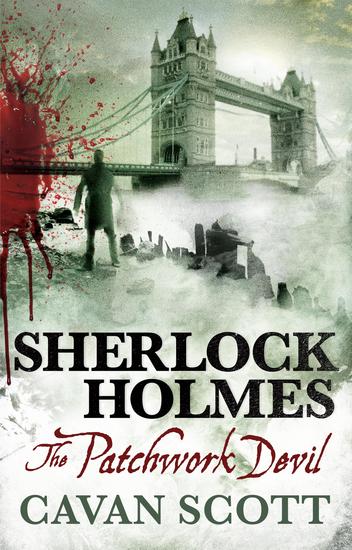
Sherlock Holmes - The Patchwork Devil - cover

Lo sentimos, pero por derechos de la editorial este libro no puede leerse desde el país desde el que te conectas.

Sherlock Holmes - The Patchwork Devil

Cavan Scott

Editorial: Titan Books

  • 0
  • 1
  • 0

Sinopsis

London, 1919. While the world celebrates the signing of the Treaty of Versailles, Holmes and Watson are called to a singular mystery. A severed hand has been found on the banks of the Thames, a hand belonging to a soldier who supposedly died in the trenches. But the hand is fresh, and show signs that it was recently amputated. So how has it ended up back in London two years after its owner was killed?
Disponible desde: 22/04/2016.
Longitud de impresión: 304 páginas.

Otros libros que te pueden interesar

  • By the Rule of Contrary (Unabridged) - cover

    By the Rule of Contrary...

    L. M. Montgomery

    • 0
    • 0
    • 0
    Lucy Maud Montgomery (November 30, 1874 - April 24, 1942), published as L. M. Montgomery, was a Canadian author best known for a series of novels beginning in 1908 with Anne of Green Gables. The book was an immediate success. The title character, orphan Anne Shirley, made Montgomery famous in her lifetime and gave her an international following.
    By the Rule of Contrary: "Look here, Burton," said old John Ellis in an ominous tone of voice, "I want to know if what that old busybody of a Mary Keane came here today gossiping about is true. If it is well, I've something to say about the matter!
    Ver libro
  • Remarkable Rocket The (Unabridged) - cover

    Remarkable Rocket The (Unabridged)

    Oscar Wilde

    • 0
    • 0
    • 0
    "The Remarkable Rocket" This story concerns a firework, who is one of many to be let off at the wedding of a prince and princess. The rocket is extremely pompous and self-important, and denigrates all the other fireworks, eventually bursting into tears to demonstrate his "sensitivity". As this makes him wet, he fails to ignite, and, the next day, is thrown away into a ditch. He still believes that he is destined for great public importance, and treats a frog, dragonfly, and duck that meet him with appropriate disdain. Two boys find him, and use him for fuel on their camp-fire. The rocket is finally lit and explodes, but nobody observes him - the only effect he has is to frighten a goose with his falling stick.
    Ver libro
  • Oliver Twist - cover

    Oliver Twist

    Charles Dickens

    • 0
    • 0
    • 0
    "Oliver Twist; or, The Parish Boy's Progress" is a novel by Charles Dickens, first published as a serialized work between 1837 and 1839. The story follows Oliver Twist, an orphan who escapes from a workhouse to seek his fortune in London. Oliver is naive and innocent, contrasting sharply with the corrupt and exploitative adults he encounters. He becomes involved with a group of juvenile criminals led by the cunning Fagin. The book explores social inequality and is an early example of the social-protest novel.
    Ver libro
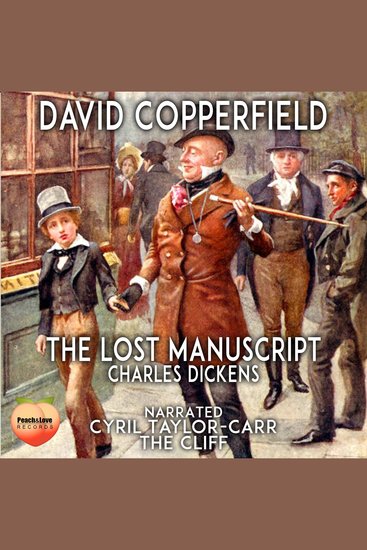
  • David Copperfield - The Lost Manuscript - cover

    David Copperfield - The Lost...

    Charles Dickens

    • 0
    • 0
    • 0
    First published in 1850, David Copperfield begins with avid the tragedy of David's brother dying when David is just a boy. After this episode, he is sent by his step-father to work in London for a wine merchant. When conditions worsen he decides to run away and embarks on a journey by foot from London to Dover. On his arrival, he finds his eccentric aunt, Betsey Trotwood who becomes his new guardian. Being witness to the formation of David's character is quite fascinating. David begins as a strong child whose only aspiration is a better life. On the way to his adulthood, David sees how people enter and leave his life. Romanticism takes its place in David’s life as he gets married to Dora Spenlow who is not long for this world. Will David ever find stability and happiness? And what of his wife? Dickens proves to be a master in creating an autobiographical work that is a captivating page-turner. 
     
    Charles John Huffam Dickens FRSA was an English writer and social critic. He created some of the world's best-known fictional characters and is regarded by many as the greatest novelist of the Victorian era.
    Ver libro
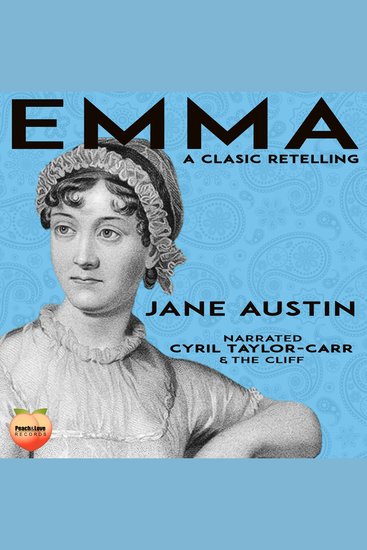
  • Emma - cover

    Emma

    Jane Austen

    • 0
    • 0
    • 0
    Emma, is a novel about youthful hubris and romantic misunderstandings. It is set in the fictional country village of Highbury and the surrounding estates of Hartfield, Randalls and Donwell Abbey, and involves the relationships among people from a small number of families. The novel was first published in December 1815, with its title page listing a publication date of 1816. As in her other novels, Austen explores the concerns and difficulties of genteel women living in Georgian–Regency England. Emma is a comedy of manners, and depicts issues of marriage, sex, age, and social status.Before she began the novel, Austen wrote, "I am going to take a heroine whom no one but myself will much like." In the first sentence, she introduces the title character as "Emma Woodhouse, handsome, clever, and rich, with a comfortable home and a happy disposition... had lived nearly twenty-one years in the world with very little to distress or vex her." Emma is spoiled, headstrong, and self-satisfied; she greatly overestimates her own matchmaking abilities; she is blind to the dangers of meddling in other people's lives; and her imagination and perceptions often lead her astray.Emma, written after Austen's move to Chawton, was her last novel to be published during her lifetime, while Persuasion, the last complete novel Austen wrote, was published posthumously.The novel has been adapted for a number of films, television programmes and stage plays.Jane Austen was an English novelist known primarily for her six major novels, which interpret, critique, and comment upon the British landed gentry at the end of the 18th century. Austen's plots often explore the dependence of women on marriage in the pursuit of favorable social standing and economic security. Her works critique the novels of sensibility of the second half of the 18th century and are part of the transition to 19th-century literary realism.
    Ver libro

  • Esme - From their pens to your ears genius in every story - cover

    Esme - From their pens to your...

    Saki Saki

    • 0
    • 0
    • 0
    Hector Hugh Munro, more familiarly known by his pen-name ‘Saki’ was born in what was then Akyab in British Burma on 18th December 1870. His father was an Inspector General for the Indian Imperial Police, and his mother the daughter of a Rear Admiral. 
    When he was 2 his mother died and he and his siblings were sent back to England to be raised by their grandmother and paternal maiden aunts in a strict, puritanical household near Barnstaple, Devon. Educated by governesses Saki used many of these women as character models for his later writing. 
    At 17 his father retried and returned to England and then embarked on a series of European travels with Saki and his siblings. 
    After a short stint working in Burma with the Indian Imperial Police Saki decided to move to London to make a living as a writer. Initially he wrote as a journalist for a number of newspapers and magazines before attempting an historical study, ‘The Rise of the Russian Empire’, whose real value lay in directing him to writing short stories instead, the first of which, ‘Dogged’, he published in 1899. 
    From here it was a short stab of the pen to writing political satire before in 1902 he became the foreign correspondent for The Morning Post, first in the Balkans, then Russia, Paris and back to London in 1908, where 'the agreeable life of a man of letters with a brilliant reputation awaited him.'  
    Collections of his short stories full of witty, mischievous and often macabre stories that satirized Edwardian society and two novels now appeared in the years up to the Great War.  At its’ outbreak he was 43 but managed to join as an ordinary trooper. More than once he returned to the battlefield when officially too sick or injured.  
    On 14th November 1916 Hector Hugh Munro was sheltering in crater during the Battle of the Ancre, when he was shot and killed by a German sniper. According to several sources, his last words were "Put that bloody cigarette out!"
    Ver libro