¡Acompáñanos a viajar por el mundo de los libros!
Añadir este libro a la estantería
Grey
Escribe un nuevo comentario Default profile 50px
Grey
Suscríbete para leer el libro completo o lee las primeras páginas gratis.
All characters reduced
Just in time - cover

Just in time

Catharine Shaw

Editorial: Good Press

  • 0
  • 0
  • 0

Sinopsis

In *Just in Time*, Catharine Shaw offers a taut, reflective narrative shaped by questions of timing, moral choice, and the unforeseen turns by which ordinary lives are altered. The book combines lucid prose with a disciplined sense of structure, balancing immediacy of incident against a more meditative concern with consequence and character. Shaw's style is marked by clarity rather than ornament, and the work may be situated within a tradition of popular yet morally attentive fiction in which suspense serves not merely to entertain but to illuminate the pressures of modern life. Catharine Shaw wrote out of a literary culture deeply attentive to domestic experience, ethical resolve, and the formative power of circumstance. Although less widely discussed today than some of her contemporaries, Shaw belongs to that body of writers for whom fiction became a means of examining conduct, responsibility, and providential opportunity. Such concerns likely informed *Just in Time*, whose very title suggests a fascination with intervention at decisive moments and with the fragile contingencies governing human affairs. This is a book to recommend to readers who value intelligent storytelling joined to ethical depth. *Just in Time* rewards attention not only for its plot but for its insight into character and decision. For admirers of thoughtful, well-crafted fiction, Shaw's work remains both engaging and quietly instructive.
Disponible desde: 29/06/2026.
Longitud de impresión: 71 páginas.

Otros libros que te pueden interesar

  • César Cascabel - cover

    César Cascabel

    Jules Verne

    • 0
    • 0
    • 0
    César Cascabel is a novel written by Jules Verne in 1890. It is part of Voyages Extraordinaires series. It was published in English in two-volume form, with subtitles "The Show on Ice" and "The Travelling Circus".
    Ver libro
  • The Complete Works of Joseph Conrad - cover

    The Complete Works of Joseph Conrad

    Joseph Conrad

    • 0
    • 0
    • 0
    Navigate the Darkest Corners of the Human Heart.
    
    Joseph Conrad, a mariner who became one of the greatest stylists in the English language, understood that the most dangerous journeys are not across oceans, but into the soul. This comprehensive collection brings together the complete literary output of a writer who blended high-seas adventure with a profound, often haunting investigation of morality, isolation, and the price of progress.
    
    Inside this monumental collection, you will encounter:
    
    The Master of the Sea: Experience the most evocative maritime prose ever written, where the ocean serves as a vast, indifferent stage for human struggle and courage.
    
    The Psychological Frontier: Explore the "internal wilderness" of characters pushed to their limits by solitude, guilt, or the corrupting influence of power.
    
    A Critique of Empire: Discover Conrad's unflinching look at the clash of civilizations and the moral decay that often accompanied the colonial expansion of the late 19th century.
    
    Modernist Innovation: Witness the birth of modern storytelling through non-linear narratives and complex, often unreliable perspectives that changed the novel forever.
    
    Conrad's work remains a cornerstone of world literature, praised by peers and successors for its atmospheric intensity and philosophical weight. Whether you are seeking a gripping tale of a storm at sea or a deep meditation on the human condition, this volume offers the definitive journey.
    
    Cast off into the unknown. Buy "The Complete Works of Joseph Conrad" today and own the library of a literary legend.
    Ver libro
  • The Secret Garden - A Walled Garden on the Yorkshire Moors - cover

    The Secret Garden - A Walled...

    Frances Hodgson Burnett

    • 0
    • 0
    • 0
    An orphan sent from India to a Yorkshire house of a hundred locked rooms finds a walled garden nobody has entered for ten years, and a boy nobody is allowed to see. Burnett wrote it late, after her own son's death and her turn to spiritualism and Christian Science, and the healing in it is meant literally. The robin, the moor and Dickon are what everyone remembers; the book is actually about two thoroughly unpleasant children. Ninety-eight plates of farmyards, cottages and quiet domestic work, from Bevan to Gilman, keep the Yorkshire of the story close at hand.
    Ver libro
  • Finished - cover

    Finished

    H. Rider Haggard

    • 0
    • 0
    • 0
    This book, although it can be read as a separate story, is the third of the trilogy of which Marie and Child of Storm are the first two parts. It narrates, through the mouth of Allan Quatermain, the consummation of the vengeance of the wizard Zikali, alias The Opener of Roads, or "The-Thing-that-should-never-have-been-born," upon the royal Zulu House of which Senzangacona was the founder and Cetewayo, our enemy in the war of 1879, the last representative who ruled as a king. Although, of course, much is added for the purposes of romance, the main facts of history have been adhered to with some faithfulness.With these the author became acquainted a full generation ago, Fortune having given him a part in the events that preceded the Zulu War. Indeed he believes that with the exception of Colonel Phillips, who, as a lieutenant, commanded the famous escort of twenty-five policemen, he is now the last survivor of the party who, under the leadership of Sir Theophilus Shepstone, or Sompseu as the natives called him from the Zambesi to the Cape, were concerned in the annexation of the Transvaal in 1877. Recently also he has been called upon as a public servant to revisit South Africa and took the opportunity to travel through Zululand, in order to refresh his knowledge of its people, their customs, their mysteries, and better to prepare himself for the writing of this book. Here he stood by the fatal Mount of Isandhlawana which, with some details of the battle, is described in these pages, among the graves of many whom once he knew, Colonels Durnford, Pulleine and others. Also he saw Ulundi's plain where the traces of war still lie thick, and talked with an old Zulu who fought in the attacking Impi until it crumbled away before the fire of the Martinis and shells from the heavy guns. The battle of the Wall of Sheet Iron, he called it, perhaps because of the flashing fence of bayonets.Lastly, in a mealie patch, he found the spot on which the corn grows thin, where King Cetewayo breathed his last, poisoned without a doubt, as he has known for many years. It is to be seen at the Kraal, ominously named Jazi or, translated into English, "Finished." The tragedy happened long ago, but even now the quiet-faced Zulu who told the tale, looking about him as he spoke, would not tell it all. "Yes, as a young man, I was there at the time, but I do not remember, I do not know—the Inkoosi Lundanda (i.e., this Chronicler, so named in past years by the Zulus) stands on the very place where the king died—His bed was on the left of the door-hole of the hut," and so forth, but no certain word as to the exact reason of this sudden and violent death or by whom it was caused. The name of that destroyer of a king is for ever hid.In this story the actual and immediate cause of the declaration of war against the British Power is represented as the appearance of the white goddess, or spirit of the Zulus, who is, or was, called Nomkubulwana or Inkosazana-y-Zulu, i.e., the Princess of Heaven. The exact circumstances which led to this decision are not now ascertainable, though it is known that there was much difference of opinion among the Zulu Indunas or great captains, and like the writer, many believe that King Cetewayo was personally averse to war against his old allies, the English.The author's friend, Mr. J. Y. Gibson, at present the representative of the Union in Zululand, writes in his admirable history: "There was a good deal of discussion amongst the assembled Zulu notables at Ulundi, but of how counsel was swayed it is not possible now to obtain a reliable account."The late Mr. F. B. Fynney, F.R.G.S.
    Ver libro

  • A Study in Scarlet - The Classic Mystery Detective Fiction Masterpiece of Murder and Deduction - cover

    A Study in Scarlet - The Classic...

    Arthur Conan Doyle

    • 0
    • 0
    • 0
    The Game is Afoot...
     
    In the murky, fog-drenched streets of Victorian London, a killer prowls, leaving behind no clues but an empty house, a dead man, a woman's wedding ring, and the word RACHE scrawled in blood upon a wall. Scotland Yard's finest are utterly baffled. The brilliant but eccentric consulting detective Sherlock Holmes, however, sees the truth clearly hidden in the dust.
     
    A Study in Scarlet is the seminal work that birthed a literary legend. Written by Sir Arthur Conan Doyle in 1887, this gripping novel marks the very first appearance of Sherlock Holmes and his steadfast companion, Dr. John H. Watson. Here, Watson—an army doctor freshly returned from the horrors of the Afghan War—takes up lodgings at the iconic 221B Baker Street, only to find himself swept into a sinister web of international revenge, secret societies, and brilliant forensic deduction.
    A Masterpiece of Mystery/Detective Fiction
     
    From the meticulous analysis of cigar ashes and muddy footprints to the dramatic capture of a desperate killer, A Study in Scarlet laid the unshakeable foundation for the modern detective genre. Conan Doyle's incredible narrative seamlessly blends a chilling procedural thriller with a tragic, sweeping backstory, exploring the darkest corners of human nature and vengeance.
     
    With an unforgettable, high-drama performance by Andre Reaves, this classic audiobook transports listeners directly to the gaslit cobblestones of 19th-century crime solving. Grab your deerstalker, sharpen your wits, and prepare to isolate the scarlet thread of murder running through the colourless skein of life.
    Ver libro
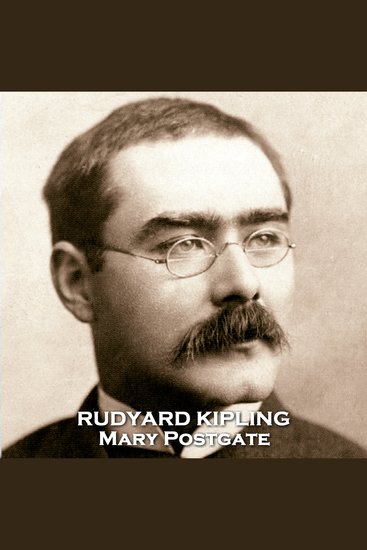
  • Mary Postgate - From their pens to your ears genius in every story - cover

    Mary Postgate - From their pens...

    Rudyard Kipling

    • 0
    • 0
    • 0
    Joseph Rudyard Kipling was born in Mumbai, India on 30th December 1865.   
    As was the custom in those days, he and his sister were sent back to England when he was 5.  The ill-treatment and cruelty by the Portsmouth couple they boarded with Kipling said contributed to the onset of his literary life.  
    At 16 he returned to India to work on a local paper where he was soon contributing and writing.  It also exposed him to the issues of identity and national allegiance which pervade much of his work.  
    In 1886, his ‘Departmental Ditties’, collection of verse appeared in print followed by 39 short stories for his newspaper over only 8 months.  These were then published as ‘Plain Tales from the Hills’, shortly after his 22nd birthday.  
    He continued his prolific pace of writing before being dismissed in a dispute and, taking his pay-off and the profits from the sale of some publishing rights, decided to return to London, travelling via Rangoon, Hong Kong, Japan and the United States, all the while writing articles, and arriving at Liverpool in October 1889. 
    Over the next two years he saw further works published as books and in magazines, as well as a nervous breakdown for which he was prescribed a sea voyage, to South Africa, Australia, New Zealand and India.  
    Happier times came with marriage to Caroline Starr Balestier in January 1892.  The honeymoon began in Vermont and ended in Yokahama where they heard their bank had failed.  They returned to Vermont and settled.  Caroline was now pregnant and he was planning the ‘Jungle Books’.  
    A failed arbitration between the US and England resulted in an argument between Caroline’s brother and Kipling, and then his arrest.  At the hearing he was mortified by the exposure of his private life and after settling the matter they returned to England and life in Torquay.  ‘Kim’ was published in 1902, and ‘Just So Stories for Little Children’, a year later.  
    In 1907 he was awarded the Nobel Prize for Literature with the citation “in consideration of the power of observation, originality of imagination, virility of ideas and remarkable talent for narration which characterise the creations of this world-famous author”.   
    When the Great War erupted, he scorned those who refused conscription.  His son enlisted and was killed at the Battle of Loos in September 1915, at 18, an exploding shell had ripped his face apart.  This death inspired Kipling’s writing thereafter, but the tragedy broke his life and by 1930 his prolific pen had almost ceased. 
    Rudyard Kipling died on 18th January 1936 from a perforated duodenal ulcer.  He was 70.  His ashes are buried at Poets’ Corner in Westminster Abbey.
    Ver libro