¡Acompáñanos a viajar por el mundo de los libros!
Añadir este libro a la estantería
Grey
Escribe un nuevo comentario Default profile 50px
Grey
Suscríbete para leer el libro completo o lee las primeras páginas gratis.
All characters reduced
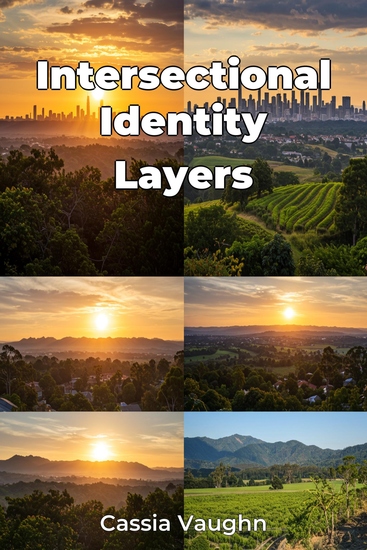
Intersectional Identity Layers - cover

Intersectional Identity Layers

Cassia Vaughn

Traductor A AI

Editorial: Publifye

  • 0
  • 0
  • 0

Sinopsis

Intersectional Identity Layers examines the intricate challenges and opportunities faced by LGBTQ individuals at the crossroads of race, disability, and class. It addresses a gap in understanding the nuanced lived experiences within the LGBTQ community, revealing the impact of intersecting identities on demographic outcomes. For instance, LGBTQ individuals with disabilities often encounter systemic barriers in healthcare, education, and employment. Additionally, socioeconomic status affects LGBTQ individuals from diverse racial backgrounds, leading to disparities in housing, income, and involvement with the criminal justice system.

 
The book adopts an intersectional approach, presenting qualitative narratives alongside empirical data to illustrate these complexities across urban and rural settings. By exploring the historical marginalization of LGBTQ people, struggles for disability rights, and the effects of racial and class inequality, it offers a more complete picture. Chapters delve into race, disability, and class intersections, culminating in a framework for intersectional analysis and policy recommendations.
Disponible desde: 07/04/2025.
Longitud de impresión: 83 páginas.
Otros libros que te pueden interesar

  • The Hidden Holocaust - The Holodomor and Its Legacy - cover

    The Hidden Holocaust - The...

    Sarah Willards

    • 0
    • 0
    • 0
    The Holodomor, a man-made famine that devastated Ukraine between 1932 and 1933, has its roots in the policies of the Soviet Union under Joseph Stalin. While the famine itself was a tragedy of immense proportions, its causes can be traced to the larger political and economic strategies of the Soviet regime. 
    The Soviet Union, in its quest for rapid industrialization, implemented harsh agricultural policies, which included forced collectivization. The idea was to consolidate small farms into larger collective farms, thereby increasing agricultural output and facilitating the redistribution of food to feed the growing industrial centers. However, this policy had disastrous effects on Ukraine, where agriculture was the backbone of the economy. 
    Collectivization forced Ukrainian peasants, who were traditionally independent farmers, into state-run collective farms. This not only disrupted agricultural production but also led to widespread resistance, as many Ukrainians viewed this as a direct attack on their way of life. The Soviets, determined to break this resistance, responded with brutal force. Those who opposed collectivization were often punished or executed, and the fertile lands of Ukraine were systematically confiscated. 
    Stalin’s government implemented the policy of grain requisitioning, where large amounts of grain were forcibly taken from Ukraine to support other areas of the Soviet Union. Ukraine, known as the “breadbasket” of the Soviet Union, became the primary target of these requisitions. The grain was not only taken for export but also used to fuel the industrial ambitions of the Soviet state. This left the Ukrainian population without sufficient food for survival, pushing them into a state of extreme deprivation.
    Ver libro
  • Aliens Explained - cover

    Aliens Explained

    Raphael Terra

    • 0
    • 0
    • 0
    This audiobook has been recorded using Text to speech (TTS). 
     
    There have been many attempts to encapsulate and explain the many mysteries that surround us; these include everything from the contents of the Vatican Secret Archives, the paranormal and Ufology and even subjects that seem to slip between the cracks of reality into the realm of high strangeness. 
     
    And now the United States government has finally admitted that many of the unexplained sightings of craft may very well be alien technology. 
     
    This book draws on all of these threads as it weaves its way thought the many twists, turns and possibilities that define the subjects discussed. 
     
    Just about all of the subjects examined are interlinked at one level or another. It is as if the ancient eastern concept of ‘oneness’ was recognised by our forefathers, long before the arcane physics of quantum mechanics demonstrated its reality. Perhaps this is a contributing factor to the belief that all points in space and time are interconnected. In fact it is thought that this peculiarity is how UFOs manage to traverse the incredible distances between the stars and perhaps even the galaxies. 
     
    Of course from our current level of knowledge, the ‘mechanics’ of such a technology can only be speculated upon. Or can it? We’re about to discover. 
     
    This book will discover and explain who these aliens are, how they come and why.
    Ver libro
  • Pestilence and Trade - The Dark Side of the Middle Ages (3 in 1) - cover

    Pestilence and Trade - The Dark...

    Harris Ropes

    • 0
    • 0
    • 0
    This volume explores how devastating plagues, ambitious trade networks, and long-standing wars defined a darker, yet transformative, side of the Middle Ages. 
    Start with The Black Death, the infamous pandemic that swept across Europe and Asia in the 14th century, killing millions and leaving entire cities and economies in ruin. The plague reshaped societies, led to labor shortages, and sparked deep religious and cultural shifts that altered the trajectory of history. 
    Next, explore The Hanseatic League, a powerful commercial and defensive confederation of merchant guilds and market towns in Northwestern and Central Europe. While it brought prosperity and trade connections, it also exposed cities to disease, piracy, and political tensions, showing the complex balance between wealth and vulnerability. 
    Finally, uncover The Byzantine-Sassanian Wars, a series of intense military conflicts between the Eastern Roman (Byzantine) and Persian (Sassanian) empires. These prolonged wars exhausted both empires, disrupted trade routes, and made the region vulnerable to later invasions and upheaval, particularly the rise of Islam. 
    Together, these three stories illuminate how interconnected the medieval world was—how disease could travel along trade routes, how commerce brought both wealth and danger, and how war weakened even the mightiest of empires.
    Ver libro
  • Swapped and Toyed With - Gender Swap - cover

    Swapped and Toyed With - Gender...

    Kinky Press

    • 0
    • 0
    • 0
    Dear Husband has been a bad boy. 
      
    He’s been very demanding of his good little housewife and her body, and now Erica fed up with his calloused attentions. 
      
    Dear Husband feels rather weak at the gym while pumping iron, and there is a little shrinkage going on, but it just must have been a long work week. When Erica is late returning from her book club and there’s no dinner on the table, though, Dear Husband is ready to lay down the law of the household. Until he finds himself unable to subdue good wifey that night. The tables are turned, and he’s the one on his knees giving pleasure. 
      
    Suddenly helpless to deny her, Dear Husband chafes at being expected to where that dress for the dinner party. He wasn’t expecting what walked through the door. The whole posse – or rather – the whole coven. The only books Erica has been reading lately are full of spells and incantations. 
      
    With the help of some serious gender bending spells, Erica is able to her Dear Husband how it feels to be the “weaker” gender. Dear Husband gets a taste of his own forceful medicine as he’s bent to his wife’s will – and bent over in the process. 
      
    PSA: This story contains a young lady expected to please at all times and ready for revenge. There will be gratification and mindless submission to women with complete mastery – in any slot these women wish to be masters of. At least one of those slots is natural for a man to have, and at least one is engineered by sheer witchcraft. Dear Husband will be placed in all sorts of compromising positions.
    Ver libro
  • Democritus - Atoms and the Birth of Materialism - cover

    Democritus - Atoms and the Birth...

    Hector Davidson

    • 0
    • 0
    • 0
    Democritus, often referred to as the "laughing philosopher," was a pre-Socratic Greek philosopher who is best known for his atomic theory of the universe. His ideas have significantly shaped modern science, especially in physics and chemistry. Democritus proposed that everything in the universe is made up of small, indivisible particles called atoms. These atoms are eternal, unchangeable, and infinite in number, differing only in shape, size, and arrangement. He was a strong proponent of materialism, the idea that everything that exists is composed of matter and that the properties of the world can be explained by the properties and interactions of atoms. 
    In addition to his contributions to atomic theory, Democritus also made significant contributions to epistemology, the study of knowledge. He suggested that our senses are the primary means by which we perceive the world, though they can sometimes be deceptive. His ideas influenced many later philosophers, including Leucippus, Epicurus, and even modern scientists like John Dalton, whose 19th-century atomic theory was inspired by Democritus's concepts. 
    Despite the lack of direct empirical evidence in his time, Democritus's theories laid the groundwork for the development of scientific thought and inquiry. He emphasized reason and observation over mythological explanations, helping to shape the way we understand the material world. Though much of his work has been lost to history, Democritus's legacy endures, continuing to inspire scientific exploration and contributing to our understanding of the universe.
    Ver libro
  • St Petersburg - cover

    St Petersburg

    Kelly Mass

    • 0
    • 0
    • 0
    St Petersburg's structures lay over the skeletons of the press-ganged servant workers who worked to build it, making it the label "the city built on bones." Historians approximate that 100,000 18th-century slaves are buried underneath the city's stunning Italianate estates and large Parisian-style streets.They passed away of cold, appetite, illness, or, if they were truly unfortunate, wolves. They were drawn from all around the Russian Empire at the time. They dedicated their lives for the magnificence of Imperial Russia, and the city they built, St Petersburg, stands as a testimony to the Russian state's single-mindedness.Its extravagant palaces radiate European elegance and were actively built in a Western way to bring Russia closer to Europe.Still, more than 3 centuries later, Russia has yet to finish this journey, and St Petersburg is a witness to the trouble of the journey.Let’s take a look at what else makes Saint Petersburg such a unique place.
    Ver libro