¡Acompáñanos a viajar por el mundo de los libros!
Añadir este libro a la estantería
Grey
Escribe un nuevo comentario Default profile 50px
Grey
Suscríbete para leer el libro completo o lee las primeras páginas gratis.
All characters reduced
The Art of War in 19th Century - Napoleon's Maxims of War + Clausewitz's On War - cover

The Art of War in 19th Century - Napoleon's Maxims of War + Clausewitz's On War

Napoleon Bonaparte, Carl von Clausewitz

Traductor J. J. Graham, George Charles D'Aguilar

Editorial: Musaicum Books

  • 0
  • 0
  • 0

Sinopsis

The Art of War in 19th Century offers a revealing exploration into the strategic mindsets that shaped military doctrines during a pivotal era of European history. This anthology weaves together the philosophical underpinnings and tactical considerations of warfare, articulated by prominent military theorists Napoleon Bonaparte and Carl von Clausewitz. Their texts, varied in style—from the pragmatic directives of Bonaparte to the methodical treatise of von Clausewitz—offer a comprehensive look at the evolution of military thought. The collection notably addresses themes of leadership, the moral and psychological aspects of war, and the impact of technological advancements on combat strategy. The diverse literary approaches enrich the reader's understanding of 19th-century warfare and its enduring relevance in modern strategic discussions. The backgrounds of Bonaparte, a revolutionary tactician who shaped the Napoleonic Wars, and von Clausewitz, a Prussian general and influential military theorist, provide a textured narrative of the era's geopolitical dynamics. Collectively, their works not only reflect the individual experiences within their respective military careers but also engage with broader movements that influenced European warfare, such as the Enlightenment and Romantic Nationalism. This anthology is indispensable for scholars and enthusiasts of military history and strategy, offering a rare scholarly dialogue between two titans of military theory. Readers are encouraged to delve into this meticulously curated collection to gain a deeper understanding of the complexities of 19th-century warfare and its theoretical foundations. The Art of War in 19th Century transcends mere historical study; it invites a reflective inquiry into the perpetual interplay between war and society, leadership, and the human condition.
Disponible desde: 04/01/2022.
Longitud de impresión: 933 páginas.

Otros libros que te pueden interesar

  • Biblical Repentance - The Need of this Hour - cover

    Biblical Repentance - The Need...

    L. R. Shelton Jr.

    • 0
    • 0
    • 0
    "Why is Biblical repentance the need of this hour? Because we are living in a day when most religious leaders actually deny the need for repentance."  Thus Pastor Shelton opens this booklet on the nature and necessity of true repentance.  First, he presents the underlying problem of man's sin which calls for repentance.  Second, he defines and explains what repentance is and how it is connected with faith.  Third, he brings us to the means of repentance, which is the Word of God. Last, he shows us the fruits of genuine repentance in a hatred for sin and a desire for holiness.
    Ver libro
  • I Heard What You Said - A Black Teacher A White System - cover

    I Heard What You Said - A Black...

    Jeffrey Boakye

    • 0
    • 0
    • 0
    An Amazon Best Non-Fiction Book of 2022'Essential reading' - The Guardian'Sharp and witty with moments of startling candour' - The i'Makes a powerful case' - Rt Hon Lady Hale‘Revealing and beautifully written’ - David Harewood________Before Jeffrey Boakye was a black teacher, he was a black student. Which means he has spent a lifetime navigating places of learning that are white by default. Since training to teach, he has often been the only black teacher at school. At times seen as a role model, at others a source of curiosity, Boakye’s is a journey of exploration – from the outside looking in.In the groundbreaking I Heard What You Said, he recounts how it feels to be on the margins of the British education system. As a black, male teacher – an English teacher who has had to teach problematic texts – his very existence is a provocation to the status quo, giving him a unique perspective on the UK’s classrooms.Through a series of eye-opening encounters based on the often challenging and sometimes outrageous things people have said to him or about him, Boakye reflects on what he has found out about the habits, presumptions, silences and distortions that black students and teachers experience, and which underpin British education.Thought-provoking, witty and completely unafraid, I Heard What You Said is a timely exploration of how we can dismantle racism in the classroom and do better by all our students.________'Hugely important' - Baroness Lawrence'Deeply compelling, intellectually rigorous and essential' - Nels Abbey'Personal and political, profound and playful' - Darren Chetty'Written with passion, fury, knowledge and, in spite of the painful subject, wit' - Patrice Lawrence
    Ver libro
  • Emile Volume 1 - cover

    Emile Volume 1

    Jean Jacques Rousseau

    • 0
    • 0
    • 0
    "Emile" unfolds Jean-Jacques Rousseau's revolutionary vision on education, weaving philosophical insight with practical advice on nurturing a child's growth from infancy through to adulthood. Rousseau champions an education that mirrors the natural order, emphasizing learning through experience over the traditional academic memorization. Through the life of Emile, a fictional character, the narrative delves into freedom, moral evolution, and the importance of fostering individuality. This groundbreaking work compels a reevaluation of conventional teaching, spotlighting the integral development of a fully realized individual.
    Ver libro
  • Evolution of Modern Mathematics The: The Lives of Influential Mathematicians Who Helped Bring Math into the Computer Age Kindle - cover

    Evolution of Modern Mathematics...

    Editors Charles River

    • 0
    • 0
    • 0
    In the last 50 years, life has been simplified by the awe-inspiring advancements that have been achieved in the world of computer science and technology. In 1976, Steve Jobs and Steve Wozniak unveiled the Apple I, the first-ever computer that operated on a single-circuit board, just five years after a team of IBM engineers introduced the “floppy disk,” which revolutionized data-sharing. In 1981, the first personal computer – IBM's Acorn – equipped with an optional color monitor, two floppy disks, and an intel chip was rolled out to the masses, and the dynamic evolution of the World Wide Web soon followed. 
    Today, the world is in the midst of the transformative and ever-developing Digital Age, otherwise referred to as the “Age of Information.” It has been an unprecedented, remarkable, and explosive era marked by social media and computer-generated imagery (and with it, deep fakes), among other novel, previously unimaginable concepts. The bulky monitors and blocky towers of personal computers and laptops, which were once upon a time considered fashionable, futuristic contraptions, have since been replaced with a sleek and stylish array – both multi-functional and specialized – of aerodynamic, minimalistic devices, ranging from smartphones and tablets to lightweight laptops and full-fledged gaming set-ups packed with powerhouse processors. 
    This new age was brought forth in large measure by the different works of scientists and mathematicians spanning several centuries, from Blaise Pascal's work on calculators to Charles Babbage's Difference Engine and Alan Turing's groundbreaking cryptography work.
    Ver libro
  • Count Magnus - From their pens to your ears genius in every story - cover

    Count Magnus - From their pens...

    M R James

    • 0
    • 0
    • 0
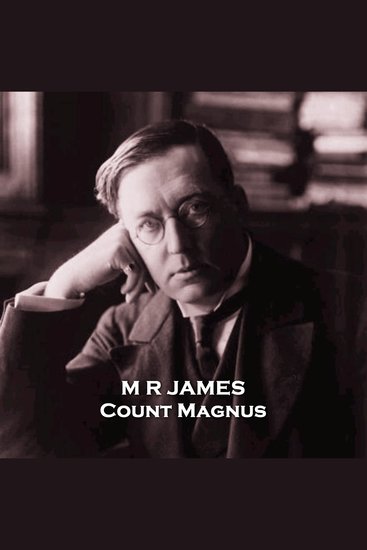
    Montague Rhodes James is cited as perhaps the greatest English writer of ghost stories, an opinion few would disagree with. 
    James was born on 1st August 1862 at Goodnestone Parsonage in Kent, where his father was Curate but at age 3 the family went to live at Livermere, near Bury St Edmunds in East Anglia.  
    From early childhood he had a passion for mediaeval books and antiques. He was educated initially as a boarder at Temple Grove School in East Sheen, west London, before gaining a scholarship to Eton and thence Cambridge where he gained a double first, becoming a distinguished linguist and mediaevalist.  
    Before the Great War vacations were usually spent touring Europe absorbing cultures and references for his later writing. 
    A man of enormous knowledge it was said he timed his breakfast egg whilst he completed the Times crossword.  
    Many of his elegant yet terrifying tales were created by discarding the prevailing gothic cliches and placing his characters and narrative in a realistic setting.  Thereby the stories gained atmosphere and menace on a grand scale and he was famed as the originator of the antiquarian ghost story. 
    Although story-telling and writing these 30 or so tales was a hobby, when published their effect transformed the genre and still chill the bones in our more modern times. 
    James was also a medievalist scholar and translator whose work remains highly respected. He was also Provost of Eton College between 1918 and 1936. 
    M R James died on 12th June 1936 at Eton in Buckinghamshire.  He was 73.
    Ver libro
  • Idleness - A Philosophical Essay - cover

    Idleness - A Philosophical Essay

    Brian O'Connor

    • 0
    • 0
    • 0
    The first book to challenge modern philosophy’s case against idleness, revealing why the idle state is one of true freedomFor millennia, idleness and laziness have been regarded as vices. We're all expected to work to survive and get ahead, and devoting energy to anything but labor and self-improvement can seem like a luxury or a moral failure. Far from questioning this conventional wisdom, modern philosophers have worked hard to develop new reasons to denigrate idleness. In Idleness, the first book to challenge modern philosophy's portrayal of inactivity, Brian O'Connor argues that the case against an indifference to work and effort is flawed--and that idle aimlessness may instead allow for the highest form of freedom.Idleness explores how some of the most influential modern philosophers drew a direct connection between making the most of our humanity and avoiding laziness. Idleness was dismissed as contrary to the need people have to become autonomous and make whole, integrated beings of themselves (Kant); to be useful (Kant and Hegel); to accept communal norms (Hegel); to contribute to the social good by working (Marx); and to avoid boredom (Schopenhauer and de Beauvoir). O'Connor throws doubt on all these arguments, presenting a sympathetic vision of the inactive and unserious that draws on more productive ideas about idleness, from ancient Greece through Robert Burton's Anatomy of Melancholy, Schiller and Marcuse's thoughts about the importance of play, and recent critiques of the cult of work. A thought-provoking reconsideration of productivity for the twenty-first century, Idleness shows that, from now on, no theory of what it means to have a free mind can exclude idleness from the conversation.
    Ver libro