¡Acompáñanos a viajar por el mundo de los libros!
Añadir este libro a la estantería
Grey
Escribe un nuevo comentario Default profile 50px
Grey
Suscríbete para leer el libro completo o lee las primeras páginas gratis.
All characters reduced
When the United States Invaded Russia - Woodrow Wilson's Siberian Disaster - cover

When the United States Invaded Russia - Woodrow Wilson's Siberian Disaster

Carl J Richard

Editorial: Stackpole Books

  • 0
  • 0
  • 0

Sinopsis

 “An intriguing and carefully argued entry into a small and often overlooked discussion of American political maneuvering at the end of World War I.” —Library Journal   In a little-known episode at the height of World War I, President Woodrow Wilson dispatched thousands of American soldiers to Siberia. Carl J. Richard convincingly shows that Wilson’s original intent was to enable Czechs and anti-Bolshevik Russians to rebuild the Eastern Front against the Central Powers. But Wilson continued the intervention for a year and a half after the armistice in order to overthrow the Bolsheviks and to prevent the Japanese from absorbing eastern Siberia. As Wilson and the Allies failed to formulate a successful Russian policy at the Paris Peace Conference, American doughboys suffered great hardships on the bleak plains of Siberia.   Richard argues that Wilson’s Siberian intervention ironically strengthened the Bolshevik regime it was intended to topple. Its tragic legacy can be found in the seeds of World War II—which began with an alliance between Germany and the Soviet Union, the two nations most aggrieved by Allied treatment after World War I—and in the Cold War, a forty-five year period in which the world held its collective breath over the possibility of nuclear annihilation.   One of the earliest U.S. counterinsurgency campaigns outside the Western Hemisphere, the Siberian intervention was a harbinger of policies to come. Richard notes that it teaches invaluable lessons about the extreme difficulties inherent in interventions and about the absolute need to secure widespread support on the ground if such campaigns are to achieve success, knowledge that U.S. policymakers tragically ignored in Vietnam and have later struggled to implement in Iraq and Afghanistan.
Disponible desde: 14/06/2023.
Longitud de impresión: 211 páginas.

Otros libros que te pueden interesar

  • Federalist Papers The: Book Summary & Analysis - cover

    Federalist Papers The: Book...

    Miles Thatcher

    • 0
    • 0
    • 0
    This content is an independent and unofficial summary created for informational and educational purposes only. It is not affiliated with, authorized, approved, licensed, or endorsed by the original author or publisher. All rights to the original work belong to its respective copyright holders. This summary is not intended to substitute the original book, but to offer a concise overview and interpretation of its main ideas.
     
    The Federalist Papers is a collection of 85 essays that delve into the principles and challenges of the newly proposed United States Constitution. Originally written to persuade New York state voters to ratify the Constitution, these essays explore themes of governance, federalism, and individual rights. Offering profound insights into the founding framework of American democracy, this timeless work remains essential reading for anyone interested in political theory, constitutional law, or the historical roots of the United States.
    Ver libro
  • Human Nature And Conduct - cover

    Human Nature And Conduct

    John Dewey

    • 0
    • 0
    • 0
    "Human Nature And Conduct" by John Dewey is a seminal work in philosophy and psychology, first published in 1922. In this book, Dewey explores the relationship between human nature, ethics, and social conduct. He argues that human behavior is not predetermined by fixed instincts or traits but is instead shaped by the interaction between individuals and their environment. Dewey emphasizes the importance of social institutions and cultural influences in molding individual character and moral conduct.
    Ver libro
  • MIND POWER SYSTEM THE - Unleash Your Inner Potential for Peak Performance and Success (2023 Guide for Beginners) - cover

    MIND POWER SYSTEM THE - Unleash...

    THEOBOLD TILLERY

    • 0
    • 0
    • 0
    "The Mind Power System" is a transformative guide that unlocks the secrets to harnessing the full potential of your mind for unparalleled success. Dive into a comprehensive system that combines cutting-edge insights, proven techniques, and practical exercises to elevate your mental capabilities and achieve peak performance in all aspects of your life. This book serves as your roadmap to unlocking the extraordinary power within your mind and shaping the success you've always dreamed of.Cultivate a Positive Mindset: Develop a mindset that fuels positivity, resilience, and unwavering determination.Enhance Mental Focus: Learn techniques to sharpen your concentration and stay focused on your goals.Master Emotional Intelligence: Harness the power of emotions to navigate challenges and build meaningful relationships.Unlock Creativity: Foster a creative mindset to solve problems innovatively and drive success.Boost Self-Confidence: Build unwavering self-confidence to overcome obstacles and achieve your aspirations.Establish Productive Habits: Develop habits that promote productivity and contribute to lasting success.Achieve Peak Performance: Learn the principles of peak performance to excel in every area of your life. 
    And Much More!... 
    🚀 Transform your mind, transform your life! Take the first step toward unlocking your mind's full potential with "The Mind Power System." Embrace the power within you and embark on a journey of unparalleled success! 🚀 
     
    Ver libro
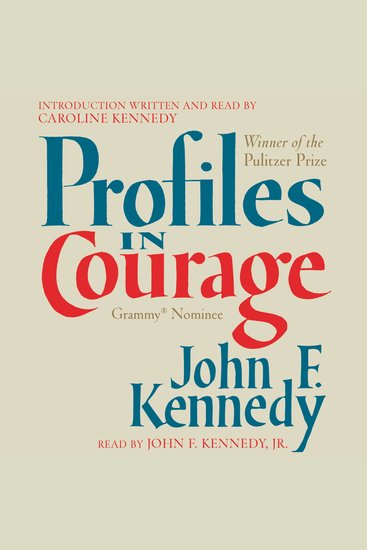
  • Profiles in Courage - cover

    Profiles in Courage

    Anónimo

    • 0
    • 0
    • 0
    THE PULITZER PRIZE-WINNING CLASSIC OF POLITICAL INTEGRITY 
    Introduction Written and Read by Caroline Kennedy; Book read by John F. Kennedy Jr. 
    John F. Kennedy’s enduring classic resounds with timeless lessons on the most cherished of virtues—courage and patriotism—and remains a moving, powerful, and relevant testament to the indomitable American spirit  
    During 1954-55, Kennedy, then a junior senator from the state of Massachusetts, profiled eight American patriots, mainly United States Senators, who at crucial moments in our nation’s history, revealed a special sort of greatness: men who disregarded dreadful consequences to their public and private lives to do that one thing which seemed right in itself. They were men of various political and regional allegiances—their one overriding loyalty was to the United States. 
    Courage such as these men shared, Kennedy makes clear, is central to all morality—a man does what he must in spite of personal consequences—and these exciting stories suggest that, without in the least disparaging the courage with which men die, we should not overlook the true greatness adorning those acts of courage with which men must live.  
    As Robert F. Kennedy writes in the foreword, Profiles in Courage “is not just stories of the past but a book of hope and confidence for the future. What happens to the country, to the world, depends on what we do with what others have left us."" 
    Ver libro
  • Dragonslayers - Six Presidents and Their War with the Swamp - cover

    Dragonslayers - Six Presidents...

    Larry Schweikart

    • 0
    • 0
    • 0
    The Swamp has been around for over 150 years, and six major presidents have tried to drain it with varying degrees of success. 
     
    Donald Trump promised to “Drain the Swamp,” by which he originally meant lobbyists. When he got in, he found an entirely different Swamp—a Deep State that had grown, layer upon layer, within the government. But he wasn’t the first to encounter entrenched Swamp opposition. Abraham Lincoln had to battle the  
    “Slave Power Conspiracy”; Grover Cleveland was the most successful of three presidents to fight the spoils Swamp. Theodore Roosevelt found a new iteration of the Swamp awaiting him: Trusts. After World War II, John F. Kennedy discovered that he had little control over the Central Intelligence Agency, and even found he  
    needed the CIA for his own purposes. Despite promising to shrink the bureaucracy Swamp, Ronald Reagan found himself helpless to even make a dent in it. And Trump soon learned that the Deep State could ensure no one ever brought any of its own to justice. Dragonslayers explains why these Swamps exist, and why they were—and remain—so hard to defeat.
    Ver libro
  • Who Will Defend Europe? - An Awakened Russia and a Sleeping Continent - cover

    Who Will Defend Europe? - An...

    Keir Giles

    • 0
    • 0
    • 0
    Who will defend Europe? The answer should be obvious: Europe should be able to defend itself. Yet, for decades, most of the continent enjoyed a defense holiday, outsourcing protection to the United States while banking an increasingly illusory 'peace dividend'. Now, after three decades of reducing armed forces and drawing down defense industries, Europe finds itself close to unprotected—while Russia is intent on continuing its war of expansion, and the United States is distracted and divided. 


    In this urgent, vital book, Keir Giles lays out the stark choices facing leaders and societies as they confront the return of war in Europe. He explains how the West's unwillingness to confront Russia has nurtured the threat, and that Putin's ambition puts the whole continent at risk. He assesses the role and deficiencies of NATO as a guarantor of hard security, and whether the European Union or coalitions of the willing can fill the gap. Above all, Giles emphasizes the need for new leadership in defense of the free world after the United States has stepped aside—and warns that the United Kingdom's brief moment of setting the pace for Europe has already been squandered.
    Ver libro