¡Acompáñanos a viajar por el mundo de los libros!
Añadir este libro a la estantería
Grey
Escribe un nuevo comentario Default profile 50px
Grey
Suscríbete para leer el libro completo o lee las primeras páginas gratis.
All characters reduced
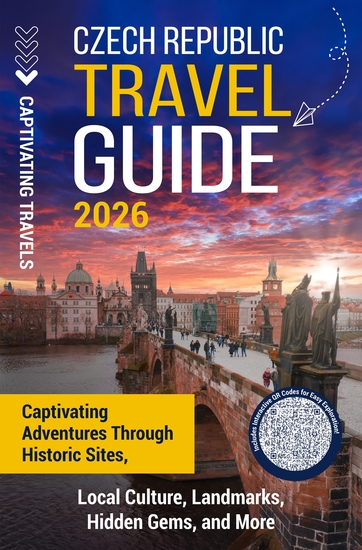
Czech Republic Travel Guide - Captivating Adventures through Historic Sites Local Culture Landmarks Hidden Gems and More - cover

Czech Republic Travel Guide - Captivating Adventures through Historic Sites Local Culture Landmarks Hidden Gems and More

Captivating Travels

Editorial: Captivating Travels

  • 0
  • 0
  • 0

Sinopsis

Unlock the Czech Republic: Your Essential Travel Companion with Images, Maps, and QR Codes
 
Discover a land where medieval charm meets vibrant modernity, Gothic grandeur towers over bustling squares, and picturesque landscapes invite exploration. From the architectural marvels of Prague to the serene vineyards of South Moravia and the fairytale allure of Český Krumlov, this guide is your key to experiencing the very best of the Czech Republic.

Here's just a fraction of what you will find inside: 

-   Must-See Sights: Explore iconic landmarks such as  Prague Castle ,  Charles Bridge , and the captivating  Sedlec Ossuary . 
-   Hidden Gems: Uncover the charm of lesser-known towns such as Olomouc, Telč, and  Mikulov. 
-   Adventure Awaits: Embark on outdoor excursions in Bohemian Switzerland and the Moravian Karst. 
-   Cultural Immersion: Engage with  local customs,  festivals, and Czech etiquette  for an authentic journey. 
-   Practical Tools: Benefit from handy Czech phrases, cultural insights, and expert planning tips for every traveler. 
 
Why This Guide is Indispensable: 

-   Effortless Navigation:  Easy-to-follow maps ensure you navigate every corner of the Czech Republic with confidence. 
-   Visual Inspiration:  Stunning images bring your destinations to life before you even arrive. 
-   Instant Access: Convenient QR codes link you directly to additional resources, streamlining your trip planning. 
 
Your Czech Adventure Starts Now: 
Whether your trip is a short break or an extended exploration, this guide empowers you to travel smarter, explore deeper, and create unforgettable memories. 

Click  "Add to Cart"  and begin planning your extraordinary Czech Republic journey today! 
Disponible desde: 30/06/2025.
Longitud de impresión: 220 páginas.

Otros libros que te pueden interesar

  • Belgium Travel Guide - Captivating Adventures through Must-See Places Local Culture Belgian Landmarks Hidden Gems and More - cover

    Belgium Travel Guide -...

    Captivating Travels

    • 0
    • 0
    • 0
    Uncover Belgium's Magic With Over 130 Full-Color Images and Maps—Plus 80 QR Codes That Bring Your Trip to Life
     
    Wander through medieval towns, taste world-famous chocolate, and soak in centuries of history. — This full-color guide is your passport to Belgium's most unforgettable experiences. Designed for curious travelers and visual explorers, it's packed with smart tips, rich visuals, and instant access to real-time info that keeps your trip smooth and stress-free.
    
    What's Inside: 
    
    - The best highlights in Brussels, Bruges, Ghent, Antwerp, and more. 
    - Charming day trips to hidden gems like  Dinant, Durbuy, and Bouillon. 
    - Local favorites:  Belgian waffles, rich chocolate, crispy frites,  and iconic beers. 
    - Seasonal must-sees and the top festivals you won't want to miss. 
    - Culture and customs made simple:  language tips, etiquette, and local advice  
    - Custom  2-, 5-, and 7-day itineraries for every kind of traveler. 
    - A curated list of the most Instagrammable photo spots in Belgium. 
    - And much, much more! 
     
    Don't Wait to Discover Belgium's Wonders
    Step into a world of cobbled streets, gothic spires, and irresistible cuisine. Belgium is a story waiting to be lived. Click "Add to Cart" and start planning the journey of a lifetime today. 
    Ver libro
  • Benin Empire - Art Warfare and the Kingdom of Bronze - cover

    Benin Empire - Art Warfare and...

    Rolf Hedger

    • 0
    • 0
    • 0
    The Benin Empire, one of the most powerful and influential kingdoms in West Africa, flourished for over 1,000 years. Its capital, Benin City, located in present-day southern Nigeria, was an epicenter of art, culture, and political power. The empire’s historical significance extends beyond its impressive architectural feats, remarkable artistry, and military prowess, as it was also a hub of trade and diplomacy. 
    The origins of the Benin Empire can be traced back to the early 11th century, with a history deeply intertwined with the Kingdom of Ife, from which the Benin people are believed to have descended. The development of the kingdom was largely shaped by its early rulers, the Obas, whose leadership and vision helped lay the foundation for the Benin Empire. The Benin monarchy, a vital institution in the kingdom, solidified the rule of the Obas and their divine connection to the people. 
    At its peak, the Benin Empire extended its influence over a vast region in West Africa, establishing a complex political and social structure. The monarchy not only commanded political and military power but also served as a central force in religious and cultural life. The empire was renowned for its rich heritage in art, including the world-famous Benin Bronzes, which showcased the advanced craftsmanship and symbolic significance of Benin artisans. These bronzes, intricate sculptures, and plaques, which depicted scenes of royalty, warriors, and historical events, remain symbols of the empire’s grandeur.
    Ver libro
  • The Myths of the Maya - Cosmic Legends and Sacred Rituals - cover

    The Myths of the Maya - Cosmic...

    Julia Blacksmith

    • 0
    • 0
    • 0
    The Maya civilization, one of the most sophisticated and enduring cultures of Mesoamerica, flourished for thousands of years, leaving behind a rich legacy of myth, ritual, and cosmic understanding. Their world was deeply interconnected with the supernatural, where gods, spirits, and celestial forces played vital roles in everyday life. Through sacred texts, oral traditions, and intricate ceremonial practices, the Maya passed down their myths—stories that explained the origins of the universe, the struggles of gods and heroes, and the sacred cycles of time. These legends were not merely tales; they formed the foundation of their spiritual and societal structures, influencing everything from kingship to agriculture.  
    At the heart of Maya society was a profound connection between myth and ritual. Unlike many cultures that viewed myths as separate from daily life, the Maya saw them as living forces that required constant renewal through ceremonies, sacrifices, and offerings. Bloodletting, a sacred act performed by rulers and priests, was believed to nourish the gods and maintain cosmic balance. Grand pyramids and temple complexes, aligned with celestial events, served as sacred theaters where rituals reenacted the struggles of deities, ensuring harmony between the human and divine realms. The famous Popol Vuh, often regarded as the Maya "Book of Creation," recounts the epic journey of the Hero Twins as they navigate the treacherous underworld, triumphing over the forces of chaos and death. This myth, like many others, reflected the Maya’s deep understanding of duality, rebirth, and the cosmic order.  
    Deciphering Maya mythology has been a long and complex journey, shaped by archaeological discoveries, linguistic breakthroughs, and the resilience of indigenous communities.
    Ver libro
  • License to Travel - A Cultural History of the Passport - cover

    License to Travel - A Cultural...

    Patrick Bixby

    • 0
    • 0
    • 0
    Discover the surprising global history of how the passport has shaped art, thought, and human experience to define the modern world. 
     
    License to Travel exposes the passport as both an instrument of personal freedom and a tool of government surveillance powerful enough to define our very humanity. 
     
    Patrick Bixby examines the passports of artists and intellectuals, ancient messengers and modern migrants to reveal how these seemingly humble documents implicate us in larger narratives about identity, mobility, citizenship, and state authority. 
     
    This concise cultural history:  
    • Takes the reader on a captivating journey from pharaonic Egypt and Handynasty China to the passport controls and crowded refugee camps of today. 
    • Connects intimate stories of vulnerability and desire with vivid examples drawn from world cinema, literature, art, philosophy, and politics 
    • Highlights the control that travel documents have over our bodies as we move around the globe. 
     
    With unexpected discoveries at every turn, from narrow escapes and new starts, tearful departures and hopeful arrivals, License to Travel shares some of our most memorable experiences involving the passport.
    Ver libro
  • Tarascan Empire - The Fierce Rivals of the Aztecs and Masters of West Mexico - cover

    Tarascan Empire - The Fierce...

    Rolf Hedger

    • 0
    • 0
    • 0
    The Tarascan Empire flourished in the rugged and resource-rich region of western Mexico, primarily in what is now the state of Michoacán. Unlike the arid landscapes of central Mexico dominated by the Aztecs, the Tarascan homeland was defined by volcanic highlands, fertile valleys, and vast lakes, particularly Lake Pátzcuaro, which played a central role in their civilization. The geography of this region not only shaped their way of life but also provided a natural defense against external threats, including the expansionist ambitions of the Aztecs. 
    The varied landscape of Michoacán consisted of towering mountains, deep forests, and fertile plateaus. This diverse terrain allowed the Tarascans to develop a robust agricultural system, cultivating maize, beans, squash, and chili peppers, which formed the foundation of their diet. The presence of rivers and lakes further supported fishing and provided fresh water, making settlements around these water bodies highly strategic. Lake Pátzcuaro, in particular, was not only an economic and social hub but also held deep religious significance. It was believed to be the gateway to the underworld in Tarascan mythology, reinforcing its central role in spiritual life. 
    Natural resources played a crucial role in the rise of the Tarascan Empire. The region was rich in minerals, especially copper and obsidian, which were vital for both tools and weaponry. Unlike the Aztecs, whose military strength relied on wooden clubs and stone blades, the Tarascans developed advanced metalworking techniques, producing copper axes, bronze weapons, and intricate ornaments. This technological advantage gave them a distinct edge in warfare and trade, allowing them to maintain independence from their more dominant neighbors.
    Ver libro
  • Egyptian Military Leaders - Generals and Their Campaigns - cover

    Egyptian Military Leaders -...

    Omar Khalil

    • 0
    • 0
    • 0
    The military strength of ancient Egypt was a defining factor in its ability to expand and sustain one of the most enduring civilizations in history. From its early beginnings, Egypt developed a structured and disciplined military that evolved to meet the challenges posed by both internal conflicts and foreign threats. The foundation of this power lay in the organization of its armed forces, the strategic leadership of its rulers, and the continual advancement of its weaponry and tactics. 
    In the early periods, Egypt's military was primarily a defensive force, focused on protecting the fertile Nile Valley from nomadic raiders. The unification of Upper and Lower Egypt under Narmer marked a crucial turning point, as military conquest became a tool for political consolidation. The pharaohs not only ruled as divine monarchs but also acted as supreme military commanders, leading their armies into battle and overseeing large-scale campaigns. This dual role reinforced their authority and ensured that military success translated into political stability. 
    One of the key factors in Egypt’s military rise was its ability to adapt to new technologies and strategies. During the Second Intermediate Period, Egypt faced the Hyksos, a foreign power that introduced advanced chariot warfare and superior composite bows. Instead of being permanently subdued, the Egyptians learned from their enemies, incorporating these innovations into their own forces. This adaptation played a crucial role in the expulsion of the Hyksos and the rise of the New Kingdom, during which Egypt became an empire with far-reaching influence.
    Ver libro