Junte-se a nós em uma viagem ao mundo dos livros!
Adicionar este livro à prateleira
Grey
Deixe um novo comentário Default profile 50px
Grey
Assine para ler o livro completo ou leia as primeiras páginas de graça!
All characters reduced
When I Crossed the Line - A Rookie’s Voyage on NNS ARADU - cover
LER

When I Crossed the Line - A Rookie’s Voyage on NNS ARADU

Captain Ahbitan Chiromah Yakubu

Editora: Commune Global Multi-Concept

  • 0
  • 0
  • 0

Sinopse

“When I Crossed the Line: A Rookie’s Voyage on NNS ARADU” is an engaging autobiographical account narrating the author’s formative experiences onboard Nigerian Navy Ship ARADU during a significant maritime voyage to Brazil. Set against the backdrop of August 2007, this narrative transforms a rookie sailor’s experiences into a tale of growth, camaraderie, and adventure.This book stands as not only a tribute to the Nigerian Navy but a powerful testament to the spirit of exploration and the bonds created through shared experiences at sea. Captain Yakubu’s storytelling brings to life a world that only a few could experience directly, inviting readers to navigate the waves
Disponível desde: 08/07/2025.

Outros livros que poderiam interessá-lo

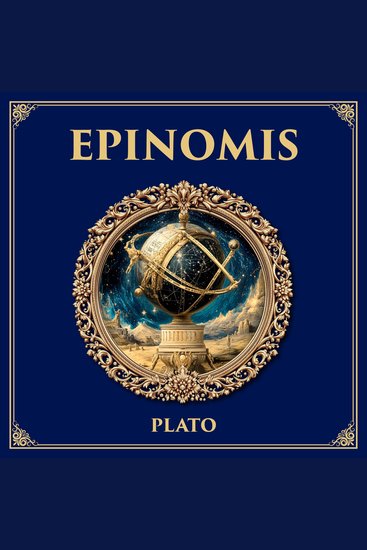
  • Epinomis - The Sequel to Laws – A Late Dialogue on Astronomy Theology and the Nature of the Divine - cover

    Epinomis - The Sequel to Laws –...

    Plato, Tim Zengerink

    • 0
    • 0
    • 0
    What if studying the stars could lead to the divine? 
    In Epinomis, Plato or his student unveils a breathtaking conclusion to his philosophical journey. Here, the cosmos becomes the classroom, and astronomy is the curriculum of the soul. This sequel to Laws invites the listener to consider the stars as more than distant objects—they are keys to understanding virtue, order, and the mind of God. 
    What you'll discover inside: 
    •	A Theological Expansion of Laws – Explore how Plato connects divine reason to legal and moral order 
    •	The Stars as Guides to Wisdom – Learn why celestial study is the highest form of education 
    •	A Dialogue on Divine Nature – Thought-provoking discussion on soul, fate, and spiritual truth 
    •	A Clear Modern Translation – Accessible for new readers, faithful to the gravity of Plato’s thought 
    Embark on a final celestial journey with one of antiquity’s greatest thinkers.
    Ver livro
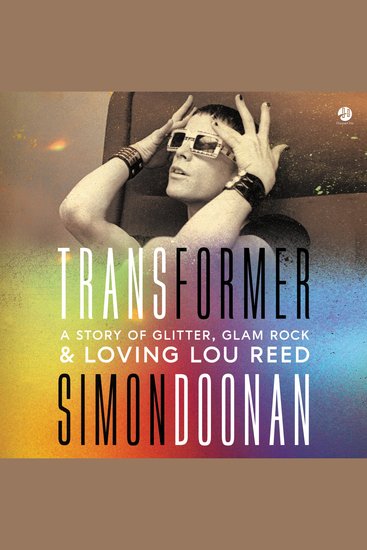
  • Transformer - A Story of Glitter Glam Rock and Loving Lou Reed - cover

    Transformer - A Story of Glitter...

    Simon Doonan

    • 0
    • 0
    • 0
    In this funny and poignant memoir and cultural history, the television personality, columnist, and author of Drag pays homage to Lou Reed’s groundbreaking album Transformer on its fiftieth anniversary and recalls its influence on his coming of age and coming out through glam rock. 
    In November 1972, Lou Reed released his album, Transformer because he thought it was “dreary for gay people to have to listen to straight people’s love songs.” That groundbreaking idea echoed with the times. That same year, Sweden was the first country to legalize gender-affirming surgery, and San Francisco struck down employment discrimination based on sexual orientation. 
    Sometimes an artistic creation perfectly aligns with a broader social and political history, and Transformer—with the songs “Walk on the Wild Side,” “Perfect Day,” and “Vicious”—perfectly captured its time. “Walk on the Wild Side” was banned on radio across the country but became a massive hit when young people threatened to boycott stations that would not play it. The album's cover featured a high-contrast image of Lou, flaunting a new mascara'd glamrock incarnation, shot by legend Mick Rock, thereby underscoring his intention to create ""a gay album."" 
    In Transformer, Doonan tells the story of how Lou Reed came to make the album with the help of David Bowie, and places its creation within the course of Reed’s life. Doonan offers first-hand testimony of the album’s impact on the LGBTQ+ community, recalling how it transformed his own life as a 20-year-old working class kid from Reading, England, who had just discovered the joys of London Glam Rock and was sparked by the artistic freedom of Warhol’s The Factory. Transformer was a revelation—hearing Reed’s songs, Doonan understood how the world was changing for him and his friends. 
    A poignant, personal addition to modern music and LGBTQ+ history, Transformer captures a pivotal moment when those long silenced were finally given a voice. As transgender icon Candy Darling, highlighted in his lyrics, told Reed, “It’s so nice to hear ourselves.” 
    Supplemental enhancement PDF accompanies the audiobook. 
    This book would make a great gift for any music lover, LGBTQ+ activist, or history buff looking to learn more about the cultural impact of Lou Reed's Transformer album on the world.
    Ver livro
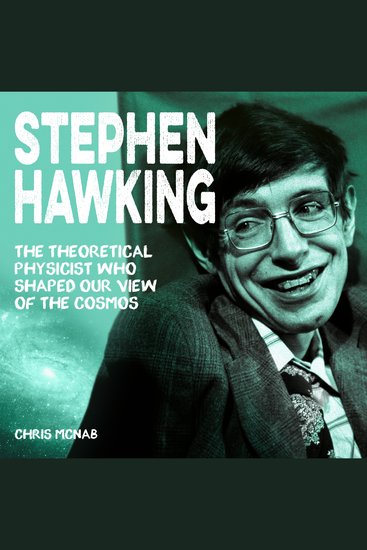
  • Stephen Hawking - The Theoretical Physicist Who Shaped Our View of the Cosmos - cover

    Stephen Hawking - The...

    Chris McNab

    • 0
    • 0
    • 0
    Explore the life and scientific legacy of Stephen Hawking - the brilliant theoretical physicist who changed the way we look at time and space. 
     
    Stephen Hawking's contributions to physics and cosmology literally changed our understanding of the universe. This captivating biography introduces his life and greatest scientific contributions, with accessible explanations on his theories surrounding general relativity, quantum mechanics, the science of black holes, and his pursuit of the 'Theory of Everything'. With black and white photographs throughout, this biography is gives wonderful insight into Hawking's extraordinary achievements and how his attitude to life and work were the true driver of his success.
    Ver livro
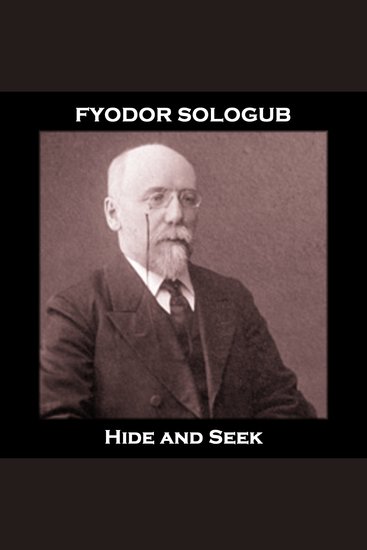
  • Hide And Seek - From their pens to your ears genius in every story - cover

    Hide And Seek - From their pens...

    Fyodor Sologub

    • 0
    • 0
    • 0
    Fyodor Kuzmich Teternikov was born on 1st March 1863 in St. Petersburg into the family of a poor tailor.  When his father died of tuberculosis in 1867, his illiterate mother was forced to become a servant in the home of an aristocrat, where Sologub and his younger sister grew up.  
    Seeing how difficult his mother's life was, Sologub was determined to rescue her from it, and after graduating from the St. Petersburg Teachers' Institute in 1882 he took his mother and sister with him to his first teaching post in Kresttsy.  It was here he began his literary career in 1884 with his poem ‘The Fox and the Hedgehog’ under the name Te-rnikov. 
    It would be another decade before he could escape his various jobs to move to Moscow and begin his literary career on what would be his most famous novel, ‘The Petty Demon’.  It was now suggested that he use a pseudonym and so Sologub became his new identity. 
    In 1896 he published a book of poems, a collection of short stories, and his first novel, ‘Bad Dreams’, which is considered one of the first decadent Russian novels. 
    In 1905 ‘The Petty Demon’, was published, initially in serial form. But life was still difficult unrewarding jobs, little time to write and a small, cramped apartment lightened only by gatherings of friends, poets and writers. 
    By the October Revolution his work was becoming popular and with the novel of ‘The Petty Demon’, finally published as a book, he now had a growing income. 
    His sister's tuberculosis could now be more easily treated with treatments in proper sanitoria, even as far away as Finland, but in June 1907 she passed. 
    He returned to St. Petersburg and retired.  The following year he married the translator Anastasia Chebotarevskaya who reordered his life.  A big new apartment was rented, small gilt chairs were bought, and the walls of the large cold office were decorated with paintings. 
    Sologub continued to write and publish poems, plays, and translations and in 1914 he started a magazine, Writers' Journals, but the outbreak of World War I put an end to it.  
    The October Revolution, with publishing under Bolshevik control, ensured he now had no outlets for his writing and could only lecture. 
    His wife’s suicide in September 1921, mainly due to deprivation and uncertainty, as they prepared for a new life abroad, grieved him for the rest of his life. 
    In May 1927 Sologub became seriously ill, and by summer he could leave his bed only rarely.  
    After a long struggle, Fyodor Sologub died on 5th December 1927 in Leningrad.  He was 64.
    Ver livro

  • Forgotten Authors The - Men - Volume 6 - Morgan Robertson to Francis Brett Young - cover

    Forgotten Authors The - Men -...

    Morgan Robertson, Sax Rohmer,...

    • 0
    • 0
    • 0
    Throughout the long centuries of human history is the want, and the need, to share information, to exchange ideas and for that knowledge and experience, for curiosity and learning, to be the basis of a civil society. 
    In literature the ambition is much narrower.  In order to be known, to be popular, you had to be published.  And for that people had to know you existed and your ideas worth reading.  Obviously for most of humanity’s time people couldn’t read and texts couldn’t be published in any great number. 
    In the 15th Century Gutenberg’s printing press began the revolution to address the second and by the 19th century had gathered pace with startling speed and mass distribution.  Education for the many was brought in to help people understand more of their world and, with new skills, how to have a better place within it.  Now, if the powers that owned the presses and means of distribution agreed an audience would now be able to avail themselves of your ideas, your printed words.  
    Sadly, in the thirst for the new, the recent and the past fell from sight, relegated to dark corners and dusty shelves.   
    But the printed word is rarely without someone, somewhere busying themselves through piles of papers and books rediscovering what a good story is, whatever its age. 
    In this volume we offer up a small selection of those talents whose time has now come again.
    Ver livro
  • Are We There Yet? - Travel as a Spiritual Practice - cover

    Are We There Yet? - Travel as a...

    Shefa Gold

    • 0
    • 0
    • 0
    It's the perpetual question: Are we there yet? We've probably asked and answered it countless times. But impatience can cloud the real question: Where are we right now? Are We There Yet? shows a way to turn travel into a spiritual practice. 
    From the Gully to the Crossroads--walking, driving, flying--Rabbi Shefa Gold shares her experience and insight on travel and helps us reexamine our natural inclination to focus on our destinations--both physical and spiritual. 
    Ride along with her on her many journeys--some mundane, some mysterious, and a few near miraculous--and discover the joy of what can happen when you stop worrying about there and focus on here. 
    Are We There Yet? lets you tap into the potential of each journey--starting with the first step. 
    Music by Steve Cramer 
    With the permission of the publisher  Ben Yehuda Press 
    Visit https://www.rabbishefagold.com/ to learn more.
    Ver livro