Join us on a literary world trip!
Add this book to bookshelf
Grey
Write a new comment Default profile 50px
Grey
Subscribe to read the full book or read the first pages for free!
All characters reduced
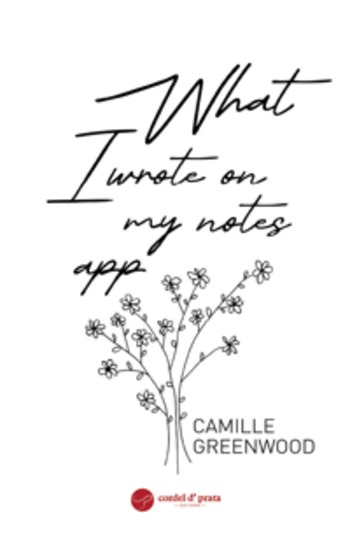
what I wrote on my notes app - cover

what I wrote on my notes app

Camille Greenwood

Publisher: CORDEL D' PRATA

  • 0
  • 0
  • 0

Summary

I've collected all my broken hearts, my moments of sadness, all my smiles and dreams. I gathered disappointments, frustrations, moments of happiness and many other emotions. I put it all together and turned it into this. I turned it into art. I hope you like my art.
Available since: 12/17/2024.
Print length: 242 pages.

Other books that might interest you

  • In the Seven Woods - cover

    In the Seven Woods

    William Butler Yeats

    • 0
    • 0
    • 0
    In the Seven Woods (1904) is Yeats's first twentieth-century poetry collection. Its fourteen poems show him moving steadily away from the decisively Romantic diction of his earlier work. Here we hear a poetic voice that is at once more individual, colloquial and dramatic than previously. In addition, several poems sound a note of bitter lamentation over the marriage in 1903 of Maud Gonne, Yeats's great love and muse, to John MacBride. (Summary by Kasper Nijsen)
    Show book
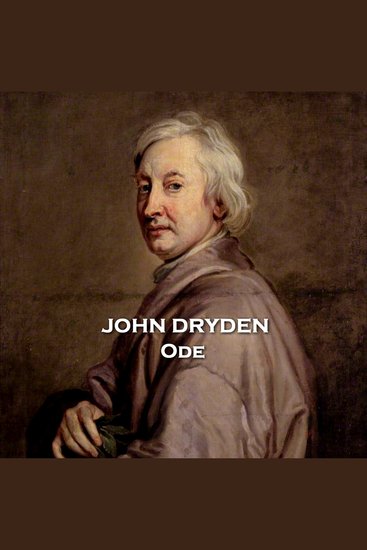
  • Ode - The Age of Dryden' is a fitting marker for why he stood above all the others of his age - cover

    Ode - The Age of Dryden' is a...

    John Dryden

    • 0
    • 0
    • 0
    John Dryden was born on August 9th, 1631 in the village rectory of Aldwincle near Thrapston in Northamptonshire. As a boy Dryden lived in the nearby village of Titchmarsh, Northamptonshire. In 1644 he was sent to Westminster School as a King's Scholar.  
    Dryden obtained his BA in 1654, graduating top of the list for Trinity College, Cambridge that year.  
    Returning to London during The Protectorate, Dryden now obtained work with Cromwell's Secretary of State, John Thurloe. 
     At Cromwell's funeral on 23 November 1658 Dryden was in the company of the Puritan poets John Milton and Andrew Marvell.  The setting was to be a sea change in English history. From Republic to Monarchy and from one set of lauded poets to what would soon become the Age of Dryden. 
    The start began later that year when Dryden published the first of his great poems, Heroic Stanzas (1658), a eulogy on Cromwell's death.  
    With the Restoration of the Monarchy in 1660 Dryden celebrated in verse with Astraea Redux, an authentic royalist panegyric. 
     With the re-opening of the theatres after the Puritan ban, Dryden began to also write plays. His first play, The Wild Gallant, appeared in 1663 but was not successful. From 1668 on he was contracted to produce three plays a year for the King's Company, in which he became a shareholder. During the 1660s and '70s, theatrical writing was his main source of income.  
    In 1667, he published Annus Mirabilis, a lengthy historical poem which described the English defeat of the Dutch naval fleet and the Great Fire of London in 1666. It established him as the pre-eminent poet of his generation, and was crucial in his attaining the posts of Poet Laureate (1668) and then historiographer royal (1670). 
    This was truly the Age of Dryden, he was the foremost English Literary figure in Poetry, Plays, translations and other forms. 
    In 1694 he began work on what would be his most ambitious and defining work as translator, The Works of Virgil (1697), which was published by subscription. It was a national event.  
    John Dryden died on May 12th, 1700, and was initially buried in St. Anne's cemetery in Soho, before being exhumed and reburied in Westminster Abbey ten days later.
    Show book
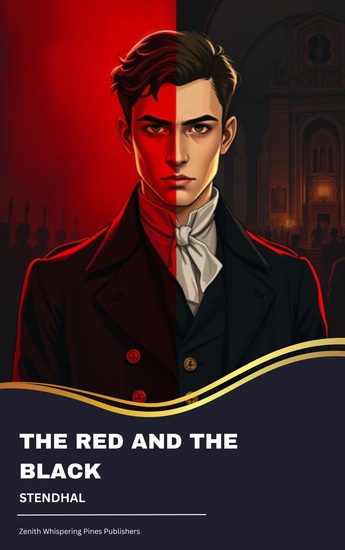
  • The Red and the Black - cover

    The Red and the Black

    Stendhal

    • 0
    • 0
    • 0
    He wants power. He wants love. Society gives him neither without a price.
    Julien Sorel, brilliant and fiercely ambitious, rises from humble origins into a world ruled by class, hypocrisy, and political intrigue. Torn between faith and ambition, desire and pride, he navigates dangerous romances and ruthless social games—each choice pulling him closer to triumph or ruin.
    
    Celebrated as "one of the first great psychological novels," Stendhal's masterpiece dissects vanity, hypocrisy, and the hunger for status with startling clarity. Its portrait of a young man fighting society—and himself—remains timeless and unsettlingly modern.
    
    If you love sharp character studies, political tension, and classics that expose the cost of ambition, this novel is unforgettable.
    
    Open the book—and witness how desire and destiny collide.
    Show book
  • Rhyme A Dozen A - London - 12 Poets 12 Poems 1 Topic - cover

    Rhyme A Dozen A - London - 12...

    William Blake, Amy Levy,...

    • 0
    • 0
    • 0
    ‘A dime a dozen’ as known in America, is perhaps equal to the English ‘cheap as chips’ but whatever the lingua franca of your choice in this series we hereby submit ‘A Rhyme a Dozen’ as 12 poems on many given subjects that are a well-rounded gathering, maybe even an essential guide, from the knowing pens of classic poets and their beautifully spoken verse to the comfort of your ears. 
     
    01 - A Rhyme A Dozen - 12 Poems, 12 Poets, 1 Topic - London - An Introduction 
    02 - A Ballad of London by Richard Le Gallienne 
    03 - Dear Old London by Eugene Field 
    04 - London by William Blake 
    05 - Impression de Nuit (London) by Lord Alfred Douglas 
    06 - London in July by Amy Levy 
    07 - West London by Matthew Arnold 
    08 - London After The Great Fire 1666 by John Dryden 
    09 - Composed Upon Westminster Bridge by William Wordsworth 
    10 - London Snow by Robert Seymour Bridges 
    11 - The Call to London by Radclyffe Hall 
    12 - Farewell to London in the Year 1715 by Alexander Pope 
    13 - His Return to London by Robert Herrick
    Show book
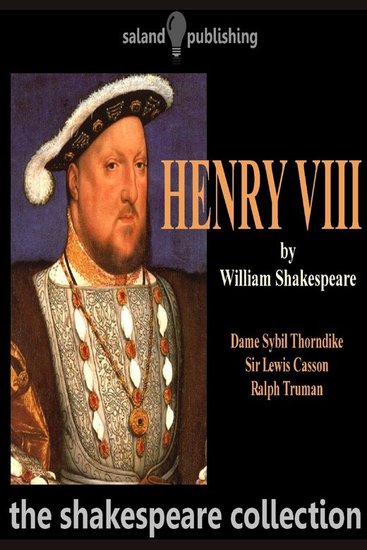
  • Henry VIII - cover

    Henry VIII

    William Shakespeare

    • 0
    • 0
    • 0
    This abridged performance of the last of Shakespeare's plays founded on English history was recorded in 1952. Henry VIII was first published in the 1623 folio edition of Shakespeare's plays. This performance stars Dame Sybil Thorndike, Sir Lewis Casson & Ralph Truman (as King Henry VIII).
    Show book
  • A Selection of Poems by Sir Walter Raleigh - cover

    A Selection of Poems by Sir...

    Sir Walter Raleigh

    • 0
    • 0
    • 0
    Sir Walter Raleigh (c. 1552 – 29 October 1618) was an English aristocrat, writer, poet, soldier, courtier, spy, and explorer. He is also well known for popularising tobacco in England.Raleigh's poetry is written in the relatively straightforward, unornamented mode known as the plain style. C. S. Lewis considered Raleigh one of the era's "silver poets", a group of writers who resisted the Italian Renaissance influence of dense classical reference and elaborate poetic devices.In poems such as "What is Our Life" and "The Lie", Raleigh expresses a contemptus mundi (contempt of the world) attitude more characteristic of the Middle Ages than of the dawning era of humanistic optimism. But, his lesser-known long poem "The Ocean to Cynthia" combines this vein with the more elaborate conceits associated with his contemporaries Edmund Spenser and John Donne, expressing a melancholy sense of history.A minor poem of Raleigh's captures the atmosphere of the court at the time of Queen Elizabeth I. His response to Christopher Marlowe's "The Passionate Shepherd to His Love" was "The Nymph's Reply to the Shepherd". "The Passionate Shepherd to His Love" was written in 1592, while Raleigh's "The Nymph's Reply to The Shepherd" was written four years later. Both were written in the style of traditional pastoral poetry. They follow the same structure of six four-line stanzas employing a rhyme scheme of AABB. (Introduction by Wikipedia)Sir Walter Raleigh (c. 1552 – 29 October 1618) was an English aristocrat, writer, poet, soldier, courtier, spy, and explorer. He is also well known for popularising tobacco in England.Raleigh's poetry is written in the relatively straightforward, unornamented mode known as the plain style. C. S. Lewis considered Raleigh one of the era's "silver poets", a group of writers who resisted the Italian Renaissance influence of dense classical reference and elaborate poetic devices.In poems such as "What is Our Life" and "The Lie", Raleigh expresses a contemptus mundi (contempt of the world) attitude more characteristic of the Middle Ages than of the dawning era of humanistic optimism. But, his lesser-known long poem "The Ocean to Cynthia" combines this vein with the more elaborate conceits associated with his contemporaries Edmund Spenser and John Donne, expressing a melancholy sense of history.A minor poem of Raleigh's captures the atmosphere of the court at the time of Queen Elizabeth I. His response to Christopher Marlowe's "The Passionate Shepherd to His Love" was "The Nymph's Reply to the Shepherd". "The Passionate Shepherd to His Love" was written in 1592, while Raleigh's "The Nymph's Reply to The Shepherd" was written four years later. Both were written in the style of traditional pastoral poetry. They follow the same structure of six four-line stanzas employing a rhyme scheme of AABB. (Introduction by Wikipedia)Poems in this collection: Epitaph The Nymph’s Reply to the Shepherd The Lie The Passionate Man’s Pilgrimage Life A Farewell to False Love Praised be Diana’s Fair and Harmless Light Farewell to the Court To her Love when He had obtained Her Nature that Washed Her Hands in Milk A Vision upon this Conceit of the Fairy Queen On the Cards and Dice The Silent Lover As You Came from the Holy Land The Excuse A Description of Love An Epitaph Upon the Right Honorable Sir Philip Sidney, Knight, Lord Governor of Flushing Another of the Same (the Faerie Queene) The Ocean to Cynthia (fragment) A Farewell to the Vanities of the World
    Show book