¡Acompáñanos a viajar por el mundo de los libros!
Añadir este libro a la estantería
Grey
Escribe un nuevo comentario Default profile 50px
Grey
Suscríbete para leer el libro completo o lee las primeras páginas gratis.
All characters reduced
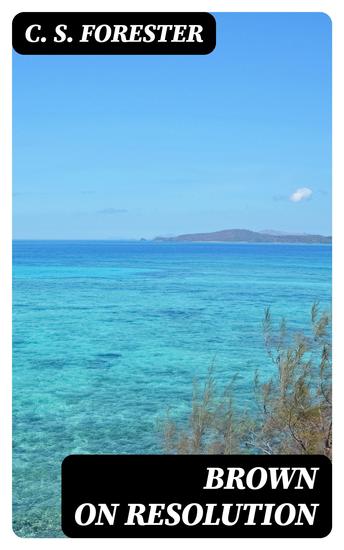
Brown on Resolution - Enriched edition World War I Novel - cover

Brown on Resolution - Enriched edition World War I Novel

C. S. Forester

Editorial: DigiCat

  • 0
  • 0
  • 0

Sinopsis

In "Brown on Resolution," C. S. Forester delves into the complexities of naval warfare through the lens of a gripping narrative centered on the British merchant ship Resolution. Forester's adept storytelling encapsulates the unique tensions of maritime conflict during the early 19th century, showcasing vivid depictions of life at sea, the psychology of sailors, and the morally ambiguous decisions faced by those at war. His narrative style is both atmospheric and immersive, reflecting the historical realities of the Napoleonic era while engaging with themes of duty, honor, and the unforeseen consequences of human actions. C. S. Forester, an accomplished British author, is best known for his Horatio Hornblower series, which has influenced the genre of historical naval fiction. Forester's experiences as a war correspondent during World War II and his understanding of maritime history deeply informed his writing, allowing him to create authentic characters and intricate plots. This duality of experiences—both on land in conflict and at sea—shapes the narrative dynamics of "Brown on Resolution," providing readers with a poignant exploration of maritime bravery and ethical dilemmas of war. Recommended for enthusiasts of historical fiction and naval history alike, "Brown on Resolution" is a profound exploration of the human spirit amidst the backdrop of brutal warfare. Forester's ability to blend authentic historical context with riveting character development makes this novel an essential read for those seeking insight into the trials of seafaring life and the moral quandaries faced by men at war.

In this enriched edition, we have carefully created added value for your reading experience:
- A succinct Introduction situates the work's timeless appeal and themes.
- The Synopsis outlines the central plot, highlighting key developments without spoiling critical twists.
- A detailed Historical Context immerses you in the era's events and influences that shaped the writing.
- An Author Biography reveals milestones in the author's life, illuminating the personal insights behind the text.
- A thorough Analysis dissects symbols, motifs, and character arcs to unearth underlying meanings.
- Reflection questions prompt you to engage personally with the work's messages, connecting them to modern life.
- Hand‐picked Memorable Quotes shine a spotlight on moments of literary brilliance.
- Interactive footnotes clarify unusual references, historical allusions, and archaic phrases for an effortless, more informed read.
Disponible desde: 10/08/2022.
Longitud de impresión: 127 páginas.
Otros libros que te pueden interesar

  • Demons in my bloodstream - cover

    Demons in my bloodstream

    Candace Nola

    • 0
    • 0
    • 0
    Award-winning Author Candace Nola' s debut collection, Demons in my Bloodstream, is a fiendishly woven tapestry of short fiction. These nightmarish tales include a mobsters bucket list, a neighborhood gardening competition gone wrong, a serial killer patiently waiting for one last kill, and a colorblind man that finally cures what ails him. Six blood-soaked tales of terror for your own demon to feast upon.
    Ver libro
  • Elinor Mordaunt - A Short Story Collection - Immensely talented author that could combine tragedy and humour - cover

    Elinor Mordaunt - A Short Story...

    Elinor Mordaunt

    • 0
    • 0
    • 0
    Evelyn May Clowes was born on 7th May 1872 in Cotgrave, Nottinghamshire.  
     
    Growing up in genteel circumstances, her early childhood was spent at Charlton Down House near Cheltenham, Gloucestershire, and her teenage years near Heythrop in the Cotswolds.  
     
    She was educated at home by governesses, excelling at German, Latin, Greek, shorthand, landscape painting, and fabric and wallpaper design. 
     
    In 1897 she went to Mauritius as companion to her cousin Caroline and in 1898 married Maurice Wilhemn Wiehe, the owner of a sugar plantation. She gave birth to two stillborn children. After a few years of marriage, she found life difficult and returned to England. Shortly afterwards she went by herself to Australia, arriving in June 1902 and gave birth to a son a few months later.   
     
    She lived in Melbourne for about eight years.  To earn a living she took on a wide and varied range of jobs; she edited a woman's fashion paper, wrote short stories and articles, made blouses, designed embroideries, tilled gardens, acted as a housekeeper, and did other artistic work. Her health was not strong, but she undertook any kind of work which would provide a living for herself and her infant son. This gained her an experience of life which was readily put to use in her literary works. 
     
    Her first book, ‘The Garden of Contentment’, was published in 1902 under her pen-name Elinor Mordaunt. It was the first of many works that covered fiction, short stories, travel and autobiography. 
     
    She changed her name by deed poll to Evelyn May Mordaunt on 1st July 1915 and gained a further reputation as a writer of short stories for magazines which display both her humour and sense of tragedy. Travel was always high on her priority and the experiences used not only for pleasure but in her writings and, as travel books, ideas in themselves.  
     
    On 27th January 1933 at Tenerife, in the Canary Islands, she married a retired barrister from Gloucestershire. In her own words, the marriage ‘ended in tragedy.’ 
     
    Elinor Mordaunt died on 25th June 1942 at the Radcliffe Infirmary, Oxford. She was 70. 
     
    1 - Elinor Mordaunt - A Short Story Collection - An Introduction 
    2 - The Landlady by Elinor Mordaunt 
    3 - The Villa by Elinor Mordaunt 
    4 - The Inspired 'Busman by Elinor Mordaunt 
    5 - Luz by Elinor Mordaunt 
    6 - Hodge by Elinor Mordaunt
    Ver libro
  • The Lesson - cover

    The Lesson

    David Horn

    • 0
    • 0
    • 0
    A few months ago, she was a rising star in professional golf. Now she's spiraling into a career threatening slump. Join Emerson Taylor as she rediscovers her game, repairs the friendship with her childhood coach, and redefines her definition of success. 
    Short enough to read in one sitting, this story is for anyone who's suffocated under the weight of performance and results. For golfers and non-golfers alike, this powerful story will give you a new perspective and scorecard for achieving your goals.
    Ver libro
  • Bellerophon To Anteia - From their pens to your ears genius in every story - cover

    Bellerophon To Anteia - From...

    Mary Butts

    • 0
    • 0
    • 0
    Mary Frances Butts was born on 13th December 1890 in Poole, Dorset. 
    Her early years were spent at Salterns, an 18th-century house overlooking Poole Harbour.  Sadly in 1905 her father died, and she was sent for boarding at St Leonard's school for girls in St Andrews. 
    Her mother remarried and, from 1909, Mary studied at Westfield College in London, and here, first became aware of her bisexual feelings.  She was sent down for organising a trip to Epsom races and only completed her degree in 1914 when she graduated from the London School of Economics.  By then Mary had become an admirer of the occultist Aleister Crowley and she was given a co-authorship credit on his ‘Magick (Book 4)’. 
    In 1916, she began the diary which would now detail her future life and be a constant reference point for her observations and her absorbing experiences. 
    During World War I, she was doing social work for the London County Council in Hackney Wick, and involved in a lesbian relationship.  Life changed after meeting the modernist poet, John Rodker and they married in 1918. 
    In 1921 she spent 3 months at Aleister Crowley's Abbey of Thelema in Sicily; she found the practices dreadful and also acquired a drug habit.  Mary now spent time writing in Dorset, including her celebrated book of short stories ‘Speed the Plough’ which saw fully develop her unique Modernist prose style. 
    Europe now beckoned and several years were spent in Paris befriending many artists and writing further extraordinary stories.   
    She was continually sought after by literary magazines and also published several short story collections as books. Although a Modernist writer she worked in other genres but is essentially only known for her short stories.  Mary was deeply committed to nature conservation and wrote several pamphlets attacking the growing pollution of the countryside. 
    In 1927, she divorced and the following year her novel ‘Armed with Madness’ was published.  A further marriage followed in 1930 and time was spent attempting to settle in London and Newcastle before setting up home on the western tip of Cornwall.  By 1934 the marriage had failed. 
    Mary Butts died on 5th March 1937, at the West Cornwall Hospital, Penzance, after an operation for a perforated gastric ulcer. She was 46.
    Ver libro
  • Puppy Love Holiday Collection - cover

    Puppy Love Holiday Collection

    C. Coal

    • 0
    • 0
    • 0
    Sometimes we just need to believe in love and things working out without conflict or drama. In this quartet of contemporary romance short stories from the Puppy Love collection, that's exactly what happens. Each story involves a puppy helping their person find love. And sometimes community, too.Includes the stories Puppy Love Thanksgiving, Puppy Love Holiday Surprise, Puppy Love Christmas Kiss, and Puppy Love Valentine.
    Ver libro
  • After Twenty years - From their pens to your ears genius in every story - cover

    After Twenty years - From their...

    O Henry

    • 0
    • 0
    • 0
    William Sydney Porter was born on 11th September 1862 in Greensboro, North Carolina. At age 3 his mother died from tuberculosis. From an early age it was clear Porter had a large appetite for reading as he absorbed the world around him. 
    He first attended at a school run by his aunt before enrolling at the Lindsey Street High School and then worked at his uncle’s drugstore and gained a pharmacists’ license in 1881.  
    A persistent cough took him to Texas in the hope that a change of climate would help his symptoms. He took on various types of work, initially from ranch hand and cook and then as varied as pharmacist, draftsman, bank teller and journalist. He also began to write, though for now, purely as a hobby. 
    He was a member of several singing and dramatic groups when he met 17 year old Athol Estes, daughter of a wealthy Austin family. Despite her mother’s objection owing to Athol’s tuberculosis, they began courting and in July 1887, they eloped and soon married. 
    Athol, impressed by his writing, encouraged him to get them published. A job as a draftsman at the Texas General Land Office paid a healthy $100 dollars per month and life was good. 
    But then life turned cruel. His son died a few hours after birth although a daughter, Margaret, came the following year.  His job had to be vacated but another was found at the First National Bank of Austin. The bank operated informally and Porter was careless in keeping the books. He lost that job but began writing for the humourous weekly The Rolling Stone and the Houston Post. Some time later the federal Bank auditors went through his former accounts and he was arrested on charges of embezzlement. 
    Porter fled the day before his trial to Honduras. Holed up for several months he began to write.  Athol had become too ill to travel to meet him and learning that her health was deteriorating he surrendered to the court in February 1897.  Bail was obtained so that he could stay with Athol during her final days.  
    Porter was sentenced to five years at the Ohio Penitentiary in Columbus. His pharmacy qualifications got him the job of night druggist.  His sentence also gave him time to write and publish fourteen short stories. In December 1899 in McClure’s Magazine he published a short story as O Henry.  
    He was released two years early in July 1901, and reunited with Margaret, now 11, in Pittsburgh.  He now began his most prolific period of writing; a short story per week for the New York World, while also publishing works in other magazines.  Eventually over 600 of his short stories were published. 
    Porter was a heavy drinker and in 1908 his health, which had deteriorated for several years, took a dramatic turn for the worse, as did his writing. 
    O Henry died of cirrhosis of the liver complicated by diabetes and an enlarged heart on 5th June 1910.<
    Ver libro