Join us on a literary world trip!
Add this book to bookshelf
Grey
Write a new comment Default profile 50px
Grey
Subscribe to read the full book or read the first pages for free!
All characters reduced
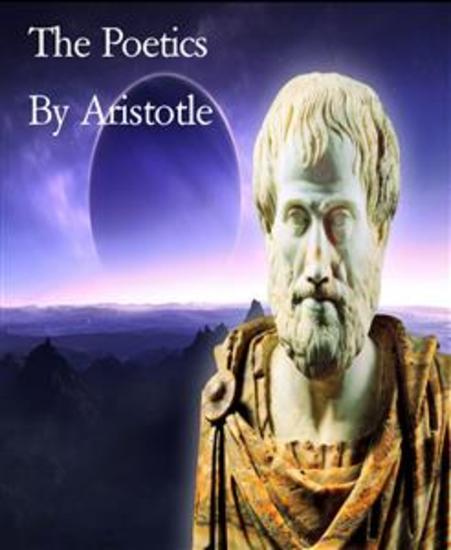
The Poetics - cover

The Poetics

By Aristotle

Publisher: BookRix

  • 0
  • 0
  • 0

Summary

Aristotle's Poetics is the earliest surviving work of dramatic theory and the first extant philosophical treatise to focus on literary theory. In it, Aristotle offers an account of what he calls "poetry" (a term which in Greek literally means "making" and in this context includes drama—comedy, tragedy, and the satyr play—as well as lyric poetry, epic poetry, and the dithyramb). He examines its "first principles" and identifies its genres and basic elements. His analysis of tragedy constitutes the core of the discussion.

Tragedy consists of six parts which Aristotle enumerates in order of importance, beginning with the most essential and ending with the least: Aristotle considers Tragedy superior to Epics and considers them higher forms of art. Tragedy should make the viewer feel fear and pity. Tragedy arouses the emotions of pity and fear in order to purge away their excess, to reduce these passions to a healthy. Aristotle also talks about “pleasure” that is proper to tragedy, apparently meaning the aesthetic pleasure one gets from contemplating the pity and fear that are aroused through the play. Tragedy is rooted in the fundamental order of the universe; it creates a cause-and-effect chain that clearly reveals what may happen at any time or place because that is the way the world operates.
Available since: 12/19/2023.
Print length: 63 pages.

Other books that might interest you

  • Nazi War Secrets - cover

    Nazi War Secrets

    Raphael Terra

    • 0
    • 0
    • 0
    This audiobook has been recorded using Text to speech (TTS). 
     
    Adolf Hitler changed the world. He was a messiah to his people and the anti-Christ to the rest. He was personally responsible for the deaths of millions of people around the globe. He is the greatest war criminal in history. 
     
    We are all familiar with the rise to power of the Nazi party and the global conflict they instigated. But not everybody is aware of how this all came to be and the many secrets. 
     
    From deep religious and occult secrets to technical innovations far beyond the abilities of the rest of the world, the Nazi party is a fascinating and tragically evil part of mankind's history. 
     
    From flying wings, super heavy tanks and suicidal rocket bombs to flying saucers and huge orbital solar mirrors, the world of Nazi war machines brings to mind the death star and super weapons of Star Wars. 
     
    This is the tale of manipulation, control, secret societies, weird weapons and ancient prophecy coming true. This is the tale of the world's most terrifying element of humanity - the dark side. Welcome to Nazi War Secrets.
    Show book
  • The Invented State - Policy Misperceptions in the American Public - cover

    The Invented State - Policy...

    Emily Thorson

    • 0
    • 0
    • 0
    In The Invented State, Emily Thorson argues that a problematic and understudied aspect of political misinformation reflects widespread public misperception about what the government does. Because much of public policy is invisible to the public, there is fertile ground for false beliefs to flourish, leading to what Thorson terms the "invented state": systematic misperceptions about public policy. However, people get the facts wrong not because they are stupid or blinded by partisan loyalty. Misperceptions are created when three conditions are met: when citizens have incomplete information about an issue, when their own biases color their understanding of it, and when they feel that the issue is important. The invented state is created by exposure to misinformation and by individuals' cognitive errors. 


    Correcting these policy misperceptions is highly effective at reducing false beliefs. Providing people with corrective information has downstream effects on attitudes. When they learn how policies really work, their approval increases and they also shift their policy priorities. Contrary to pundits' assumptions of a public who is largely indifferent to policy, there is a deep public desire to learn basic facts about how the government works. Thorson meets that desire with analysis on how the media can identify and correct substantive policy misperceptions.
    Show book
  • The Egyptian Book of the Dead - Texts and Interpretations - cover

    The Egyptian Book of the Dead -...

    Omar Khalil

    • 0
    • 0
    • 0
    The Egyptian Book of the Dead is one of the most significant and enigmatic works of ancient Egyptian literature. It is a collection of funerary texts that were intended to guide the soul of the deceased through the afterlife. The texts were not a single work but rather a compilation of spells, hymns, and prayers, which were tailored to ensure a safe passage to the afterlife and to grant protection in the realm of the dead. The Book of the Dead, also known as the "Book of Going Forth by Day," was typically inscribed on papyrus and placed in the tombs of the deceased, often alongside various amulets and offerings to aid the soul's journey. 
    The origins of the Book of the Dead can be traced back to the Pyramid Texts and Coffin Texts of the Old Kingdom, which were intended for royal burials. Over time, these texts evolved into the more accessible and expansive collection found in the New Kingdom, where it was available for individuals from all social classes. The Book of the Dead represents an essential aspect of ancient Egyptian religion, providing a vivid description of the journey the soul would undergo after death. It was believed that through the proper recitation and understanding of these texts, the deceased could navigate the trials of the underworld, known as Duat, and ultimately reach the afterlife in the presence of the gods. 
    The role of the Book of the Dead in Egyptian religion was deeply intertwined with the belief in Ma’at, the concept of divine order, truth, and justice. The texts emphasized the importance of the deceased’s heart being weighed in the Hall of Ma’at, where it would be measured against the feather of Ma’at to determine whether the soul was worthy of entering the eternal paradise. This idea of judgment after death is a central theme throughout the Book of the Dead and reflects the profound importance of moral conduct and the balance of cosmic forces in Egyptian thought.
    Show book
  • The Radical Acceptance Workbook - Transform Your Life & Free Your Mind with the Healing Power of Self-Love & Compassion — Positive Lessons to Treat Anxiety Self-Doubt Shame & Negative Self-Judgemen - cover

    The Radical Acceptance Workbook...

    Ava Walters

    • 0
    • 0
    • 0
    Unlock the path to inner healing and transformative growth with the empowering "Radical Acceptance Workbook." This comprehensive self-help guide, enriched with real-life insights from author Ava Walters and others, invites you on a journey of self-discovery, emotional healing, and cultivating an abundance mindset through the lens of Acceptance. 
    Discover how you can free yourself from emotional hardship and mental suffering as you explore key topics such as mindfulness, self-awareness, judgmental and nonjudgmental behavior, self-acceptance, self-love, self-compassion, forgiveness, and more. 
    So, if you're tormented by constant feelings of self-doubt, insecurity, shame, low self-esteem, negative body image, social anxiety, are caught in the web of childhood trauma, or are struggling to cope with life's difficulties, this book is for you. 
    The Radical Acceptance Workbook invites you on an inner healing journey so you can untangle your emotions, develop inner strength (resilience), accept your imperfections, learn to love yourself, and foster positive emotional well-being. 
    The Radical Acceptance Workbook doesn't just provide self-transformation insights; each chapter includes simple and easy-to-do inner healing exercises to help you apply what you've learned. These will help you develop the mental and emotional skills you need to transform yourself and finally be able to live the life you truly want to experience.
    Show book
  • High Performance Sport Skill Instruction Training and Coaching - cover

    High Performance Sport Skill...

    DDJ Publishing

    • 0
    • 0
    • 0
    Every sportsperson seeks the elusive next level up. Whether at the pro or beginner level there are hidden, inner sources of power to improve and excel. If you want the keys to maximize your athletic achievement and enjoyment, keep reading.Famous, three-time Grand Slam winner, Arthur Ashe, pointed out that many in sport fall victim to, “PARALYSIS BY ANALYSIS”.  Athletes on any level can experience the pain of overthinking and sabotaging their performance. Blame many traditional methods of teaching and training.How can we train smarter, not harder? If only our body and mind could perform in a way that’s more natural and instinctive. The best athletes have this quality, but many feel it is simply unattainable for them. I assure you IT IS NOT. In this book you will DISCOVER keys in relation to:•	  Harnessing the superpower of your mind•	  Exercises to enhance your feel and senses•	  Clutch performing under pressure•	  Being a great team member•	  Evolved and phenomenal skills we all possess•	  The impact of strong coaching•	  Achieving and consistently entering the “Flow” state	Recent studies by the Department of Medicine at Imperial College London show that training the right way reshapes our brain architecture. This means we can reach our ultimate potential in sports regardless of natural skill or talent. If you are a professional athlete this book is INVALUABLE. EVERYONE who plays sports can be stifled by self-criticizing disbelief in their ability. The recreational player certainly wants to have more fun, and THEY CAN. Whether you think you’re a gifted athlete or not, your biological mind and body system is capable of reaching peaks of ultimate athletic performance.Take the first step to gaining the power to adapt, improve, and excel in sports and all areas of life. Read this book.
    Show book
  • The Chinese Great Leap Forward Famine - A Social and Political Catastrophe - cover

    The Chinese Great Leap Forward...

    Sarah Willards

    • 0
    • 0
    • 0
    The origins of the Great Leap Forward are deeply rooted in the political ambition and ideological vision of Mao Zedong, the founding leader of the People’s Republic of China. Following the success of the Communist revolution in 1949, Mao sought not only to rebuild a war-torn nation but to rapidly transform it into a socialist utopia capable of rivaling the industrial powers of the West. By the mid-1950s, China had already launched its First Five-Year Plan, modeled after the Soviet approach to centralized economic planning. Encouraged by early gains in heavy industry, Mao envisioned a second phase of development that would leap over traditional stages of economic growth. 
    At the heart of this vision was a push for mass mobilization. Mao believed that the sheer size of China's population could be harnessed as a revolutionary force capable of achieving miraculous feats. The Great Leap Forward, initiated in 1958, was designed to propel China into a modern communist society by emphasizing agricultural collectivization and rural industrialization simultaneously. Rather than relying on expert knowledge or slow-paced industrial planning, Mao favored decentralized enthusiasm and ideological commitment, trusting that the collective will of the people would overcome any technical limitations. 
    One of the most radical elements of this plan was the establishment of people’s communes, which replaced the traditional family unit and private farming with large-scale collective labor. Households were merged into communes comprising thousands of individuals, who would eat, sleep, and work under strict communal arrangements. The idea was to increase efficiency and free up labor for industrial production, especially in rural areas where backyard furnaces were set up to produce steel. This was accompanied by an aggressive campaign to eliminate what were seen as capitalist tendencies, including private plots and individual incentives.
    Show book