Begleiten Sie uns auf eine literarische Weltreise!
Buch zum Bücherregal hinzufügen
Grey
Einen neuen Kommentar schreiben Default profile 50px
Grey
Jetzt das ganze Buch im Abo oder die ersten Seiten gratis lesen!
All characters reduced
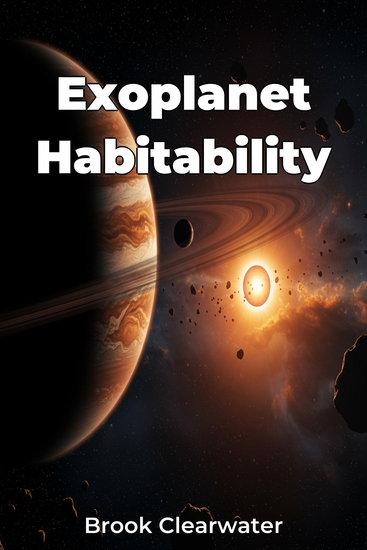
Exoplanet Habitability - cover

Exoplanet Habitability

Brook Clearwater

Übersetzer A AI

Verlag: Publifye

  • 0
  • 0
  • 0

Beschreibung

Exoplanet Habitability tackles the captivating question of whether life exists beyond Earth by exploring the factors that make a planet habitable. This book is unique because it emphasizes how interconnected different elements, like a planet's geological activity and atmospheric composition, are in determining its potential to harbor life. Did you know that even the type of star a planet orbits significantly impacts its habitability? Or that scientists study extreme Earth environments as analogs for potential alien habitats? The book delves into planetary science, astrobiology, and atmospheric science to provide a holistic understanding of habitability. It begins by laying the groundwork with essential definitions and the history of the search for extraterrestrial life. Subsequent chapters systematically examine stellar characteristics, planetary geology, and atmospheric science, building towards a comprehensive framework. This approach moves beyond simple habitable zone definitions, offering a more nuanced perspective on the conditions necessary for extraterrestrial life. By presenting data from advanced telescopes and computer models, Exoplanet Habitability gives readers a window into the cutting-edge research shaping our understanding of exoplanets. The book highlights that assessing habitability isn't just about a planet's distance from its star, but also its geological activity, atmospheric composition, and orbital dynamics, offering a spectrum of possibilities for life's existence.
Verfügbar seit: 27.02.2025.
Drucklänge: 68 Seiten.

Weitere Bücher, die Sie mögen werden

  • The Sadness Business - cover

    The Sadness Business

    Patrick Landman

    • 0
    • 0
    • 0
    Have you lost a loved one? Your sadness becomes depression. Your child is a little too lively? He or she may be a danger to society. Do you have a penchant for cake? You have a psychiatric disorder.
    The new standard way of thinking about mental health, dictated by the publication of an international guide, the Diagnostic and Statistical Manual of Mental Disorders, is authorian and overshadows Therapeutic Listening in favor of the drug treatment—its latest version, the DSM-5, lists more than 350 diseases.
    Patrick Landman exposes the abuses of such a takeover—the range of normality is reduced and we all become consumers of psychotropic drugs, and even potential lunatics.
    Zum Buch
  • Scaled Scrum - Practice Questions with Explanations - cover

    Scaled Scrum - Practice...

    Jimmy Mathew

    • 0
    • 0
    • 0
    Scaled Scrum: Practice Questions with Explanations. 
    300 Practice Questions on Nexus Framework with Answers and Explanations for Scaled Professional Scrum (SPS) Certification assessment 
    Written by Jimmy Mathew, narrated by David Artellan 
    This book is designed for those who are taking Scaled Professional Scrum (SPS) Certification assessment, but these are also useful for all those who what to learn the Nexus framework or preparing for interviews. 
    This has 300 questions with answers and explanations, that prepare you to answer questions in Scaled Professional Scrum (SPS) Certification assessment.  
    This is newly built based on the recent changes and latest version of The Scrum Guide. And Nexus Guide 
    Basic knowledge of Scrum Framework and Nexus™ are required to take up these questions. It is recommended to read the latest version of “The Scrum Guide” and “Nexus Guide” before taking these questions.
    Zum Buch
  • Palliative Care - Managing Chronic and End-of-Life Conditions - cover

    Palliative Care - Managing...

    Ava Westwood

    • 0
    • 0
    • 0
    Palliative care is a specialized approach to medical care that focuses on improving the quality of life for individuals facing serious, chronic, or life-limiting illnesses. Unlike curative treatments aimed at eradicating disease, palliative care prioritizes symptom management, pain relief, and holistic support for both patients and their families. This field of healthcare is rooted in compassion, emphasizing dignity, comfort, and individualized care tailored to the needs of each patient. 
    The principles of palliative care are guided by a patient-centered philosophy that considers physical, emotional, social, and spiritual well-being. It is not limited to end-of-life situations but can be integrated alongside curative treatments at any stage of a serious illness. Patients suffering from conditions such as cancer, heart failure, chronic obstructive pulmonary disease (COPD), kidney disease, and neurodegenerative disorders like Alzheimer’s or Parkinson’s can benefit from palliative interventions. The goal is to enhance quality of life, alleviate distress, and provide support to both the patient and their loved ones. 
    A defining feature of palliative care is its interdisciplinary approach. A team of healthcare professionals—including physicians, nurses, social workers, chaplains, and therapists—collaborates to address the complex needs of patients. This holistic model ensures that care extends beyond the physical symptoms of illness to include emotional and psychological support. Effective communication is essential in palliative care, as clinicians must navigate sensitive conversations about prognosis, treatment goals, and advance care planning. By fostering open dialogue, healthcare providers empower patients to make informed decisions that align with their values and preferences.
    Zum Buch
  • Artificial Intelligence - Concepts Evolution and Future Prospects - cover

    Artificial Intelligence -...

    Bright Mills

    • 0
    • 0
    • 0
    Artificial Intelligence (AI) is a transformative field of computer science dedicated to building systems that can perform tasks typically requiring human intelligence. These tasks include learning, reasoning, problem-solving, perception, language understanding, and decision-making. This comprehensive guide explores the foundational principles of AI, its historical evolution, methodologies, real-world applications, ethical challenges, and the future it holds. The document begins by defining AI, its goals, and its place in the broader field of computer science. It discusses the major branches, such as machine learning, natural language processing, computer vision, robotics, and expert systems. Following that, the paper delves into the historical timeline of AI from early philosophical concepts to the rise of neural networks and deep learning in the 21st century. The core methodologies are explored in-depth, including supervised, unsupervised, and reinforcement learning, as well as symbolic AI, heuristic approaches, and hybrid models. It further illustrates how AI is integrated across industries like healthcare, finance, manufacturing, education, transportation, and defense. The guide also addresses the critical ethical and societal questions surrounding AI: data privacy, algorithmic bias, surveillance, job displacement, and the need for regulation and responsible AI development. 
    Finally, it speculates on the future trajectory of AI, including artificial general intelligence (AGI), quantum AI, and human-AI symbiosis. It highlights both the immense opportunities AI offers and the serious challenges it poses. 
    This 10,000-word exposition aims to serve students, researchers, policymakers, and enthusiasts by offering a detailed, accessible, and balanced perspective on one of the most powerful technologies of the 21st century.
    Zum Buch
  • BRAINSPOTTING - Adventures in Neurology - cover

    BRAINSPOTTING - Adventures in...

    A. J. Lees

    • 0
    • 0
    • 0
    As a trainee doctor, Andrew Lees was enthralled by his mentors: esteemed neurologists who combined the precision of mathematicians, the scrupulosity of entomologists and the solemnity of undertakers in their diagnoses and treatments. For them, there was no such thing as an unexplained symptom or psychosomatic problem – no difficult cases, only interesting ones – and it was only a matter of time before all disorders of the brain would be understood in terms of anatomical electrical and chemical connections.
    Today, this kind of 'holistic neurology' is on the brink of extinction as a slavish adherence to protocols and algorithms – plus a worship of machines – runs the risk of destroying the key foundational clinical skills of listening, observation and imagination that have been at the heart of the discipline for over 150 years. In this series of brilliant, insightful and autobiographical essays, Andrew Lees takes us on a kind of Sherlock Holmes tour of neurology, giving the reader insight into – and defending – the deep analytical tools that the best neurologists still rely on to diagnose patients: to heal minds and to fix brains.
    Zum Buch
  • From Outer Space to Inner Space - An Apollo Astronaut's Journey Through the Material and Mystical Worlds - cover

    From Outer Space to Inner Space...

    Dr. Edgar Mitchell

    • 0
    • 0
    • 0
    The sixth man who walked on the moon shares his journey to the stars, into the mind, and beyond. 
    In February 1971, as Apollo 14 astronaut Edgar Mitchell hurtled Earthward through space, he was engulfed by a profound sense of universal connectedness. He intuitively sensed that his presence and that of the planet in the window were all part of a deliberate, universal process, and that the glittering cosmos itself was, in some way, conscious. The experience was so overwhelming, Mitchell knew his life would never be the same.  
    For the next thirty-five years, he embarked on another journey, an inward exploration of the ineffable mystery of human consciousness and being. Mitchell left NASA to form the Institute of Noetic Sciences (IONS). There he initiated research in areas of study previously neglected by mainstream science and constructed a theory that could explain not only the mysteries of consciousness, but also the psychic event—what spiritualists call a “miracle” and scientists dismiss altogether.  
    Mitchell also created a new dyadic model of reality, revealing a self-aware universe not predetermined by the laws of physics, preordained by deities, or infinitely malleable. While human actions are generally subject to the laws of physics, these laws are also influenced by the mind.  
    From Outer Space to Inner Space traces two remarkable journeys—one through space and one through the mind. Together they fundamentally alter the way we understand the miracle and mystery of being, and ultimately reveal humankind’s role in its own destiny.  
    Previously published as The Way of the Explorer, this edition includes a new foreword by Avi Loeb, an afterword by Dean Radin, and a postscript chapter by the author.
    Zum Buch