Junte-se a nós em uma viagem ao mundo dos livros!
Adicionar este livro à prateleira
Grey
Deixe um novo comentário Default profile 50px
Grey
Assine para ler o livro completo ou leia as primeiras páginas de graça!
All characters reduced
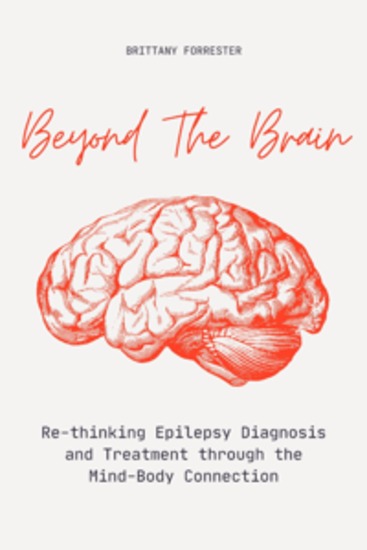
Beyond The Brain - Re-Thinking Epilepsy Diagnosis And Treatment Through The Mind-Body Connection - cover
LER

Beyond The Brain - Re-Thinking Epilepsy Diagnosis And Treatment Through The Mind-Body Connection

Brittany Forrester

Editora: Brittany Forrester

  • 0
  • 0
  • 0

Sinopse

This book takes a deep dive into the intricate world of epilepsy, encompassing its diagnosis, treatment, and scholarly exploration with a keen critical eye. Its primary mission is to present a compelling argument, challenging the prevailing biomedical approach's narrow focus on the brain as the sole locus of intervention for epilepsy. By doing so, it underscores that such an exclusive perspective falls short of addressing the multidimensional needs of individuals living with epilepsy and comprehending their profound lived experiences.In response to this critical shortfall, it proposes a radical departure from the conventional reliance on pharmaceuticals and biological pathways. This innovative approach promises to unveil novel treatments and foster a holistic understanding of the human body's intricacies. By transcending the current biomedical boundaries, this approach has the power to alleviate the suffering of the estimated 70 million people worldwide who grapple with epilepsy.This book represents a beacon of hope and a new era of enlightenment in epilepsy care, potentially significantly enhancing the quality of life for countless individuals affected by this condition.
Disponível desde: 10/05/2025.

Outros livros que poderiam interessá-lo

  • On Operations - Operational Art and Military Disciplines - cover

    On Operations - Operational Art...

    B. A. Friedman

    • 0
    • 0
    • 0
    On Operations: Operational Art and Military Disciplines traces the history of the development of military staffs and ideas on the operational level of war and operational art from the Napoleonic Wars to today, viewing them through the lens of Prussia/Germany, the Soviet Union, and the United States. B. A. Friedman concludes that the operational level of war should be rejected as fundamentally flawed, but that operational art is an accurate description of the activities of the military staff, an organization developed to provide the brainpower necessary to manage the complexity of modern military operations. Rather than simply serve as an intercession between levels, the military staff exists as an enabler and supporting organization to tacticians and strategists alike. 


    On Operations examines the organization of military staffs, which has changed little since Napoleon's time. Historical examinations of the functions staffs provided to commanders, and the disciplines of the staff officers themselves, leads to conclusions about how best to organize staffs in the future. Friedman demonstrates these ideas through case studies of historical campaigns based on the military discipline system developed.
    Ver livro
  • Girls Gone Carnal - cover

    Girls Gone Carnal

    Giselle Renarde

    • 0
    • 0
    • 0
    Furry. Vicious. Wicked.Lesbian shifters, vampires, and witches come in all shapes and sizes. From the humblest mouse to the most ferocious cougar, from maids and their mistresses to urban vamps and the women they lust after, these eight stories of lesbian sensuality are sure to inspire chills, thrills, and delicious shivers: Milady’s Bath ~ a Gothic tale from a Lady’s maid at midnightMrs. Fox and the Cat of Nine Tails ~ a fairy tale cat girl seduces her mistressSneak ~ a mouse shifter saves the day in a backwoods bordelloSparrow Takes Flight ~ a wind witch leaves as often as she comesBlood Lust ~ this vamp leaves a markWild Things ~ a deaf witch meets her match in the rainforestTaken from Behind ~ cougar shifters must be extra carefulBlood Money ~ urban fantasy from a student just vamping for the cash
    Ver livro
  • Return to the Medium - Science Spirit and the Mystery of Afterlife - cover

    Return to the Medium - Science...

    Ylia Callan

    • 0
    • 0
    • 0
    This audiobook is narrated by an AI Voice.   
    Journey beyond the familiar boundaries of life in Return to the Medium, a groundbreaking exploration of consciousness, spirit, and the afterlife. Blending rigorous science with profound spiritual insight, this audiobook invites listeners to explore the threshold between life and death, uncovering the hidden patterns that shape our existence.  
    From near-death experiences and soul journeys to the physics of light and vibration, each chapter illuminates the reflective medium connecting all life. Discover transformative stories, visionary accounts, and practical practices that help us live with greater awareness, acceptance, and connection to the cosmos.  
    Whether you seek understanding, comfort, or inspiration, this audiobook offers a bridge between science, spirit, and the eternal mystery that lies beyond.
    Ver livro
  • Liao Dynasty - Nomadic Conquerors of Northern China - cover

    Liao Dynasty - Nomadic...

    Rolf Hedger

    • 0
    • 0
    • 0
    The story of the Liao people begins in the vast and harsh steppe regions to the north of China, where they first emerged as a formidable force in the region’s history. The Liao were a nomadic group, characterized by their mastery of horseback riding and combat, which set them apart from the sedentary agricultural societies of the surrounding civilizations. Their origins are not fully understood, but it is widely believed that they came from the Mongolian Plateau, migrating southward and eastward into the northern reaches of China during the early centuries of the Common Era. 
    In their early years, the Liao people were organized into various tribes, each with its own leadership and customs. These tribes were constantly in motion, following the migratory patterns of their livestock and engaging in periodic warfare with one another for dominance and resources. Despite the chaotic nature of their existence, the Liao were bound together by a common identity rooted in their nomadic lifestyle and warrior culture. Over time, they developed a strong sense of unity, driven by their shared need to survive in an unforgiving environment. 
    As the tribes of the Liao people grew in number and influence, they began to organize themselves more systematically under the leadership of powerful chieftains. These chieftains rose to prominence not only through their military prowess but also through their ability to forge alliances and broker peace with neighboring peoples. The Liao were skilled diplomats, and many of their early leaders recognized the value of creating relationships with the settled agricultural societies that dominated China’s northern frontier. This strategic diplomacy allowed them to secure critical resources, such as grain and horses, while maintaining their autonomy and military strength.
    Ver livro
  • What Is Property? - An Inquiry into the Principle of Right and of Government - cover

    What Is Property? - An Inquiry...

    Pierre-Joseph Proudhon

    • 0
    • 0
    • 0
    ‘Property is Theft’, a phrase which has passed into common parlance, was the rallying call of Pierre-Joseph Proudhon’s political treatise What Is Property? Proudhon (1809-1865) was both admired and excoriated. A political theorist of the first order, he was vilified in his native France by the Communists and the Monarchists alike, though admired by Karl Marx as well as many in the nation’s academia and judiciary who valued the clarity of his thought and analytical method.  
     
    He criticised both Right and Left (the very definition of French political thinking), describing them as two sides of the same coin. Their solutions to society’s ills, he said, were like Thesis and Antithesis, based on a common error and both inadequate to the task of healing society. He offered, instead, a third way, which he called his Synthesis. Regarded as the founder of modern Anarchism, his aim was not to engender chaos, as the word anarchy often connotes, but to suggest a workable, political, and economic foundation for society which would promote order and equity for all under the most unfettered conditions of individual liberty.  
     
    Proudhon grew up in poverty, and was home schooled as a child, but received a bursary in his youth sufficient to allow him to attend the City College in his home town (though not sufficient, it seems, to buy him shoes). There, he discovered the library which introduced him to a world, classical and contemporary, previously denied him. Lacking wealth or contacts, he worked variously as a printer, a compositor and proof-reader by day and an essayist by night, learning Latin along the way to assist in his work. In 1830, a friend, a scholar, invited Proudhon to join him in Paris to pursue his philosophical writings full time. When a cholera outbreak forced his return home, Proudhon spent the next few years juggling his two careers. In 1839, he applied for a pension (bursary) at the Academy of Besançon which obliged him to write works on its behalf.  
     
    What Is Property?, published in France in 1840, was his first. It was so controversial that little else followed. However, it established his reputation, and he was eventually able to pursue his philosophical work full time. What Is Property? (First Memoir) attempts to uncover the roots of poverty and associated social ills and examines different attitudes to poverty and wealth from the Greeks to the present day. Proudhon quickly identifies a common thread, property, which he distinguishes from possession, and argues that only a fundamental, though gradual, abandonment of property (as an asset) and all that flows from it, can rescue society from its current conflicts. The memoir seeks to illuminate the underlying causes of war, poverty, slavery, and oppression and points the way to a solution. In effect, it is a practical manual for the survival of mankind. The Second Memoir (1841), included on this recording, is Proudhon’s response to the criticisms of the First Memoir, initially uncomprehending and then self-assured by turns. What Is Property? is Proudhon’s masterwork. It divides opinion, but no one who hears it can come away with their view of their own world unchanged.  
     
    Translation: Benjamin R. Tucker.
    Ver livro
  • Get Off My Neck - Black Lives White Justice and a Former Prosecutor's Quest for Reform - cover

    Get Off My Neck - Black Lives...

    Debbie Hines

    • 0
    • 0
    • 0
    In Get Off My Neck, Debbie Hines draws on her unique perspective as a trial lawyer, former Baltimore prosecutor, and assistant attorney general for the State of Maryland to argue that US prosecutors, as the most powerful players in the criminal justice system, systematically target and criminalize Black people. Hines describes her disillusionment as a young Black woman who initially entered the profession with the goal of helping victims of crimes, only to discover herself aiding and abetting a system that prizes plea bargaining, speedy conviction, and excessive punishment above all else. In this book, she offers concrete, specific, and hopeful solutions for just how we can come together in a common purpose for criminal justice and racial justice reform. 
     
    Get Off My Neck explains that the racial inequities in the prosecutorial system are built into our country’s DNA. What’s more, they are the direct result of a history that has conditioned Americans to perceive the Black body as insignificant at best and dangerous at worst. Unlike other books that discuss the prosecutor’s office and change from inside the office, Hines offers a proactive approach to fixing our broken prosecutorial system through a broad-based alliance of reform-minded prosecutors, activists, allies, communities, and racial justice organizations—all working together to end the racist treatment of Black people. 
     
    Told intimately through personal, family, and client narratives, Get Off My Neck is not only a deeply sobering account of our criminal justice system and its devastating impact on Black children, youth, and adults but also a practical and inspiring roadmap for how we can start doing better right now. 
     
    “Years as a prosecutor taught Debbie Hines that justice in America isn’t colorblind—it’s color coded. In Get Off My Neck, Hines not only exposes the staggering racial inequities in our prosecutorial system and the harsh history that produced it, she lights a brilliant path toa more just and equitable future.”—Marc H. Morial, President and CEO, National Urban League
    Ver livro