Junte-se a nós em uma viagem ao mundo dos livros!
Adicionar este livro à prateleira
Grey
Deixe um novo comentário Default profile 50px
Grey
Assine para ler o livro completo ou leia as primeiras páginas de graça!
All characters reduced
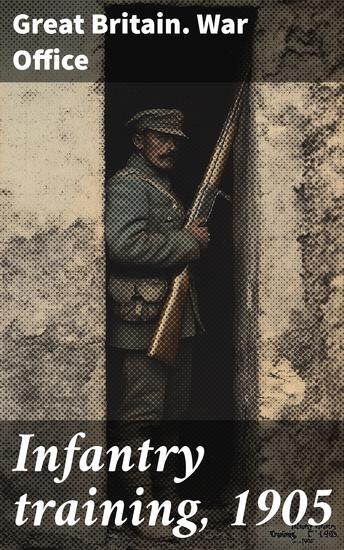
Infantry training 1905 - cover
LER

Infantry training 1905

Britain War Office of Great

Editora: Good Press

  • 0
  • 0
  • 0

Sinopse

Infantry Training, 1905 serves as a comprehensive manual dedicated to the preparation and refinement of infantry tactics, techniques, and procedures during a pivotal period in military history. The work is characterized by its methodical approach and precise language, reflecting the military's need to optimize personnel effectiveness in static warfare. The manual addresses a range of topics from drill routines to the integration of new technologies, set within the context of the changing dynamics of warfare in the early 20th century, where conventional battles increasingly met the demands of modernity. Authored by the War Office of Great Britain, the text embodies the institutional knowledge and practical experience accumulated during the late Victorian era and the early years of the 20th century. This period was marked by the rise of industrial warfare and emergent technologies, prompting military leaders to reassess training paradigms. The War Office's authoritative guidelines were essential for standardizing practices across contingents, ensuring a prepared and resilient force in anticipation of future conflicts. I highly recommend "Infantry Training, 1905" to scholars, historians, and military enthusiasts alike, as it provides invaluable insights into historical military training practices and organizational structure. It is an essential resource for understanding the evolution of infantry tactics and the institutional mindset that shaped the British Army's preparedness in the years leading up to World War I.
Disponível desde: 02/03/2025.
Comprimento de impressão: 210 páginas.


Outros livros que poderiam interessá-lo

  • The Madman - His Parables and Poems - cover

    The Madman - His Parables and Poems

    Kahlil Gibran

    • 0
    • 0
    • 0
    The book explores themes of madness, love, spirituality, and the human condition. The essays are presented as the musings of a madman who wanders the streets and countrysides, speaking in riddles and offering cryptic insights into life and the nature of existence. Through the character of the madman, Gibran explores the idea that true wisdom and understanding can only be gained by stepping outside of societal norms and expectations, and by embracing the irrational and the seemingly incomprehensible. Overall, "The Madman" is a profound and moving work that challenges readers to question their own beliefs and assumptions about the world, and to embrace the madness and uncertainty that lies at the heart of the human experience. Read in English, unabridged.
    Ver livro
  • The Next Century - cover

    The Next Century

    David Halberstam

    • 0
    • 0
    • 0
    What can we learn from the events of the 20th century? David Halberstam set out to answer that question in this perceptive and eye-opening work which examines the past in order to determine the future. From the rise of the Japanese economy to the startling changes that reshaped the Soviet Union and Eastern Europe, Halberstam argues that the American economy's survival depends on the rededication and continued education of the American worker. As pertinent in today's economy as it was when first published, The Next Century is a timeless call to arms, reminding us that we must continually better ourselves in order to compete on the world stage.
    Ver livro
  • Little Boy Lost - cover

    Little Boy Lost

    Marghanita Laski

    • 0
    • 0
    • 0
    Marghanita Laski’s novel Little Boy Lost is as enthralling as it is heart-wrenching. A man grapples with questions of emotional responsibility, fatherhood, and memory. Laski describes a much-changed France, struggling to rebuild its morale after the ruin caused by wartime bombing and occupation.English writer Hilary Wainwright lost all trace of his young son when Lisa, his wife, was killed by the Gestapo in Paris. Several years later, an acquaintance travels to England with news that Hilary’s son may be alive in France. Doubting whether five-year-old Jean is indeed his, and determined not to feel vulnerable to love and tenderness again, Hilary travels to France to find the boy. Amidst a war-torn Northern French town, he gets to know young Jean, as well as the town’s inhabitants. In a matter of days Hilary must decide if this charming and intelligent child could be his own . . . and if he is prepared to take Jean home.Little Boy Lost is part of the Persephone Audiobook Collection, a series of forgotten classics including neglected fiction and non-fiction by women writers. First published in 1949, this edition includes a new afterword by Anne Sebba.
    Ver livro
  • Reading Black Books - How African American Literature Can Make Our Faith More Whole and Just - cover

    Reading Black Books - How...

    Claude Atcho

    • 0
    • 0
    • 0
    Learning from Black voices means listening to more than snippets. It means attending to Black stories. Reading Black Books helps Christians hear and learn from enduring Black voices and stories as captured in classic African American literature. 


    Pastor and teacher Claude Atcho offers a theological approach to ten seminal texts of twentieth-century African American literature. Each chapter takes up a theological category for inquiry through a close literary reading and theological reflection on a primary literary text, from Ralph Ellison's Invisible Man and Richard Wright's Native Son to Zora Neale Hurston's Moses, Man of the Mountain and James Baldwin's Go Tell It on the Mountain. The book includes end-of-chapter discussion questions. 


    Reading Black Books helps readers of all backgrounds learn from the contours of Christian faith formed and forged by Black stories, and it spurs continued conversations about racial justice in the church. It demonstrates that reading about Black experience as shown in the literature of great African American writers can guide us toward sharper theological thinking and more faithful living.
    Ver livro
  • Soul Care in African American Practice - cover

    Soul Care in African American...

    Barbara L. Peacock

    • 0
    • 0
    • 0
    Christianity Today Award of Merit
    In the midst of our hectic, overscheduled lives, caring for the soul is imperative.
    Now, more than ever, we need to pause—intentionally—and encounter the Divine.
    Soul care director Barbara Peacock illustrates a journey of prayer, spiritual direction, and soul care from an African American perspective. She reflects on how these disciplines are woven into the African American culture and lived out in the rich heritage of its faith community. Using examples of ten significant men and women—Frederick Douglass, Martin Luther King Jr., Rosa Parks, Darrell Griffin, Renita Weems, Harold Carter, Jessica Ingram, Coretta Scott King, James Washington, and Howard Thurman—Barbara offers us the opportunity to engage in practices of soul care as we learn from these spiritual leaders.
    If you've yearned for a more culturally authentic experience of spiritual transformation in your life and community, this book will help you grow in new yet timeless ways. Come to the river to draw deeply for your soul's refreshment.
    Ver livro
  • Women of Ancient India - Sages Warriors and Rulers - cover

    Women of Ancient India - Sages...

    Layla Gupta

    • 0
    • 0
    • 0
    Women in Ancient Indian mythology hold significant and multifaceted roles, often embodying both nurturing and destructive forces within the cosmic and earthly realms. These divine figures are central to the very fabric of the ancient Indian worldview, illustrating the depth and complexity of feminine energy. In these mythologies, women are not just passive characters but active, powerful beings who shape the universe, challenge societal norms, and assert their authority in the divine order. 
    One of the most notable representations of female power in Indian mythology is through goddesses. The concept of Shakti, or divine feminine energy, permeates many Hindu myths and is embodied by goddesses such as Durga, Lakshmi, and Saraswati. Durga, for instance, is a warrior goddess who symbolizes the victory of good over evil. She is often depicted riding a lion or tiger, wielding weapons in multiple hands, signifying her multifarious power and strength. Durga's myth tells of her battle with the demon Mahishasura, where she not only defeats him but also restores cosmic balance. This story symbolizes the resilience and power of feminine energy, which is integral to the maintenance of order in the universe. 
    Lakshmi, the goddess of wealth, prosperity, and beauty, represents another facet of feminine influence. While her power is associated with material and spiritual wealth, her role is not passive. Lakshmi’s mythology highlights her active involvement in ensuring prosperity and well-being, both on a personal and societal level. She is often depicted as a source of light, standing on a lotus, symbolizing purity and the abundance that follows divine favor.
    Ver livro