¡Acompáñanos a viajar por el mundo de los libros!
Añadir este libro a la estantería
Grey
Escribe un nuevo comentario Default profile 50px
Grey
Suscríbete para leer el libro completo o lee las primeras páginas gratis.
All characters reduced
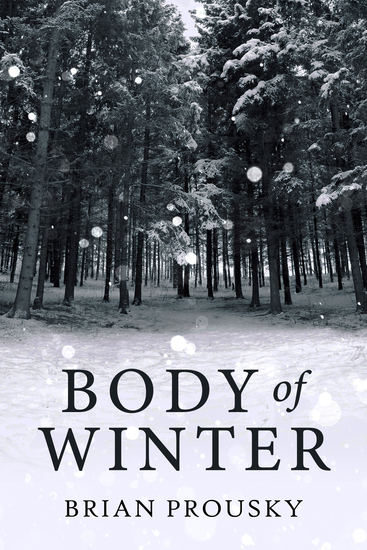
Body Of Winter - cover

Body Of Winter

Brian Prousky

Editorial: Next Chapter

  • 0
  • 0
  • 0

Sinopsis

In these exquisitely rendered poems, people fall in and out of love, in and out of religious belief and in and out of accepting the distance between their imagined lives and the lives they live. They look back as much as forward and pick mercilessly at the open wounds of failed relationships. They inhabit geographies that are both their emancipators and captors. And they find joy, or succumb to sorrow, amid life’s inescapable ephemerality and fragility.
 
Breathtaking in its range of styles, Body of Winter, at its heart, is a vivid reflection of the best and worst of us all.
Disponible desde: 02/02/2023.
Longitud de impresión: 188 páginas.

Otros libros que te pueden interesar

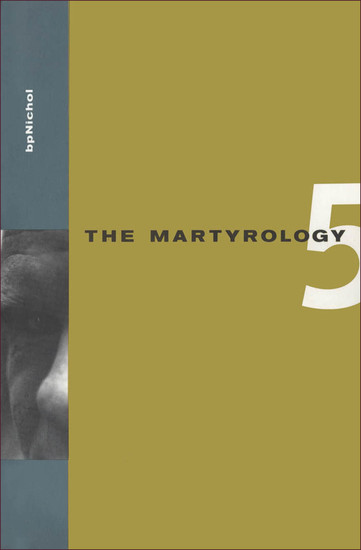
  • Martyrology Book 5 - cover

    Martyrology Book 5

    bp Nichol

    • 0
    • 0
    • 0
    'All of Nichol's work is stamped by his desire to create texts that are engaging in themselves as well as in context, and to use indirect structural and textual devices to carry meaning. In The Martyrology different ways of speaking testify to a journey through different ways of being. Language is both the poet’s instructor and, through its various permutations, the dominant 'image' of the poem. The [nine] books of The Martyrology document a poet’s quest for insight into himself and his writing through scrupulous attention to the messages hidden in the morphology of his own speech.' - Frank Davey
    Ver libro
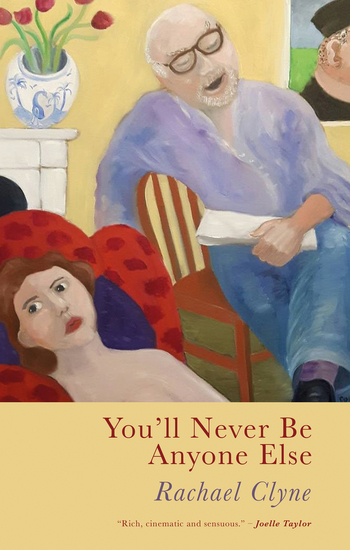
  • You'll Never Be Anyone Else - cover

    You'll Never Be Anyone Else

    Rachael Clyne

    • 0
    • 0
    • 0
    Rachael Clyne's You'll Never Be Anyone Else presents a direct and assured voice, demanding that we think carefully about what it takes to reconcile being different. She advises the reader to 'Stop drinking the poison / labelled "Hate me." / It's that simple. I didn't say easy.' Clyne also has an alter-ego "Girl Golem" reminiscent of a superhero but based on the mythical man made from clay and spells to protect Jewish people from persecution. Through this empowering persona, Clyne opens up an exploration of Jewish and lesbian identity. Surveying attitudes in the present day and in the past, these poems explore migrant heritage, sexual identity, domestic violence and ageing.
    The stories of this collection are often poignant, like the retired tailor in 'Mr Shopping Trolley', who takes to shearing newspapers, so that his scissor fingers remain busy. Or in 'Leaving Odesa', the speaker revisits the prison where – under Tsarist law – her grandmother (even as an infant) had to serve out the remainder of her father's sentence after he died.Clyne's imagery is razor sharp in its precision, as she deftly weaves different poetic forms and wildly versatile subject matter, even interspersing Yiddish phrases, as part of her own unique poetic idiolect. Take the hilarious poem, 'Jew-a-lingo (Code-switching for Jews 1970 edition)' which emphasizes Jewish humour as a staple survival strategy. You'll Never Be Anyone Else offers a unique story of survival and empowerment told in spite of experiences of violence and prejudice – this from a poet who has spent a lifetime learning self-acceptance and as a psychotherapist helping others to do similar.  Treating even dark subjects with playful wit and colourful imagery, Clyne is a distinctive new voice with a powerful message about self-acceptance.
    "Rich, cinematic and sensuous." – Joelle Taylor
    'With its impressive scope, ranging from the Holocaust, nuclear fallout, and immigration to domestic life and childhood, Rachael Clyne's Girl Golem thoughtfully explores our tactics for survival: in resistance, in the imagination, in mutual care. In these evocative, spirited poems, Clyne implicitly argues for faith in our own humanity and for the richness of difference.' - Carrie Etter
    'Rachael Clyne's poetry, full of physicality and dramatic openness, accumulates a series of tensions within her Sixties free spirited identity and Jewish heritage. Attentive to narrative angle and migrant experience, she allows characters to emerge over generations showing how they mould into a new cultural identity. In its quiet and carefully crafted ways, Girl Golem shows the sweep of history and the importance of a tolerant county that offers salvation to those persecuted abroad.' - David Caddy
    'Clyne's poems inhabit a shadowy and uncomfortable space where all is not as it seems – people become pieces of furniture and rooms have sinister personalities. A complex work of many layers – these thought provoking and deftly crafted poems are a playful and powerful examination of identity, sexuality, heritage and family dynamic. Clyne skilfully conveys a sense of disquiet and alienation, a sense of being other, both within the dysfunctions of the family, but also within the context of the wider world.' - Julia Webb
    Rachael Clyne is a psychotherapist from Glastonbury. Her prizewinning collection Singing at the Bone Tree (Indigo Dreams) concerns human beings' relationship with nature, and she is a climate activist. Her pamphlet Girl Golem (4word) concerns her migrant background and sense of otherness. A frequent reader at poetry events and festivals, she has been published in magazines like Shearsman, The Rialto, and The Interpreter's House. 
    Ver libro
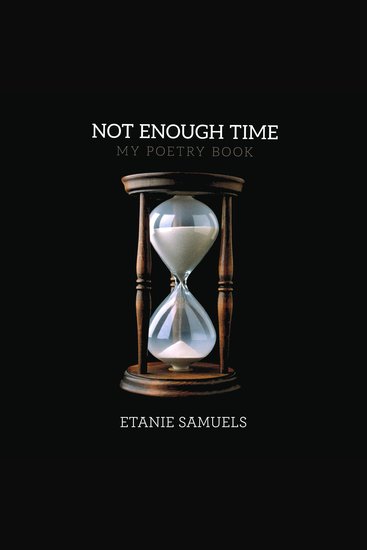
  • Not Enough Time - My Poetry Book - cover

    Not Enough Time - My Poetry Book

    Etanie Samuels

    • 0
    • 0
    • 0
    Not Enough Time is written in the form of a mini bio in a poetry form. Each chapter is designed with life, purpose, motivation, and reality.
    Ver libro
  • The Legend of Sleepy Hollow - cover

    The Legend of Sleepy Hollow

    Washington Irving

    • 0
    • 0
    • 0
    "The Legend of Sleepy Hollow" is an 1820 short story by American author Washington Irving, contained in his collection of 34 essays and short stories titled The Sketch Book of Geoffrey Crayon, Gent. Irving wrote the story while living in Birmingham, England. "The Legend of Sleepy Hollow" is among the earliest examples of American fiction with enduring popularity, especially during Halloween because of a character known as the Headless Horseman believed to be a Hessian soldier who was decapitated by a cannonball in battle. The story is set in 1790 in the countryside around the Dutch settlement of Tarry Town (historical Tarrytown, New York), in a secluded glen known as Sleepy Hollow. Sleepy Hollow is renowned for its ghosts and the haunting atmosphere that pervades the imaginations of its inhabitants and visitors. Some residents say this town was bewitched during the early days of the Dutch settlement, while others claim that the mysterious atmosphere was caused by an old Native American chief, the "wizard of his tribe ... before the country was discovered by Master Hendrik Hudson." Residents of the town are seemingly subjected to various supernatural and mysterious occurrences. They are subjected to trance-like visions and frequented by strange sights, music, and voices "in the air." The inhabitants of Sleepy Hollow are fascinated by the "local tales, haunted spots, and twilight superstitions" on account of the mysterious occurrences and haunting atmosphere.
    Ver libro
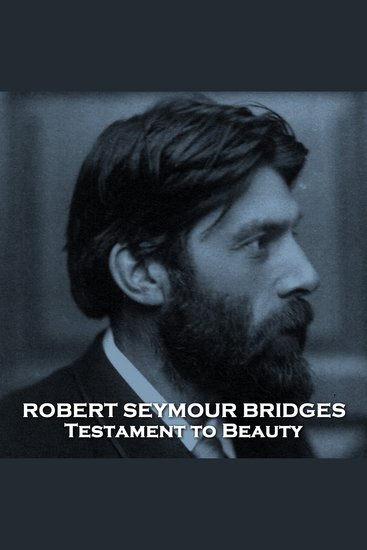
  • Testament to Beauty - A former Poet Laureate demonstrates his poetic talents in this tender and beautiful verse - cover

    Testament to Beauty - A former...

    Robert Seymour Bridges

    • 0
    • 0
    • 0
    Robert Seymour Bridges, OM was born on 23rd October 1844 at Walmer in Kent where he spent his early childhood in a house overlooking the anchoring ground of the British fleet.  
    His father died aged only 47 in 1853. A year later his mother remarried and the family relocated to Rochdale, where his stepfather was the vicar.  
    In 1854 Bridges was sent to Eton College and attended until 1863.  After Eton he went to Corpus Christi College at Oxford. There he became good friends with Gerard Manley Hopkins and would later compile an edition of his poems that is now considered a major contribution to English literature. 
    He graduated from Oxford, in 1867, with a second-class degree in literae humaniores.  Initially he planned to join the Church of England and travelled to the Middle East to broaden his religious horizons.  However, he soon decided that life as a physician would be a better path and, after 8 months studying German (that being the language of many scientific papers at the time) he began his study of medicine at St. Bartholomew's Hospital in 1869.  His long-term ambition was that by the age of forty he could retire from medicine to devote himself to writing. 
    Unfortunately Bridges failed his final medical examinations in 1873 and, as unable to immediately retake the papers, spent six months in Italy learning Italian as well as immersing himself in its art. In July 1874 he went to Dublin to continue his medical studies. Re-examined in December he passed and became a house physician at St Bartholomew's Hospital. It was whilst here that he engaged in a series of highly critical remarks about the Victorian medical establishment. One such was his claim that whilst working as a young doctor he saw a staggering 30,940 patients in one year. 
    A bout of severe pneumonia and lung disease forced his retirement from the medical profession in 1882 and so, slightly ahead of schedule, he began his literary career in earnest.  He already been writing for several years and had published his first poetry collection in 1873.  
    After his illness and a trip to Italy, Bridges moved, with his mother, to Yattendon in Berkshire.  It was during this time, from 1882 to 1904, that Bridges wrote most of his best-known lyrics as well as eight plays and two masques, all in verse.  
    It was also here, in 1884, that he married Monica Waterhouse. They would go on to have three children and spend the rest of their lives in rural seclusion, in an idyllic marriage, first at Yattendon, then at Boars Hill, Oxford. 
    Bridges made an important contribution to hymnody with the publication in 1899 of his Yattendon Hymnal. This collection of hymns became a bridge between the Victorian hymnody of the late 19th century and the modern hymnody of the early 20th century. He was also a chorister at Yattendon church for 18 years. 
    In 1902 Monica and his daughter Margaret became seriously ill with tuberculosis, and a move from Yattendon to a healthier climate was in order. After several temporary homes they moved abroad to spend a year in Switzerland before returning to settle again in England at Chilswell House, which Bridges had designed, and built on Boar's Hill overlooking Oxford University.   
    His greatest achievement though was still some years ahead of him.  The office of Poet Laureate was held by Alfred Austin but with his death it was offered first to Rudyard Kipling, who refused it, and then to Bridges. He was appointed Poet Laureate in 1913 by George V, the only medical graduate to have ever held the office. Bridges, at this time, was neither highly regarded nor well known but a safe pair of hands in a World rapidly being overshadowed by the storms about to erupt over Europe and the First World War. 
    The events of this War, including the wounding of his son, Edward, had a sobering effect on Bridges' poetry. His work became fiercely patriotic. In 1915 edited a volume of prose and poetry, The Spirit of Man, intended to appeal to readers living in war time
    Ver libro

  • A Lost Soul Found in the Darkness - The Journey of a Soul in Haiku - cover

    A Lost Soul Found in the...

    Brett C. Persson

    • 0
    • 0
    • 0
    Step into a powerful journey through abuse, addiction, and redemption, told through the art of Haiku. 
    As a profound collection of Japanese Haiku poetry, this illuminating book transports you on a journey through the troubled life of one tormented soul. From a childhood marred by abuse and neglect to a life poisoned by addiction, Jake was plunged down a dark path from an early age by the cruelties of fate. 
    But in his darkest moment, while sitting in a prison cell, a ray of light appeared to him. Jake was faced with a life-defining choice: to continue down his self-destructive path, or to turn toward the hope of redemption and find the courage to face his demons. 
    As an inspiring and redeeming testament to the hidden potentialities within us all, A Lost Soul Found in the Darkness describes one man's journey to overcome his predicament, defy his upbringing, and forge a new life for himself beyond the pain and addiction that hounds him. 
    Author and recovering addict Brett C. Persson invites you on this journey, weaving Jake's story with real-life lessons and struggles drawn from his personal life. 
    Imbued with timeless religious motifs, this book is a must-read for anybody who loves thought-provoking Haiku collections that communicate deep truths about tragedy, hope, and salvation.
    Ver libro