Join us on a literary world trip!
Add this book to bookshelf
Grey
Write a new comment Default profile 50px
Grey
Subscribe to read the full book or read the first pages for free!
All characters reduced
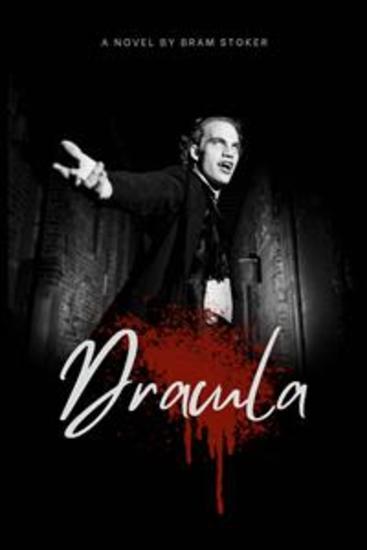
Dracula - cover

Dracula

Bram Stoker

Publisher: Publisher s23237

  • 0
  • 0
  • 0

Summary

Dracula is an 1897 novel by Irish author Bram Stoker, featuring as its primary antagonist the vampire Count Dracula.
Dracula has been attributed to many literary genres including vampire literature, horror fiction, the gothic novel and invasion literature. Structurally it is an epistolary novel, that is, told as a series of diary entries and letters. Literary critics have examined many themes in the novel, such as the role of women in Victorian culture, conventional and conservative sexuality, immigration, colonialism, postcolonialism and folklore. Although Stoker did not invent the vampire, the novel's influence on the popularity of vampires has been singularly responsible for many theatrical and film interpretations throughout the 20th and 21st centuries.
Available since: 11/09/2022.

Other books that might interest you

  • Baffling Beasts - 15 Tales of Weird and Mystifying Creatures - cover

    Baffling Beasts - 15 Tales of...

    Walter de la Mare, Arlton Eadie,...

    • 0
    • 0
    • 0
    Fifteen horror stories about strange beings and behaviours that defy conventional definitions. 
    Contents: 
    Warning Wings by Arlton Eadie (Weird Tales, 1929) 
    A seemingly insignificant white moth. 
    Mother of Toads by Clark Ashton Smith (WT, 1938) 
    An unusual witch. 
    The Destroying Horde by Donald Wandrei (WT, 1935) 
    The first BLOB story? 
    Caterpillars by E. F. Benson (The Room in the Tower, 1912) 
    Terrible things in an Italian villa. 
    The Urbanite by Ewen Whyte (WT, 1950) 
    The great city is never still. 
    Rats by F. A. M. Webster (At Dead of Night, 1931) 
    A plague of rats. 
    The Malignant Invader by F. B. Long (WT, 1932) 
    A creature from the bowels of the earth. 
    The Horror in the Museum by H. P. Lovecraft (WT, 1933) 
    A private wax museum that specialises in the grotesque. 
    My Father, the Cat by H. Slesar (Fantastic Universe, 1957) 
    A most unusual cat. 
    The Seeking Thing by Janet Hirsch (Magazine of Horror, 1964) 
    Something in the middle of the road. 
    They by R. B. Johnson (WT, 1936) 
    They dwell in Dead Man's Canyon. 
    The Hyena by Robert E. Howard (WT, 1928) 
    A man with an unusual ability. 
    Sredni Vashtar by Saki (The Chronicles of Clovis, 1911) 
    A secret in the garden shed. 
    Demons of the Film Colony by Theodore LeBerthon (WT, 1932) 
    A tale of 'Dracula' and 'Frankenstein'. 
    A:B:O. by Walter de la Mare (Cornhill, 1896) 
    The excavation of a metallic chest.
    Show book
  • Tomato Sauce - A sadistic priest takes interest in a knife fight - cover

    Tomato Sauce - A sadistic priest...

    Hanns Heinz Ewers

    • 0
    • 0
    • 0
    Hanns Heinz Ewers was born on 3rd November 1871 in Düsseldorf, Germany. 
     
    His first published poem was at 17 on the death, after a reign of only 99 days, of the German Emperor Frederick III. 
     
    A stint in the German military was cut short after only 44 days because of his myopia.  Writing was to be the way forward for him with a book of satiric verse published in 1901. At the same time he co-founded a literary vaudeville troupe that toured central and eastern Europe before censors and expenses forced its closure.  An inveterate traveller he was in South America when the Great War enveloped Europe and he relocated to New York. 
     
    From here his story darkens. Although by now a successful and admired author he was arrested in the U S in 1918 as a German Agent on the pretext of his travels and a falsified Swiss passport. Interned, he was released in 1921 and returned to Germany.  He claimed only to be raising money for the German Red Cross. 
     
    His literary fame is decidedly easier to clarify. His novels beginning with ‘The Sorcerer’s Apprentice’ in 1910 are dark, they bristle with evil intent and are littered with characters who have a dubious moral compass and yet, along with his short stories, are brazen, brilliant feats of literary narrative. 
     
    He also wrote and published plays, fairy tales, opera librettos, critical essays and lectured for many years on ‘The Religion of Satan’ and was one of the first to write scripts for the cinema, which he considered a legitimate art form. 
     
    As the Weimar republic began its chaotic death throes Ewers became attracted to the rising Nazi Party.  At first he was warmly received despite disagreeing with its anti-semitism (his most famed literary character had a Jewish mistress) and he was even commissioned by Hitler to write a biography of the Nazi martyr Horst Wessel.  This together with his own homosexuality culminated with his works being banned in 1934 and his assets and property seized.  It took him many years to have the ban lifted.  This association rightfully clouds his personal reputation but has meant his literary contributions are also overlooked and neglected. 
     
    Hanns Heinz Ewers died of tuberculosis on 12th June 1943 in his Berlin apartment.
    Show book
  • The Pit and the Pendulum - cover

    The Pit and the Pendulum

    Edgar Allan Poe

    • 0
    • 0
    • 0
    Edgar Allan Poe’s “The Pit and the Pendulum” is a terrifying classic Gothic horror story of fear, torture, and psychological suspense. Set during the Spanish Inquisition, the tale follows a condemned prisoner as he awakens in darkness and faces a series of nightmarish traps designed to break both body and mind. With its intense atmosphere, claustrophobic dread, and unforgettable imagery, this short story remains one of Poe’s most gripping explorations of terror, survival, and human endurance.
    Show book
  • Other Gods The (The Work of H P Lovecraft Episode 26) - cover

    Other Gods The (The Work of H P...

    H. P. Lovecraft

    • 0
    • 0
    • 0
    Barzai the Wise, a high priest and prophet greatly learned in the lore of the "gods of earth", or Great Ones, attempts to scale the mountain of Hatheg-Kla in order to look upon their faces, accompanied by his young disciple Atal. Upon reaching the peak, Barzai at first seems overjoyed until he finds that the "gods of the earth" are not there alone, but rather are overseen by the "other gods, the gods of the outer hells that guard the feeble gods of earth!" Atal flees, and Barzai is never seen again.
    Show book
  • The Cask of Amontillado - cover

    The Cask of Amontillado

    Edgar Allan Poe

    • 0
    • 0
    • 0
    First published in the November 1846 issue of Godey's Lady's Book, the story is set in 19th century Italy and concerns the deadly revenge taken by the insane narrator on a friend who he claims has insulted him. Like several of Poe's stories, and in keeping with the 19th century fascination with the subject, the narrative revolves around a person being buried alive.
    Show book
  • The Age of Inno-Scents - cover

    The Age of Inno-Scents

    Renee George

    • 0
    • 0
    • 0
    My name is Nora Black, and I'm proof-positive that life past fifty just keeps getting better. I have great friends, own my own business, and I have a wonderful man in my life who loves me, crow's feet and all. 


    For my BFF Gilly's birthday, we are heading to an 80s-themed mystery weekend set in an old high school, and I'm looking forward to big shoulder pads and even bigger hair. The fact that my guy Ezra looks great in tight jeans doesn't hurt one bit, either. 


    But when my scratch-n-sniff psychic gift acts up, and it sniffs out an actual murderous plot, our fun outing takes a totally deadly turn. 


    My scent-o-rama is spazzing out to the max! 


    The clues are in the past, and we're racing against the clock to turn back time. But with my nose for clues and a little luck, hopefully, we can find a killer before schools out for murder.
    Show book