Junte-se a nós em uma viagem ao mundo dos livros!
Adicionar este livro à prateleira
Grey
Deixe um novo comentário Default profile 50px
Grey
Assine para ler o livro completo ou leia as primeiras páginas de graça!
All characters reduced
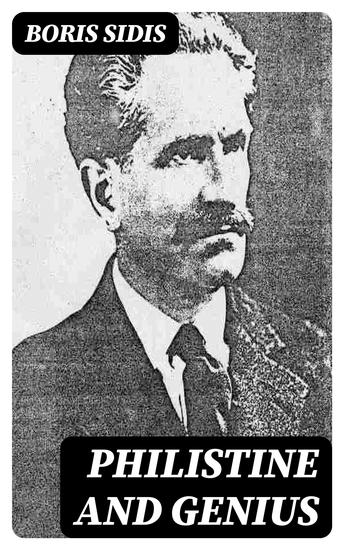
Philistine and genius - cover
LER

Philistine and genius

Boris Sidis

Editora: DigiCat

  • 0
  • 0
  • 0

Sinopse

In "Philistine and Genius," Boris Sidis explores the intricate dynamics between societal values and creative brilliance. The work is a rich psychological study presented through a blend of philosophical discourse and empirical observation. Sidis meticulously examines how societal structures can constrain intellectual and artistic pursuits, arguing that what is often deemed 'genius' is frequently at odds with mainstream cultural standards. His literary style is characterized by a rigorous and analytical approach, addressing current debates in psychology and education relevant to early 20th-century America. Boris Sidis, an influential psychologist and educator, was deeply committed to understanding human potential and the factors that nurture or hinder it. His diverse academic background and personal experiences as a parent and educator fueled his interest in the complexities of genius. Sidis's own advocacy for progressive education challenged conventional norms, leading him to investigate the plight of individuals whose extraordinary capabilities are often dismissed by society as eccentricity or 'philistine.' This thought-provoking text is a must-read for anyone intrigued by the interplay of genius and societal expectations. Sidis' insights resonate with contemporary discussions surrounding mental health, creativity, and societal acceptance, making it a vital contribution to the fields of psychology and education.
Disponível desde: 29/05/2022.
Comprimento de impressão: 48 páginas.
Outros livros que poderiam interessá-lo

  • How to Be Kind - cover

    How to Be Kind

    Olivia Werner

    • 0
    • 0
    • 0
    [How to Be Kind] delves into the intricate nature of compassion through a richly layered exploration of human connection. With the precision of a poet and the insight of a philosopher, this guide illuminates the subtle art of kindness in all its forms—from the gentle power of listening to the profound impact of small, everyday gestures. Unlike conventional self-help books, it weaves together psychological understanding with literary sensitivity, examining how tiny moments of consideration can reshape our relationships, our communities, and ultimately, ourselves. Through chapters that read like intimate conversations, the book unravels the complexities of empathy, vulnerability, and patience, offering a nuanced perspective on what it truly means to navigate the world with an open heart.
    Ver livro
  • Animal Bodies: On Death Desire and Other Difficulties - cover

    Animal Bodies: On Death Desire...

    Suzanne Roberts

    • 0
    • 0
    • 0
    How do we reckon with our losses? In Animal Bodies Suzanne Roberts explores the link between death and desire and what it means to accept our own animal natures, the parts we most often hide, deny, or consider only with shame—our taboo desires and our grief. In landscapes as diverse as the Salamanca’s cobbled streets, the Mekong River’s floating markets, Fire Island’s windswept beaches, Nashville’s honky-tonks, and the Sierra Nevada’s snowy slopes, Roberts interrogates her memory and tries to make sense of her own private losses (deaths of people and relationships), as well as more public losses, including a mass shooting in her hometown, environmental devastation in the Amazon rainforest, and wildfire evacuations. 
    With lyricism, insight, honesty, and dark humor, these essays illuminate the sometimes terrible beauty of what it means to be human, deepening the conversation on death and grief, sexuality, and the shame that comes from surviving the world in a female body with all of its complexities. 
    Please note: This collection features writing on sensitive topics for some listeners, including but not limited to abortion, sexual assault, and death resulting from various causes.
    Ver livro
  • The Artisan Author - The Low-Stress High-Quality Fan-Focused Approach to Escaping the Publishing Rat Race - cover

    The Artisan Author - The...

    Johnny B. Truant

    • 0
    • 0
    • 0
    Less rush. More freedom. A way to love writing again.  
    If modern indie publishing feels like a high-stress race to the bottom, the good news is there’s another way. 
    Most authors start writing for the love of it, but in recent years the reality of “writing for a living” has soured. Now, for a lot of us, it no longer looks fun — or creatively fulfilling — at all. 
    You have to obey genres exactly or your books won’t sell. If you step outside your lane and try something new, the kinds of readers most authors court will never buy it. And then there’s the SPEED of it all: The rules of “Rapid Release” say you have to publish a book every month — at least — or you’ll never survive. Forget about taking a vacation. Time off will let the algorithms forget you. 
    In The Artisan Author, industry veteran Johnny B. Truant offers an alternative to Rapid Release: a new way to succeed as an author without sacrificing your freedom, worrying about competition or AI, or fearing you’ll lose everything when the winds — or the algorithms — inevitably change. 
    The way of the Artisan Author is the opposite of Rapid Release. Instead of rushing to churn out the same-old same-old, Artisans follow their muse and write whatever they want. Instead of stressing out, Artisans take their time, putting as much care and beauty into their work as they desire. It’s a way to build a substantial, sustainable, bulletproof income based on Kevin Kelly’s idea of “1000 True Fans”: readers who are loyal to you, not any platform. True Fans are all you need to earn as much as you want as an author. They’re people with whom you build genuine human connections … and who therefore love you enough to spend far more than ordinary readers will ever spend.
    Ver livro
  • Oregon Trail and the Appalachian Trail The: The History of America’s Two Most Famous Trails - cover

    Oregon Trail and the Appalachian...

    Editors Charles River

    • 0
    • 0
    • 0
    The westward movement of Americans in the 19th century was one of the largest and most consequential migrations in history, and among the paths that blazed west, the most well-known is the Oregon Trail, which was not a single trail but a network of paths that began at one of four “jumping off” points. The eastern section of the Oregon Trail, which followed the Missouri River through Kansas, Nebraska, and Wyoming, was shared by people traveling along the California, Bozeman, and Mormon Trails. These trails branched off at various points, and the California Trail diverged from the Oregon Trail at Fort Hall in southern Idaho. From there, the Oregon Trail moved northward, along the Snake River, then through the Blue Mountains to Fort Walla Walla. From there, travelers would cross the prairie before reaching the Methodist mission at The Dalles, which roughly marked the end of the Trail. 	As many who used the Oregon Trail described in memoirs, the West represented opportunities for adventure, independence, and fortune, and fittingly, the ever popular game named after the Oregon Trail captures that mentality and spirit by requiring players to safely move a party west to the end of the trail. 
    	The most iconic of the major American pathways is the Appalachian Trail, which completes the “triple crown” of the national hiking experience. Covering a range from central Maine to Georgia at a distance of 2,193 miles, it is the longest of the three, following the crest of the Alleghenies and Blue Ridge Mountains through 14 states. All in all, it encompasses 465,000 feet in elevation and hosts three million visitors each year for at least a part of the total distance. On an annual basis, approximately 4,000 hikers begin a south to north trek beginning at Springer Mountain, Georgia, with the goal of hiking all the way to Maine. The northerly direction is greatly preferred because of the weather.
    Ver livro
  • Marie Antoinette - The Last Queen of France before the French Revolution - cover

    Marie Antoinette - The Last...

    Kelly Mass

    • 0
    • 0
    • 0
    Before the Reign of Terror, Marie Antoinette was the last queen of France. She was the penultimate kid and youngest daughter of Empress Maria Theresa and Emperor Francis I, and was born an archduchess of Austria. At the age of 14, she wed Louis-Auguste, the beneficiary evident to the French throne, and ended up being dauphine of France in May 1770. Her partner, Louis XVI, took the throne on May 10, 1774, and she ended up being queen.After 8 years of marriage, Marie Antoinette's position at court enhanced when she started bearing kids. Nonetheless, she ended up being more out of favor amongst the people, with French "libelles" implicating her of being inefficient, promiscuous, holding compassions for France's perceived nemeses-- specifically her home Austria-- and having invalid kids. Her credibility was more tainted by the phony claims surrounding the Diamond Locket Affair. At the time of the Revolution, she was called Madame Déficit because of her elegant spending and enmity to Turgot and Necker's social and monetary reforms, which were blamed for the nation's monetary disaster.Learn more about Marie Antoinette by going through this book.
    Ver livro
  • Rare Recording of Father Charles Coughlin A - Vol 5 - cover

    Rare Recording of Father Charles...

    Father Charles Coughlin

    • 0
    • 0
    • 0
    Father Charles Coughlin (October 25, 1891 - October 27, 1979), was a controversial Canadian-American Catholic priest based in Michigan. Calling for monetary reforms, the nationalization of major industries and railroads, and protection of the rights of labor, Coughlin used weekly radio broadcasts to reach a mass audience of up to thirty million listeners during the 1930s. An early supporter of Franklin D. Roosevelt and his New Deal, Coughlin later became a harsh critic. Coughlin’s commentary also became more anti-semitic, and he supported some of the fascist policies of Hitler, Mussolini, and Hirohito. As a result, many American Catholic leaders, as well as the Vatican, wanted Coughlin silenced. After the outbreak of World War II in 1939, the Roosevelt administration finally forced the cancellation of his radio program and forbade the dissemination of his newspaper, Social Justice. In this recording, he warns about the lead up to World War II.
    Ver livro