Junte-se a nós em uma viagem ao mundo dos livros!
Adicionar este livro à prateleira
Grey
Deixe um novo comentário Default profile 50px
Grey
Assine para ler o livro completo ou leia as primeiras páginas de graça!
All characters reduced
The Man Farthest Down: A Record of Observation and Study in Europe - cover
LER

The Man Farthest Down: A Record of Observation and Study in Europe

Booker T. Washington, Robert Ezra Park

Editora: DigiCat

  • 0
  • 0
  • 0

Sinopse

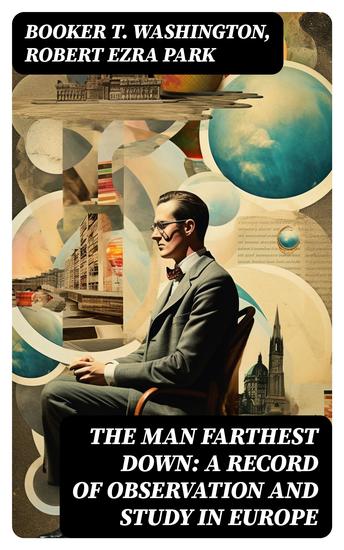
The Man Farthest Down: A Record of Observation and Study in Europe is a profound exploration of societal stratifications and the human experience across diverse European landscapes. The collection melds rigorous observation with heartfelt storytelling, capturing a tapestry of human conditions through varying literary styles. This anthology explores the depth of human dignity amidst poverty, documenting lives that, though seemingly peripheral, reveal a significant tapestry of resilience and humanity. Throughout the collection, both somber and hopeful, the narratives highlight not just survival, but the struggle to thrive, offering readers a window into the socio-economic dynamics of early 20th-century Europe. At the core of this anthology are the combined insights of Booker T. Washington and Robert Ezra Park, who bring their distinguished backgrounds in social science and pedagogy to the forefront. Washington, a pivotal figure in African American history, and Park, a foundational sociologist, together present a textured narrative enriched by their respective legacies. Their intrepid journey into Europe's underbelly renders a critical lens on how class, race, and cultural heritage shape and reflect societal realities, aligning with the broader historical discourse of the Industrial age and its workforce dynamics. For readers seeking to understand complex social themes through a nuanced and engaging lens, The Man Farthest Down offers an invaluable compendium of perspectives. This anthology not only advances educational insights into socio-economic inequalities but also invites readers to engage in a broader conversation about cultural diversity and resilience. It stands as a vital resource for those eager to dissect the rich interplay of individual narratives against the backdrop of wider societal tides, offering profound implications for sociological and historical discourse.
Disponível desde: 20/11/2023.
Comprimento de impressão: 213 páginas.

Outros livros que poderiam interessá-lo

  • Conscious Grieving - A Transformative Approach to Healing from Loss - cover

    Conscious Grieving - A...

    Claire Bidwell Smith

    • 0
    • 0
    • 0
    From one of the leading grief therapists, this compassionate and accessible guide to grieving offers a new framework for understanding and navigating loss.An intimate guide to grieving that offers hope and healing within loss from one of the nation’s top grief therapists.    Conscious Grieving is a book for anyone seeking guidance and support after loss. Renowned grief therapist Claire Bidwell Smith combines her deeply personal experience of loss with her long career spent working with thousands of people to introduce a new approach to grief, one that promotes hope and even transformation.   What does it mean to grieve consciously? Most of the time, when we lose someone we love, it feels like grief is just happening to us. We feel out of control, and overwhelmed. Claire reminds us that while loss is something that inevitably happens to all of us, how we choose to grieve is up to us. When we can consciously engage with our grief, rather than avoiding it, we can access profound pathways to healing.  Presented in a series of thoughtful, brief vignettes that don’t overwhelm the reader, Conscious Grieving offers a new framework for each stage of grief: Entering, Engaging, Surrendering, and Transforming. Entering – staying present and taking care of ourselves as we navigate the shock and upheaval of a new loss.  Engaging – navigating that first year after a loss by staying in tune with our needs as more complicated feelings of depression, guilt or anger surface. Surrendering – facing the changes to our identity and who we are becoming in the face of loss. Transforming – through ritual, honor, hope, and grace, and learning to carry our grief with intention so that we can continue to grow, heal, and thrive.  Grief asks a lot from us. But the ability to grieve is a birthright. We grieve throughout our lifetimes. We grieve the deaths of loved ones yes, but also moves, divorce, illness, injustice, time lost, changes in the world and healing from these losses requires that we evaluate everything we ever considered meaningful. Healing means making our lives worth the pain we endure when we lose someone we love. And transforming through grief is an opportunity afforded to all.
    Ver livro
  • Irish Confederate Wars The: The History and Legacy of Ireland’s Deadliest Conflict - cover

    Irish Confederate Wars The: The...

    Editors Charles River

    • 0
    • 0
    • 0
    During the 12th century, the people of Ireland came under the sway of the English, who had extended into their domain. With every subsequent century, English dominion in the land gradually expanded, leading to the exceedingly harsh treatment of native Irish populations at the hands of English settlers. The Tudor period was especially tumultuous, with Elizabeth I waging a notoriously expensive conquest against the Irish in the waning years of her reign. 
    By the time of the Bishops’ War, the majority of native Irish people were Catholic. Discrimination against native Irelanders had, at that point, come to encompass both ethnic and religious elements. English colonists brought Protestantism with them, leading to intense theological friction between the natives - who followed the teachings of the Vatican - and the settlers - who followed the teachings of Luther, Calvin, Knox, and the like. Plantation of the natives took place where property owned by Irish Catholics was seized by the newcomers with the support of the English controlled Irish Privy Council. 
    Tensions began to come to a head during the Second Bishops’ War, when the Irish Parliament was called upon to garner funds for Charles I’s fight against Scottish insurrectionists. In March of 1640, the speaker of the Commons, Maurice Eustace, delivered an overtly pro-English speech in the Irish Parliament. He praised Wentworth for his rule over the island and insisted to his fellow Irishmen that they put the past of Irish-English animosity behind them. Bitter irony would strike the island following Eustace’s optimism. Ethnic and religious oppression, three failed harvests, and the Covenanters' military success had sufficiently stirred an anti-English spirit amongst the Irish 
    	The stage was now set for a new conflict that would make the Bishops’ Wars pale in comparison. All it took was for someone to light the fuse.
    Ver livro
  • Dark Psychology - Learn How to Analyze People Avoid Emotional Manipulation and Defend Yourself From Narcissistic Abuse Using Body Language NLP Mind Control Techniques and Subliminal Persuasion - cover

    Dark Psychology - Learn How to...

    Leonard Farrell

    • 0
    • 0
    • 0
    Do you struggle with feeling emotionally manipulated or controlled by others?Are you tired of falling victim to narcissistic personalities in your life?Do you want to gain the power to analyze people and defend yourself from dark psychology techniques?If you've ever felt powerless against manipulators, or if you're simply interested in the study of the human mind and behavior, “Dark Psychology” is the ultimate guide for you!Whether you want to enhance your people skills or defend yourself against manipulative abusers, this audiobook will help you unlock the secrets of the human mind and protect you from opportunists!Here’s what’s in store for you:Learn how to analyze people and defend yourself against manipulation: Understand the ins and outs of body language, the art of persuasion, and the psychology of narcissism, so you can analyze people with ease and defend yourself against emotional manipulation.Discover the secrets of NLP and mind control techniques: Learn how to use NLP and mind control techniques to your advantage, so you can effortlessly influence others and achieve your personal and professional goals.Protect yourself against subliminal persuasion and dark triad personalities: Gain insight into the tactics of the narcissists and psychopaths in your daily life, so you can anticipate their every move before they start causing trouble.Enhance your communication skills and improve your relationships: Use dark psychology for a good cause! Gain deeper knowledge into human psychology so you can tailor your communication skills and improve your relationships with friends, family, and colleagues.And so much more!Get this audiobook today, and start taking control of your own fate!
    Ver livro
  • Our Enemy the State: Book Summary & Analysis - cover

    Our Enemy the State: Book...

    Briefly Summaries

    • 0
    • 0
    • 0
    This is a concise summary and analysis of Our Enemy, the State, by Albert Jay Nock.
     
    It is not the original book and is not affiliated with or endorsed by Albert Jay Nock.
    Ideal those seeking a quick and insightful overview.
     
    Our Enemy, the State offers a compelling critique of modern government, challenging the conventional understanding of the state as a benevolent force for societal good. With razor-sharp analysis, this thought-provoking work examines the historical evolution of the state, exposing its inherent tendency to prioritize power over individual liberty and economic freedom. Combining philosophical insights with incisive commentary, it invites readers to question the role of the state in their lives and consider alternatives that uphold the principles of self-reliance and voluntary cooperation.
    Ver livro
  • Dick Bong: The Life and Legacy of America’s Greatest Combat Ace during World War II - cover

    Dick Bong: The Life and Legacy...

    Editors Charles River

    • 0
    • 0
    • 0
    During World War II, greatly increased engine power allowed these aircraft to slice through the sky at speeds of 200 miles per hour (mph), 300 mph, or even in excess of 400 mph when flying flat-out. Service ceilings jumped to 30,000 feet, altitudes unthinkable to World War I’s aviators.  
    pilots had to adapt to countless technological improvements, and a select few truly mastered the art of dogfighting during history’s deadliest war. In the United States, the top ace came from almost literally out of nowhere. Richard “Dick” Ira Bong was born on September 24, 1920 in Superior, Wisconsin on the westernmost tip of Lake Superior, the son of Swedish immigrants. America was a very popular destination for Swedes seeking a new life during the early 20th century, and many Swedes headed for Wisconsin, with the greatest number arriving between 1880 and 1900. Dick’s father Carl, arrived in America at the age of eight, and he eventually married Dora Bryce, of Scottish-English descent. When Dick was born, they were living on a farm in the very small town of Poplar, in Douglas County, Wisconsin. Even in the 21st century, it is still diminutive, with a population of around 600.  
    	Dick’s first memorable encounter with an aircraft was as a child playing in and around the farm, and in the summer of 1928, when Dick was seven, President Calvin Coolidge had a summer holiday residence at Cedar Island Lodge on the Brule River by Brule, another very small town a few miles east of Poplar, down the Route 2 highway that is now known as the “Major Richard I. Bong Memorial Highway.” Most days a small silver Navy biplane filled the role of a mail plane responsible for delivering and receiving presidential correspondence, and it would fly over the Bong farmstead. This touched off a lifelong fascination that would lead to Bong shooting down 40 enemy planes in the Pacific Theater during the war, making him the country’s top ace before he had even reached the age of 25.
    Ver livro
  • For F*ck's Sake - Why Swearing is Shocking Rude and Fun - cover

    For F*ck's Sake - Why Swearing...

    Rebecca Roache

    • 0
    • 0
    • 0
    Why do we love to swear so much? Why do we get so offended when others do it? 


    In this lively and amusing exploration of the various puzzles that surround swearing, philosopher Rebecca Roache argues that what makes swearing offensive is not really the words at all: the offensiveness lies in what we don't say. The unspoken—and usually unconscious—inferences that speakers and listeners make about each other are key to explaining swearwords' capacity to shock. Swearing is unique among etiquette breaches in that it is designed to convey disrespect—swearing packs more of a punch than failing to say "please." 


    Roache helps listeners understand how swearing works, celebrating its power as a communicative tool and source of humor while also taking a close and serious look at specific words—those directed at women and women's bodies, for example—that function in particular, complex ways. She also examines the often-hypocritical ways swearing can be punished or censored. 


    Finally, Roache helps listeners appreciate that swearing isn't always bad. When it's not used offensively, it can foster social intimacy, can help people withstand pain, and might even help us curb our violent impulses.
    Ver livro