¡Acompáñanos a viajar por el mundo de los libros!
Añadir este libro a la estantería
Grey
Escribe un nuevo comentario Default profile 50px
Grey
Suscríbete para leer el libro completo o lee las primeras páginas gratis.
All characters reduced
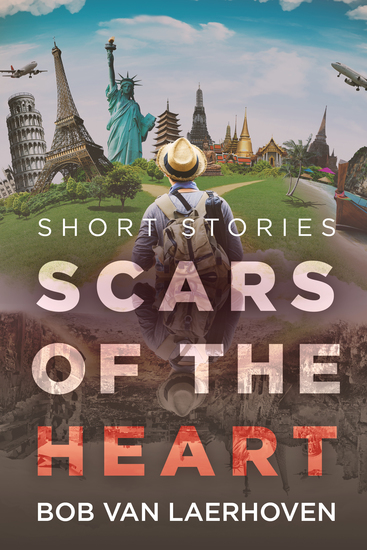
Scars of the Heart - Short Stories - cover

Scars of the Heart - Short Stories

Bob Van Laerhoven

Editorial: Next Chapter

  • 0
  • 0
  • 0

Sinopsis

Why can people be so cruel to each other? In his search for answers, Bob Van Laerhoven concentrates on individuals, but ideologies, religions, and political structures shimmer in the background.
 
Through ten stories set in different countries and eras, Van Laerhoven takes us through the destructive consequences of our passions as a common thread, from contemporary Syria to Algeria in the 1950s, and the civil war in Liberia to the uprising in Belgian Congo in the 1960s.
 
The ten stories in SCARS OF THE HEART highlight the dark side of love, which fuels our violence, inner loneliness, and greedy egos.
Disponible desde: 18/05/2024.
Longitud de impresión: 232 páginas.

Otros libros que te pueden interesar

  • The Short Stories of Herman Melville - Though known for Moby Dick we encourage you to try his amazing short stories - cover

    The Short Stories of Herman...

    Herman Melville

    • 0
    • 0
    • 0
    Herman Melville was born in New York City on 1st August 1819.   
     
    At the age of 7 Melville contracted scarlet fever which permanently diminished his eyesight. Add this to a contemporary description of being "very backwards in speech and somewhat slow in comprehension" and his opportunities for success seemed limited. 
     
    His father died when he was 12 leaving the family in very straitened times. 2 years later Melville took a job in a bank and followed up with a failed stint as a surveyor. He went to sea and travelled across to Liverpool and then to the Pacific on adventures which included a mutiny, being jailed and falling in love with a South Pacific beauty. He was also a figure of opposition to the coercion of native Hawaiians to the Christian religion.  These experiences helped provide the novels ‘Typee’, ‘Omoo’, and ‘White-Jacket’. 
     
    By 1851 his ambitious masterpiece, ‘Moby Dick’, was ready to be published.  It never sold out its initial print run of 3,000 and Melville’s earnings on his masterpiece was a mere $556.37. 
     
    In succeeding years his reputation waned, life was increasingly difficult.  His family was growing and a stable income was essential. Melville took the advice of friends to try public lecturing, as others had, to increase his revenues. He embarked on three successful lecture tours, speaking on Roman statuary and sightseeing in Rome.  
     
    In 1876 he was at last able to publish privately his 16,000 line epic poem ‘Clarel’. It was to no avail.  The book had an initial printing of 350 copies, but sales failed miserably. 
     
    It was only in late 1885 that Melville was at last able to retire after his wife inherited several legacies, enough to provide them with a reasonable income. 
     
    Herman Melville, novelist, poet, short story writer and essayist, died at his home on 28th September 1891 from cardiovascular disease. 
    01 - Herman Melville - A Short Story Collection - An Introduction 
    02 - Bartleby the Scrivener by Herman Melville 
    03 - The Lightning Rod Man by Herman Melville 
    04 - The Fiddler by Herman Melville
    Ver libro
  • F Scott Fitzgerald - Six of the Best - Their legacy in 6 classic stories - cover

    F Scott Fitzgerald - Six of the...

    F. Scott Fitzgerald

    • 0
    • 0
    • 0
    Six has always been a number we group things around – Six of the best, six of one half a dozen of another, six feet under, six pack, six degrees of separation and a sixth sense are but a few of the ways we use this number. 
     
    Such is its popularity that we thought it is also a very good way of challenging and investigating an author’s work to give width, brevity, humour and depth across six of their very best. 
     
    In this series we gather together authors whose short stories both rivet the attention and inspire the imagination to visit their gems in a series of six, to roam across an author’s legacy in a few short hours and gain a greater understanding of their writing and, of course, to be lavishly entertained by their ideas, their narrative and their way with words. 
     
    These stories can be surprising and sometimes at a tangent to what we expected, but each is fully formed and a marvellous adventure into the world and words of a literary master.
    Ver libro
  • Top 10 Short Stories The - Men 1900s - The top ten Short Stories of the 1900's written by male authors - cover

    Top 10 Short Stories The - Men...

    O Henry, Maxim Gorky, Algernon...

    • 0
    • 0
    • 0
    Short stories have always been a sort of instant access into an author’s brain, their soul and heart.  A few pages can lift our lives into locations, people and experiences with a sweep of landscape, narration, feelings and emotions that is difficult to achieve elsewhere. 
     
    In this series we try to offer up tried and trusted ‘Top Tens’ across many different themes and authors. But any anthology will immediately throw up the questions – Why that story? Why that author?  
     
    The theme itself will form the boundaries for our stories which range from well-known classics, newly told, to stories that modern times have overlooked but perfectly exemplify the theme.  Throughout the volume our authors whether of instant recognition or new to you are all leviathans of literature. 
     
    Some you may disagree with but they will get you thinking; about our choices and about those you would have made.  If this volume takes you on a path to discover more of these miniature masterpieces then we have all gained something. 
     
    In this new century expansion and turbulence are competing forces. Society is ripe for change, the elite are not.  In this fertile ground these very talented authors grabbed literature by the scruff of the neck and dragged it into new directions and new forms. 
     
    1 - The Top 10 - The  1900's - The Men - An Introduction 
    2 - Gift of the Magi by O Henry 
    3 - Her Lover by Maxim Gorky 
    4 - Oh Whistle and I'll Come to You My Lad by M R James 
    5 - To Build a Fire by Jack London 
    6 - The Fly In The Ointment by D H Lawrence 
    7 - The Scapegoat by Paul Laurence Dunbar 
    8 - The Kit Bag by Algernon Blackwood 
    9 - The Voice in the Night by William Hope Hodgson 
    10 - Silence by Leonid Nikolaevich Andreev 
    11 - The Diary of a God by Barry Pain
    Ver libro
  • The Mourner - cover

    The Mourner

    Mary Shelley

    • 0
    • 0
    • 0
    In Mary Shelley's "The Mourner," Horace Neville encounters the deeply troubled Ellen Burnet, who is shrouded in sorrow from a traumatic past. As he becomes increasingly drawn to her, he learns of her overwhelming guilt linked to her father's death and her contemplation of suicide. Their connection reveals Ellen's complex emotional landscape, marked by despair and longing for redemption.
    Ver libro
  • About Love - From their pens to your ears genius in every story - cover

    About Love - From their pens to...

    Anton Chekhov

    • 0
    • 0
    • 0
    Anton Pavlovich Chekhov was born on 29th January 1860 in Taganrog, on the south coast of Russia.  
    His family life was difficult; his father was strict and over-bearing but his mother was a passionate story-teller, a subject Chekhov warmed to. As he later said; ‘our talents we got from our father, but our soul from our mother’.  
    At school Chekhov was distinctly average. At 16 his father mis-managed his finances and was declared bankrupt. His family fled to Moscow. Chekhov remained and eked out a living by various means, including writing and selling short sketches to newspapers, to finish his schooling. That completed and with a scholarship to Moscow University obtained he rejoined his family. 
    He was able to help support them by selling satirical sketches and vignettes of Russian lifestyles and gradually obtained further commissions. In 1884, he qualified as a physician and, although it earned him little, he often treated the poor for free, he was fond of saying ‘Medicine is my lawful wife, and literature is my mistress.’ 
    His own health was now an issue as he began to cough up blood, a symptom of tuberculosis.  Despite this his writing success enabled him to move the family into more comfortable accommodation.  
    Chekhov wrote over 500 short stories which included many, many classics including ‘The Kiss’ and ‘The Lady with a Dog’.  His collection ‘At Dusk’ won him the coveted Pushkin Prize when was only 26.  
    He was also a major playwright beginning with the huge success of ‘Ivanov’ in 1887.   
    In 1892 Chekhov bought a country estate north of Moscow. Here his medical skills and money helped the peasants tackle outbreaks of cholera and bouts of famine. He also built three schools, a fire station and a clinic.  It left him with less time for writing but the interactions with real people gained him detailed knowledge about the peasantry and their living conditions for his stories.  
    His most famous work, ‘The Seagull’ was received disastrously at its premiere in St Petersburg. It was later restaged in Moscow to highlight its psychological aspects and was a huge success. It led to ‘Uncle Vanya’, ‘The Three Sisters’ and ‘The Cherry Orchard’.  
    Chekhov suffered a major lung hemorrhage in 1897 while visiting Moscow. A formal diagnosis confirmed tuberculosis and the doctors ordered changes to his lifestyle.  
    Despite a dread of weddings the elusive literary bachelor quietly married the actress Olga Knipper, whom he had met at rehearsals for ‘The Seagull’, on 25th May 1901. 
    By May 1904 with his tuberculosis worsening and death imminent he set off for the German town of Badenweiler writing cheerful, witty letters to his family and assuring them his health was improving.  
    On 15th July 1904 Anton Chekhov died at Badenweiler.  He was 44.
    Ver libro
  • Rawdon's Roof - cover

    Rawdon's Roof

    D H Lawrence

    • 0
    • 0
    • 0
    'Rawdon's Roof', is a slight comic piece, relying for its humour on the folly of a man throwing away his chance of happiness because of an unexplained and unlikely vow.
    Ver libro