Join us on a literary world trip!
Add this book to bookshelf
Grey
Write a new comment Default profile 50px
Grey
Subscribe to read the full book or read the first pages for free!
All characters reduced
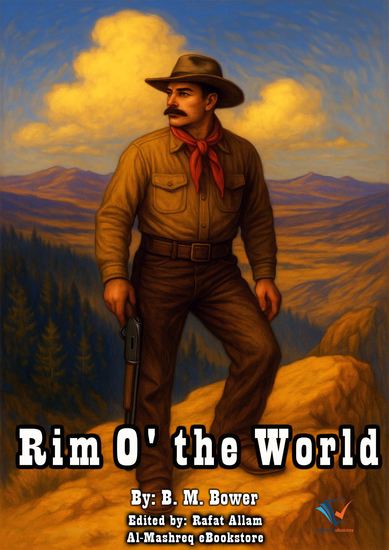
Rim O' the World - cover

Rim O' the World

B.M. Bower

Publisher: Al-Mashreq eBookstore

  • 0
  • 0
  • 0

Summary

In Rim o' the World, B.M. Bower immerses readers in the untamed expanse of Idaho's Black Rim country, where the rugged landscape mirrors the complexities of human ambition and morality. The narrative centers on Tom Lorrigan, a formidable rancher with a notorious lineage, who inherits the Devil's Tooth Ranch after the tumultuous demise of his father and brothers. Determined to amass a fortune in cattle and land, Tom's relentless pursuit of success is challenged by the arrival of Belle Delavan, a mysterious woman from the city whose presence stirs unforeseen emotions and conflicts. As Tom grapples with his past and navigates the treacherous dynamics of frontier life, Bower crafts a tale rich in adventure, romance, and the enduring quest for redemption. This classic Western offers a vivid portrayal of the American frontier, where every choice can lead to triumph or tragedy.
Available since: 06/14/2025.
Print length: 200 pages.

Other books that might interest you

  • The Moon and Sixpence - cover

    The Moon and Sixpence

    William Somerset Maugham

    • 0
    • 0
    • 0
    "The Moon and Sixpence" by W. Somerset Maugham is a riveting exploration of artistic passion and unconventional life. Inspired by the life of Paul Gauguin, the novel follows Charles Strickland, who abandons convention to pursue art. Maugham delves into the clash between societal norms and individual freedom, portraying Strickland's tumultuous journey through Europe and Tahiti. With vivid prose and profound insights, the story navigates themes of creativity, sacrifice, and the relentless pursuit of one's true calling. Strickland's unconventional choices provoke reflection on the nature of art and the price one pays for breaking free from societal expectations.
    Show book
  • A Witch's Den - A look into the darker rituals of late 19th Century rural India - cover

    A Witch's Den - A look into the...

    Helena Blavatsky

    • 0
    • 0
    • 0
    Helena Petrovna Blavatsky, often known as Madame Blavatsky, was born on 12th August 1831 into an aristocratic family in present day Dnipro in Ukraine, then part of the Russian Empire.  She was the younger sister of the writer Vera Zhelikhovsky. 
     
    Much of Blavatsky’s life story relies on her own memories which changed much during her lifetime and therefore parts of it are unreliable.  What appears to be certain is that much of her life was lived first on family travels and postings and then on her journeys in an effort to further her own self-education and quest for knowledge. 
     
    As a teenager she developed an interest in Western esotericism and from there she claimed many travels including a trip to India where she encountered a group of spiritual adepts, the ‘Masters of the Ancient Wisdom’, who sent her to Shigatse, Tibet, where they trained her to develop a deeper understanding of the synthesis of religion, philosophy, and science.  
     
    By the early 1870s, Blavatsky was involved in the Spiritualist movement, which was then popular both in Britain and abroad, even though she argued against its main tenet that those ‘contacted’ were the spirits of the dead.  
     
    She moved to the United States in 1873 and became close to the journalist Henry Steel Olcott who helped her gain public attention as a spirit medium and then also became an adherent to her principles.   
     
    In 1875 in New York City she co-founded the Theosophical Society and two years later published ‘Isis Unveiled’, a book outlining her Theosophical world-view from its ancient roots to the modern day.  Her work was even more popular in Asia than elsewhere and is said to have influenced both Ghandi and Nehru amongst many others.  
     
    In 1880, she and Olcott moved to India, where the Society was allied to a Hindu reform movement.  That same year she converted to Buddhism.  However, she was often plagued with accusations of fraudulent paranormal phenomena.  
     
    With her health failing she returned to London and published ‘The Secret Doctrine’, her commentary on claimed ancient Tibetan manuscripts, and other books.  
     
    Helena Blavatsky died in London of influenza during the global pandemic on 8th May 1891.  She was 59.
    Show book
  • The Night-Soil Men - cover

    The Night-Soil Men

    Bill Broady

    • 0
    • 0
    • 0
    Broady's major work of fiction, nearly a decade in the writing, explores the origins and development of the Independent Labour Party – the working-class political movement founded in Bradford in 1893. Detailing the exploits, fortunes, and relationships of three central characters: passionate Fred Jowett, ruthless Philip Snowden (later, the Labour Party's first chancellor), and the licentious and unforgettable Victor Grayson.
    Spanning four decades, the novel covers the socialist foment and activism of fin-de-siècle Britain, the impact of the First World War and the changing landscape of the interwar years, as social change points forward to a new politics and the reinvention of Britain, despite fierce resistance from the establishment and its allies. And all punctuated with sex, comrades, hustings, art, dialect and copious points of order.
    With cameos of every leading socialist of the age, this sweeping generational tale is thrilling, revolutionary, ribald and laugh-out-loud funny.
    Show book
  • Īnangahua Gold - cover

    Īnangahua Gold

    Kathleen Gallagher

    • 0
    • 0
    • 0
    This historical novel, told in two stories 20 twenty years apart, explores the relationships that unfold on the West Coast of Te Wai Pounamu New Zealand, in the mid-19th century, as isolated, difficult to access parts of the country are entered by European explorers guided by local Maori. 
    Set in the 19th Century, it plaits together as a flax-root narrative prose and poetic imagery to tell a timeless love story. It links people with the natural environment, and blends languages, cultures, shared endeavour and compassion in a vivid multi-cultural epiphany of life in Aotearoa-New Zealand. - John Weir 
    Kathleen Gallagher is a poet, playwright, filmmaker and novelist. She received the New Zealand Playwrights Award in 1993, and the Sonja Davies Peace Award in 2004 for the film Tau Te Mauri Breath Of Peace. She has authored three collections of poetry, 16 plays, six feature films, and two novels.
    Show book
  • The Camp - Freedom Through the Chimney - cover

    The Camp - Freedom Through the...

    Claude Stahl

    • 0
    • 0
    • 0
    A time traveler returns to occupied Europe as an observer to find out what happened to a Jewish family member, becoming an eyewitness to the atrocities of a women's concentration camp. 
    Losing her family and humanity in a cattle train bound to a women’s death camp, young Elli is about to abandon all hope of surviving. But after a horrifying year of unimaginable torment, Elli is given a lifeline when she is sent to work in the camp’s surrounding forest to pick herbs, she uses this rare opportunity to dare an escape, despite the horrendous outcome for others if she is caught. 
    Interweaving accurate historical fact with science fiction, The Camp brings to life the perversity of organized human destruction, bloody sacrifices, betrayal and heroism within a doomed women's community.
    Show book
  • After Sappho - cover

    After Sappho

    Selby Wynn Schwartz

    • 0
    • 0
    • 0
    LONGLISTED FOR THE 2022 BOOKER PRIZE 


    An exhilarating debut from a radiant new voice, After Sappho reimagines the intertwined lives of feminists at the turn of the twentieth century. 


    "The first thing we did was change our names. We were going to be Sappho," so begins this intrepid debut novel, centuries after the Greek poet penned her lyric verse. Ignited by the same muse, a myriad of women break from their small, predetermined lives for seemingly disparate paths: in 1892, Rina Faccio trades her needlepoint for a pen; in 1902, Romaine Brooks sails for Capri with nothing but her clotted paintbrushes; and in 1923, Virginia Woolf writes: "I want to make life fuller and fuller." Writing in cascading vignettes, Selby Wynn Schwartz spins an invigorating tale of women whose narratives converge and splinter as they forge queer identities and claim the right to their own lives. A luminous meditation on creativity, education, and identity, After Sappho announces a writer as ingenious as the trailblazers of our past.
    Show book