Junte-se a nós em uma viagem ao mundo dos livros!
Adicionar este livro à prateleira
Grey
Deixe um novo comentário Default profile 50px
Grey
Assine para ler o livro completo ou leia as primeiras páginas de graça!
All characters reduced
The Algorithmic Philosophy Volume II - An Integrated and Social Philosophy - cover
LER

The Algorithmic Philosophy Volume II - An Integrated and Social Philosophy

Bin Li

Editora: Spines

  • 0
  • 0
  • 0

Sinopse

- Perhaps the first satisfactory thinking theory in history- Strikingly revealed the mysteries and true face of human minds- A creative conclusion of hitherto philosophy and an opening of its new stage- A solution to reinventing and reactivating social sciences- A necessary and correct application of IT and AI principles in the humanities
Disponível desde: 12/06/2025.
Comprimento de impressão: 476 páginas.

Outros livros que poderiam interessá-lo

  • Parachute to Berlin - cover

    Parachute to Berlin

    Lowell Bennett, Alan Bennett

    • 0
    • 0
    • 0
    The vivid account of a war correspondent shot down over Germany and taken prisoner. 


    Bennett was one of several journalists to fly a night raid over Berlin in November 1943. This is the vivid testimony of an American journalist shot down over Berlin. After he was captured in Berlin, he was taken on a tour of Germany and shown what the civilian population was being subjected to. Bennett spent the rest of the war in Stalag Luft I, where he started the newspaper POW WOW, secretly read by 9,000 prisoners. Bennett's experiences led him to condemn the Allied policy of systematically bombing civilian population centers.
    Ver livro
  • Surviving the Frontier - Aboriginal Resilience in Australian History - cover

    Surviving the Frontier -...

    Lillian Brooks

    • 0
    • 0
    • 0
    The story of Aboriginal resilience in Australian history is one of survival, adaptation, and unyielding strength in the face of immense challenges. For tens of thousands of years, Aboriginal peoples thrived across the diverse landscapes of the continent, developing complex societies deeply connected to the land. However, with the arrival of European settlers, they faced an unprecedented upheaval that threatened not only their way of life but also their very existence. Despite this, Aboriginal communities endured, finding ways to resist, adapt, and preserve their cultural heritage against overwhelming odds. 
    Colonization brought profound disruptions to Aboriginal societies. Traditional lands were seized, sacred sites were desecrated, and entire communities were forcibly removed from their ancestral homes. The introduction of foreign diseases, combined with violence and systematic dispossession, led to devastating population losses. European settlers viewed the land as something to be owned and exploited, disregarding the deep spiritual and cultural relationship that Aboriginal people had maintained with it for millennia. The introduction of colonial laws and policies further marginalized Aboriginal peoples, stripping them of autonomy and attempting to erase their identities through forced assimilation. 
    Yet, even in the darkest periods of history, Aboriginal resilience remained steadfast. Many Aboriginal nations engaged in active resistance, fighting to defend their land and people. Leaders emerged to challenge European incursions, using knowledge of the terrain to their advantage in conflicts now known as the Frontier Wars. Others found ways to survive within the new colonial framework, forming alliances, working within the pastoral industry, or preserving their culture in secret despite government suppression.
    Ver livro
  • Göbekli Tepe and Derinkuyu: The History of Ancient Anatolia’s Most Unique Sites - cover

    Göbekli Tepe and Derinkuyu: The...

    Editors Charles River

    • 0
    • 0
    • 0
    Despite the fact some Neolithic communities grew to considerable sizes, they’re typically not considered when people think of the first ancient civilizations or the first major cities, so when German archaeologists discovered the archaeological site of Göbekli Tepe in southeastern Turkey in the 1990s, it created an academic firestorm that is still raging. Far from being just another settlement, Göbekli Tepe has been described as the world’s first temple and perhaps one of the locations where human civilization began. Subsequent archaeological work at Göbekli Tepe has revealed that the site was a spiritual center for the local population during a time when humans were undergoing a transition as hunter-gatherers in the Paleolithic Period to a more sedentary lifestyle in the Neolithic Period, more than 10,000 years ago. Further research in the disciplines of anthropology, religion, and history indicate that the activity at Göbekli Tepe subsequently set the tone for elements of Neolithic and Bronze Age religion and ideology in the Near East, especially in Anatolia (roughly equivalent with modern Turkey).  
    Derinkuyu, which started with a series of cave constructions in the 7th century BCE, managed to become a somewhat bustling location when the Byzantine Empire controlled the area in the Early Middle Ages, alive with a combination of peasants, pilgrims, merchants, and warriors. As is the case with many archaeological sites, it was surpassed and forgotten with the advent of the modern world, so when Derinkuyu was serendipitously discovered in the mid-20th century, it remained a curiosity for quite some time and did not elicit much scholarly attention beyond the initial archaeological work and subsequent reports. More recently, Derinkuyu has caught the attention of tourists, while academics have started to ask serious questions about this important site.
    Ver livro
  • When You See It - How I Outsmarted & Outlasted Dirty John - cover

    When You See It - How I...

    Tonia Bales, Amy Jauman

    • 0
    • 0
    • 0
    Tonia Bales married a handsome young man named John Meehan, who offered her a bright future. They had a happy marriage for nearly ten years, weathering the typical challenges couples experience. Then, Tonia sensed something was wrong. He started coming home late, spending more time traveling, and they were losing their connection. Her gut told her to start digging for answers. Her questions uncovered a web of lies and then a shocking truth: Tonia had married a sociopath.How could he have hidden the truth for so long? They had two children and seemingly normal, busy lives when Tonia discovered that John had been diverting drugs. She struggled to understand this level of deception. Little did she know this was just the beginning.The more questions Tonia had, the more distant and angry he became, accusing Tonia of sabotaging their marriage and blowing things out of proportion. With the devastating realization setting in that Tonia may not have known her husband at all, and the threat of divorce looming over her, Tonia must push herself to dig further into this mystery. The discovery of more dark secrets—aliases, affairs, a criminal record, and a dark family past—reveal that there is a story to be told, a story that can only be complete if John's previous victims, lovers, coworkers, and family are willing to come forward.
    Ver livro
  • Ottoman-Portuguese Conflicts The: The History and Legacy of the Military Encounters Between the Ottoman Empire and Portugal in the Indian Ocean - cover

    Ottoman-Portuguese Conflicts...

    Editors Charles River

    • 0
    • 0
    • 0
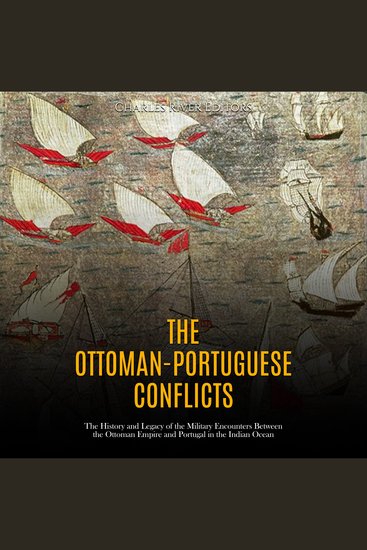
    The Ottoman conquest of Constantinople played a decisive role in fostering the Renaissance in Western Europe. The Byzantine Empire’s influence had helped ensure that it was the custodian of various ancient texts, most notably from the ancient Greeks, and when Constantinople fell, Byzantine refugees flocked west to seek refuge in Europe. Those refugees brought books that helped spark an interest in antiquity that fueled the Italian Renaissance and essentially put an end to the Middle Ages altogether.  
    	It was also roughly around this time that a period of European exploration began, and major factors that contributed to this period of exploration were introduced by the Chinese, albeit indirectly. The magnetic compass had already been developed and used by the Chinese sailors since the 12th century, although it had first been created in the 3rd century BCE as a divination device. The Song Dynasty then began using the device for land navigation in the 11th century and sailors began using it shortly after. The technology slowly spread west via Arab traders, although a case can be made for the independent European creation for the compass (Southey 1812: 210). Regardless, by the 13th century the compass had found its way to Western traders, coming at a time that trade had been increasing across Europe.  
    	The Portuguese started exploring the west coast of Africa and the Atlantic under orders from Prince Henry the Navigator. At this point, Europeans had not yet been capable of navigating completely around Africa since the ships being built were not yet fully capable of being able to sail very far from the coast and navigation in open waters was difficult, but the Portuguese continued pushing down the western African coast looking for ways to bypass the Ottomans and Muslims of Africa who had been making overland trade routes difficult. .
    Ver livro
  • The Meaning of Life - Answers to Life's Biggest Questions from the World's Most Extraordinary People - cover

    The Meaning of Life - Answers to...

    James Bailey

    • 0
    • 0
    • 0
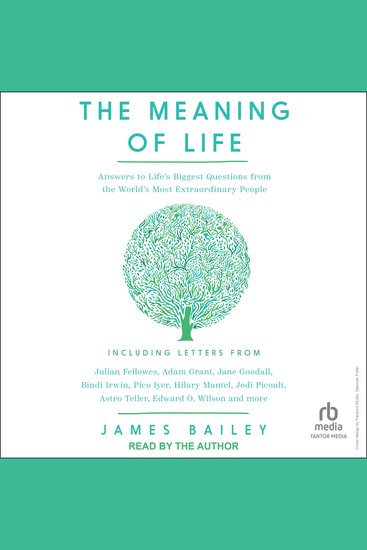
    Over 100 extraordinary people. One profound question. Countless life-affirming answers.When James Bailey was feeling lost in life, he was inspired by philosopher Will Durant's project, conducted in the 1930's, to write to one hundred luminaries in arts, politics, religion, sport, and sciences, challenging them to respond to a direct yet fundamental question—What is the meaning of life? The response was more remarkable than he could have ever imagined.A decade on, James had garnered an incredible collection of replies, collated here for the first time. By turns thought-provoking, amusing, and enlightening, these letters from scientists, writers, campaigners, athletes, political leaders, entertainers, survivors, and philosophers are a wonderful source of inspiration. Some are about happiness and heartbreak, some are about purpose, some are funny, and some will change the way you think.The Meaning of Life is a gift from people of all walks of life with incredible experience, connecting through one meaningful question that broadens our understanding of what it really means to be human and happy. It is more than just a collection of letters—it's a roadmap to finding your own path.
    Ver livro