Junte-se a nós em uma viagem ao mundo dos livros!
Adicionar este livro à prateleira
Grey
Deixe um novo comentário Default profile 50px
Grey
Assine para ler o livro completo ou leia as primeiras páginas de graça!
All characters reduced
San Francisco's Forgotten Cemeteries - A Buried History - cover
LER

San Francisco's Forgotten Cemeteries - A Buried History

Beth Winegarner

Editora: The History Press

  • 0
  • 0
  • 0

Sinopse

Digging into a forgotten past - and the dead left behind.  San Francisco is famous for not having any cemeteries, but the claim isn't exactly what it seems. In the early 20th Century, the city relocated more than 150,000 graves to the nearby town of Colma to make way for a rapidly growing population. But an estimated fifty to sixty thousand burials were quietly built over and forgotten, only to resurface every time a new building project began. The dead still lie beneath some of the city's most cherished destinations, including the Legion of Honor, United Nations Plaza, the Asian Art Museum and the University of San Francisco.  Join author Beth Winegarner as she maps the city's early burial grounds and brings back to life the dead who've been erased.
Disponível desde: 28/08/2023.
Comprimento de impressão: 233 páginas.

Outros livros que poderiam interessá-lo

  • The PTSD Workbook Third Edition - Simple Effective Techniques for Overcoming Traumatic Stress Symptoms - cover

    The PTSD Workbook Third Edition...

    PhD Mary Beth Williams, PhD...

    • 0
    • 0
    • 0
    PTSD is a debilitating condition that can occur after exposure to a terrifying event. But whether you're a veteran of war, a victim of domestic violence or sexual violence, or have been involved in a natural disaster, crime, car accident, or accident in the workplace, your symptoms may be getting in the way of you living your life. 


    In The PTSD Workbook, Third Edition, psychologists and trauma experts Mary Beth Williams and Soili Poijula outline techniques used by PTSD experts from around the world to conquer distressing trauma-related symptoms. You'll learn how to move past the trauma you've experienced and manage symptoms such as insomnia, anxiety, and flashbacks. 


    Based in cognitive behavioral therapy (CBT), this book is accessible and easy to use, offering evidence-based therapy at a low cost. This new edition features chapters focusing on veterans with PTSD, the link between cortisol and adrenaline and its role in PTSD and overall mental health, and the mind-body component of PTSD. Clinicians will also find updates reflecting the new DSM-V definition of PTSD. 


    This book is designed to give you the emotional resilience you need to get your life back together after a traumatic event.
    Ver livro
  • Ways of Attending - How our Divided Brain Constructs the World - cover

    Ways of Attending - How our...

    Iain McGilchrist

    • 0
    • 0
    • 0
    Attention is not just receptive, but actively creative of the world we inhabit. How we attend makes all the difference to the world we experience. And nowadays in the West we generally attend in a rather unusual way: governed by the narrowly focussed, target-driven left hemisphere of the brain.  
    Forget everything you thought you knew about the difference between the hemispheres, because it will be largely wrong. It is not what each hemisphere does – they are both involved in everything – but how it does it, that matters. And the prime difference between the brain hemispheres is the manner in which they attend. For reasons of survival we need one hemisphere (in humans and many animals, the left) to pay narrow attention to detail, to grab hold of things we need, while the other, the right, keeps an eye out for everything else. The result is that one hemisphere is good at utilising the world, the other better at understanding it.  
    Absent, present, detached, engaged, alienated, empathic, broad or narrow, sustained or piecemeal, attention has the power to alter whatever it meets. The play of attention can both create and destroy, but it never leaves its object unchanged. How you attend to something – or don’t attend to it – matters a very great deal. This book helps you to see what it is you may have been trained by our very unusual culture not to see.  
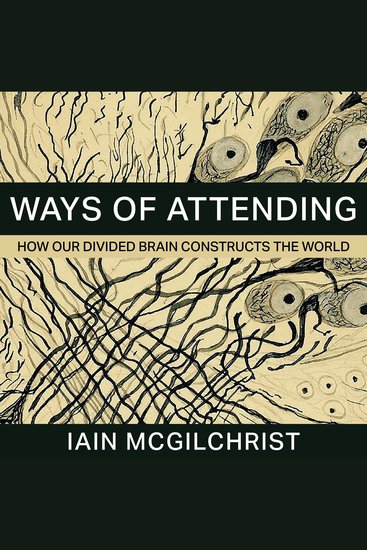
    Ways of Attending is expertly read by Mike Fraser. The cover design has been adapted from a Cajal original drawing, and used with permission of Legado Cajal (Madrid).  
    This audiobook was produced and published by Echo Point Books & Media, an independent bookseller in Brattleboro, Vermont. © 2018 Iain McGilchrist (P)
    Ver livro
  • The Stage of Survival - The Art of Theater in Buchenwald Concentration Camp - cover

    The Stage of Survival - The Art...

    Davis Truman

    • 0
    • 0
    • 0
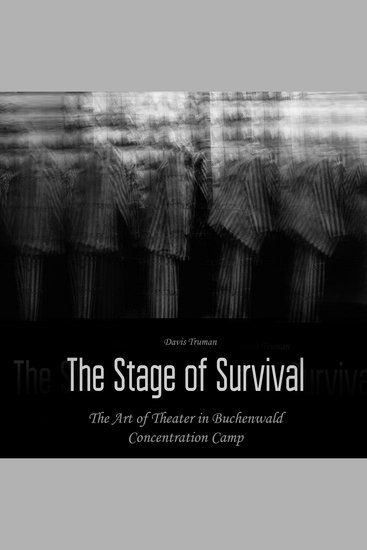
    Many of the concentration camps and ghettos under the Nazi regime had cultural and artistic activities which have been reported upon. The cabaret was very popular in the concentration camp of Buchenwald. Any available space could be transformed, as was done in Auschwitz, Buchenwald, Dachau, and Theresienstadt. It seems apparent that these cabaret presentations were acts of resistance and attacks on the Third Reich. The heavily satirical content of these entertainment sites has already been noted.  
    Moreover, this book attempts to use theatrical performances to learn more about the conditions in the camp and how they changed during its existence.
    Ver livro
  • The Reveries of the Solitary Walker - cover

    The Reveries of the Solitary Walker

    Jean Jacques Rousseau

    • 0
    • 0
    • 0
    The Reveries of the Solitary Walker was one of the last works written by the French philosopher Jean-Jacques Rousseau (1712-1778) and was, in fact, not quite complete. It was published four years after his death and came quickly to be regarded as one of his most poetic works. 
     
    It consists of 10 Walks (only the final ‘Walk’ was unfinished) during which he muses on a variety of topics including thoughts on issues which featured strongly in his notable life as a philosopher and commentator, including education and political philosophy. However, interwoven into the reflective narrative are personal observations and memories—some painful, concerning times when he felt attacked and severely criticised for his writings. There are also comments on nature particularly the plants he encounters which, placing the writer in the countryside, balances the darker inner musings. This puts the tone beyond nostalgia, and if there is undoubtedly a feeling of resignation, the essays emanate a sense of end-of-life understanding and acceptance. 
     
    The First Walk sets the scene: “BEHOLD me then as if alone upon the earth, having neither brother, relative, friend or society but my own thoughts; the most social and affectionate of men proscribed as it were by unanimous consent. They have sought in the refinement of their hatred what would be the most cruel torment to my susceptible soul and have rent asunder every bond which attached me to them. I should have loved mankind in spite of themselves and it was only by throwing off humanity that they could avoid my affection. At length, then, behold them strangers, unknown, as indifferent to me as they desired to be; but thus detached from mankind, and everything that relates to them, what am I? This remains to be sought. Unhappily the search must be preceded by casting a glance on my own situation, since I must necessarily pass through this examination, in order to judge between them and myself.” 
     
    Matthew Lloyd Davies reads the first translation into English which appeared in 1796, less than 20 years after Rousseau’s death.
    Ver livro
  • The Majesty Of Hanuman Neem Karoli Baba - cover

    The Majesty Of Hanuman Neem...

    Sripad Jaganantha Das

    • 0
    • 0
    • 0
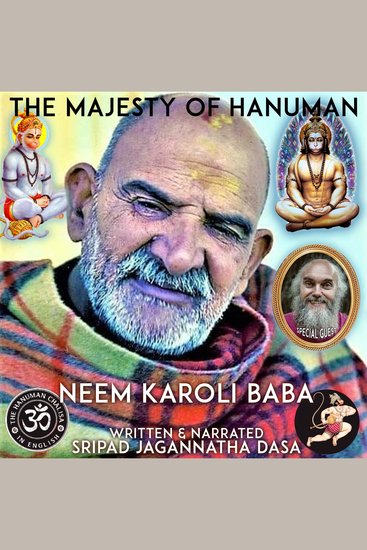
    AN INSIDE LOOK AT INDIA’S GREATEST MYSTIC SAINT! 
     
    THE CHANT 
     
    The Hanuman Chalisa is a hymn in praise of Hanuman authored by Tulsi Das. The word 'chālīsā' means the number forty in Sanskrit, as the Chalisa has forty verses. Hanuman is a great devotee of Ram and one of the central characters in the epic, Ramayan. He is also an incarnation of Shiva. The qualities of Hanuman – his strength, courage, wisdom, celibacy, devotion to Ram, and the many names by which he is known are all in the Hanuman Chalisa. 
     
    Hanuman is the epitome of ultimate devotion manifested with its full glory unchallenged. By the power of his devotion to Sita Ram, he easily achieved supreme status as the perfect devotee and servitor. 
     
    Reciting the Hanuman Chalisa infuses one with unlimited energy and prana. This sacred mantra also increases a person’s resilience and they emerge victorious in every situation. 
     
    THE TEACHER 
     
    Neem Karoli Baba known to his followers as Maharaj-ji - was a mystic saint and devotee of Hanuman. Here is the essence of his remarkable life and teachings. He is known outside India for being the spiritual master of a number of Americans who traveled to India in the 1960s and 70s, including Ram Dass and Bhagavan Das, as well as musicians Krishna Das and Jai Uttal. 
     
    Dr. Richard Alpert, a former Harvard professor and Timothy Leary cohort, was an icon of the hippie, LSD-fueled revolution of the 1960s. Thereafter, on a trip to India - like Clark Kent changing into Superman - he became the much-beloved spiritual teacher Baba Ram Das. His 1970s' iconic book 'Be Here Now' turned on a generation to the deep, non-sectarian spirituality within us all.
    Ver livro
  • Egyptomania - Our Three Thousand Year Obsession with the Land of the Pharaohs - cover

    Egyptomania - Our Three Thousand...

    PhD Bob Brier

    • 0
    • 0
    • 0
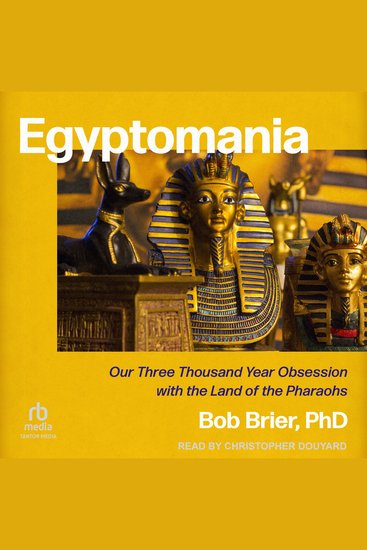
    The world has always been fascinated with ancient Egypt. When the Romans conquered Egypt, it was really Egypt that conquered the Romans. Cleopatra captivated both Caesar and Marc Antony and soon Roman ladies were worshipping Isis and wearing vials of Nile water around their necks. What is it about ancient Egypt that breeds such obsession and imitation? Egyptomania explores the burning fascination with all things Egyptian and the events that fanned the flames—from ancient times, to Napoleon's Egyptian campaign, to the discovery of Tutankhamen's tomb by Howard Carter in the 1920s. For forty years, Bob Brier, one of the world's foremost Egyptologists, has been amassing one of the largest collections of Egyptian memorabilia and seeking to understand the pull of ancient Egypt on our world today. In this original and groundbreaking book, he explores our three-thousand-year-old fixation with recovering Egyptian culture and its meaning. He traces our enthrallment with the mummies that seem to have cheated death and the pyramids that as if they will last forever. Drawing on his personal collection—from Napoleon's twenty volume Egypt encyclopedia to Howard Carter's letters written from the Valley of the Kings as he was excavating—this is an inventive and mesmerizing tour of how an ancient civilization endures in ours today.
    Ver livro