Join us on a literary world trip!
Add this book to bookshelf
Grey
Write a new comment Default profile 50px
Grey
Subscribe to read the full book or read the first pages for free!
All characters reduced
Philosophy - cover

Philosophy

Bertrand Russell

Publisher: Good Press

  • 0
  • 0
  • 0

Summary

In "Philosophy," Bertrand Russell offers a comprehensive exploration of fundamental philosophical questions that have shaped human thought. Written with a clarity that transcends the era it was penned in, this book covers a broad range of topics, including the nature of reality, the limits of human knowledge, and the intricacies of language and logic. Its literary style combines rigorous argumentation with accessible prose, situating Russell within the analytic tradition of philosophy, which emphasizes logical clarity and empirical validation. The historical context enriches the text, as it engages with both classical philosophical ideas and the burgeoning modern scientific worldview of the early 20th century. Bertrand Russell, an eminent philosopher, logician, and social critic, was deeply influenced by the tumultuous political landscape of his time, as well as by his rich academic background in mathematics and philosophy. His quest for understanding the human condition often intersected with his fervent advocacy for peace, rational thought, and social justice. It was his unique perspective, shaped by personal experience and intellectual rigor, that drove him to articulate the complexity of philosophical inquiry in a manner accessible to a broad audience. "Philosophy" is an essential read for anyone seeking to cultivate a deeper understanding of philosophical concepts that underpin contemporary discourse. Russell's insights not only challenge the reader's preconceptions but also inspire a profound appreciation for the interplay between philosophy and everyday life. This text stands as a vital contribution to the field, making it indispensable for students, scholars, and general readers alike.
Available since: 03/02/2025.
Print length: 110 pages.

Other books that might interest you

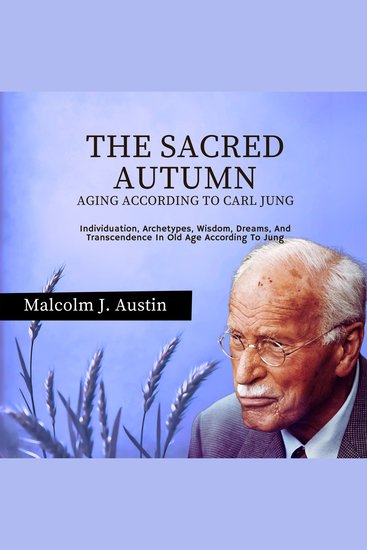
  • Sacred Autumn The - Aging According To Carl Jung - Individuation Archetypes Wisdom Dreams And Transcendence In Old Age According To Jung - cover

    Sacred Autumn The - Aging...

    Malcolm J. Austin

    • 0
    • 0
    • 0
    This audiobook is narrated by an AI Voice.  
    Aging is not merely the passage of time—it is a profound transformation of the psyche. Inspired by Carl Gustav Jung’s legacy, The Sacred Autumn invites listeners to explore old age as a season of psychological depth, spiritual renewal, and symbolic richness. 
    Rather than a period of decline, this audiobook presents aging as a culmination: a time when the mind, free from outer demands, turns inward toward wisdom, introspection, and self-realization. Jung viewed this phase as the final act of individuation, where the psyche seeks integration and meaning. Key Jungian concepts—such as the collective unconscious and the shadow—take on unique power in this stage, guiding us through the inner terrain of late life. 
    Each chapter acts as a reflective guide, exploring archetypes like the Wise Old Man and the Great Mother, and offering insight into topics such as dreams in later life, the alchemy of aging, intimacy, creativity, and the transformation of family roles. The book also addresses how unresolved psychological patterns may reemerge, and how they can be healed and integrated to bring peace and clarity. 
    At its core, The Sacred Autumn portrays aging as an alchemical journey—turning a lifetime of experience into symbolic gold. It is not a manual or a set of instructions, but a poetic and philosophical invitation to embrace the richness of elderhood. 
    This is a work for seekers, thinkers, and anyone drawn to a deeper understanding of life’s final, most meaningful chapter. It challenges outdated views of aging and opens a path to inner wholeness, legacy, and transcendence.
    Show book
  • Healing Childhood trauma 2-1 Series - The Perfect Series for Victims of Childhood Sexual Abuse - cover

    Healing Childhood trauma 2-1...

    Nancy Loyat

    • 0
    • 0
    • 0
    If you were sexually abused as a child or minor and its consequences still affect your life, read this. 
     
    You are no longer alone. For years, I didn’t understand the source of my anger. Past and present were tangled, leaving me feeling rejected and abandoned. To find clarity, I tried several therapeutic approaches, alone and in groups. The secret buried in my memory poisoned my life. All I wanted was to feel better, but I didn’t know how. 
     
    Years passed before I discovered the truth. My life felt like a windswept leaf—frustration and anger ruled me. It wasn’t until I hit rock bottom—overreacting to comments, without a job or money, asked to move out—that my body reminded me of the trauma I had buried: childhood sexual abuse. 
     
    Common behaviors among victims include: 
     
    Trust issues 
     
    Taking care of others at their own expense 
     
    Persistent anger or panic 
     
    Overreacting to remarks 
     
    Living aimlessly or trying to escape 
     
    Inability to focus on real needs or make decisions 
     
    Difficulty identifying priorities 
     
    Possible post-traumatic stress disorder (PTSD) 
     
    Talking about such pain is difficult, yet its effects often lead to destructive behavior. Joining a support group helped me understand that victims of childhood sexual abuse are survivors. Through readings and exercises with the group, I learned to recognize my wounds and name long-repressed emotions. 
     
    If you believe your life could be better without anger or shame, this book is for you.
    Show book
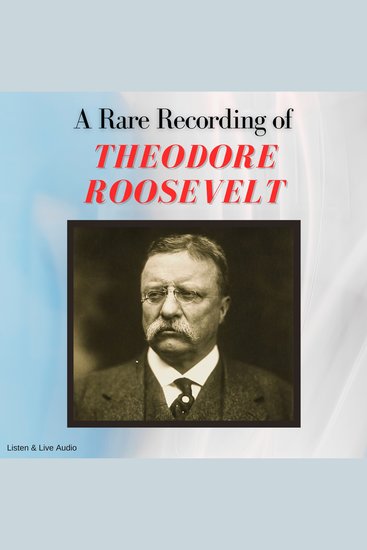
  • A Rare Recording of Theodore Roosevelt - cover

    A Rare Recording of Theodore...

    Theodore Roosevelt

    • 0
    • 0
    • 0
    When running as the third-party Progressive (Bull Moose) candidate for president of the United States in 1912, Theodore Roosevelt recorded a number of campaign speeches. Represented here are all of the cylinder recordings he made for the Edison Company in August of 1912, including "The Progressive Covenant with the People," "The Right of the People to Rule," "The Farmer and the Businessman," and "Social and Industrial Justice." 
     
    Theodore Roosevelt Jr. (October 27, 1858 - January 6, 1919) was an American politician, statesman, soldier, conservationist, naturalist, historian, and writer who served as the 26th president of the United States from 1901 to 1909. He previously served as the 25th vice president under President William McKinley from March to September 1901 and as the 33rd governor of New York from 1899 to 1900. Assuming the presidency after McKinley's assassination, Roosevelt emerged as a leader of the Republican Party and became a driving force for anti-trust and Progressive policies.
    Show book
  • From Fear to Freedom - Mastering Social Interactions - cover

    From Fear to Freedom - Mastering...

    Fiona Zenith

    • 0
    • 0
    • 0
    Ever felt your heart race at the thought of a simple “hello”? Or found yourself dodging a room full of strangers, palms sweaty, mind racing with “what ifs”? Social fear can lock you in silence, turning everyday moments into mountains—but Fiona Zenith knows the way out. She’s walked that shaky path herself, from dreading small talk to discovering freedom on the other side. In this heartfelt guide, she offers nine practical steps to shed the heavy weight of anxiety and step boldly into connection. You’ll learn to quiet the doubts that echo in your head, face those pulse-quickening moments with steady courage, and build conversations that feel genuine—not forced. This isn’t about faking confidence or becoming someone new; it’s about uncovering the strength you already carry. Take a deep breath, turn the page, and start living freer—one real, brave moment at a time.
    Show book
  • Geauga Lake - From Sunrise to Sunset - cover

    Geauga Lake - From Sunrise to...

    Tom Smolko, Joe Taylor

    • 0
    • 0
    • 0
    From its quiet beginnings as a picnic grounds in 1872 to its gradual evolution into an amusement park, Geauga Lake became one of Northeast Ohio's most famous attractions. The story of Geauga Lake take readers through its entire history -- from its dramatic climb in status to become a nationally recognized megapark to its almost inexplicable and rapid decline and demise in 2007. The fascinating story illuminates the changing strategies that different owners brought to the park and captures the many changes that regularly transformed the midway. For those who made Geauga Lake Park an integral part of their summer tradition, the book is sure to rekindle fond memories.
    Show book
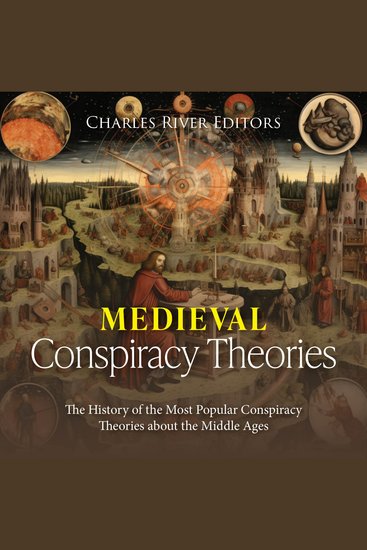
  • Medieval Conspiracy Theories: The History of the Most Popular Conspiracy Theories about the Middle Ages - cover

    Medieval Conspiracy Theories:...

    Editors Charles River

    • 0
    • 0
    • 0
    Few eras are easier to let the imagination run wild than the Middle Ages, which have often been coined the Dark Ages based on a perceived lack of progress and information. Indeed, we can say that it is not completely unfounded because we know less about that historical period compared to those that come after it. In addition, it is a period marked by a great number of deaths caused by plague epidemics, crusades, and inquisitorial persecutions. Often, researchers are not even sure how and why certain events happened, and these mysteries still occupy the attention of historians. 
    	This era was very harsh, difficult, and often gloomy. In that greyness, burdened by various fears, people were looking for something that would light up their lives and bring them a feeling of beauty and joy. People experienced all things and events around them more intensely than people do today. They often exaggerated the events that happened, giving them a mystical and divine character. For this reason, medieval sources are taken with a grain of salt and are first carefully examined before believing.  
    	At the same time, some historical mysteries about the era may never be solved, if only because the relevant excavated material has been lost or the archaeological site has been destroyed. In other cases, it is because new evidence is unlikely to emerge, or the surviving evidence is too vague to lead to a consensus. Of course, the lack of answers only makes these enigmas more intriguing.  
    	Similarly, few stories have the power to mesmerize as much as unsolved mysteries, so codes and missing puzzle pieces fill people with excitement and intrigue. What did a source want to say with that coded message? What mysteries did they hide? 
    Show book